May is the Month of Mary by Mary Jane Miller

 Mary Icons

There are three classic prototypes of Mary Icons, their collective messages point toward a new contemporary kind of trinity. Perhaps the concept of Mary is still undeveloped, as our society has changed her message is still provocative and meaningful. It has been through contemplating her image, and painting icons of her that I have come to realize a deeper mystical message. Her popular iconography may have the keys to how we are to care for creation and one another in the world.

Mary Icon of the Panagia

Mary looks directly at the viewer, beckoning us towards poised stillness and constant prayer with palms extended outward in total surrender to what she receives. She contains the Creator of the Universe in her womb.

Mary Icons of the Theotokos

She is the feminine energy which tenderly nurtures Jesus to become a teacher, rabbi, master and lord. She is the icon which reminds us to love one another, to love life, and to love creation.

Mary Icons of the Hodegitria

Mary becomes a mystical location where we can be taught to give ourselves to God and one another. There, held by the church tradition, we like Mary are called to release to the world what we most love and cherish.

Continue reading “May is the Month of Mary by Mary Jane Miller”
My Grandmother is a Gangster… a Spiritual Gangster by Valentina Khan

My grandmother is a gangster… a spiritual gangster

I recently attended a funeral for a relative-in-law. The grassy patch at the cemetery was filled with many familiar faces as well as unfamiliar. My side of the family was asked to come. My father, mother and even teeny tiny little 4 foot 9 grandmother showed up. I emphasize her height because it has nothing to do with her stature… and this is where my story begins.

My grandmother aka “Mama Shamsey” is from my maternal side. She grew up in Tehran, Iran. She was a young bride to a handsome intellectual who was French educated but a deeply spiritual and passionately religious Iranian Shia Muslim. He truly believed people should never discuss politics or religion. He knew how to be open and compassionate with people of differing opinions than his. They married, had 5 children, my mother was the eldest. When she was just entering her tender teenage years, many of her peers were flocking to Europe to be educated in Germany or France. She however had the dream of going to school in America, so in the 70’s this family of 7 made the great migration over to America.

Continue reading “My Grandmother is a Gangster… a Spiritual Gangster by Valentina Khan”

Working Hard at Spirituality by Sara Frykenberg

I sometimes have to work hard at spirituality.
… And I haven’t been.

I have realized that lately, when I sit down to write blogs for this community, I have a difficult time incorporating one of the most basic FAR themes into my pieces: religion. I identify as agnostic—but that’s not really the problem. I am a spiritual person, or, have been. I was a deeply religious person as adolescent and young adult. After leaving my childhood faith, though it did take time, I was able to find a safe outlet to first, participate, and then, flourish in my spiritual life. I have found joy in deep meditations and rigorous, physical spiritual discipline. I believe in larger powers that are relational, shared, intentional, and sustaining. I appreciate the rich flavor to life that I have only had access to through the spiritual. But, at least right now, I am not participating in it. And to be honest, I sometimes think I am not fully participating in me. Continue reading “Working Hard at Spirituality by Sara Frykenberg”

Make Humanity Great Again by Gina Messina

Gina-MD-5-UrsulineThe Handmaid’s Tale on Hulu has become my latest guilty pleasure.  I rarely watch television and when I do my channel is set to MSNBC. But the news has been almost too much to handle.  I still find myself living in disbelief that we are a nation under the Trump Administration.  And it seems that if you miss one day of the news cycle, you’ve missed a year with all the Trumptastic failures that continue to arise.
I decided one night to switch over to this series I had heard so much about. I was instantly gripped by the plot and the eerie reminder of what our nation could become with a growing alt right population. And with social policy continually being utilized as a weapon against women’s rights, there are many parallels to draw with The Handmaid’s Tale and our supposed “Christian” Nation. Even escapism landed me back in the frightening reality of our world.

81% of Evangelicals and 65% of Catholics voted Trump into the White House. While some argue faith has no place in politics, the real issue is that most do not vote with their faith in mind. Or perhaps they do, but the foundation of the Christian tradition is lost on them. Like the characters in The Handmaid’s Tale, many God-fearing Christians live “under His eye” and see progressive attitudes as a threat to natural order. The response is to overlook hatred in favor of calming fears. We fear what we do not know, we fear those who think differently than we do, and that fear has taken a hold of our nation with encouragement from our POTUS 45. Continue reading “Make Humanity Great Again by Gina Messina”

Religion, Race, and Feminism in an Era of Elusive Enlightenment by Salaam Green

The warrior spirit is not only the coherent ability to resist circumstances outside of one’s making; but the ability to fight the war within all of us thus managing discomfort and chaos with the force of authenticity.

Recently an enlightened friend on social media reminded me of the importance of not only portraying an awakened consciousness in the fight towards enlightened morays in an age of fascist’s dictatorships but actually waking up to unresolved veracities.

Hurriedly, I searched for a working definition of enlightenment consistent with my Christian beliefs. I finally found several however, none exactly measured up to the values that are interlaced within scriptures and thus are founding principles of Christianity and religious fundamentals.

Continue reading “Religion, Race, and Feminism in an Era of Elusive Enlightenment by Salaam Green”

Redeeming Gender, Softening Extremes by Chris Ash

Christy CroftLast month, I attended a lecture by Anglican theologian Adrian Thatcher on his recent book, Redeeming Gender. In this book, Thatcher draws upon the one sex and two sex theories described by Thomas Laqueur in his book, Making Sex: Body and Gender from the Greeks to Freud. Laqueur posits that until the eighteenth century, it was believed that women and men were two expressions of the same basic sex – that women were men whose reproductive organs were similar but found in the “wrong” places. Ovaries were internal testes, the vagina an inverted penis, and the labia a parallel for the scrotum – all making women flawed expressions of man.

This sets up a continuum in which there is one sex rather than two, with men as more perfect expressions of man, and women as inferior expressions. Thatcher argues that if the language, liturgy, and doctrines of the church arose in the context of the one sex theory, then Christianity’s foundational beliefs and practices are already compatible with acceptance of a spectrum of gender identity within a one-sex model, opening up new interpretations that allow for full participation of women and LGBTQ+ people within the church. While the old one sex theory as described by Laqueur is a spectrum from more to less perfection, from more to less like God, the spectrum Thatcher proposes is clearly progressive – one in which all places along the spectrum share in the same equality.

And yet it is still a linear spectrum, with extremes envisioned as opposites, as distant from each other. Continue reading “Redeeming Gender, Softening Extremes by Chris Ash”

We the People by Joyce Zonana

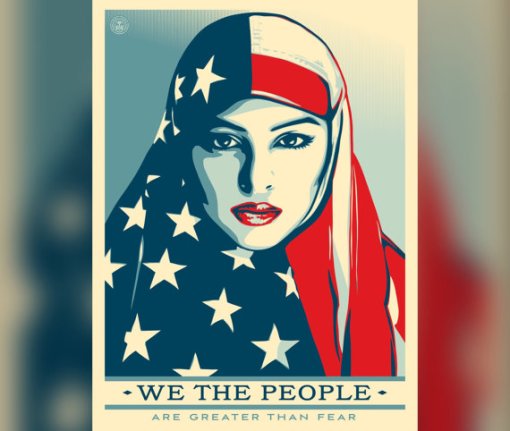
jz-headshotDuring the January 21st Women’s March in New York City, I was inspired and delighted by so many of the signs women and men had crafted to express their opposition to the current disastrous regime in the United States: “Grab America Back,” “Support Your Mom,” “Sad!,” “Miss Uterus Strikes Back.”  But one image stood out, mesmerizing me:  that of a woman proudly wearing an American flag as hijab, with a message below—“We The People Are Greater Than Fear.”  For several blocks as we made our way up Fifth Avenue, I walked beside a woman carrying that sign, and it became, for me, the most powerful symbol of the resistance we must all wage during the dark time ahead.
il_570xn-1174082361_2sxw
Poster by Shepard Fairey
images-1
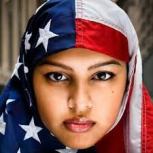
Munira Ahmed photo by Ridwan Adhami

The image, based on a photograph of Munira Ahmed by Ridwan Adhami, was created for the Women’s March by graphic artist Shepard Fairey (who also designed the iconic image of Barack Obama, “Hope”).  It offers a striking visual challenge to a long-held orthodoxy, now brought to the fore by Donald Trump and his gang:  that Western-style liberal democracy (epitomized by the United States) is incompatible with Islam.  And, perhaps even more specifically, that Islam is incompatible with feminism.

Many Western women—including feminists—are still bound by the Orientalist worldview that encumbered our liberal feminist foremothers.   Continue reading “We the People by Joyce Zonana”

The Importance of Religion for Eco-Feminism by Ivy Helman

untitled.png“Why is religion important to ecofeminism?”  A student, in the Master’s course I teach at Charles University, asked this as we began the class session dedicated to the topic.  Given the overwhelming presence of atheism in the Czech Republic, I wasn’t too surprised by the inquiry.  Nonetheless, the idea has been at the back of my mind ever since: what does religion have to do with ending patriarchy and bolstering the health of the planet?  While I may take the connection as obvious, it is clearly not for many feminists out there.  Here is how I understand it.
First, it is true: many of our inherited religious traditions have been and still are considerably patriarchal.  Because of that, some feminists outright reject religion.  In fact, some feminists even consider religion dangerous and threatening, as it is often utilized to contradict many feminist aims.  Yet, there are many, many feminists who find, within their given or chosen tradition, non-patriarchal elements that can be recovered, remembered and/or (re)created.   Religious feminists work tirelessly to transform religions in life-sustaining and post-patriarchal ways not just for themselves but also for those women and men who belong to the same communities.   Continue reading “The Importance of Religion for Eco-Feminism by Ivy Helman”

Part One: Young Adult Fantasy is on Fire by Anjeanette LeBoeuf

AnjeanetteAs per my last month’s FAR post, I will be looking at book series from the Young Adult Fantasy genre. The first series of young adult fantasy that I will be looking at is Rae Carson’s trilogy The Girl of Fire and Thorns. This series heavily centers around religion, empowerment, and agency. The trilogy explores fanaticism, fate and free choice, and even xenophobia. Also, found amongst its pages are positive female friendships, daring adventures, and yes, a blooming love story. Continue reading “Part One: Young Adult Fantasy is on Fire by Anjeanette LeBoeuf”

Women, Theology and Identity as Believer by Vanessa Rivera de la Fuente

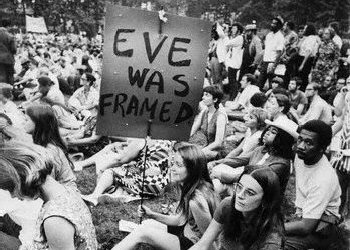
eve

Like all my reflections, this is not intended to be conclusive, but rather, to share some impressions about theology and the way in which women are created or given an identity as believers.

In the androcentric and misogynist narratives of religious traditions lies the root of much violence against women. This is not new, since the same diagnosis has already been raised by the theologian José Luis Tamayo when he says that although women are the majority presence of religious communities and those most involved in the transmission and practice of traditions “they are the biggest losers” for all the exclusion and violence exercised against them in the name of religion.

The influence of religion on the lives of women goes beyond the realm of religion itself. From theology comes the gender discourses that impact our lives as political subjects. In all the most obvious (sociological, historical, economics) causes of the weak status of women, we can find theological roots or argument religion-based. These  roots are discursive. What is said about women from religions, as well as from the social and exact sciences, institutions and the media, are stories, narratives that are the product of the interaction of mechanisms of power, enunciation authority and historical accumulation of performative actions. Continue reading “Women, Theology and Identity as Believer by Vanessa Rivera de la Fuente”