
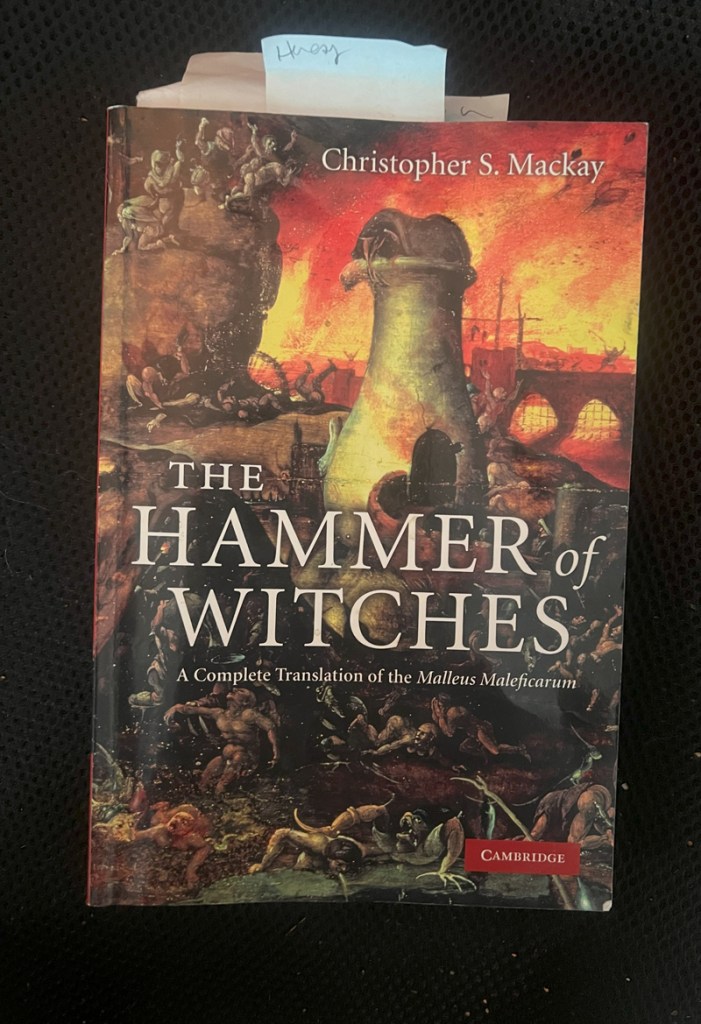
Incredibly! The Inquisitional Cultural Mechanism Rears its Hydra Head by by Elisabeth Sikie

As a young witch hungry for feminist sisterhood and spiritual wisdom in the 90s, before the blooming of the internet, I discovered a mag called The Beltane Papers. I remember devouring an article featuring channeled material of women killed during the European witch hunts. This transmission revealed past voices of everyday people living their lives until they were snagged by the slow creep of an increasingly oppressive cultural trajectory. What struck me was the normalcy of their voices, the deceased echoes of regular women trying to make sense of events beyond their control until they were taken by a system that destroyed them. What stayed with me is the author’s observation that even at their violent end these women’s voices remained “incredulous”. 

Decades, and seemingly lifetimes later, I completed my dissertation for my PhD in Religion and Philosophy in which I excavated some of the subaltern history of my European Ancestors and their female shamanic practices. At one inevitable point in my research – kicking and screaming – I reluctantly faced the inquisitions and witch trials. After waving a sage wand and cracking a sacred beer, I cracked open the Malleus Maleficarum, the infamous “Hammer of the Witches”.[1] This notorious guidebook, a how-to for career Christian Inquisitors written by two Dominican Friars[2] during the Middle Ages, details moral arguments supporting the legalized suppression, interrogation, and eradication of women designated by the church-state as heretics.

Continue reading “Incredibly! The Inquisitional Cultural Mechanism Rears its Hydra Head by by Elisabeth Sikie”
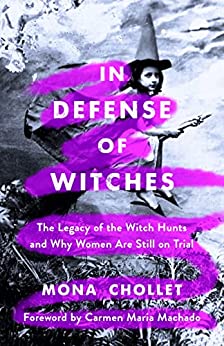
Life Still Shaped by the Witch Hunts? by Eline Kieft

In this article I reframe my understanding of feminism through the lens of Mona Chollet’s In Defence of Witches, and reflect on how my psyche as a woman today is still deeply influenced by the effects of the witch hunts in mediaeval times. 

Continue reading “Life Still Shaped by the Witch Hunts? by Eline Kieft”

Who Are the Pagans? by Barbara Ardinger

Barbara ArdingerIt has occurred to me that it’s possible that some of the bloggers and readers of this site may not know very much about pagans, so here’s a little New Year’s lesson. The first thing to know is that pagans are almost by definition rebels. That means any generalization anyone may make will almost certainly have a thousand exceptions. You may have heard what Will Rogers wrote in 1932: “I am not a member of any organized political party. I am a Democrat.” Well, the same goes for pagans: many of us joke that we don’t belong to an organized religion. “Pagan,” by the way, is the generic term. Witches, Wiccans, and eclectics (among others, see below) are specific terms. Many of us belong to what are called traditions, which are somewhat analogous to the Protestant denominations. Some traditions are said to go back to the Middle Ages (or further back), but this is generally nonsense. Paganism as it is practiced today is a modern religion looking for (and—voilà! finding!) roots in the ancient and classical pantheons or in Old Europe, where archaeology shows us that the Goddess was worshipped thousands of years before Abraham met his god, ca. 2000 BCE (see Marija Gimbutas’ text for more information on this). Continue reading “Who Are the Pagans? by Barbara Ardinger”