

Faithfully Dissident Daughters by Chelsea Kim Long

At 28 weeks pregnant with twins, on a gorgeous summer day, I looked in the mirror and marveled at the way my body had expanded to accommodate the two lives within. I was proud of my body, proud of myself. I put on a black, lacy bralette with matching underwear and threw a lightweight open front kaftan on top. I set my phone on a self timer and took some beautiful shots of myself. Sitting on the bed. Standing in front of a mirror. Next to the crib, looking down at my belly.

The lighting was perfect; I felt ethereal—like the definition of a glowing pregnant woman. Pregnancy is magical for about 2 seconds out of 9 months and I was basking in them. I thought about God as Mother and smiled at the way my body reflected the image of God. I uploaded a photo to Instagram. Positive comments started to come in right away.

A few minutes later, my husband Colby walked into the room asking, “Did you just post a picture of yourself wearing a bra? That’s really weird.”

My heart dropped into my stomach. He had policed my outfit choices before, and it wasn’t worth the conflict to bring it up. This time felt different. This time I was carrying a baby girl who would be a sister in a family with two brothers.

Continue reading “Faithfully Dissident Daughters by Chelsea Kim Long”
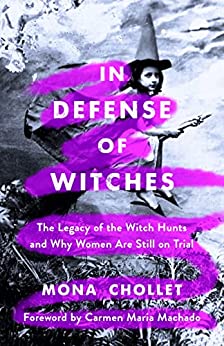
Life Still Shaped by the Witch Hunts? by Eline Kieft

In this article I reframe my understanding of feminism through the lens of Mona Chollet’s In Defence of Witches, and reflect on how my psyche as a woman today is still deeply influenced by the effects of the witch hunts in mediaeval times. 

Continue reading “Life Still Shaped by the Witch Hunts? by Eline Kieft”

Resisting Shame and Choosing to Live through the Loving Eye by Stephanie N. Arel

This week, I finished reading The Politics of Reality: Essays in Feminist Theory by Marilyn Frye, a text I had not encountered in my studies of feminism (in literary theory, psychology, philosophy, or theology) until now. In some ways, I wish I would have read it sooner. In other ways, I am grateful for this more recent rendezvous. From my current position and perspective – theoretical and personal – I was, I think, more able to hear the core message Frye conveys than I would have been years ago. I have less to protect now, and my ego is less fragile. In the text, she names the mechanisms around which Western – and patriarchal – cultures are founded. Her argument is fluent and cogent, even as it threatens the stability this culture offers. Our lives are embedded in it, even if our personal ethics point to alternative, feminist ways of living. Frye pushes her readers to live alternatively, so that we can recognize the times that we conspire/feed into/comply with patriarchal messages and clean the residue of servitude off of our skin.


For the purposes of this post, I engage two opposing concepts Frye presents in the text: the arrogant eye and the loving eye. Located in the chapter entitled “In and out of Harm’s Way: Arrogance and Love,” Frye investigates how men in phallocentric culture exploit and enslave women. The opposing, contradictory eyes of arrogance and love directly relate to the experience of shame which effectively serves to subjugate women in patriarchal culture.


Shame functions within what I call a logic of exposure. Shame relates intimately to the concept of being seen.  Affectively, shame results from our interest/excitement being partially truncated. For instance, we are drawn to someone (real or imagined); we are interested in their response to us, and somehow something interferes with the desire to connect. Contact is cut off, and interest/excitement partially halted. Shame ensues. We experience that someone (real or imagined) seeing us as other, different, foreign, maligned, wrong, or worthless. We are seen wrongly. This misperception alleviates joy and relates to the gaze of the arrogant eye under which (as the default gaze of phallocentric culture) we often find ourselves seeking approval.

Continue reading “Resisting Shame and Choosing to Live through the Loving Eye by Stephanie N. Arel”