


I love the time between the Winter Solstice and New Year’s – a time of suspended animation, a reprieve from the demands of daily life, a respite from the woes of the world, from needing to pay attention to the time of day, days of the week, and tasks that need to be accomplished. A whole week with nothing scheduled on the calendar. Simply presence. It is a liminal time on the threshold between the old year and the new – whether measured by the turning of the planet from dark to light on the Solstice or of the Gregorian calendar year – a time when many of us pause and reflect on the year past and our hopes for the year to come. It is a moment of what the Greeks called Kairos time, as opposed to Chronos time, by which we measure most of our lives — in seconds, minutes, hours, days, and years.
In the years I spent in academia, my life was governed by Chronos time that often forced me to live in the future rather than the present. Course scheduling and book orders needed to happen far in advance. Course syllabi planned students’ readings and assignments for the next several months ahead. Learning was to occur in specific blocks of time, which always struck me as such a bizarre way to teach and learn, when we’d have to break off discussion and deep learning simply because the hour was up.
Continue reading “Kairos Time by Beth Bartlett”

 In “Time Telling in Feminist Theory,” Rita Felski suggests that there are four main ways feminists discuss and use time: redemption, regression, repetition and rupture. They are aptly named as they behave similar to their labels. Redemption is the linear march of time, hopefully progressing step by step towards a redeemed, or at least better, future even if sometimes things get momentarily worse. Regression is the want to go back in time or at least return to idyllic and/or imagined pasts: to matriarchy or to a time before patriarchy’s violent arrival. Repetition is a focus on the cyclical nature of time in bodies, in daily chores, in seasons and so on. Rupture posits a break in time in a way what was before no longer makes sense or doesn’t exist. Think utopia or dystopia.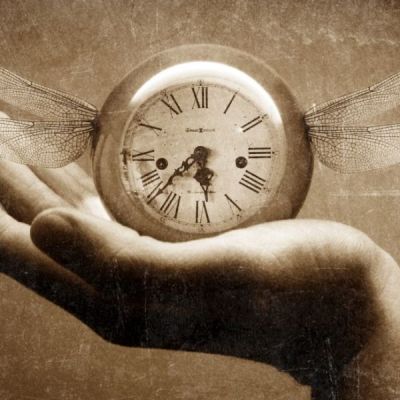

 I have recently been looking at the Goddess Ananke. Ananke and Her consort Khronos, were primal energies emerging from chaos, producing the world egg and then wrapping themselves around it causing it to burst. Out of that egg came the world and all that it contains. Just imagine, the world being formed by two energies – those of Inevitability or Necessity and by Time. How simple and yet how complex.
 From our very beginnings, women have danced with time. Our bodies’ moon cycles have always been a human calendar. As the first agriculturists, we partnered with the seasons to feed our families and communities. When we served as midwives and carers for the dead, we ushered our species into and out of their Earthly lives.
 Feminism and Religion