Women, Theology and Identity as Believer by Vanessa Rivera de la Fuente

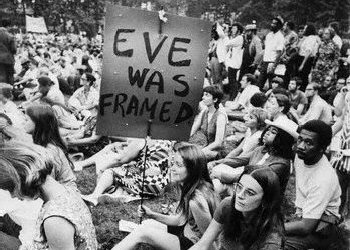
eve

Like all my reflections, this is not intended to be conclusive, but rather, to share some impressions about theology and the way in which women are created or given an identity as believers.

In the androcentric and misogynist narratives of religious traditions lies the root of much violence against women. This is not new, since the same diagnosis has already been raised by the theologian José Luis Tamayo when he says that although women are the majority presence of religious communities and those most involved in the transmission and practice of traditions “they are the biggest losers” for all the exclusion and violence exercised against them in the name of religion.

The influence of religion on the lives of women goes beyond the realm of religion itself. From theology comes the gender discourses that impact our lives as political subjects. In all the most obvious (sociological, historical, economics) causes of the weak status of women, we can find theological roots or argument religion-based. These  roots are discursive. What is said about women from religions, as well as from the social and exact sciences, institutions and the media, are stories, narratives that are the product of the interaction of mechanisms of power, enunciation authority and historical accumulation of performative actions. Continue reading “Women, Theology and Identity as Believer by Vanessa Rivera de la Fuente”

Reconstructions of the Past 8: Hafsa bint Sirin (My Story of Her Life 3) by Laury Silvers

silvers-bio-pic-frblog - Version 2As discussed in earlier blogs, the sources tend to paint pious women as recluses for any number of reasons. No matter the intention, the message transmitted over time–in so many ways–is that pious women should restrict their social lives, especially their public social lives, even if that means restricting spiritual or scholarly engagement. But what I have been arguing over this series of blogs is that pious and Sufi women lives were not restricted in the way they are portrayed. Thus I argue that despite the messaging that silence is the mark of our purity, there is little historical ground for it. If we are to take the Prophet’s wives and pious and Sufi women such as Hafsa bint Sirin seriously as models for women’s piety, then there is no “sunna” of silence or social disengagement to be a good woman.

The portrayal of the tender relationship between Hafsa and her son is out of character in the literature concerning early pious and Sufi women. When children are mentioned in these sources, it is almost always in bare sketches depicting their service to their mothers, transmitting their mother’s wisdom, or, less often, distracting their mothers from their worship. For all the idealization of mothers in Islam from the early period onward, it is surprising to find this aspect of women’s experience missing from biographies devoted to articulating their piety. Even in those very few accounts in which a loving relationship is depicted between mother and child, like Hafsa and al-Hudhayl, the stories seem to be used mainly to portray the mother as an idealized solitary worshipper, not an idealized mother.

After al-Hudhayl died, Hafsa became close with her student Hisham who seems to have become something of an adopted son to her. She shared stories about al-Hudhayl with him which he transmits and are recorded in the sources. But these stories are not transmitted in order to demonstrate the tenderness of their relationship. Consider that Hafsa’s intent may have been to share stories with Hisham about her close relationship with her son, but the transmitter’s intent was first and foremost to show that she stayed awake all night in solitary prayer and that she fasted everyday.

Playing down the presence of children in these women’s lives seems to have less to do with de-emphasizing the women’s identity as mothers or grandmothers as it does with de-emphasizing women as embodied social beings of which motherhood is a part. Women raised their children as part of a community of other women, members of their extended families, and neighbors in which the shared experience of the cycles of life create ineluctable social bonds. Just because these relationships are not documented in the texts, does not mean we cannot logically infer the possibility of them given all the other evidence to hand.

Given the structure of homes at the time in Basra and the common practice of extended families living in related quarters, Hafsa, her son, and his family probably lived in a grouping of rooms with a shared courtyard and an area set aside for his camel. Her son visited with her regularly. Given the social roles of family members during that time, it is likely that her daughter-in-law helped out with cleaning and cooking. After al-Hudhayl died, his wife probably returned to her own family. Hafsa is reported to have purchased an enslaved girl to do the household chores after he died. This girl, about whom we have no other information, was asked about her and transmits a story about her habit in prayer. She was Hafsa’s unwilling companion. Her sister is said to have visited her often, and although we only have the story of the lamp from her, I find it hard to believe that they never spent time with one another as sisters do. Likewise, there are no stories of her and her sister Karima visiting each other or worshipping together, even though Karima was also known for being a devoted worshipper.

Her brother Muhammad’s wife is said to have been almost continuously pregnant and to have lost nearly all her children. These were hard times in Basra and Muhammad had little interest in business. His work as an itinerant cloth salesman seems to have been more of an opportunity for him to sit with other scholars and pious folk. His wife and children seem to have lived in dire poverty. Given Hafsa’s close relationship with her brother and love of her own child for whom she would grieve so deeply, it is hard for me to imagine that she never came to the aid of her sister-in-law. No doubt her sister-in-law’s own family would be there for her, but in this cultural context it would be expected that all the members of extended families would care for one another.

Perhaps more telling for the silence in the texts, we never hear of any grandchildren or her siblings’ children visiting her. She had twenty-two full or half brothers and sisters. A number of her siblings were also scholars and pious worshippers. It seems impossible that any of their children, not to mention Ibn Sirin’s surviving son who would become a scholar himself, never sat with her to learn Qur’an and Hadith as a child. Ibn Sirin sent his own companions to study with his sister, but not his son who would himself become a pietist and transmitter of hadith?  Just because these relationships are not documented in the texts, does not mean we cannot logically infer the possibility of them given all the other evidence to hand.

So despite almost no mention of these social relations in the reports concerning her, I feel comfortable assuming that Hafsa would have spent a good amount of time with her sisters, sister-in-law, daughter-in-law, their children, not to mention her enslaved servant.

If my understanding of her life as filled with family, friends, and her students is correct, then it is impossible, as the sources report, that she only left her place of prayer long enough to relieve herself and get some sun. This claim becomes even more implausible when we consider that the very reports attesting to her extraordinary solitude are transmitted by people who so often spent time in her company: the young men who studied Qur’an with her on a regular basis. In particular, Hisham visited with her socially in her old age, learning from her, taking advice from this wise old woman, and listening to her as she shared stories about her relationship with her son.

Most likely, then, Hafsa stayed awake in worship from the evening prayer to the morning prayer, slept until the midday prayer, then received visitors, students, or visited others during the afternoon hours, performing the afternoon and sunset prayers at their appointed times. This schedule would leave her ample time to take part in the social life of her home as well as teach her classes on the Qur’an and Hadith. We know too that she traveled for Hajj several times in the company of others and visited the homes of elites in Basra. Finally, consider that at least on cold nights, her son, and then her slave, kept her company through the night feeding the fire while she prayed.

All of which begs the question, when was this recluse ever alone?

This entry marks the completion of the Hafsa blogs.

(Accounts are taken from Ibn Saʿd’s Tabaqat al-kubra, her transmissions of hadith, and Ibn al-Jawzi’s Sifat al-safwa).

The featured photo is of the Senegalese Sufi leader Sayyida Zeynabou Mbathie and disciples at a Friday ḥaḍra (gathering) and sikkar (zikr, dhikr). For more on the many female Sufi leaders of Senegal see Hill’s linked article or his forthcoming book Wrapping Authority.

 Laury Silvers is a North American Muslim novelist, retired academic and activist. She is a visiting research fellow at the University of Toronto for the Department for the Study of Religion. Her historical mystery, The Lover: A Sufi Mystery, is available on Amazon (and Ingram for bookstores). Her non-fiction work centres on Sufism in Early Islam, as well as women’s religious authority and theological concerns in North American Islam. See her website for more on her fiction and non-fiction work. 

Khutba “A Call to Radical and Angry Women of Faith” by Vanessa Rivera de la Fuente

Sacred+Circle+home+page+image+oneI am grateful to the Interfaith Group of Feminist Theologians and Women of Faith for remembering my spiritual affiliation and giving me the opportunity to lead this service in this fully of blessings month of Ramadan and share with you a reflection in the form of a sermon or khutba. Perhaps you know that in orthodox Islam, tradition, without any theological basis, still forbids women to speak or lead rituals. So, this is a joyful occasion for me and I want to start with my usual invocation:

I thank God for this day. I praise Allah for the paths I had to walk that led me to its light and the present day. I ask the protection of the Divine that lives in the essence of everything. and I invite my female ancestors to walk with me in this journey.

A Call to Radical and Angry Women of Faith

My dear sisters, I want to invite you this evening to reflect on what it means to be a radical woman of faith, in a context of extreme upsurge of violence against women and minoritized groups we live in. What does mean being a radical woman? As we know, radical women are feared even by their activist and feminists peers. For the mainstream of society, a radical woman is a little crazy, a little witch, a little ugly, and especially, a very angry woman.

Well, they are right about anger. To be radical is to be as outraged enough to, fearlessly and tirelessly, claim and work for the total end of all kinds of oppression. You heard it right, the total end of all kinds of oppression. For women of faith, like us, who believe in social justice as the prior duty and principle of living in the creation, the current status of abuse, violence and exploitation to which a part of humankind is subjected must provoke us to rage, anger and outrage.

Aren`t you upset? Because I am. Religious patriarchy has historically exercised and endorsed, until today, violence against women and those group defined as “minority.” This religious patriarchy, composed for priests, imams, lamas and rabbis legitimize multiple forms of exclusion of women, sexism, control of our bodies, misogyny and rape culture.

This week we mourn the death of about 50 of our Latino siblings in Orlando. We have to add to this list the hate crimes against queer people in Veracruz, México, as well the slaughtering of women in thousands of gendercides that have become the standard cover of newspapers every day, and the violence against lesbians and trans women, crimes that fail to capture the visibility and solidarity of a homophobic and androcentric society.

Without denying the misogyny and homophobia existing in my community, I want to say that the specific religion of those criminals doesn´t matter, you know why? The pernicious influence of religious patriarchy extends beyond the limits of our assemblies. People blame misogyny and LGTBQphobia on religions as if this is something external to their lives. But each day, at the school, workplace and media our society reproduces all that hetero-sexist, colonial, racist, elitist violence. Heterosexuality as a political regime, validated by hegemonic religious narratives, present in all belief systems, is a source of violence and a form of terrorism itself. Continue reading “Khutba “A Call to Radical and Angry Women of Faith” by Vanessa Rivera de la Fuente”

A Crone’s Life, an Embodied Experience by Deanne Quarrie 

Deanne Quarrie, D.Min.In January of 2013, I wrote an article here for FAR called Embody the Sacred. In it I wrote,

“If we are to fully embrace living a magical life it is important to remember how to live in our bodies comfortably and safely. If we re-awaken all of our senses, our awareness is expanded and our perceptions clarify and develop. Without this, our magical life will not develop as it could. Our enjoyment of all that is Sacred will be impeded, as if walled in and separated from all that is possible.”

I would like to rephrase this statement just a bit to reflect where I am in my thinking now.

If we are to fully embrace living, it is important to remember how to live in our bodies comfortably and safely. If we re-awaken all of our senses, our awareness is expanded and our perceptions clarify and develop. Without this, our lives will not develop as they could. Our enjoyment of all that is Sacred will be impeded, as if walled in and separated from all that is possible. Continue reading “A Crone’s Life, an Embodied Experience by Deanne Quarrie “

To Know Her Is to Love Her by Joyce Zonana

“As my mother passed from this life, she was surrounded by a great matrix of love. As she died I began to understand that I too am surrounded by love and always have been. This knowledge is a great mystery.”— Carol P. Christ, A Serpentine Path: Mysteries of the Goddess (forthcoming, FAR Press, 2016)
Joyce Zonana head shot

It has taken me 66 years—my entire life—to learn to love my mother, and, even more importantly, to accept her love for me.

When I was younger, I could not distinguish that love from control, and I felt smothered by her constant attention, care, and what I took to be criticism. I felt overwhelmed, stifled. I resisted, fighting to assert my autonomy and freedom, my difference. Our relationship become one of painful, sometimes ugly conflict, extending well beyond my adolescence and into my adulthood. For too many years, it was almost impossible for me to be in the same room with her.

Today, I happily sit on the floor at her feet, holding her hand, basking in the glow of her love, offering what I can of my own. Continue reading “To Know Her Is to Love Her by Joyce Zonana”

Restoring Ourselves to Ceremony: Red Tent Circles, by Molly

April 2015 103
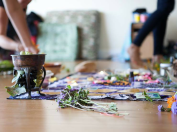
At a Red Tent Circle this spring.

I believe that these circles of women around us weave invisible nets of love that carry us when we’re weak and sing with us when we’re strong.”

–SARK, Succulent Wild Woman

Seven years ago, a small postcard at the local Unitarian Universalist church caught my eye. It was for a Cakes for the Queen of Heaven facilitator training at Eliot Chapel in St. Louis. I registered for the training and went, driving alone into an unknown neighborhood. There, I circled in ceremony and sisterhood with women I’d never met, exploring an area that was new for me, and yet that felt so right and so familiar.

I’d left my two young sons home for the day with my husband and it was the first time in what felt like a long time that I’d been on my own, as a woman and not someone’s mother. At the end of the day, each of us draped in beautiful fabric and sitting in a circle around a lovely altar covered with goddess art and symbols of personal empowerment, I looked around at the circle of women and I knew: THIS is what else there is for me. Continue reading “Restoring Ourselves to Ceremony: Red Tent Circles, by Molly”

Enemy of (H)Islam by Vanessa Rivera de la Fuente

Vanessa Rivera de la Fuente. Misogyny in IslamSo, again, you, the most holy and enlightened man of the mosque have pointed your finger at me to declare, noisy and hysterical, that I am an “Enemy of Islam.” Then you, who preaches and recites best, have gone out there slandering me, “eating my flesh,” devotedly.

“Enemy of Islam.” Well, which Islam? Is there one unique Islam? Why is your Islam, THE Islam? There are so many ways to be Muslim, or, didn’t you know?

You seem to follow the principle “you believe like me or you believe against me,” especially when the discussion is about women. In your narrow view, I am an enemy of Islam because I’m a feminist, radical, progressive woman. I am engaged in interfaith dialogue and in political struggle against discrimination instead of “being at home serving [my] husband as a good Muslimah.” Continue reading “Enemy of (H)Islam by Vanessa Rivera de la Fuente”

A Women’s Mosque: An Interfaith Space for Feminist Spirituality by Vanessa Rivera de la Fuente

Vanessa Rivera de la Fuente. A Women MosqueIf you thought that all I could do in regards to feminism and religion is challenge Patriarchy and tease around ladies and gentlemen of good temper and better reputation with my corrosive comments, this post may change your mind.

As I said in a previous article, this year I started, with a small group of people, a social project called Imaan, whose goal is centered on inter-faith dialogue and better visibility of the actions and contributions of women in Islam (and religion in general,) plus critical thinking on religion from a feminist and progressive perspective.

As part of the activities of Imaan, we are developing “A Women’s Mosque” project; an initiative that aims to create a meeting place for women and our spirituality. The idea came after a reunion to talk on Islam and inter-faith dialogue with women from different denominations. At one point in the discussion, they asked me about sex segregation in mosques, which led us to a broader reflection on the position of women in the religious space, both material and symbolic, and how uncomfortable we were with that.

We realized that, in a variety of ways, places of worship displace women. Whether they relegate us to separate rooms, or refuse to allow us to speak, limiting our participation to “strictly female” issues such as maternity, caregiving, the role of wife and – of course- clothing, these prohibitions are always from a patriarchal “canonical” perspective.

So we decided to join together to create our own space. Continue reading “A Women’s Mosque: An Interfaith Space for Feminist Spirituality by Vanessa Rivera de la Fuente”

Facing Depression by Carol P. Christ

carol mitzi sarahThe suicide death of Robin Williams prompted me to reflect again on my own experience with depression and to share my story in the hope that it can help others.

In my twenties, thirties, and forties, I suffered severe intermittent depressions. My life in those days was a series of ups and downs. When I feel in love and was having good sex, I was in love with the world and could literally feel energy radiating from my body connecting it to the world. When I was dumped, the energy retreated, and I crawled into a dark hole of despair and self-pity from which there seemed to be no escape. In the in-between times, I carried on my life with neither the highs or the lows.

In recent days, a number of people have tried to describe what depression feels like. Here is what it felt like to me.

It was as if my mind had a single track on which were repeated a few deadly words: “No one loves me. No one will ever love me. I might as well die.” I could not erase the track or jump to another one. The words repeated themselves relentlessly in my mind.

Although I usually managed to get up and go to work during those times, these words were ever present: they would take over when my mind wandered on the bus or the subway and whenever I was alone. I could go through the motions of life, but I could not connect to the wellsprings of my creativity.

In the low times, I thought often about suicide. Indeed the words “I might as well die” encouraged them. Thoughts of my mother usually stopped me.

One time I decided to slit my wrists (slightly) to see if committing suicide would hurt. When I found that it didn’t, I immediately called two friends and asked them to take me to their home for the weekend.

When I was depressed, well-meaning friends told me that “this too will pass” and assured me that “you will find someone else.” I didn’t believe them. When I was in the place of depression those words did not help at all.

In therapy I learned that depression often masks enormous anger. Sometimes I screamed out my rage at my latest boyfriend in the confines of my apartment. But when the depression had taken hold, this did not help either.

I also tried all kinds of spells and divination to see “if our love was meant to be,” “to bring him back,” and “to find my true love.” None of this worked. (Readers of this blog who have wondered why I put little faith in divination and spells have their answer: not from lack of trying!)

Just as I was coming out of my last serious bout with depression, a friend who had suffered in similar ways told me that she had resorted to anti-depressant pills. She explained to me that the pills seemed to move her mind away from her depressing thoughts. When she felt stronger, she weaned herself off of them gradually. She said that she would go back to the pills if the depression came back. I was elated to learn that there was something that could work, and I filed this information in the back of my mind.

I don’t suffer from depression any more. Yes, life has its ups and downs, and I sometimes feel lonely or under-appreciated. I never did find “the right” man. But my disappointments no longer spiral down into depression and not wanting to live.

What happened?

It was like a miracle.

When my mother died, I felt the room fill with love. From that day to this I have never doubted that there is enough love to go around and that I am loved.

Thinking about the change that “happened” in my life, I can now say that I was suffering from an “error in thought.” I had equated “being loved” with finding my “true love.” In the process I was discounting all the many other forms of love in my life—including the love of my mother and grandmothers that had sustained my childhood years, and the love of friends, family, animals, plants, and the universe itself that continued to sustain it.

Soon after that, I realized that I had compounded my suffering with a major “error in theology.” When I bemoaned my inability to find “true love,” I was blaming the universe. I was blaming the divine power.

When, years earlier, I expressed my anger at God for not “saving” women from patriarchy, I heard the words: “In God is a woman like yourself. She shares your suffering.” These words inspired my journey to the Goddess.
cave woman climbingBut I needed to take another step.

I was still angry at the universe for not giving me what I wanted and thought I needed in my life. I was angry at Goddess because I thought She could make my life better and She was not doing it!

When I finally expressed my enormous anger to Her, I learned that I had been making the “theological error” of attributing omnipotence to Goddess. However She sympathized with my suffering, She did not have the power to “send my true love to me” when I poured out my heart to Her.

“The path you are on is not easy,” She said to me, “but I will be with you all the way.” Reflecting on those words, I understood that Her power is not omnipotence, but omnipresence, not power over, but power with.

So what advice would I give to those are in the throes of depression. (I am speaking here to those who suffer as I did from “garden variety” depression, not its more serious forms.)

• I would tell them that I understand how they are feeling. I would tell them that I understand how bad it really can feel. Not: “oh come on, it’s not that bad.”

• I would recommend getting in touch with the anger and sadness that underlies depression with the help of therapy, spirituality, family, and friends. A depressed person often feels that whatever underlies depression is too horrible to be faced. Yet there is nothing that cannot be faced “with help” from someone who can listen. However, this might have to wait until the depression has lifted.

• I would encourage exercise, singing, and dancing. Sometimes moving the body can also move the mind off the fixed track that leads to depression.

• I would suggest anti-depressant drugs not for the long-term, but for their short-term power to move the mind off a fixed track.

• After the depression has lifted, I would ask if “errors in thought” led to the conclusion that life is not worth living. I would urge them to open new tracks in their minds that lead to different conclusions—while they are healthy enough and strong enough to do so. Repeating a mantra like, “my true love is me,” “life is worth living,” or “life is a gift” just might help.

• I would also ask them to examine their “theology”–even if they think they don’t have one. Feelings that “God” could make things right, but in “this particular case” chooses not to, are one of the pathways to depression.

• I would urge them to be open to miracles.

Carol is looking forward to the fall Goddess Pilgrimage to Crete–$150 discount for the next two women to sign up for the fall 2014 tour–www.goddessariadne.org.  Carol can be heard in a recent interviews on Voices of the Sacred Feminine, Goddess Alive Radio, and Voices of Women.  Carol is a founding voice in feminism and religion and Goddess spirituality. Her books include She Who Changes and Rebirth of the Goddess and with Judith Plaskow, the widely-used anthologies Womanspirit Rising and Weaving the Visions.  Follow Carol on GoddessCrete on Twitter.

 

Five Years of Untamed Spirituality and Challenging Feminism by Vanessa Rivera de la Fuente

Vanessa Rivera de la Fuente. Path to IslamIn Chilean tradition, the number five has an important meaning regarding the understanding of life. At 5, a person starts school and  life in society. At 15, we celebrate the entrance into the young adulthood. At 25, it is expected you have finished college. Age 30 is a good age to get married and by age 35 you’ve probably bought your first house. At 40, it is the perfect time to make an evaluation of your life … At 65, you leave behind all duties and enjoy the rest of the path. Each one of this milestones comes with a celebration or ritual that gathers your family and/or closest friends.

A few days ago, I entered my 5th year of Islam as my spiritual path. Following the tradition, I want to make an honest assessment of my first period as a Muslim- naming the Good, the Bad and the Ugly- but also expressing my Hopes, in the sincere feeling that the best is yet to come. Continue reading “Five Years of Untamed Spirituality and Challenging Feminism by Vanessa Rivera de la Fuente”