

A Reflection
Two days ago, I climbed a nearby mountain on a quest to check on some wildflowers that have been disappearing. I noted the leaves in the hardwood forest were crackling under my feet and the two small brooks were dry. When I reached my destination, I felt discouraged. Not again. A whole series of trees had been cut to open a view that made no sense. Across the horizon some trees, but no mountains or water ‘views’ although I was standing on a mountain ledge (and just how many mountain views do we need here in the mountains anyway)? After perusing the area with keen attention, I was convinced. The wildflower I was seeking had been burned to a crisp under a solstice sun after the protective trees were cut, and I had to accept that this jewel was gone for good. Worst of all this travesty occurred in what was supposed to be a protected “recreational community forest.” (translation: human centered – nature is just being used).
During the last month we have had two torrential rains and many ongoing cloudy days with ongoing drizzle. In April we had snow, in May drizzle, and then during June two heavy rains and more drizzle. Even though flooded rivers and streams took precious topsoil to the ocean, the excess water produced a magnificent late spring greening. After years of drought the trees are experiencing some relief, probably not enough to help insect/dry cracked and weakened trees or the shrinking the water table but I am grateful all the same, soaking in every drop (though it took one of my bridges out and flooded my cellar again). Everywhere I go complaints about rain drone on. Trees, wild plants, and animals are invisible (unless we are killing them). In the age of the Anthropocene only humans (or robots) matter. Since most of the cloudy days only produce drizzle, it doesn’t change the water level in rivers or streams that are still on the low side. Sadly, this trend is probably permanent.
Today I visited my local land trust taking deep pleasure from my walk down a shaded path where I could listen to the warblers I sometimes miss at home, especially because so many have raised their young and will not be nesting again this season. Many are still singing there. One of the adjustments I have made is accepting that the birds I love are not returning in the numbers that once graced my yard. Instead, I focus my attention on feeling joy at the sound of what’s left of nature’s symphony.
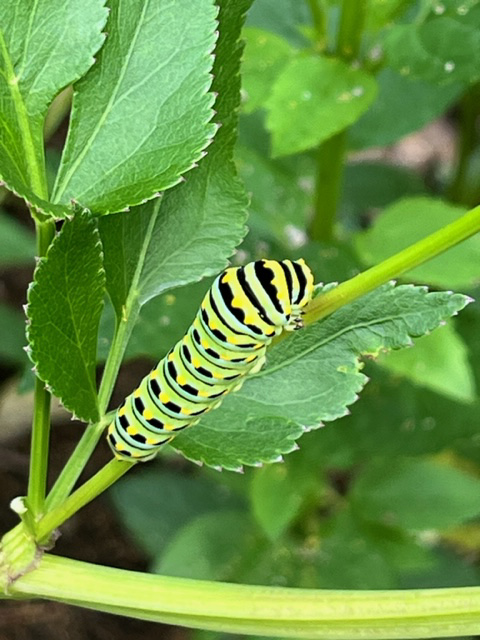
My last stop at the land trust was the Pollinator Garden that has at least doubled in size since last year. Here I saw some bedraggled bee balm, allium, speedwell, and few other blooms. The highlight was a couple of black swallowtail caterpillars – such gorgeous creatures! One woman was busy tying up milkweed that did not grow wild around here. All I could think of was my milkweed meadow soon to come into its own untouched by me; blossoms look like puffballs and leaves are bright green. I was pleased to see a stalk of water hemlock that was covered with tiny bees, but otherwise not a lot of pollinators were visible even at high noon with heat and a hazy sun – I have had so many pollinators at home because they love spring flowers, my favorites, so I am doing my part too!
I hardly recognized the changes! So many annuals, bushes etc were being added. An unfinished plastic pond was also a new addition, though what it will look like when the surrounding area is finished is hard for me to imagine. I am told that some kind of special fountain will attract many more birds. Oddly, the Androscoggin River lays just beyond the gorgeous wet meadow and field. And just below the garden beavers have been working on their dam so there is plenty of water for all kinds of birds. The sound of warblers and bull frogs serenade me every time I am there.
I will have to wait to see what the summer brings to see if the new garden will be as beautiful as the one before. For me in some way the integrity of the space feel violated in some way I can’t really describe. Is bigger really better?
When the conversation turned to rain there were complaints. The garden needed sun. Of course, from a gardener’s view complaints about lack of sun were more than justified. And because this garden has access to town water lack of rain was not a problem. But like every other complaint I have heard elsewhere, not one person mentioned climate change as an issue with respect to the weather… I think the most destructive aspect of the age of the Anthropocene from my point of view is its inability to see beyond the smallest picture.
I too have been a gardener my entire life, so I understood the frustration. I made a choice to stop tending a summer garden as drought began peaking in this area because I have a dug well and limited access to water. But I also noted many other disturbing changes including escalating destructive insects, and extremes in weather. I decided not to fight what was happening and let go. Besides, I loved the forests and needed to spend more time there; something I could not do as a full – time gardener.
Except for spring wildflower gardens like my own that thrive in light shade and love rain, requiring little water during dry spells and scant attention (except deep appreciation), my plants are almost finished blooming when cultivated flowers and vegetable gardens are just beginning. No one mentioned our changing climate, fueled by the raging Canadian boreal forest fires that are already creating smoke that is polluting our already compromised air in Maine on certain days as part of the current problem. I come away from these conversations with the distinct impression that global thinking and action aren’t getting much attention. Hopefully I am wrong.
Part 2, tomorrow
Discover more from Feminism and Religion
Subscribe to get the latest posts sent to your email.

 Feminism and Religion
Sara,
It is really, really sad to witness the extinctions going on all around us and face so much denial about it from so many corners. There are people who are working to renovate and rewild damaged lands but they are spread out and not that easy to find. I recently learned about John Liu and the vision he helped birth of groups of people coming together to camp and restore land badly damaged by human activity. But not many of these projects are going on in the U.S. – sadly. He reiterates that the restoration work being done is not coming from institutions but from the people. Maybe that’s the problem with the Pollinator Garden – it’s being run institutionally so their vision is not what we might like to see.
I had a few gorgeous black swallowtail butterflies, loving the parsley in my garden last year so I planted more this year hoping to attract more of them. Butterflies and birds always lift my spirits. Such a sad world it will be if we lose them completely.
Thanks for sharing the beauty you found in your walk.
LikeLike
Yes, Judith that is the problem… It’s not that there aren’t dedicated people like us around – there are small groups everywhere – but this is no longer enough – we need a HUGE and rapid REVERSAL to occur on a global level and I don’t see that happening – do you?
LikeLike