

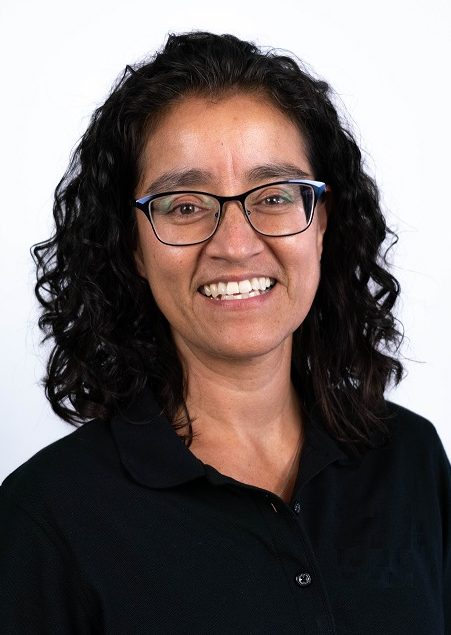
This was originally posted on June 26, 2013 and continues to be a story I love retelling!
“I did not know to recognize you as individuals when I bought you, but I know to recognize you as individuals now…”
I had been a vegetarian, and sometimes pescatarian, for more than 10 years before becoming vegan. Despite the length of my vegetarianism, in all that time I had not been inclined to go vegan. First, I really didn’t know too much about veganism and only began meeting a few vegans about five or six years ago here in Boston, none of whom had shared a compelling enough reason for their choice (at least not compelling to me). Further, I had no imagination for life without cheese or Cherry Garcia ice cream(!), and so I happily continued with my vegetarian ways. Then enters Carol Adams…
In a teleconference that WATER had with Carol Adams on March 14, 2012 (Women’s Alliance for Theology, Ethics and Ritual), the beauty of her veganism moved me to a new understanding of my food choices. I listened to the WATER audio recording some months after the actual event (these teleconference audio recordings are a great resource you should all access), and although I had been familiar with some of her work and had heard her speak before, I had not heard her talk about the compassion element of veganism. Her emphasis on increasing compassion, which I witnessed in action during her conversation with one of the listeners, was what moved me to my new practice.
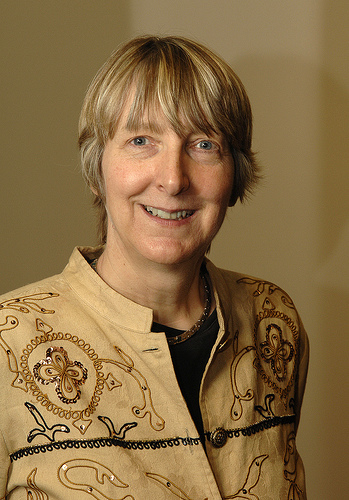
In the teleconference, Carol began by delineating three points of connection between vegetarianism and feminisms. First, she points out that meat eating is central to the social and cultural construction of masculine identity in a patriarchal framework (see chapter one of The Sexual Politics of Meat). Secondly, she explains how meat eating makes animals absent referents in the same way patriarchy makes women absent referents. Both are made into consumable products that don’t have rights over their own bodies. We literally make animals into products by killing them and transforming their body parts into ‘pork chops, chicken wings, bacon, hamburger, sirloin, etc.,’ and likewise make women visually consumable through media and popular culture, and sexually consumable through sexual slavery. These mechanisms represent a structure of overlapping absent referents that reinforce the hierarchical structure and domination core of patriarchy.
Then in her third point Carol highlights the value of all of our existences, animals included, and our mutual interconnection in the web of life. She brings a compassionate viewpoint to our eating practices and helps raise the question of how it is that we could be eating other animals. Carol explains that compassion is bringing attentive love to our lives and the lives of all others and being able to imaginatively respond to oppression, including the oppression of animals. If we were willing to be attentive to animals’ experiences and asked them the simple question, “what are you going through?” eating animals and the food produced at their expense would be a lot more difficult. For Adams, how and what we eat is a practice of extending compassion, of being a human willing to hear the answer of what animals are going through and caring about it. This is what got me, this emphasis, this desire to be someone who extends compassion, even to non-human animals, and takes seriously the injunction that all oppressions are interconnected and bad for us all. So, Carol states, “Being vegan is a spiritual practice.”

And here is what did it for me: Around minute 34 of the teleconference, Carol and a Franciscan nun on the call have a beautiful and transformative conversation. The sister expresses her disbelief at the fact that even though she and her other sisters are vegetarians it had not occurred to them to become vegans, as St. Francis was known to be an animal lover. Nonetheless, she is now moved to become vegan and will be having a conversation with her sisters about it; her only problem are the 6 chicken’s wings that are in her freezer; “I guess I better eat them first before I become vegan,” she says. Carol’s response to her in that moment changed everything for me. After her initial reaction of “no, no, nooo,” and then quickly affirming that everyone has to make their own decision, Carol suggests that perhaps the sister could bury the chicken’s wings and in that way begin to incorporate the idea of the chicken’s being-ness; that during the burial the sister can say, “I did not know to recognize you as individuals when I bought you, but I know to recognize you as individuals now…” This was the moment that brought me to tears and sealed the deal for me. In that moment I knew that I wanted to practice being such a person. I wanted to be a person inclined to such beautiful compassion, compassion extended even to the chicken and its wings; and in that very moment I chose to adopt veganism as a spiritual practice.
I know the issues around food are complicated. I know we don’t all have the same access and choices, and that the reality of our contexts impact our possibilities. We have had rich discussions about these complexities here on FAR, see Amy Levin’s post, for example. At the end of the day, we all need to make our own choices, and we don’t need to judge one another for them; the point is not judgment, but the extending of compassion. Carol states that “stopping our eating of animals liberates us into new relationships,” to compassionate ones. I have experienced this to be true and I hope to continue to do so as I grow in my practice of veganism.
Thanks to WATER’s teleconference with Carol Adams, not only did I learn a compelling reason for being vegan, I encountered a woman whose very being was so compelling, so beautiful, I couldn’t help but want to follow. Cheese and Cherry Garcia are just not that appealing anymore!
Discover more from Feminism and Religion
Subscribe to get the latest posts sent to your email.

 Feminism and Religion
I love this post. This is what’s at the core, I believe. ”…the point is not judgment, but the extending of compassion. Carol [Adams] states that “stopping our eating of animals liberates us into new relationships,” to compassionate ones.” I am currently reading BRAIDING SWEETGRASS by Robin Kimmerer. Robin, as far as I can tell, is not vegan. What I find compelling is that she addresses the fact that no matter what we (humans) eat, we are destroying life. Robin, a botanist and poet, using her Native American heritage, shows us how to be mindful and respectful of that fact. So, she talks about “asking permission” and expressing gratitude from the vegetation she uses to sustain her own life–always mindful to “take only what you need.” I’ve always found it strange that we (in the US) don’t eat cats and dogs, yet cows, sheep, and deer are considered culinary delights.
LikeLike
Oh my! – I wrote my response and then turned to yours! Robin Wall Kimmerer is not a vegan or vegetarian… What she does in Braiding Sweetgrass is to teach us about compassion for all beings. When I first read her book just after it came out I was overjoyed because it seemed to me that she reached into the deep heart of what matters.
LikeLiked by 1 person
This is an excerpt from my FAR post in early 2014 where I speak about compassion and quote Carol Adams. ”In her book, The Sexual Politics of Meat A Feminist Vegetarian Critical Theory, Carol writes, “Because I see the oppression of women and the other animals as interdependent, I am dismayed by the failure of feminists to recognize the gender issues embedded in the eating of animals” (p. 26). She speaks about the “texts of meat,” explaining that production of meat happens within a political-cultural context. “…[W]e generally fail to see the social meanings that have actually predetermined the personal meaning [of eating meat].” We have become inured to the “patriarchal nature of our meat-advocating cultural discourse.” We’ve assimilated the message that people SHOULD eat animals because that’s good for us. Animals become “consumable bodies” and rarely is this cultural text closely examined. The words “subdue” and “dominion” as they unfold within fixed gender roles nicely envelop her work. Patriarchy as a social system where power-over is paramount subdues and dominates women and other animals, assuring us that it all is really for our own good.”
LikeLike
Oh, I love this post so much! Extending compassion – this kind of thinking brings out the very best of who we are as humans. And WOMEN – we take the lead!!!
“I did not know to recognize you as individuals when I bought you, but I know to recognize you as individuals now…”
OH…
I absolutely love this personal story of awakening to the sanctity of animal life.
And I learned the meaning of a new word too!
I grew up as a meat eater, and ANIMAL lover… by my mid – twenties I started to feel very uncomfortable about eating meat so I ate less and less…Then I took a philosophy course. The professor shocked me. Was becoming vegetarian the answer? Wasn’t I still eating living things? By then I had already developed deep personal relationships with plants both inside and out – I already knew they responded to being loved and cared about. If I really wanted to get away from killing things then would I be wiling to take a pill to get the nutrients I needed instead of eating any more food he asked? I loved to cook. I loved food. No, I thought. For me answering this question honestly was the source of my harsh awakening. No matter what I ate I was killing living beings…I finished that class with a burning question – how do I make peace with being an omnivore? I held that question in my heart. By then I had lost my taste for meat. It was ten years before I was finally able to answer my question.
My study of Indigenous peoples taught me that what I ate was less important than how I ate food.
The critical thing was to express my GRATITUDE to the beings whose lives were sacrificed for me to live.. to be mindful… to stay aware.
And so I have tried to live ever since. I say ‘try’ because often I forget. I rarely eat meat, but my dogs do because they are carnivores. I do eat fish. I see myself as a participant in the Circle of Life where we must kill living beings from fungi, plants, or animals to live regardless of who we are.
I am aware that most non Indigenous people don’t have the kind of relationship I do with plants.
As you say Xochitl the issues around food are complex and it is so important not to make judgements. What is important is to extend our compassion outward into the world however we can. Thank you so much for writing this post. I hope to see it again and again on FAR. Some of our posts are timeless.
LikeLiked by 1 person
A very thought-provoking and elegantly written post! How to eat responsibly and compassionately has always been a question for me. I became a vegetarian about 40 years ago for better health, but for me, among the most compelling reasons, whether to be vegetarian or vegan, now is the effect of growing livestock for meat on climate change. The carbon footprint of meat is far greater than plants. And, of course, climate change is an immensely feminist issue. I think it just goes to show how much all these issues are related. Living compassionately in the world is complex, but once you find even one, small way to live more compassionately, what you do has an effect often far beyond what you originally thought.
LikeLiked by 1 person