

Excerpts in two parts adapted from My Life as a Prayer: A Multifaith Memoir
(Note: Both excerpts have been edited for brevity)
The Mothers
When I was fourteen years old, I had a dream. I was pregnant and riding a donkey through a landscape, all golds and browns, hills crowned with ancient trees. I arrived at a monastery where monks with brown hands helped deliver my baby. From that time on, I longed to have a child.
My first pregnancy ended in miscarriage. I was devastated. Not only had I lost my longed-for baby, I had always taken my body for granted. Despite illnesses and injuries, I had assumed my will and my body’s health and strength were one. Now I knew in my own flesh that I was not in control; doing all the right things (thinking all the right thoughts) could not save me from sorrow. I sat in my own small version of Job’s ash heap.
Over the next few years, I heard many stories in sympathetic murmurs from older women. I learned that one in four pregnancies (maybe more) end in miscarriage. The medical term is spontaneous abortion. Many miscarriages do not complete themselves. Mine didn’t. To prevent potentially life-threatening infection, I had to have dilation and curettage, a procedure that in this post Roe v Wade era, will be or is illegal in many states. Although reproductive rights were controversial then (forty years ago), I could not have foreseen a time when a woman could be convicted of manslaughter for miscarrying, something that has happened more than once in the 2020s.
But I knew something was wrong, something was missing. Though by that time I had joined a Quaker Meeting, I remember leafing through the pages of The Book of Common Prayer looking for a ritual to speak to my condition. Its pastoral offices include “Thanksgiving for the Birth or Adoption of a Child” but nothing about loss of a pregnancy through miscarriage or stillbirth.
During my childbearing years, I experienced another subtler but more bewildering loss.
“You can’t write and have children. You will have to choose. You cannot do both.”
I was at lunch with Miss Sang [an adored older parishioner from my father’s church], and her best friend Eileen, a former army nurse and mother of two adult children. I was taken aback both by Eileen’s pronouncement and the anger of a woman I had previously experienced as affable and easy-going. I don’t remember if I argued. I don’t remember whether Miss Sang agreed with her, but I do know she did not defend me, perhaps because she had not raised a child herself. Yet she was my fairy godmother. That is how I thought of her. I had begun writing The Wild Mother in Miss Sang’s home. I missed her championship keenly.
Other older women added their voices to Eileen’s. When I was pregnant with my son, a woman from Quaker Meeting called to plead with me to give up writing, as her own mother had not, apparently causing great harm to her children—and lasting bitterness.
In my generation, many women were raising children and working outside the home out of necessity as well as choice. Was it the choice that was the problem, that I wanted to write, though so far I had no publisher? I don’t recall anyone saying, “you will have to quit your job at High Valley [my mother-in-law’s school] when you have children.” Nor had anyone questioned the effect of my writing on the stepdaughter I had been helping to raise since she was eight years old.
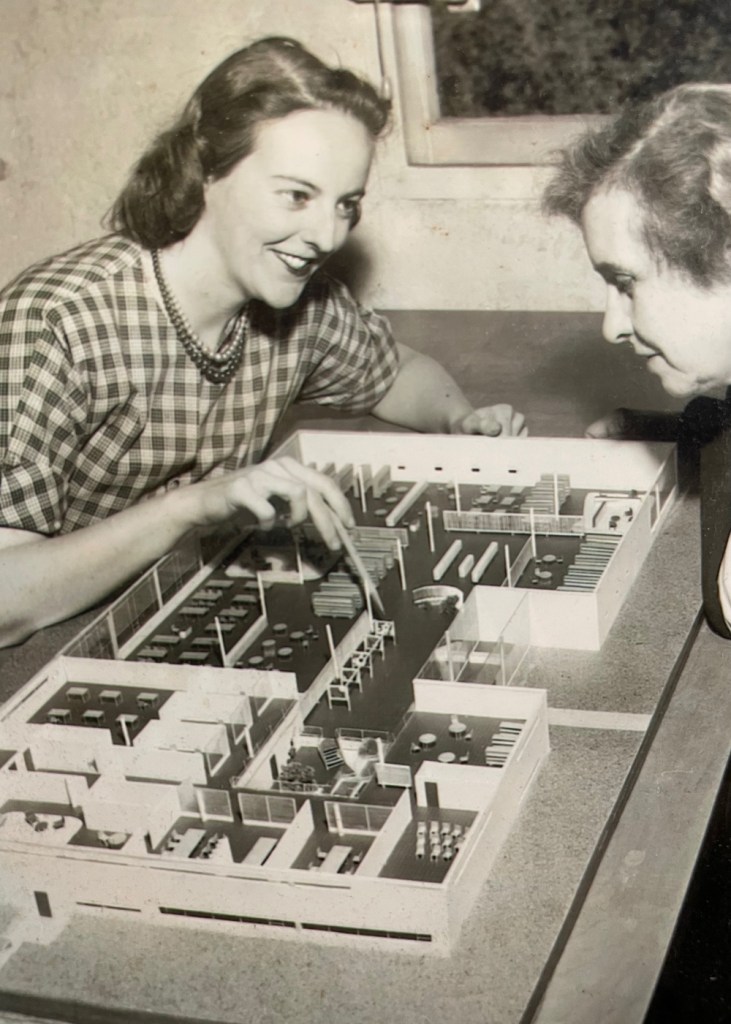
I remembered the women of my childhood [1950s, 60s]; only one divorced mother worked outside the home, i.e. for pay. The rest of them, as far as I could see, ran everything: the rummage sale, the altar guild, the portion supper, the needle guild, the garden club, the PTA. My mother volunteered her skills as an architect to help design the new centralized public school. They were not paid, so however hard they worked, they were not…working. Their families came first; their families defined them. Anything else, they had given up, as my grandmother had given up her career as a concert pianist, as my mother had given up her desire not only to be an architect but an artist.
You cannot write and have children. You have to choose.
You cannot bring a life into the world and have a life of your own.
You have to choose.
You have to choose between a child’s life and your own.
And if you refuse to choose, you must be a bad mother.
There are plenty of rational and anecdotal arguments I could make, and probably did make, to insist that I did not have to make this choice. But the mothers had spoken. And no matter what I thought, their words hit hard, below the belt. Moreover, the mothers, individually and collectively, had once been allies of my writing, contradicting the maledictions of my father, and his fathers before him….
[During my second full-term pregnancy], my own mother made her most direct pronouncement. [Note: I had resumed writing a couple of mornings a week when my son was four months old.]
“I don’t see how you can go on writing when you have two children.”
I understood, even then, how unbearable my choice to write and be a mother must have been for her, how it called her whole life into question. Yet I felt betrayed and bereft. Because of my choice, or refusal to choose, I had, in many ways, lost my mother.
Part 2 tomorrow: The Goddess Finds me.
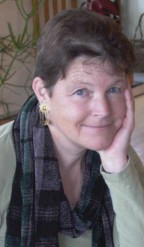
BIO: ELIZABETH CUNNINGHAM My Life is a Prayer: A Multifaith Memoir is Elizabeth Cunningham’s nonfiction debut. Best known for The Maeve Chronicles, featuring a Celtic Magdalen, Elizabeth is the author numerous other novels including The Return of the Goddess and The Wild Mother. She lives in the valley of the Mahicantuck (the river that flows both ways) on unceded land that was home to the Esopus Tribe of the Lenape. She is at work on a fairytale novel. For more visit her website: https://elizabethcunninghamwrites.com/
Discover more from Feminism and Religion
Subscribe to get the latest posts sent to your email.

 Feminism and Religion
Oh, how lovely to read this post Elizabeth. I have missed you so much… your memoir intrigues me, a must read for the future! Recalling my childhood, my mother was an artist that ended up being a mother and hated the job – She was always angry and scary and only now do I understand the source of some of that rage. She was stuck between two worlds. Women STILL have to overcome such great odds to create…it’s fine to work – but create endeavors are not supported.. in some ways I was more fortunate because I became a mother before I became a person and didn’t develop myself, my professional or creative life until my children were grown – a different kind of split which I hardly recommend. I think it is so important to support women who choose to do both because so many will not – and now with all the=is repressive woman stuff happening things are worse. Thank you! Hope that you are well…I love your dream!
LikeLike
Thank you again, Sara. Apologies for misspelling!
LikeLiked by 1 person
THANK YOU!!!!
LikeLike
Thank you so much, Sarah. Yes, so many of our mothers had rage expressed or repressed. My mother’s rage–which I felt deeply when I wrote from her point of view on a novel long after she had died, took the form of chronic depression.
I am so glad you persevered against all sorts of odds to become the writer you are and the passionate witness and advocate for earth and all the beautiful, mysterious and precarious forms of life that too many people don’t see. I do keep reading daily posts and always look forward to yours.
LikeLiked by 1 person
To everyone, I am still having trouble posting comments. Just had to go through creating a new password. Relieved that it worked at least once. I will respond to comments as I can. Thanks again for yours, Sara! My apologies for the “h”.
LikeLiked by 1 person
Thank you Elizabeth for still be ing here! Oh we do need you and I need to read that book as soon as I can – I too am having trouble reaching FARS’s site and my own as well – is anyone else having this problem?
LikeLike
I’m finding the connection a bit sketchy off and on. Is Mercury in Retrograde…again!? Thank you for your kind words, Sara!
LikeLiked by 1 person
Hi Elizabeth. Thanks for sharing this. I read it 3 times. Your story hits me to the core.
I grew up in an Evangelical Christian household with a rage-aholic dad who didn’t want my mother to work. So the compromise was her doing daycare. My mom was a devout christian til the day she died. Yet she found no help in the church. Athough when she was dying she found an online prayer group of women that brought her comfort.
When I was growing up she struggled with migraines and depression. I witnessed her pain as a child. My heart breaks for the people that try to find help in the church structure and are dismissed or admonished.
I made a conscious choice not to have children. I believed once I had a child my life would not be my own. That I would live first for the child and not for myself. I was never ready to do that. Your story brings enlightenment of how much patriarchal systems are so deeply immersed our psyches…in me.
Right now I am 52 years old in the midst of unpacking my religious upbringing. I was born a nature loving pagan. In the church’s eyes a witch. I take that as a compliment. My problem now is I don’t know what to do with Jesus. I believe there was a man who walked upon Earth to help those who were considered “unclean”. I guess I believe in christ consciousness without all the baggage. It’s difficult because so much of the bible has hurt me accept for the man who called out the hypocrisies of the times.
I look forward to your next post. Thank you for writing.
LikeLike
Michelle, thank you so much for reading and for sharing your reflections and story. I was also born a nature-loving pagan and had to find the way to embrace that core of myself. Tomorrow’s post tells some of that story. Much of my life and my writing life has been taken up with what to do with that man Jesus. (I also had a rage-oholic and alcoholic father, and didn’t want anything to do with God the Father; in My Life as a Prayer I tell the story of the deicidal plot I hatched as a three-year-old. I spent 20 years of my adult life writing the Maeve chronicles. Maeve, my Celtic Magdalen, is a pagan who never converts, who is never a follower, but who loves that man and is also not afraid to call him out. She was especially furious when he blasted the fig tree. She restored it to life and then threw figs at him in the Temple Porticoes while he was preaching. I think you would find a kindred spirit in Maeve. Thanks again for commenting!
LikeLiked by 1 person
Like so many others, this post brought back memories of my mother, who gave up both singing and nursing careers to be a wife and mother. I remember once when I had one of my first poems published I found my mother with the poem in her hand, listening to the one recording she made, and crying. Later, after my sister and I were in high school, she learned to be a pilot and flying became her passion. But, even in my own time, in 1975 when I went to my high school counselor to get help in finding a college where I could pursue journalism, the male counselor just told me to learn to type so I could be a secretary (a friend’s father later showed my friend and I how to research colleges and she got an engineering degree and I got a journalism degree). What is it about mothers pursuing creative careers that others find so threatening? Maybe its because when we pursue a creative career we will have our own thoughts and opinions, and mothers with their own thoughts and opinions are scary to others because then we might teach our children to also think and opine for themselves? I’m so glad you persisted and followed your passion for writing, as your books are definitely among my favorites! (And I have read your memoirs and adored every page! I highly recommend it to anyone who hasn’t yet read it!)
LikeLike
Thank you so much for your comment, Carolyn, and thank you for reading the book. Your story and your mother’s story are poignant and inspiring. Thank you–and your mother–for persisting and finding a way to fulfill your creative, adventurous natures. Your comment, Sara’s and Michelle’s are a reminder that we must persist. The struggles and choices our mother’s faced, and we faced, still call for courage and ingenuity.
LikeLike
my father told me I should become a secretary -why do we have to live the same male dominated story? because it is still in control
LikeLike
Elizabeth, I enjoyed your post and resonated with it like Sara and Carolyn before me. My mother worked at home as the secretary and bookkeeper of my father’s veterinary business. It took me a long time to realize that I had emulated her career path, because I was able to work at home (mostly, except when I was in the classroom to teach my university courses). It was the best solution for being a mom and having work “outside the home.” But it meant that I was on the “mommy track,” so it was only possible because I had a spouse who made enough money to support us. I remember once, though, when I was beginning the writing part of my life, when my mother told me I should go back to school and become a cetologist (one of my first projects was about the birth of Baby Shamu at Sea World). She believed that I should get a degree rather than write. I’ve always believed that she said that because she was a writer manqué. She always wanted to write, but never did.
LikeLike
Thank you reading and for sharing some of your story, Nancy. So striking that your mother encouraged a degree in cetology, though in the context of both your lives it makes sense. An advanced degree in anything may seem safer and more worthy of respect to a parent than the riskiness of writing. I often think of Emily Dickinson’s declaration about her work, “this is my letter to the world that never wrote to me.” Interesting to ponder the difference between our parents’ urge to protect us or prevent us from pursuing their own disowned dreams.
LikeLiked by 1 person
Oh Emily, I think of her all the time…
LikeLike
I had numerous miscarriages. I almost lost my only child, my son, who is now 31 years old. When he was 5, I miscarried twins & almost died. I remember being in the ER & the doctor wanting to know if I was suicidal (I am bipolar). I shot back, “If I was suicidal, I would have stayed home & bled to death!” I didn’t add, “You moron!” although I wanted to.
I live in NY & I did then but I wonder … if that happened now & if I lived in a red state, would I be prosecuted for murder? It’s a chilling thought. I wanted those children. I wanted ALL my children, even the ones I chose to abort. The idiots who have made abortion illegal don’t ever consider that.
LikeLike
Thanks for sharing your experience. I agree, chilling to realize how much hard won ground we’ve recently lost, are losing. Here is to telling our lived truth.
LikeLiked by 1 person