

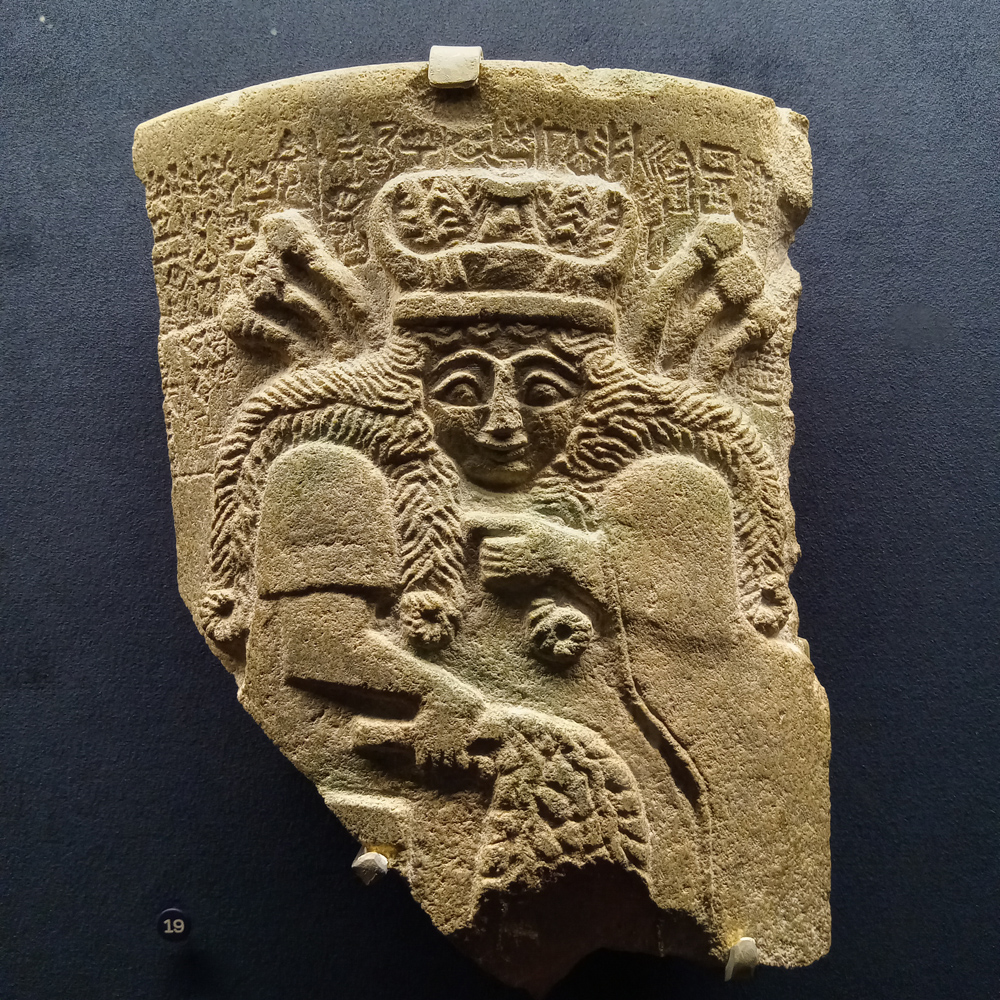
Women’s History Month brings our attention to women of the present and the recent past. What about those women from our distant past? Those whose great stories go back thousands of years?
Scholars are discovering more and more evidence of powerful women in pre-history. Here is a snippet of the true herstory of my ancestral grandmothers.
Every day there is more research showing that women played leadership roles in the earliest large-scale civilizations of Western Asia, North Africa and Europe. We know that these areas had international trade and exchange of ideas going back at least 5,000 years. Maybe more.
It was common in those times for people, including women, to travel to educational centers to learn folk technologies, science and traditional medicine. Wisdom and skills were also passed on by generations of women, from the beginning of time. In her iconic book, Judy Grahn helps us to understand how the reproductive cycles of women led to math, astronomy, textiles, cultural practices and my favorite science, gynecology.
The first female physician to be widely accepted by historians was Peseshet, “lady overseer of the female physicians” in Egypt, over 4000 years ago. Some of the first medical writings in both Egypt and Mesopotamia were about midwifery and gynecology, which may have been humanity’s first science. When Hippocrates created the first large scale compilation of medicine, he had access to over 2,000 years’ worth of international wisdom sharing.
Scholars are re-thinking theories which assume that men have always been intellectually superior, more powerful or dominant than women. This controversial topic exposes some of society’s most deep-seated expectations about womanhood, power, intelligence, and history. When the first throne of Europe was found at Knossos, Crete, it was assumed to be the king’s throne. Then, paintings and other evidence surfaced which clearly pointed to the throne to belonging to a woman. Why is it so hard for us to imagine that the palace might have been ruled by a queen?
A perfect example is my favorite author, the great but little-known Enheduanna of Sumer, around 2,500 BC. She wrote poetry, religious texts, autobiography and political analysis. Her works helped to create cultural and religious cohesion in her Akkadian family’s growing empire. Enheduanna was so unique in her writing skills that her works were used hundreds of years later in the scribal schools in nearby Babylon.
Reading Enheduanna’s writings, we come to understand the complicated role of a woman who was a political and religious leader in Mesopotamia, almost 5 thousand years ago. She wrote of her devotion to the Goddess Inanna, who was then the primary divinity of the Sumerian Civilization. She also described her assault by a political enemy and having been banished and then reinstated as high priestess.
Enheduanna’s father was known as Sargon the Great. He led the Akkadian invasion coming from the north into Sumer. At that time, it was common for male warriors to “marry” the Queens of the people they have conquered. It is possible that Enheduanna’s mother was also a high priestess or queen, whose marriage was part of a political alliance to keep peace.
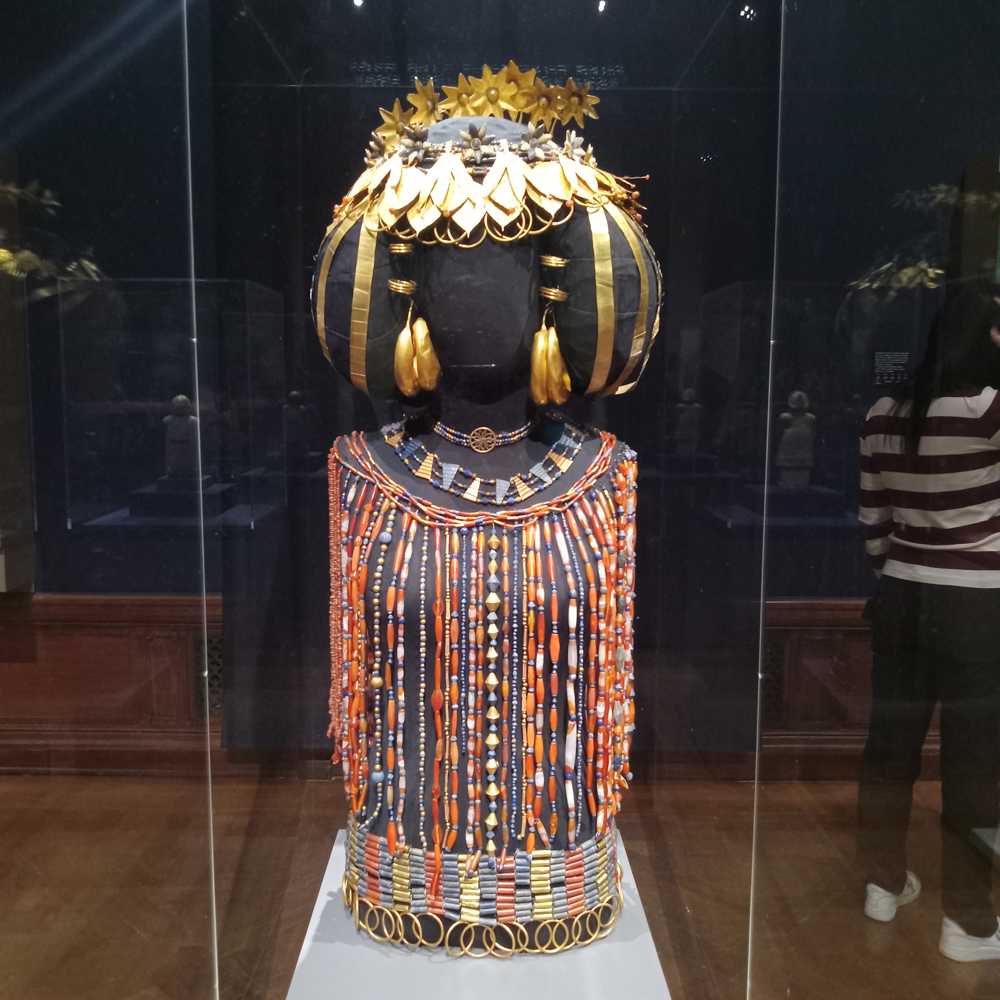
This part of the story has yet to be uncovered, however we do know that a few hundred years earlier, the same lands were ruled by another powerful woman. Her name was Queen Puabi, and she was buried in magnificent jewelry made from exotic stones, and accompanied in death by her servants and soldiers.
In many cases throughout history, marriage was used as a political function. To forge alliances, such as the marriage of Alexander of Macedon to Roxana of Bactria. Or to break them, as did Helen when she chose to go to Troy. In ancient civilizations where the queen represented the land and its inhabitants, any power held by the king was due entirely to the woman he was married to. Could that be the reason that the Greeks fought so hard to get Helen back?
Prehistoric queens may have chosen to only keep their husbands or consorts temporarily, disposing of them after limited periods of time. The ritual mourning of the king was a cultural practice which was reflected in the mythology of Cybele, Isis and Aphrodite. Stories of these goddesses, and many others, included the tragic loss of their lovers, and sometimes sons, followed by a period of intense mourning. These stories emphasized the immortality and divine power of the female.
From the beginning of history, Goddesses, or the Queens that represented them, have displayed the extent of their power with stories of violence, omnipotence, intelligence and creation. Just as Kali still does in India, ancient Western versions of the divine woman included weapon-heavy goddesses like Ishtar and Athena. Goddesses could outsmart men and control forces of nature, like Inanna, Queen of the Heavens. They could hunt, like Artemis, or create a whole world, like Gaia.
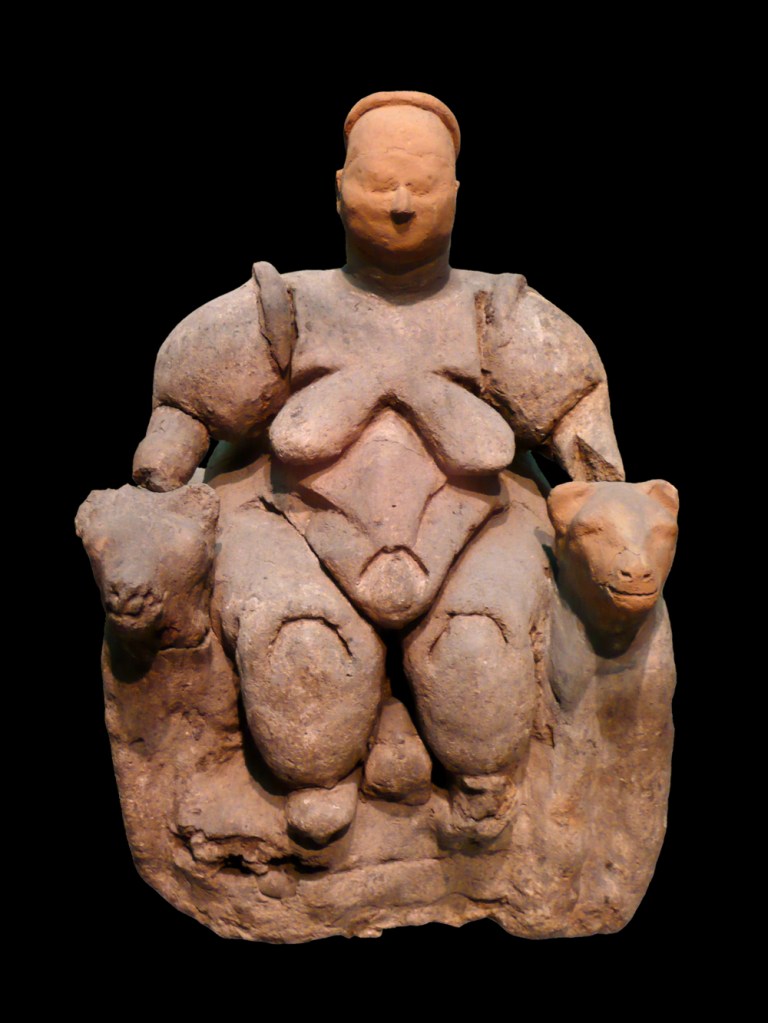
Before the famous pantheon of 12 Gods and Goddesses led by Zeus, there were parts of Greece where organized religious activities revolved primarily around the divine feminine. In fact, many of Zeus’ aggressive “romances” were used to convince the locals that their Goddess or her representative Priestess Queen, were no longer all-powerful. This ancient propaganda contributed to the creation of a culture of rape, domination and colonization that still exists today.
This re-writing of gender relations paved the way for the Classical era in Greece, with its well-documented tendency towards male domination. Women who fought to defend their temples and their egalitarian ways of life existed on all sides of Greece at the time. Now collectively known as Amazons, they were grouped together by their enemies and written off as “mythical”. They, like Enheduanna 2,000 years before them, were fighting for their political autonomy and, of course, to defend their Goddesses.
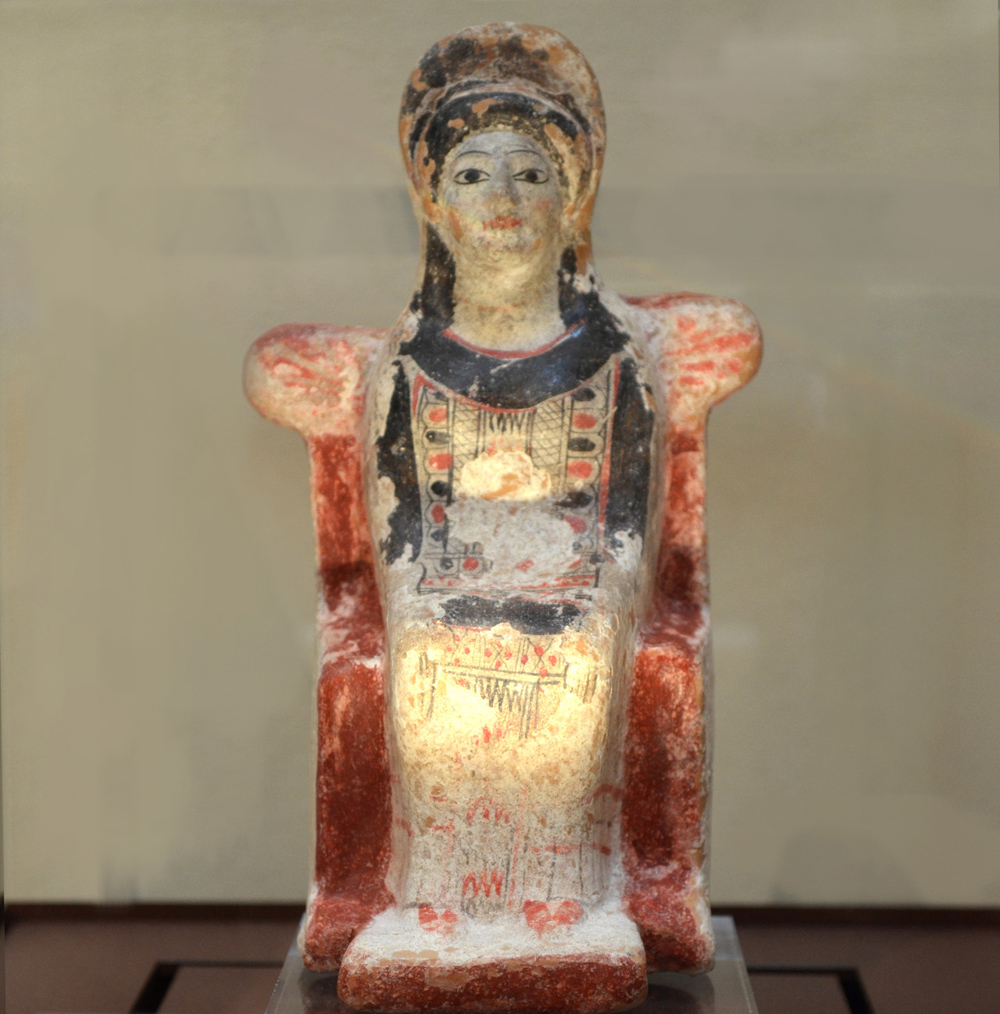
These powerful women and their divine counterparts have been almost completely erased from historical accounts. For many today, the idea that God would be a feminine entity is impossible. However, in Ancient Mirrors of Womanhood, Merlin Stone describes a hundred different goddesses from around the world. Some of these goddesses are still worshipped and others have become woven into other stories, artwork, breadmaking, dances and songs.
In the ancient world, being in the favor of the gods or goddesses was important for rulers. So it is not surprising that as male-dominated culture spread, so did the perception of a dominant male god, who eventually become the God we now associate with that title.
For many of us, it is difficult to re-imagine the “natural” role of women in society, or to consider whether women face more subjugation now or in pre-historic times. Looking deeper into the past will bring new opportunities to reconsider our perspective and be open to the true potential of empowered women.
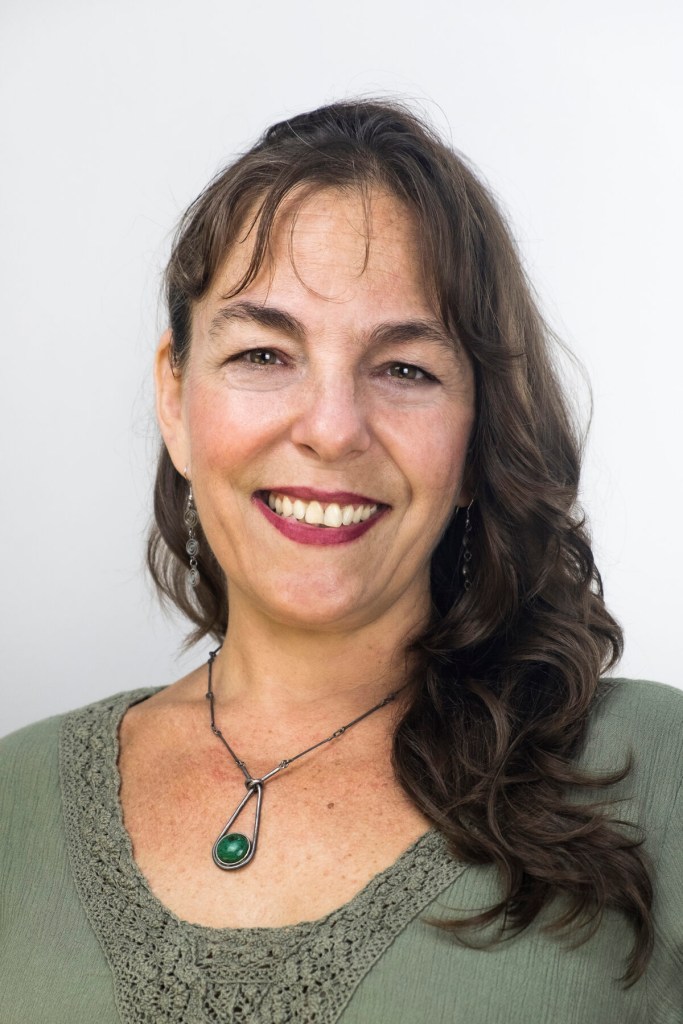
BIO: Rachel Thomas is a writer, teacher, consultant & health coach at Ancient Wellness Tools. She travels internationally doing wellness workshops, ceremonies and retreats for women.
Discover more from Feminism and Religion
Subscribe to get the latest posts sent to your email.
 Feminism and Religion
Although your essay is interesting and familiar to some of us I can’t help feeling that we HAVE to get the focus on what is happening to us NOW.
LikeLiked by 1 person
I don’t know Sara, I think both are important. When we know and understand our feminist history, it gives us a foundation on which to build our present. I think without that, it would be even harder than it already is.
LikeLiked by 4 people
I didn’t say that only one was important – what I am saying is that I think we need to be focusing on what is happening now to women – obviously it’s important to keep a both and perspective but it worries me that so much emphasis is put on the past.
LikeLiked by 1 person
Thank you for this post with such clear examples of powerful women throughout history, and there are so many more all over the globe and in every time period. So much history hidden from all of us for so many millennia! I think of how my own struggles as a young woman would have been made so much easier if this knowledge was current then, if I had had so many models of what a strong, creative, woman leader could be.
LikeLiked by 2 people
Thank you for your comments! My contribution is centered on helping women to connect with their powerful ancestry and awaken their DNA memories, to give us extra strength moving forward. From early childhood, many of us are exposed to the misogynist propaganda of ancient mythology, which normalizes rape and domination. Some of these stories have been used to justify oppression for millennium and are still being taught to our children at school. By connecting to the stories that came before that propaganda, we open ourselves to rewrite our own stories for future generations.
LikeLike
I would love to have a podcast discussion about powerful women in pre-history.
Would you?
LikeLike
Hi Tyrone, I am definitely open to it. I have taught the topic in workshop format online or in person. Thanks for reaching out!
LikeLike
Awesome, are you familiar with any women from the ancient past?
LikeLike
Hi Tyrone, for sure :) Please reach out to me by email to chat more. rachel@ancientwellnesstools.com
LikeLike