

THE SYMBOL OF THE GENIZAH
Being a non-Jew, the first word I had to look up while reading The Weight of Ink was genizah—a hiding place or the act of hiding sacred texts until they can receive proper burial in the earth. In Jewish tradition this is a required honoring of the written word, especially if it is writing about God. It can also mean depository or treasure; something hidden away in time with hope for more welcome in the future that finds it.
Genizah was the perfect word for me to have etched into my mind with regard to The Weight of Ink as it set the stage and opened a space in my heart for a novel which concerns itself with the power of writing and words through time. The story is centered around human lives engaged in passionate intellectual pursuits, the love of books and learning, and imaginations set afire by the academic.
Many of the characters, Aaron, Helen, and Ester are scholars and Kadish describes their excitement and passion around these pursuits with eye stopping sentences. Below she describes the young American college student, Aaron Levy’s feelings when he first sets eyes on the texts or genizah hidden for 350 years in a secret closet under a stairwell:
“Today, when he’d peered under that staircase, it was as though what he’d starved for all these lifeless months of dissertation research had been restored to him. History reaching out and caressing his face once more, the way it had years ago as he sat reading at his parents’ kitchen table. The gentle, insistent touch of something like a conscience, stilling him. Waking him to a lucid new purpose”(43).
The book opens with the discovery of the above genizah —Jewish texts written in Portuguese and Hebrew —in a stairwell in a home from the 1600s in what it now Richmond district of London. Of course this is also where Virginia Woolf lived when she started Hogarth Press—yet more homage to writing, publishing, and voices through time.
The plot line unfolds from there. The Weight of Ink reads as part mystery: Who wrote these papers? Is there hidden information? Which scholar gets to publish them first? Can they read them before they need to share them?
Then, the discovery of a secret scribe, who turns out to be a woman, but who was this woman? The narrative splitting between the mystery woman’s life, interior voice and reality, and Helen Watt, a British History Professor and Aaron Levy, the dissertation student.
Ester Valasquez is the hidden and disguised voice writing the papers they are reading. It is revealed that she is allowed to learn to read and write by a generous Rabbi who befriends her family in Amsterdam after they have all fled persecution by the inquisition in Portugal. The Rabbi has been blinded by the inquisitors.
The Rabbi moves to London to educate the newly liberated Jewish population there. He is disabled and needs Ester, an extremely intelligent and curious minded woman who has lost her parents, to be his scribe.
Because the Rabbi is blind, Ester can take certain advantages, including sneaking down to his library in the middle of the night to read by candlelight all the philosophers she is compelled by, to fully consume texts women were not allowed to read, and to think thoughts women were not allowed to think.
It interests me that Kadish has to mar and disable the Rabbi in order to afford Ester any chance at wholeness and satisfaction just as the Charlotte and Emily Brontë disabled their male characters Rochester (Jane Eyre 1847 )and Hareton (Wuthering Heights 1847)to acquire equality and wholeness for their female characters Jane Eyre and Catherine Linton. Another nod from Kadish to literary women before her.
Read Nasty Women Writers posts on the Brontës:
Charlotte Brontë: Jane Eyre’s Righteous Anger, British Woman Writer (1816-1855)
Emily Brontë’s Wuthering Heights: a 19th Century Woman Writer Calling Out White Supremacist Patriarchy
Woman Writer Anne Brontë: The Youngest, Most Shocking Brontë Sister
Being Poor While Female in 19th Century Woman Writer Charlotte Brontë’s Villette (1853)
ESTER’S HERETICAL THOUGHTS
In these secret readings Ester encounters the work of Spinoza, a Jew excommunicated from her very own community for thinking thoughts and writing things down that could get him killed at the time. It was not only being a Jew that could get you killed but being an atheist as well. Though Spinoza would not have called himself an atheist, he was considered one, and indeed some of Ester’s thoughts and writings could be taken the same way. But she ultimately comes to a conclusion far more heretical and eloquent than that.
As Ester ponders the essence of the universe:
“The imperative—she whispered to herself—to live. The universe was ruled by a force, and the force was life, and life, and life—a pulsing, commanding law of its own. The comet making its fiery passage across the sky didn’t signify divine displeasure, nor did it have anything to say of London’s sin; the comet’s light existed for the mere purpose of shining. It hurtled because the cosmos demanded it to hurtle. Just as the grass grew in order to grow. . . just as Ester herself had once, long ago, written because she had to write.
She’d been wrong to think the universe cold, and only the human heart driven by desire. The universe itself was built of naught but desire, and desire was its sole living god”(471).
The beauty of this conclusion that Ester comes to kept me tethered to the book in a deeper way. The conviction that life exists for life so we must therefore live. After all the wrangling of words and discourse, the epiphany of simply being alive, and feeling that was icing on the cake of this rambling, larger than life novel.
To have that as the take away is a gift Kadish bestows upon us as well as her characters. Let life—all life— live. Participate in that. It’s why we are all here. It’s as simple as that.
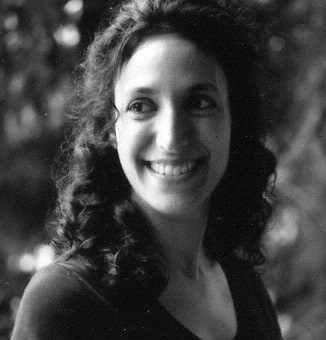
Rachel Kadish is also the author of From a Sealed Room and Tolstoy Lied: A Love Story. She teaches in the MFA program at Lesley College and lives outside of Boston.
Rachel Kadish is a Nasty Woman Writer.
BIO: Theresa C. Dintino is the author of Membranes of Hope: A Guide to Attending to the Spiritual Boundaries that Keep Lifesystems Healthy from the Personal to the Cosmic, The Tree Medicine Trilogy which includes: The Amazon Pattern: A Message from Ancient Women Diviners of Trees and Time, Notes From a Diviner in the Postmodern World: A Handbook for Spirit Workers, and Teachings from the Trees: Spiritual Mentoring from the Standing Ones. She is also the author of The Strega and the Dreamer, a work of historical fiction based in the true story of her great-grandparents, Ode to Minoa and Stories They Told Me, two novels exploring the life of a snake priestess in Bronze Age Crete, and Welcoming Lilith: Awakening and Welcoming Pure Female Power. Find out more about Theresa at ritualgoddess.com
Discover more from Feminism and Religion
Subscribe to get the latest posts sent to your email.
 Feminism and Religion
Let All Life Live – if ever there was a take away it is that – the one thing we don’t seem interested in doing on a cross cultural level. This morning I was writing about the emergence of a discarded seed thinking about the miracle of life and how simple attention and care allow the miraculous to continue.
LikeLiked by 2 people
Fascinating, it reminds me of the Netflix movie Golem. The main character was a house wife. But she yearned to be more. She studied and absorbed the mystical Jewish texts. Even hiding beneath the temple through a tunnel to listen to the Rabbi’s instructions. Eventually gaining such mastery over the forces of the Kabbalah, that she successful created a Golem.
LikeLike