

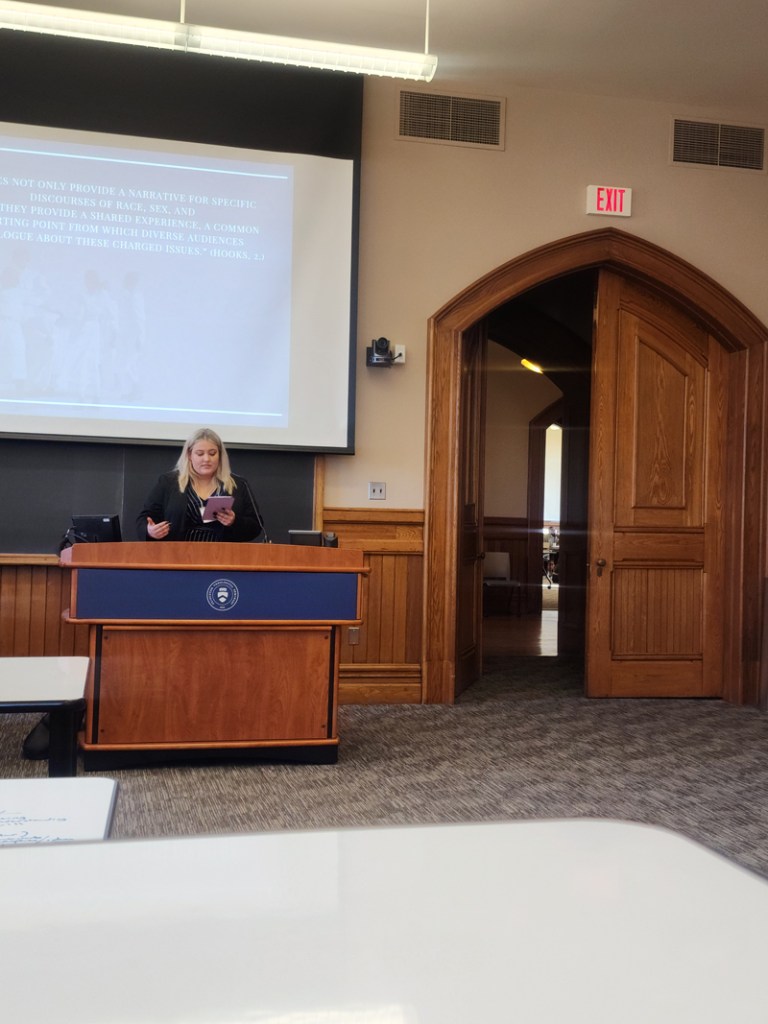
Recently tasked with the co-creation of a film ethics course, I thought extensively about what material would best serve film acting students in a New York City Conservatory. I wanted to include films that would focus on diversity, story inclusivity, and encourage them to wonder if what they saw on screen impacted or influenced their reality. In a course centered on ethics, religion and spirituality tend to enter the conversation. This entrance provided me with the opportunity to introduce a plethora of women’s visionary films that would be used to examine the spiritual lives of women and how religion and spirituality impact the film narrative. Women’s visionary films can be defined as films that are “written, directed, and/or produced primarily by women and share women’s vision of realities. The sacred themes of these films, in diverse cultural contexts, engage women’s self-reflective use of the arts to convey greater insight into the colors, shapes, emotions, and spirituality of women’s lives—women’s imagination, suffering, hopes, beliefs, and dreams.” (Mara Keller, 2018)
The acting conservatory environment’s strict curriculum can sometimes leave students under-exposed to debates around a film’s religiosity or ethical content, since it’s not their main focus. Therefore, I find I have to be extra creative and thoughtful in my approach to teaching at the start of the semester. To that end, I begin priming my students for challenging topics, themes, and cinematic content by beginning the semester by identifying our worldviews. Our worldview will guide our ways of knowing, interpreting, and understanding the film content we will ingest over the course of the semester. By discussing how knowledge is socially situated, we establish some ground rules for respectful communication; even when our worldviews seem to collide.
To establish these ground rules, we build a foundation from the “Brave Space” model. Developed by Victoria D. Stubbs, the 6 pillars of Brave Spaces are:
- Vulnerability
- Perspective Taking
- Leaning into Fear
- Critical Thinking
- Examining Intentions
- Mindfulness
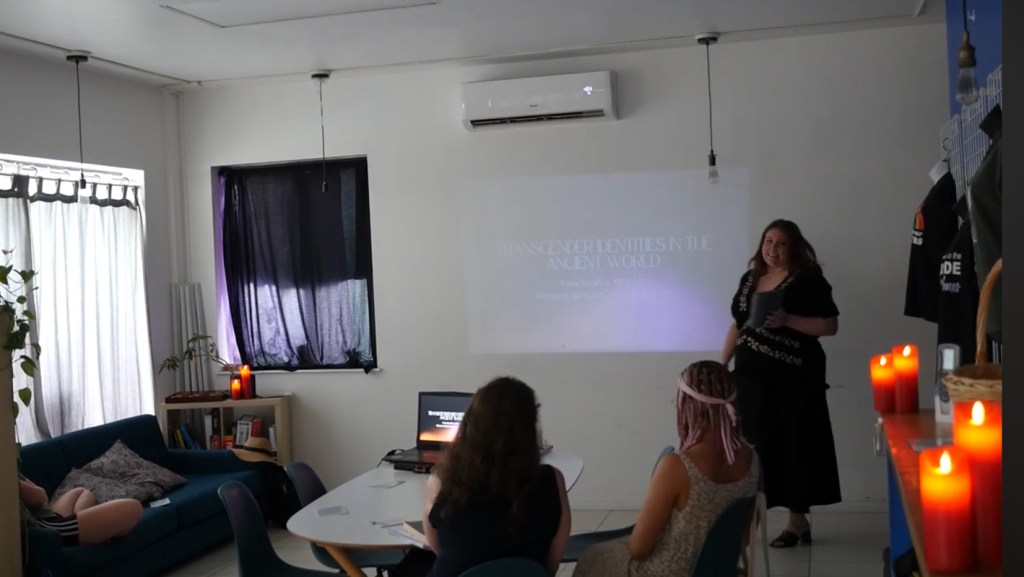
By establishing my classroom as a brave space, we acknowledge that what we talk about/view in this class might present us with a worldview that is drastically different than our own, and that difference might create feelings of unease or confusion. Furthermore, discussing depictions of women’s spiritual lives on screen not only examines women’s spiritual lives and sense of self through a sacred or religious lens, but presents us with an opportunity to critically examine the intersections of race, gender, culture, religion, and more.
Some topics found within these films can be difficult to view and discuss. Being able to talk about such imagery takes the implementation of the “Brave Space” model. For example, when viewing films that deal with sexual violence on screen, students are encouraged to lean into their fear by staying present in the classroom or in the discussion. Of course, any student can step away at any time to care for their emotional and mental wellbeing. But by being vulnerable and mindful, students begin to show up for these discussions in ways that engage their critical thinking around how the imagery on screen is reflective of society and how they could use their own cinematic voice to discuss similar themes. Finally, students learn to appreciate differing voices and perspectives when they pause to examine their own intentions before speaking. Am I speaking just to be heard? Or, am I contributing to the conversation in a thoughtful and intentional manner? Applying the “Brave Space” model has completely transformed the way I hold classroom discussions and has empowered my students to become active, empathetic, and critical contributors around difficult topics.
I consider my syllabi to be intersectional and feminist-leaning. This particular film syllabus opens the door to deeper analysis of the depictions of the feminine on screen from multiple standpoints. Women’s visionary films allow us to dig deeper into intersectionality, the effects of colonialism, who gets to tell whose story, and how the sacred symbols we see on screen create meaning and convey messages. Additionally, by analyzing cinematic symbolism and the tools of the filmmaker, we can identify whose voices are missing and begin to build a more in-depth cinematic language around alternate styles, aesthetic usage, symbolism, and narrative devices available to them as actors and filmmakers.
By exposing students to alternate modes of filmmaking and criticism, we open the door to ethical discussions that inherently link religion and spirituality. Filmmakers have intentions and make films in order to convey meaning. They send us messages consciously and unconsciously, and we should examine what the spiritual reality of the films we are ingesting are telling us. The inclusion of women’s visionary films gives us a tool for more in-depth scholarship centered on sacred feminine symbolism.
The great feminist scholar, bell hooks, tells us that our work as teachers is a sacred vocation and that “our work is not merely to share information but to share in the intellectual and spiritual growth of our students” (hooks, 1994). In my limited capacity as a film educator, I take those words to heart when considering curriculum, film selection, and module direction. The spiritual and religious content of our greatest communication art form is ripe for exploration. Women’s visionary films widen the door for discussions about women’s spiritual lives, their personal power, their moral struggles, and the challenges the world has placed upon them.
I would like to leave you with a path forward for discussing sacred symbolism on screen by way of four tips that have greatly assisted me in the classroom.
- Be honest and open about your own position and relationship to the material. What is your worldview? What do you believe? How is that impacting your interpretation of the subject material? Where do you feel you have your own personal blind spots or biases?
- Ask your students about their background and worldview. How do they identify? What kind of films do they wish to birth into the world? Is there a theme or topic they may be intimately familiar with in a way that you are not? How can you enhance and lift their voice during discourse?
- Be Brave. Let students know from day one that they will be challenged, pushed, and often feel uncomfortable. This is not an excuse to be rude, disrespectful, or violent towards others. Being uncomfortable is okay. It’s how we learn and grow. Encourage your students to remain in the classroom and engaged during these moments.
- Ask them for their feedback. Closer to the end of the semester, when there are a handful of weeks remaining, I take class time to sit and listen. “What do you think is going well? What have you been enjoying so far? What else would you have liked to have seen or talked about? Where do you feel there’s room for improvement?” In order to upset the normative balance of power, we must acknowledge our positions of power in the classroom and seek to create balance so the voices of those who are listening to us are also heard.

Bio: Freia Serafina is a multi-disciplinary artist and educator whose work highlights the connection between women, nature, myth, and the divine. Her background in film and theatre supports her inquiry into the relationship between ritual and the performing arts where she has analyzed, both creatively academically, the magical and mystical elements found throughout Shakespeare’s body of work. As a PhD student of Women’s Spirituality, Freia has expanded this inquiry to include nature, the feminine archetype in folklore, and Goddess herstory. Freia joyfully works as a Women’s Circle facilitator where she deepens her connection to the cycles of the Earth and her fellow women. Additionally, Freia is available for educational workshops, Goddess informational workshops, women’s circles, and more. www.freiaserafina.com
Discover more from Feminism and Religion
Subscribe to get the latest posts sent to your email.
 Feminism and Religion
Wow I loved this article – I so appreciate the Brave Space model you present – if only we could all embrace that way of relating. Incredibly courageous…You know I am so sick of academia’s ‘no position’ mentality – EVERYONE HAS A POSITION AND PERSPECTIVE – AND TO PRETEND THAT IT DOESN’T INFLUENCE WHAT WE PERCEIVE THINK SENSE SEE IS NONSENSE – so refreshing to be honest about our biases – we all have them – no one is immune.
LikeLiked by 1 person
Thank you so much for your kind words, Sara! I agree – our position absolutely impacts how we see the world and operate within it! I’ve found acknowledging and honoring that goes a long way in the classroom.
LikeLiked by 1 person
Great work. I would add connecting to feelings and needs as a seventh pillar, this is a deeply important component to healing our selves, (as many people are dis-embodied and dis-connected from their feelings and needs, our feelings and needs are hard wired together sort of speak in that they inform us moment to moment, as well they allow us to communicate with others, to understand what others are feeling hence needing.) Our feelings are actually the most alive and real part of us, the body never lies whereas, thoughts(beliefs-perception can be off.
LikeLike