

An occupational hazard for a woman in a religious setting is having people try to claim authority to speak into my life that they simply do not have. Two recent examples were so blatant that they caused me to pause and reflect on the underlying dynamics that led to these unrealistic expectations.
In the first event, I was out with a friend for coffee, and someone from her congregation approached. They wanted to pray for an upcoming service, but then, during the prayer, he started to pray against the “confusion” at our table. His sudden praying against this “confusion” is notable in that it only arose after my colleague introduced me as the lead pastor at a church (not an associate) in a denomination where this particular gentleman’s church broke off. After the prayer ended, he tried to explain his “prophetic gift” and how he arrived at praying against any confusion, which was tied to his own confusion during the prayer. However, the truth was, there wasn’t any, and he thought he had authority, during prayer, to speak into my life in a way that he did not.
In the second instance, a congregation member said something cruel and then tried to cover it up, calling it a jest. Further, her comment came amid a conversation she inserted herself into that did not involve her. But once again, she had no authority to speak into my life with those words, jest or not.
My first question following these instances was, “Why?” Why did these people feel that they had the right to speak into my life? The first answer that came to mind was that I’m a woman. Another way to phrase this question is, “Would these people speak to me in this manner if I were a man?” The answer was a resounding ‘no.’’
But even unpacking that answer is nuanced. First, the way that women are talked to and about in this world often reeks of paternalism. This practice is so pervasive in society that we do not even always recognize the ways that women are spoken to as subordinates instead of equals. Statements about women being “confused” or “not having a sense of humor” are birthed out of overarching beliefs that women need to be taught and corrected in ways that our male colleagues do not.
Second, if a man had the education, success, and longevity of experience that a woman has in a position of authority, they would be lauded. Yet, women are approached in ways that try to diminish them by stripping away their authority. Once again, this stance is so baked into society that we fail to recognize it even when it happens in our lives.
With these realizations, the conversation opened up from individual actions towards me to systems that encourage such reactions due to gender.
How do we re-educate the world about the systems that impact how people speak to us? Systems that need to be brought to the light so they can be dismantled. We live in a time when everyone thinks they can speak into our spiritual lives simply because of gender. Please do not fall prey to the idea that anyone and everyone gets to speak into your lives, dear friend, because not every word they say is worthy. Too many words reek of paternalism and are masked through personal dynamics or claims that women are “too sensitive.” The problem is not that we are too sensitive, but that too many people are not sensitive to the systems that impact our lives that exist to control and belittle women simply because of gender.
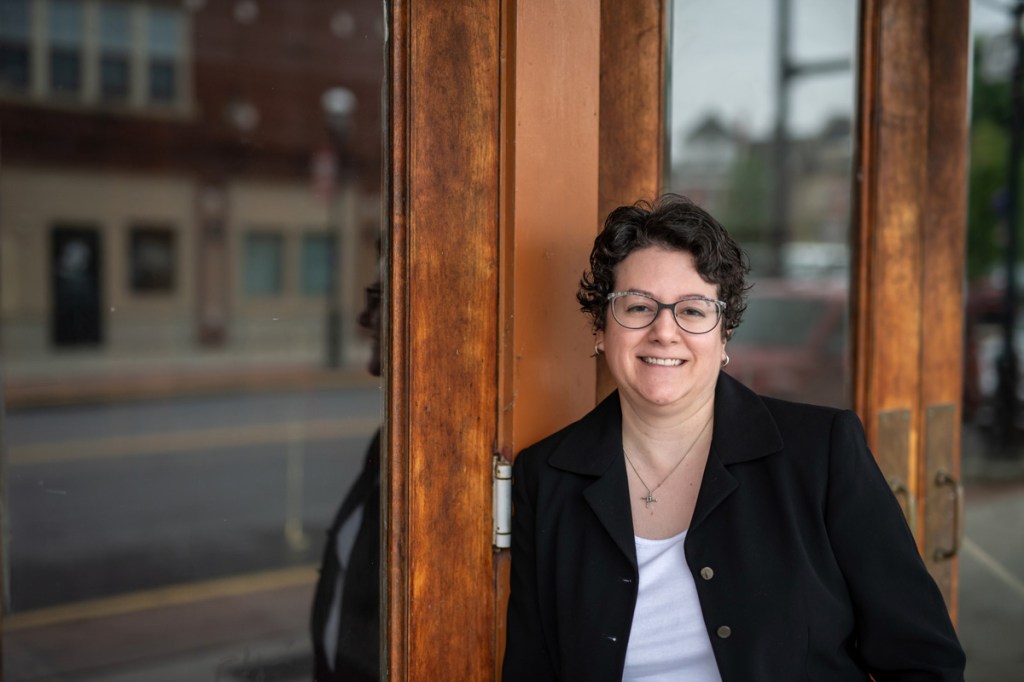
BIO: Michelle Bodle has served for over a decade as a pastor in the United Methodist Church and spiritual director. She creates sacred spaces of holy listening through Abide in the Spirit, www.abideinthespirit.com
Discover more from Feminism and Religion
Subscribe to get the latest posts sent to your email.
 Feminism and Religion
Thanks, Michelle, for this reminder that your individual experience mirrors a system of oppression that often gets dismissed. “…[T]he conversation opened up from individual actions towards me to systems that encourage such reactions due to gender.” Both sexism and racism flourish around us. I’ve found that we are much more likely to acknowledge racism (and work towards its abolishment) in the US than sexism. Both racism and sexism are systems that are “baked in” to our lives.
LikeLiked by 2 people
This is key – our individual experiences do mirror the culture as a whole. “Baked” – oh this word is so so excellent!
LikeLike
This reminds me of the famous quote by Muriel Rukeyser “What would happen if one woman told the truth about her life? / The world would split open.” We all spend so much time and energy fending off these intrusions — it’s exhausting. Thank you for telling the truth of your life in this post — only when we name something can we really work towards changing it.
LikeLiked by 3 people
Excellent examples of how insidious this system is and women are treated _oh I can empathize… I am aware of discriminations because I am an older woman, have Native roots, a feminist, and a naturalist who has lived alone and one who also speaks out to injustice – I am also a person who creates and celebrates her own ceremonies using the eight spokes of the year as a basic framework.. oh, I am also emotionally honest and have been told that many people cannot handle honest people. This is not to say I have no shortcomings! I have plenty and do my best to own my quick temper, inability to suffer fools, judgmental – well you get the point. All theses make me an outsider – mindlessly hated by some because I exist. I think my belief that Nature is my guide also makes me a target on another level – just like you. I guess my point here is that you are vulnerable and recognize when you are being manipulated. Often I do not. Kudos to you! I do not agree that education will make a difference… what I have learned from my lifetime (approaching 80) experiences is that most people will believe what they want to or need to…. part of what scares me so about our present situation on a personal and a global level…. We may be able to educate those who already have a crack in their minds but otherwise?
LikeLike
I apologize for mistakes but my eyes are very bad and I can barely read these posts let alone edit my own mistakes…
LikeLike
Thank you for a provactive column. What you describe is pervasive. How do we respond? The answer is not silence. Is it some variation of you would not have said that to me if I was a man?
LikeLike