

I have been involved with plants since I was a toddler. My first word was ‘fower’ for bright yellow buttercups, a nickname I was given by my grandfather that stuck.
I guess it’s no surprise that I started out with gardening as a three-year-old under my grandmother’s tutelage. Her large vegetable plot fed us for most of the year. I seeded my first yellow summer squash into rich moist earth and watched with wonder as the seed emerged with two emerald ears.
In college when students were decorating their rooms with drapes and bedspreads, I bought a pepper plant to brighten my cement surroundings and soon had a windowsill full of plants.
As a young adult I grew many house plants and often talked to them, noting that we seemed to have an uncanny personal relationship, a childhood reality that I had been educated out of. I also gardened with herbs outside my back door, because I loved to cook and needed tasty condiments. Soon I moved on to planting a full – fledged vegetable plot. I canned what I could like my grandmother still longing for the bountiful flower gardens of my dreams. I come from a lineage of female flower gardeners and farmers that stretched back three generations (that I know of) but as a young single mother who worked and one who was frozen from loss, I didn’t make the time.
In my mid- thirties I became interested in medicinal herbs. I made a few tinctures… When I discovered their efficacy, I promised myself that when I had more free time, I would make a formal study of herbs.
After my children left home, I planted my first flower garden and oh, what a beauty she was. It wasn’t long before I had created flower gardens in every nook and cranny on the one- acre property that I called home.
When I moved to the mountains, I was free to roam the mountain under which I lived identifying the wild plants that lived there. My mother had loved wildflowers and so now at last I was able to follow this passion too. Oh, I still had a vegetable plot and a huge flower garden but living alone diminished my enthusiasm for growing vegetables for one person.
I began to study herbs earnestly experimenting with medicinal tinctures all of which I made from plants on this land. I had a curious sense that these tinctures would work most effectively. I was beginning to listen to plants. I also became fascinated by mushrooms. How could I not in these bountiful forests that surrounded me? I was not a forager, (and this remains true for me today) but I was captivated by the relationships that mushrooms seemed to have with certain trees and detritus. That and their shapes and colors.
I spent three summers in the Amazon studying jungle remedies with Indigenous medicine men and women. The two most valuable lessons I learned from these experiences was how important it was to listen to what plants were saying beneath words; that it was quite normal to have plants guide me through dreams and visions. And that the plants that worked best were those that grew locally. Each medicine person had her/his own wild garden and concocted medicines in non -rational ways that supported my conversations with plants, dreams, and my intuitions.
While living in the high desert of New Mexico I walked to the river and bosque every morning before dawn. On one occasion I was in a naturally occurring altered state from walking around this small lowland in a circle when I felt sharp pin pricks or points of light rising up through my feet. This experience occurred not long after I had heard an Indigenous scholar discuss the reality that humans were facing probable extinction if measures weren’t taken to reverse the trajectory we were on. I wondered about this light that was coming out of the ground…but had no idea what it could mean.
I had already begun my study of mycelial networks through the work of scientist Suzanne Simard, so I knew that all plants and trees around me were communicating. It would be a couple of years before I learned that the pin pricks of light that I felt were literally real and part of the pulsing fungal network that lay beneath my feet. This magical world opened a door to a whole new reality and most recently has shifted my perspective on our climate crisis, the deadly catastrophe that continues to slowly overtake us all.
I know now that this incomprehensible network underlies all plant life on land. Even when fragmented it is somehow able to regenerate itself and it can communicate with other parts of itself anywhere across the globe. Fungi have successfully survived five extinctions, so no matter what we do to the earth S/he will survive to begin again. As the youngest species on the planet, we are also the most vulnerable. Ironically humans desperately need the earth to remain relatively stable to stay alive. Yet, instead of supporting nature we have created climate chaos. We have things backwards. Instead of ‘saving’ the monarch the Bicknell thrush or the whatever maybe we need to start saving ourselves. Our hubris around technology ‘saving’ us has probably cast the dye… The most excellent scholarly online magazine Emergence states that ‘the ecological crisis is a catastrophe in slow motion’. I won’t live to see the ever – worsening plight of humans but the next generations will.
Returning the sanctity of life and sovereignty to the soil has allowed me to do two things. Although I mourn the loss of each species, each forest and field, the loss of clean unpolluted air and flowing waters, when I can align myself with the big picture, I can also feel a sense of peace. I have done what I could to sound the warning for the second half of my life. The important thing is that I tried, even if it wasn’t enough.
This summer has been a challenge with so much continuous humidity, and I have been struggling with sinusitis and headaches from bad air, so I have stayed closer to home roaming through my own land and two nearby sanctuaries. Quick retreats into the house have become a necessity.
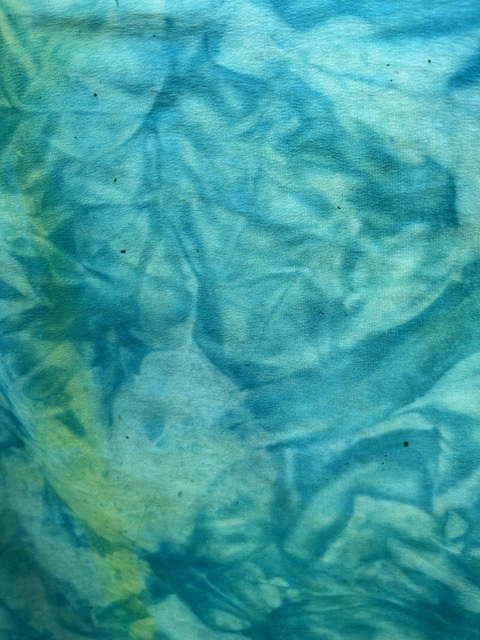
My newest adventure with plants is learning how to use them as natural fabric dyes. What I am most interested in learning is how to dye without using toxic chemicals to ‘fix’ the colors. The gifted woman who allowed me to attend a couple of very expensive classes free introduced me to this idea of natural dyeing although she does use chemicals as mordants. I want to play with dyeing without them.
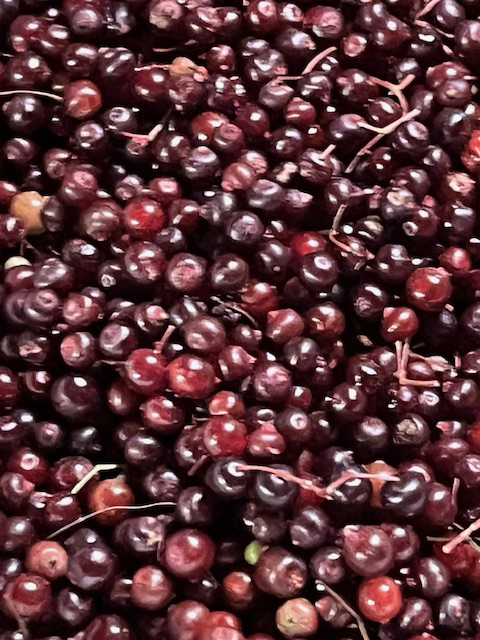
Just this week I have been gather elderberries for a tincture that I have been using for many years. Elderberry patches are becoming scarce for the usual reasons, but just yesterday I discovered some in an old haunt that are regenerating themselves after being brutally destroyed by man’s machines. I was absurdly excited to find this patch of ripe berries and picked them all, brought them home and tinctured them immediately. Why was I so happy?
Life goes on… with or without humans at the helm.
Discover more from Feminism and Religion
Subscribe to get the latest posts sent to your email.

 Feminism and Religion
Dear Sara. My sister died last night, and when I read the title of your post, it felt so well-timed for her passing. Indeed it was quite healing for me to read. The seeds of life are everywhere. She was my flower. And life goes on … just in different forms.
LikeLiked by 1 person
Dear Beth, I just want to express my heartfelt sorrow at your loss of your sister. Your love for her shines so radiantly in your mention that she was your flower. Know that you have much healing energy coming your way from me and others here at FAR.
LikeLiked by 2 people
Thank you so much, Carolyn. I do feel that caring and healing energy from you and others in this community, which is why it felt right to post about the loss of my sister here. <3
LikeLiked by 1 person
Oh Beth I am so very sorry – losing a sibling is an excruciating experience that as a very young woman I barely survived… it helps so much to know that life goes on regardless and the ground round assures that is only part of a whole process… In time this will be=ring you comfort. For now I align myself with your grief.
LikeLike
Thank you so much, Sara. And again for your healing words this morning. I’m sorry you suffered the loss of your sibling so young. I had 72 years with my dear sister. But now I can’t imagine the world without her.
LikeLike
Of course you cannot – this is going to take time and a willingness to stay present to what seems to be an intolerable loss. I can promise you one thing though, that if you are willing to go through this process you will come through the other side…
LikeLiked by 1 person
Beth, I’m so sorry for you loss. My heart goes out to you. I’m sending healing energy and prayers.
LikeLike
Thank you so much, Linda. That means a lot.
LikeLiked by 1 person
Great
LikeLike
I love your description of your close relationship with plants and how we can communicate as long as we listen for the message beyond the words. I have had similar experiences in my own herb garden where several plants will “volunteer,” in other words, just start growing. When I would look up what their properties were, how they could help heal humans, I would immediately see how the plants were telling me what areas of my life needed attention. Your elderberry story is wonderful – Nature’s regenerative power! All we can do is tell our stories and hope people will listen.
LikeLiked by 2 people
Sara, you are the real deal. You are congruent … practicing what you profess to value. I respect you for that. I also love how you have honed your sensitivity to plants. This is just beautiful.
LikeLiked by 1 person
Thank you as always for your powerful, passionate wisdom and your deep knowing of the life all around us that so many miss.
LikeLiked by 1 person
Sara,
I always love reading about your deep connection to the natural world. We are certainly soul sisters in that regard. The state of our world is most definitely one to cause despair. I too find solace in taking the long view. Human hubris reveals itself with the saying “Save the Earth”. Earth will be just fine after she cleanses and purges herself back into some new place of balance. Humans will not be able to survive in the newly rebalanced Earth though.
LikeLiked by 1 person
Oh Judith – you and I are two sisters that can stand what we know – no doubt primarily due to our deep connection to nature – S/he’s keening in a thousand ways as I write but the planet will survive – and address the imbalance in her time not ours. My friend Merlin Sheldrake calls our hubris ‘Species Narcissism’ – this incredibly arrogant idea of saving species and the earth – the same idea we can’t – no refuse to follow up on because it will require radical change – Today in the UK Guardian – the only news I read – even Switzerland backed out of passing a law that would support conservation – why? What else? the economy of course – the depressing part of this story is that like it or not we are all embedded in dominant cultures that only care about money and power – worst of all – we are all part of the problem – money is the exchange that matters and we are all caught on the same wheel by choice or not. What I can’t handle is people saying ‘all be be well’ when it won’t. Not for a long long time.
LikeLike
I know what you mean. The dominant system we’re in has us all trapped, those who are aware of the problem and those who aren’t. Even green technology isn’t a real way out as it requires too much mining and use of limited resources. But if we could just get past the absurd grip Big OIl has on the world and transition to asolar and wind, it could buy us a little bit more time to actually make the needed changes away from a money based world into a world in which we build healthy local environments and come together in community, joy and love instead of all this hate and violence. But no government anywhere in the world is moving in that direction. And let’s not forget how loudly the drums of war are sounding these days which threatens us all on so many levels.
I think people have a really hard time facing the consequences brought on since the Industrial Revolution began. All will most definitely not be well. Even if we were to make the needed changes, we’re still facing decades of climate catastrophes while Mother Earth rebalances herself.
I guess we just have to keep on loving the natural world no matter how hard living on Earth becomes.
LikeLiked by 1 person
The bottom line: this we can do – love every bush tree earth ground lizard rock around
LikeLike