

We are back with a new volume of uncovering and focusing on extraordinary persons. We start our first post of Volume II with 4 figures who in many ways throw history, narrative, and the status quo off their axis. All 4, if alive in 2024, would find solidarity and kinship with the Queer Community. So let us being.
Hatshepsut (1508-1458 BCE) Egyptian Pharaoh.
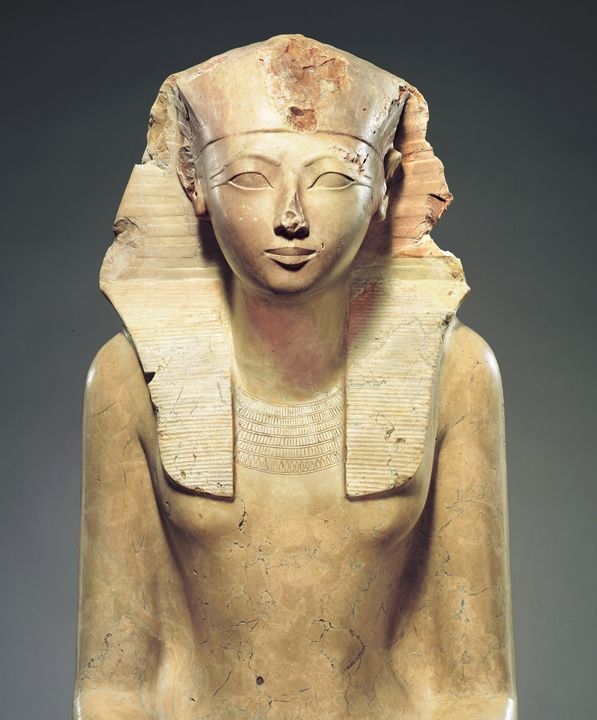
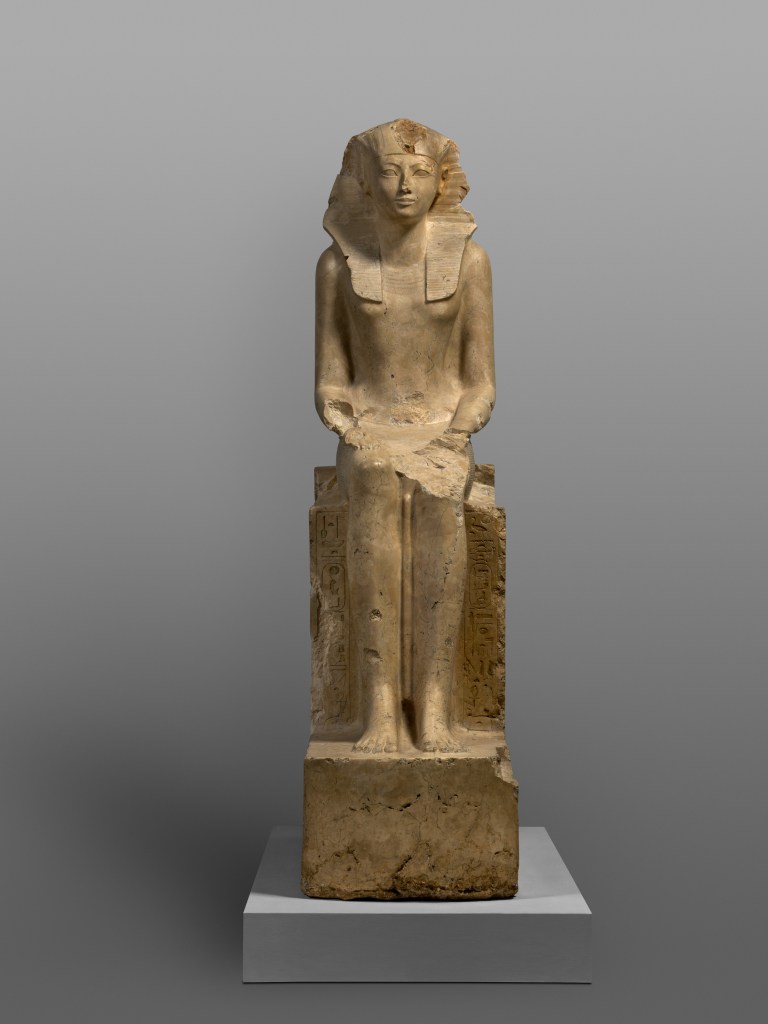
Hatshepsut was the daughter of Thutmose I, wife to Thutmose II, and stepmother to Thutmose III. Her husband died while his heir was too young to ascend the throne. Hatshepsut became not only the acting regent but full fledge ruler. She would reign for 21 years as the 5th Ruler of the 18th Dynasty of Egypt. Her reign was prosperous including funding for art, statues, and monuments that have stood the test of time and active destruction. Deir –el-Bahari became a significant temple for Hatshepsut.

She made sure that all her likenesses were done in the style of male pharaohs. This could be said as her way to legitimize her role and acknowledging the symbolism of the gendered position of pharaoh.
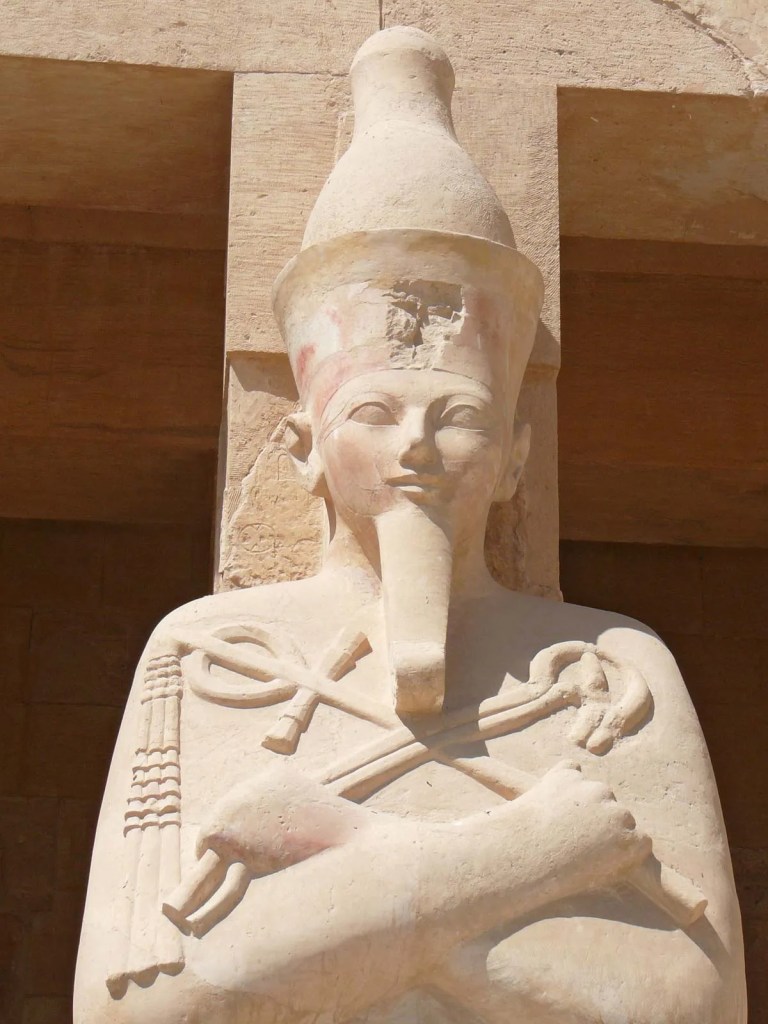
We can also look to this juxtaposition of opposing gender potentially being read as a historical instance of rejecting heteronormative roles and evidence of transgender inclusion. It can also be used to break the hold that modern societies have on the gender binary.
Her 21 year reign also saw peace, prosperity, expansion, and successful diplomacy. Her reign lasted long after her stepson became of age to rule. After her death, Thutmose III ordered all her monuments and statues defaced and her name removed from all records. He even claimed the majority of her successful accomplishments and improvements. Hatshepsut, her influence, and importance was lost until 1822CE when Egyptologists were successful in translating the hieroglyphs at Deir-el-Bahari. In 1903CE, Hatshepsut’s sarcophagus was discovered but was empty. Her body would not be recovered until 2007CE and now is kept at the Egyptian Museum in Cairo.
Saint Jeanne d’Arc (1412-1432 CE) Maid of Orléans, Catholic Saint, French National Heroine.
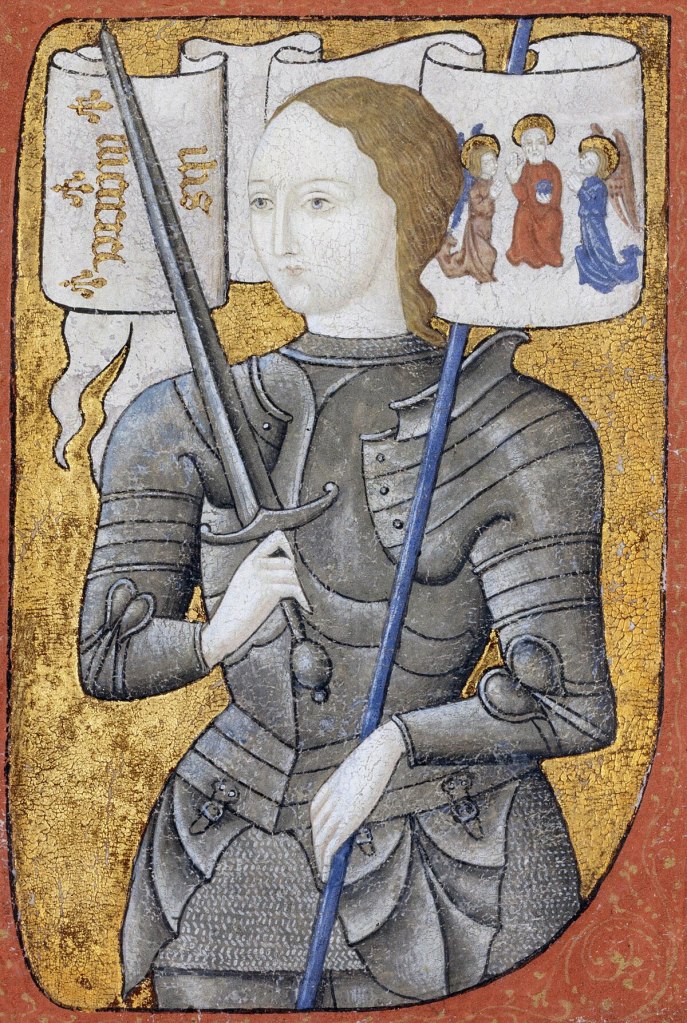
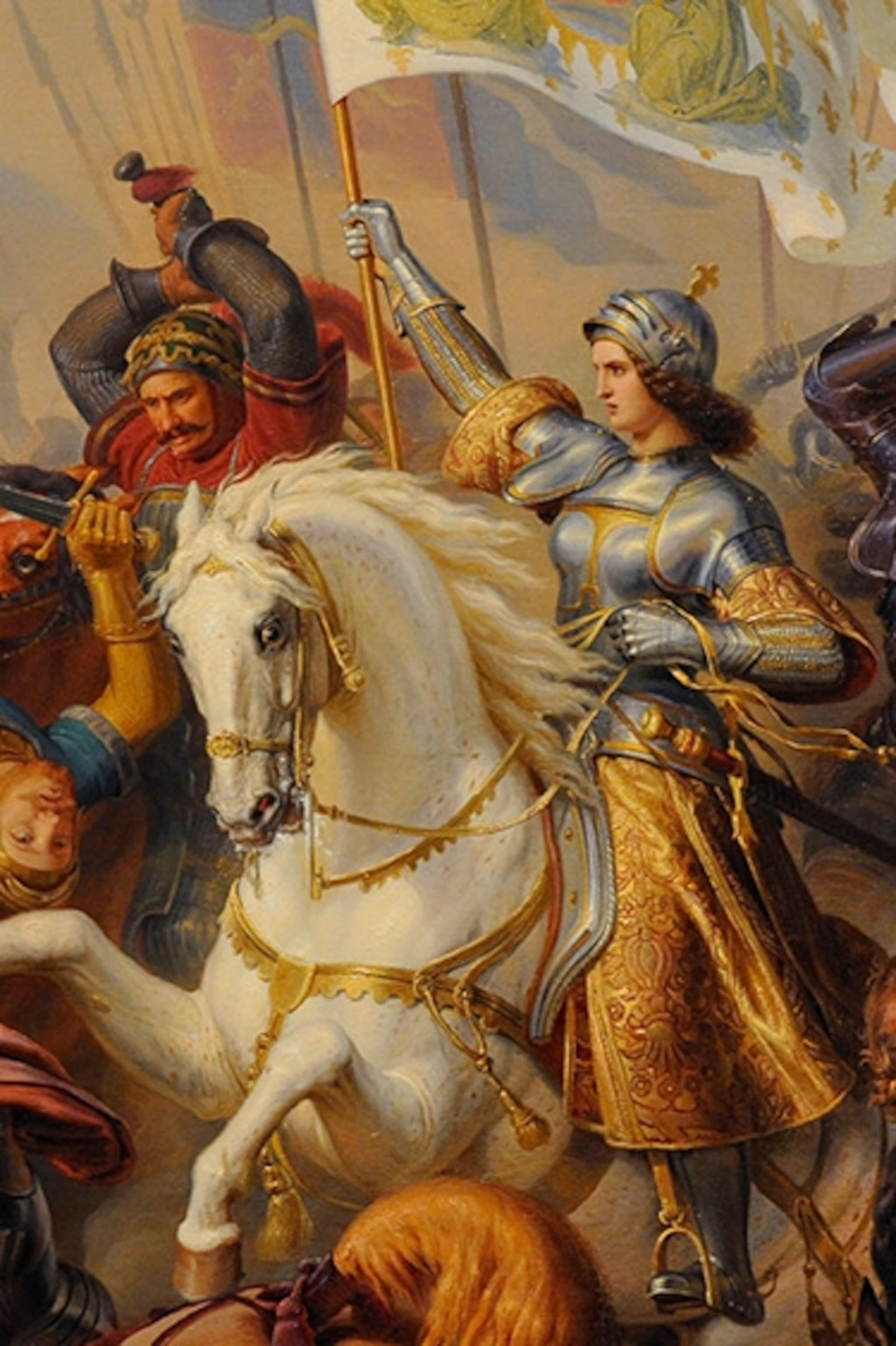
Jeanne or Joan, was born to tenant farmers and was illiterate for most of her life. She was visited her entire life by Saint Michael the Archangel, St. Catherine of Alexandria, and St. Margaret of Antioch. She was known for her physical strength, her wisdom, her courage, and her piety; well beyond her young teenage years. She led French armies to victory, helped crown the French heir, and ultimately inspired what would become a French National Consciousness.
At the tender age of sixteen, wearing men’s clothing, she was questioned by theologians, religious men and women, at Poitiers for three weeks; where they declared her pious, pure, and a servant of God. They even declared that her choice of garments was necessary to ensure her safety and purity as she would be constantly surrounded by men and armies. All those records have mysteriously not survived. She was later betrayed, captured, and put on trial by the English. Seventy charges were filed against her including assuming authority of divine revelation, direct communication of God, and wearing men’s clothing. Throughout the rigorous and even tortuous trial, the tribunal were only able to make twelve charges stick. She was sentences as a heretic, put to death, and burned at the stake on May 30, 1432CE, at the tender age of twenty. In the span of 4 years Joan went from being a Servant of God and the Church to a heretic condemned to death.
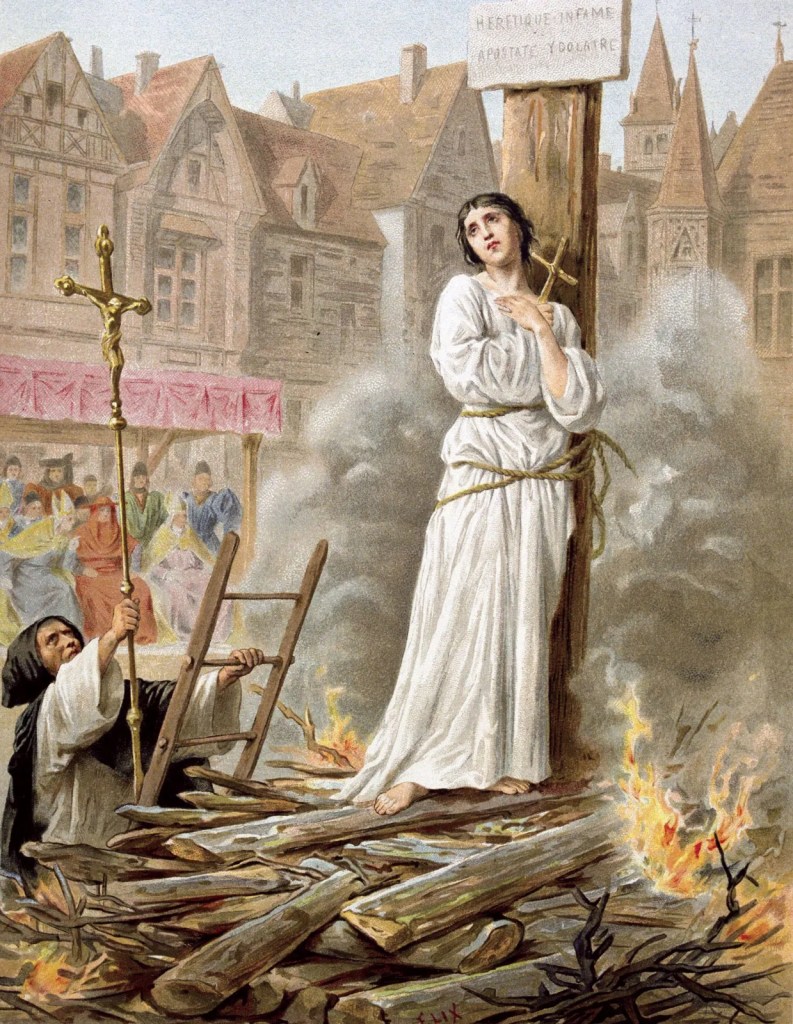
It would take 18 years for the French King to ask for an inquiry into her death and 23 years for the Roman Catholic Church to reverse the sentence. In 1920CE, Pope Benedict XV would officially canonize Joan and the same year the French Parliament decreed May 30th as a National Holiday. Today, Joan of Arc is considered the greatest national heroine for France and one of its’ patron saints.
Audre Lorde (1934-1992CE) Writer, feminist, womanist, librarian, academic, and civil rights activist.
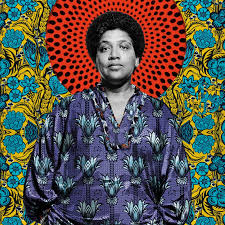
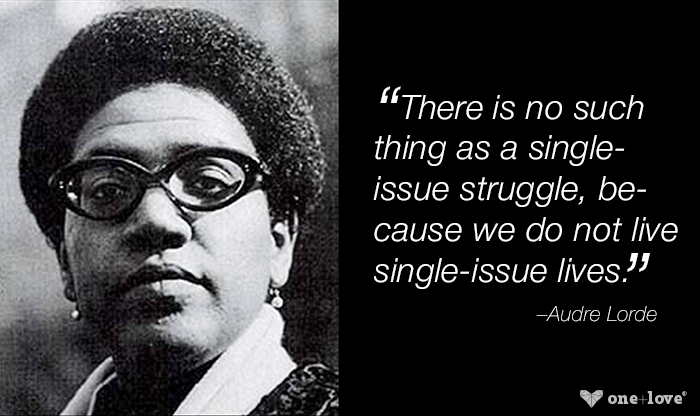
She called herself “black, lesbian, mother, warrior, and poet.” Her works and legacy are in confronting, addressing, and influencing change surrounding racism, sexism, classism, capitalism, heteronormativity, and homophobia; just to name a few.
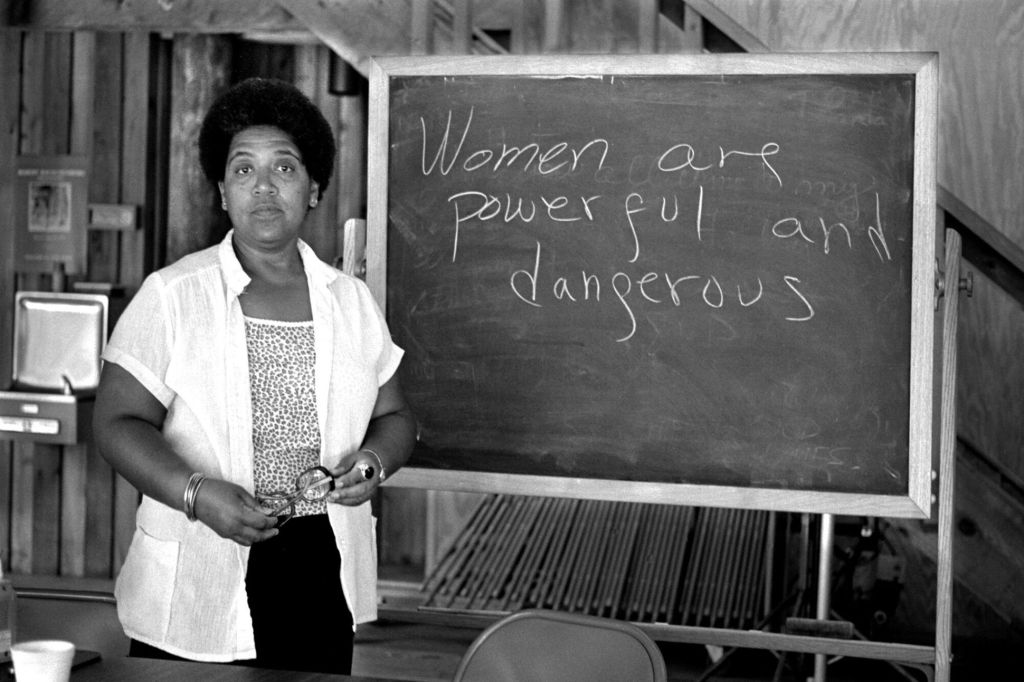
Her parents were Caribbean immigrants who settled in Harlem, NY. Lorde states that poetry was one of her first modes of language. She got her master’s degree in library science from Columbia. She teamed up with Barbara Smith and Cherrie Moraga to form “Kitchen Table: Women of Color Press” which is the first U.S. Publisher for women of color. Audre became the NY State Poet in 1991. Her book ‘Sister Outsider’ continues to be poignant and powerful and contains one of her most cited essays and quotes:
“For the master’s tool will never dismantle the master’s house. They may allow us temporarily to beat him at his own game, but they will never enable us to bring about genuine change. And this fact is only threatening to those women who still define the master’s house as their only source of support.”
Elvira De La Fuente Chaudoir (1910-1996CE) Peruvian heiress, British spy, and French shop owner.
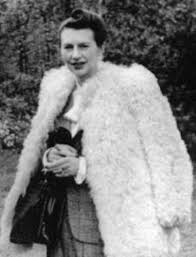
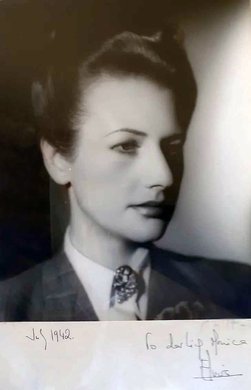
Elvira was born into an influential Peruvian farming family whose father was also the Peruvian Ambassador in France. She was a known bisexual who loved to visit casinos across Europe. She would leave France when the Germans invaded and flee to England. She was given an interview with the head of MI6 and became a secret agent. She was in the perfect position to infiltrate enemy lines and gain information. She held a foreign passport of a country not engaged in the War and diplomatic powers due to her parent’s connections.
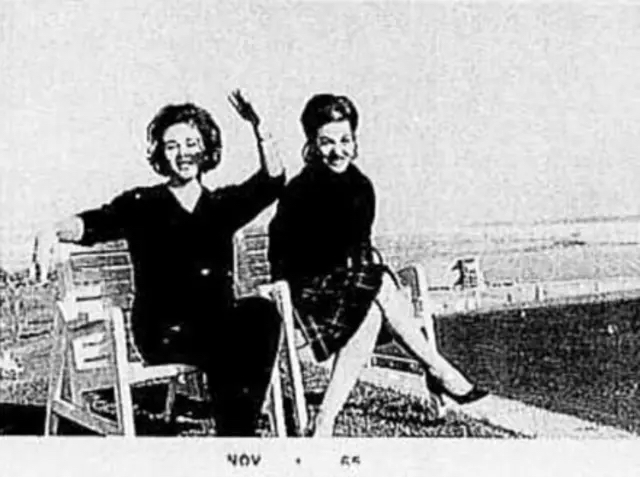
She was quite known across Europe as the woman who loved cards, alcohol, and all genders. She was able to infiltrate the German offices in France and helped with Operation Overlord- the Allied efforts to mislead the Germans about the D-Day Invasion. She gave the Germans false information while relying on German information back to the Allied Forces. She was so convincing that the Germans sent a large number of tanks to the Bay of Biscay and away from the beaches of Normandy. All her work was sealed by the British War Effort. She was given a check by MI5 in 1995CE to thank her for her war effort, but it was not until 2005CE that MI5 released her role and war efforts.
These four extraordinary figures have all experiences versions of the mainstream society dictating their narratives, their roles, and their positions. Yet each one shows diverse ways to which they have continued to succeed in pushing and throwing off those same impositions to show each and everyone of us resiliency, advocacy, agency, leadership, strength, courage, faith, and the indelible human spirit.
Discover more from Feminism and Religion
Subscribe to get the latest posts sent to your email.

 Feminism and Religion
That quote of Lourdes is a classic – she was so right – the masters tools will never dismantle the masters house – we need to find new tools – let’s begin with self reflection – if we don’t know what’s going on in our house how can we be sure the master isn’t ruling?
LikeLiked by 1 person
It’s always fascinating to learn more about the interesting lives of women.
LikeLiked by 1 person
Audre Lorde didn’t need to be “queered.” She was a groundbreaking lesbian feminist who lived through the rough “old gay” times, when that word meant you could be in physical danger.Like most women warriors, Jeanne d’Arc cross-dressed, and this figured prominently in her eventual conviction and burning. At the beginning of her meteoric rise to military leadership, she was forced to undergo a virginity test—because the aristocrats feared this peasant woman might be a witch (and believed that witches had sex with “the devil”). After her astonishing successes taking back occupied French cities, some jealous and greedy knights betrayed her to the English enemy. She was imprisoned and underwent an inquisitorial witch trial, in which she answered back smartly to the monks and theologians from the University of Paris. The priests convinced her to put women’s clothing back on, which would spare her from the stake. But the Earl of Warwick and his men went into her cell and raped her. She went back to men’s clothing (which had been her protection in war) and was condemned as a relapsed heretic, and so burned at the stake. Vita Sackville-West wrote this history.As for Hatshepsut, she was one of only a few female pharaohs. Two others were quickly overthrown. She knew exactly what she was doing. Assuming masculine guise as the “son” of Amun, especially on her public monuments, enabled her to rule for more than two decades. Certainly she was breaking gender rules. Many, many other women adopted male dress and manner in order to move in a man’s world.
LikeLiked by 1 person
Hmmm, all my paragraph breaks went away.
LikeLike
Max,
I appreciate your words and your additional information.
I was not attempted to queer Audre Lorde more then she herself already claimed.
And you are correct that many of Joan of Arc’s clothing choices were done to ensure safety and acceptance in an increasingly male dominate society. There are records that state that Joan herself felt more comfortable in male clothing even when she was not in male-dominate situations. You are right to mention the enormous and horrendous things that Joan had to endure in her short life. I could spent an entire series just on the life and exploits of Joan but alas we are only given under 1200 words for these posts.
As for your remarks on Hatshepsut, I agree that she entirely knew what she was during when she commissioned her statues and images and she was working within the system to continue and ensure her position and power. I also think we need to be aware when we start to look at history with such a hold on the gender binary and descriptions. Example, the colors of pink and blue were reverse up until the end of the Victorian Era and it was common practice for all children to wear dresses until a certain age. And especially in regards to Hatshepsut and many in Ancient Egypt and other civilizations – the narratives, records, and histories have been controlled and shaped by men and the heteronormative agenda.
LikeLike
Not every woman with agency was (or is) nonbinary or trans. Women can actually Do Things and still be women.
LikeLike
Yes I agree. I have done an entire Series where we solely looked at Women doing wonderful and amazing things.
This post looks at 4 women who have live beyond and outside the heteronormative and gender binary.
LikeLike