

I was captivated by a bunch of wispy, weedy zinnia flowers on my dining-room table, with its bright blossoms sprinkled on the curling stems. The zinnias pulled me from my current obsession with sea goddesses into a different zone, into the Kingdom of Plants (Kingdom Plantae). The Plant Kingdom is an important part of Goddess manifest, having come into being long before the appearance of our human family. It’s no wonder that flowers and other members of the Plant Kingdom play an important part in the mythology of our ancestors worldwide.
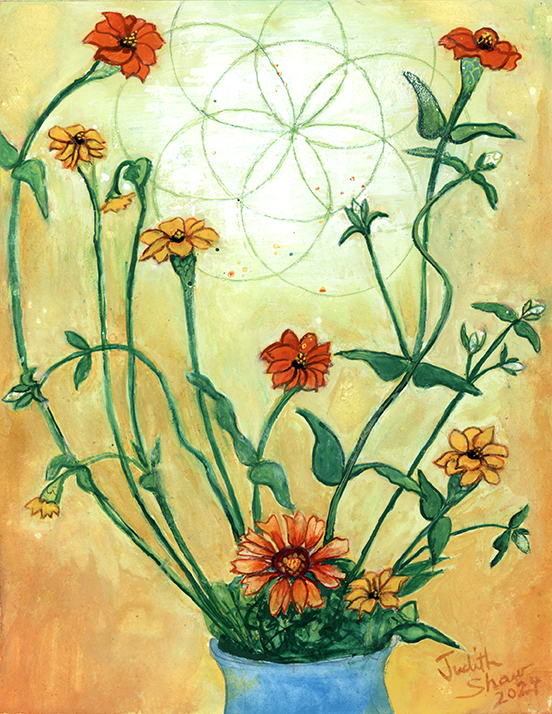
As zinnias are indigenous to Mexico, you won’t find them in myths and legends of the European, African, Middle Eastern or Eastern religions. However they do gain symbolic significance in Europe during the Victorian Age.
Myth and legend
Zinnias were sacred to the Aztecs, who used them in various rituals and ceremonies. Seeing them as symbolic of the sun, they were often given as offerings in tribute to their gods.
Brazilian curanderos used zinnias in ceremonial healings, putting their leaves on top of the patient’s head as a cure for madness. They were also put in ritual baths as part of a healing ceremony.
In the North American Southwest, the Dine people used zinnia flowers as a sacred life medicine. In somewhat similar fashion, the Pueblo people fed zinnia blossoms to children, believing this would make them eloquent and intelligent.
Various Native American cultures, recognizing the flowers’ ability to endure harsh conditions, viewed zinnias as symbolic of endurance and perseverance.
Symbolism
Endurance, Perseverance, Resilience
These vivid flowers grow and thrive in even the harshest weather. From heat waves to prolonged droughts, you’ll find zinnias flourishing where many other plants wither and die. Now all across the globe, zinnias remind us that we too can endure and persevere whatever challenges come our way. And in the same way that this humble plant produces such beautiful, colorful flowers, we see that we too can grow emotionally and spiritually by confronting and overcoming our challenges.
Love and Affection, Friendship and Loyalty, Joy, Warding Off Evil
Zinnias bloom through out the summer heat and well into the chilly days of fall. You can count on zinnias for its flowers and beauty for much longer than some. For this reason they have come to be associated with friendship, loyalty, love and affection. The jewel-like tones of zinnias’ reds and pinks symbolize the intense feelings of romantic love.
Zinnias bright colors, particularly the yellows and oranges symbolize joy. These brilliant blossoms are an uplifting addition to any garden or bouquet.
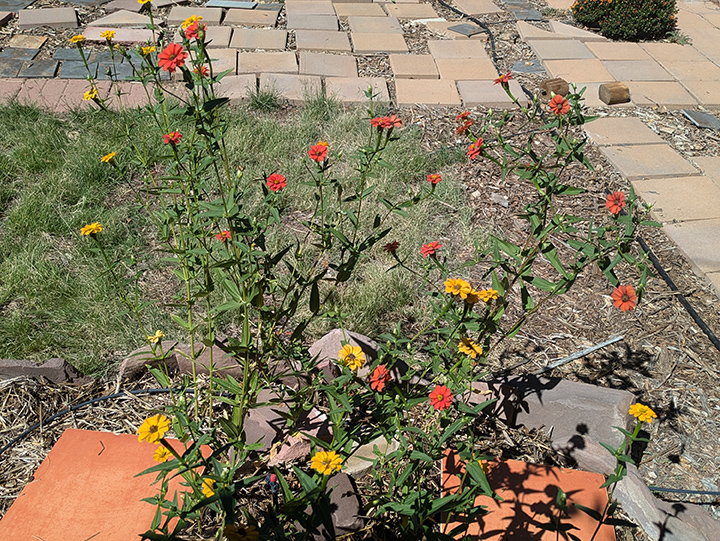
When the Spanish colonists arrived in Mexico they saw the zinnia wildflowers everywhere. Strangely enough they didn’t appreciate the zinnia’s beauty, instead dubbing these bright flowers with their evident centers as “evil eyes.” Perhaps this is when the flower’s association with “warding off the evil eye” began. They weren’t even known as “zinnias” until the 18th century when German botanist, Johann Gottfried Zinn, named them after himself.
Victorian Era
During the Victorian era in the mid to late 19th century, the English embraced a wide range of symbolic meanings for zinnias. They assigned different symbolic meanings to each color. For instance:
Red zinnias — love and passion
Pink zinnias — romance and admiration
Purple zinnias — creativity and imagination
Orange zinnias — energy and enthusiasm
Yellow zinnias — happiness and joy
white zinnias — purity and innocence
Modern Day
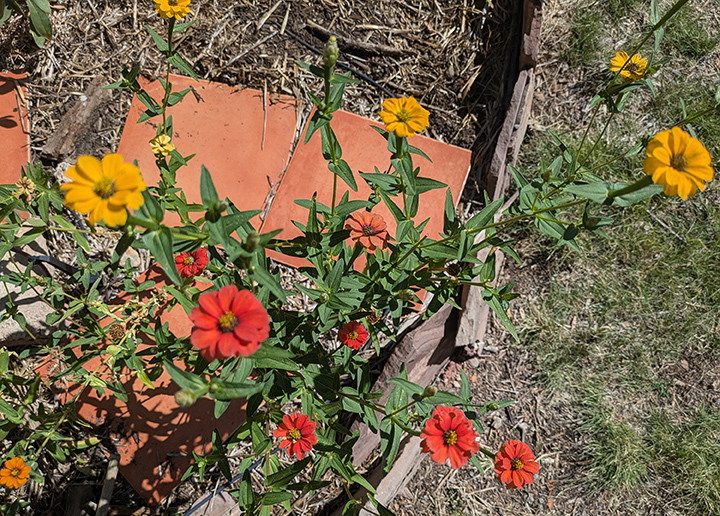
During the 20th century zinnias became widely popular. But in the United State where “big is better” has been the sentiment for a long time, the small native zinnia flowers were not enough. The breeders got to work, producing zinnia varieties with large flowers. A favorite for gardens, the California Giant Zinnia has been bred over many years to produce some of the largest blooms available. These beautiful giants are sure to put a smile on your face.
As we find with so much ancient wisdom, modern science is now “proving” what Native Americans knew so long ago — zinnias do in fact have beneficial health properties.
The major beneficial compounds in zinnia flowers include saponins, glycosides, flavonoids, steroids, and phenols. They have been shown to have anti-oxidative qualities in addition to anti-fugal, phytoremediative, anthelmintic and hepato-protective properties.
Zinnias provide further benefit as exceptional pollinator plants. Bees, butterflies, and hummingbirds can’t resist their dazzling colors and tasty nectar. While pollinators have always been important, they are even more crucial today as pollinator habitats are being lost worldwide.
Because of zinnia’s abilities to endure and thrive in all kinds of conditions they were among the first flowers grown successfully on the International Space Station. Now that’s a modern-day variation of the recognition of this flowers’ abilities for sure.
As we work together to create a more equitable, balanced world, flowers and other members of the Plant Kingdom remind us that Mother Earth is our constant companion. She is our home and the very fabric of our physical bodies, as well as those of all living beings.
With summer coming to a close, I hope you too can find some beautiful zinnias — an ancient gift from the Goddess — to inspire your day.
Discover Judith’s art on her website – judithshawart.com
Here’s a direct link to Zinnia Joy with its various print and merch options.
Discover more from Feminism and Religion
Subscribe to get the latest posts sent to your email.

 Feminism and Religion
Another beautiful painting and such an informative essay! Just yesterday I saw a patch of zinnias on my walk and was struck by their happy loveliness just as most other flowers are fading here in New England and we are starting hibernation into the cold months! Such a wonderful reminder that those beings – whether flowers, stones, trees, animals, etc. – that we see everyday and can take for granted have deep meaning and healing properties we just need to appreciate!
LikeLiked by 1 person
Carolyn, That’s great to hear that you’ve still got zinnias around too. I first became aware of zinnias a couple of years ago as my daughter-in-law was growing some large ones in her garden. I was surprised that the ones I planted this year had such small flowers. So I found it interesting to learn about how Americans wanted bigger flowers on their zinnias and the breeding began. Though the result of the bigger flowers from that breeding is really quite stunning, I do still love my humble small flowered ones.
LikeLike
Thank you for writing and painting about one of my favorite garden flowers. I am glad to know more about zinnias. They have been bringing me daily joy every day since May this year and many other years. They are still blooming profusely. I am grateful!
LikeLiked by 1 person
Elizabeth, That’s great to hear – Yay zinnias!
LikeLike
I LOVED this essay! Not only did I learn a whole lot about Zinnias but I was blown away by this comment: “… they (Europeans) didn’t appreciate the zinnia’s beauty, instead dubbing these bright flowers with their evident centers as “evil eyes.” Wow, what a stretch! Even flowers become the evil eye -Twisted minds evidently cannot appreciate beauty. I don’t grow zinnias because I have lots of trees and not enough sun these days But I sure appreciate seeing them elsewhere – their colors are stunning – I was given a bouquet of them last summer – and they lasted a week! Thank you for this post… it is raining here and insect ridden leaves are drifting to the ground -I am learning to appreciate the tips of the swamp maples that still turn crimson and gold before they fall…
LikeLike
Sara,
Yeah that response to zinnias – calling them “evil eyes” is very revealing as to the European consciousness at that time, which was already very disconnected from the many beautiful elements of nature.
I’ve only seen Fall one time in the North East and it’s stunning. Have fun watching those beautiful colors!
LikeLiked by 1 person
Hi Judith! Thanks for all this wonderful information about zinneas! I have been growing them in my front garden for a few years now and I didn’t realize they were indigenous to Mexico! They are so much fun in the fall and I love making bouquets to bring inside my house and to all my friends. My friend told me that they were once called “Cut and come again” because the more you cut them, the better they grow!
LikeLiked by 1 person
Hi Diane, I’m glad to hear that you are enjoying zinnias in your own garden. “Cut and come again” – cool nickname.
LikeLiked by 1 person