

October 3, 2024 // 1 Tishre, 5785
“Rosh Hashanah is the anniversary of the creation of the world,” wrote the Eish Kodesh, Rabbi Kalonymous Kalman Shapira, Rebbe of the Warsaw Ghetto. Writing at a time of unimaginable suffering, even against the backdrop of impossible circumstances, he knew this moment, the day in which we inhabit right now, to be one of creativity, possibility and renewal.
This theme of creativity and Rosh Hashanah is perhaps expressed nowhere more poignantly than in the phrase Hayom Harat Olam. One of the many names by which Rosh Hashanah is known, these words come from one of the holiday’s most ancient piyyutim, recited in the sacred center of the Rosh Hashanah service, the haunting, evocative Musaf Amidah. To conclude each of the three special sections for Rosh Hashanah: Malchuyot (Sovereignty), Zichronot (Remembrances), and Shofarot (marking the appearances and meanings of shofar across Torah), the shofar is sounded in the proscribed pattern — wholeness, breakage, shattering, wholeness, followed by Hayom Harat Olam.
Like the Eish Kodesh teaches, today is the anniversary of the creation of the world. The Kitzur Ba’al HaTurim teaches that the words In the beginning, created, have a numerical equivalent of ‘On Rosh Hashanah was created’ (the world). Yet distinct from both the Eish Kodesh and Beresheit, here the image for how creation happens is visceral and vivid: that of giving birth.
By invoking birth, all of the holiday’s Torah and Haftorah readings become threaded together and deftly woven into the liturgy, stitched into the very heart of our Rosh Hashanah prayers. We call to mind Sarah who had long ago given up on the ability to create new life, whose laughter in the face of seeming-impossibility opens something within God and within her, this sign of surprise, flow and pleasure where the body contradicts the mind transforming her life and forever changing the story of our people. And Hannah, who refuses to settle for what anyone, most especially the men she encounters, tell her is impossible and turns to God in humility and with a similar audacity to Sarah’s laughter, in fervent prayer born from the deepest recesses of her heart. We feel in these stories the longing and the disbelief; the struggle and the surprise that birth can bring.
Here, today is not the day of conception, nor the day of childrearing, it is the day of giving birth: visceral, embodied, cosmic and mundane all at once. Just as we are invited to read ourselves into any character in Torah, so too can each of us see ourselves as one giving birth. We hear these words calling on the creative power of each one of us, expanding the notion of birth beyond the literal to all the myriad ways we bring that which is new and needed into the world: new ideas, new parts of self, new understandings, new paradigms, new beliefs. We are reminded of the ways that birth of any kind requires the powerful combination of total surrender and intense efforting all at once; it can be scary and overwhelming; it takes opening up and letting go, it is exhausting and all-encompassing and taps us into an inner well of strength and fortitude that we may have never known we had.
Today the world is born — and it is born anew through us. In the midst of grief as deep as Hannah’s and disbelief as all-encompassing as Sarah’s, Rosh Hashanah comes each year and places the stories of these women in our mouths, echoes of their prayers and laughter, sorrow and power in our hearts. In Jewish tradition, our season of renewal doesn’t wait for us to feel ready and capable, or for the time when our struggles are resolved and the world is at peace. It comes when that thin crescent of Tishre moon first appears in the sky. Amidst all our sorrow, heaviness, hurt and tears, hope and fears, tiny silver glow amidst the vast darkness.
In his formative work Halakhic Man, Rabbi Joseph Soleveitchik writes, “In sounding the shofar we express the desire to…extricate [ourselves] from the straits of contraction–the Divine realm of strength–and enter into the wide spaces of expansion–the Divine realm of grace.” Today, the sounds of the shofar are our own cries as we open to the depths within us and make way for new life, new worlds, new ways of seeing, believing, relating and doing to emerge. Today we will sound the shofar 100 times: shattering, sobbing, bleating, resonating through the air, vibrating and recalibrating the pulse of our heart. Of these blasts, tradition teaches: ninety-nine of death and one of life. Of these 100 blasts, ninety-nine are cries of death and/yet 1 is that newborn cry of life. If we stop listening, tuning out after so many sounds of loss, we miss the miraculous, magnificent, cry of life. Like Sarah, like Hannah, perhaps we are in despair or disbelief, it may be that we long ago gave up, and yet, Hayom Harat Olam. Today the world is born anew — through me and through you. Tekiyah gedolah.
Ken yehi ratzon. May it be so.
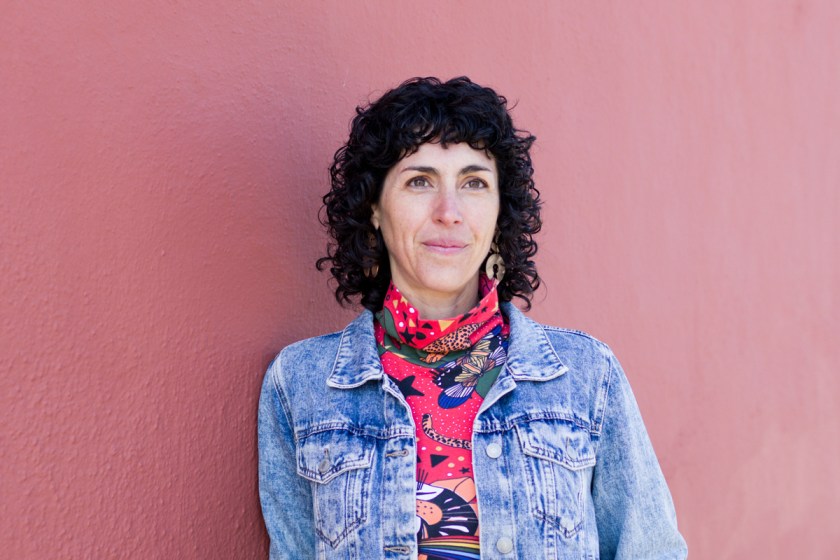
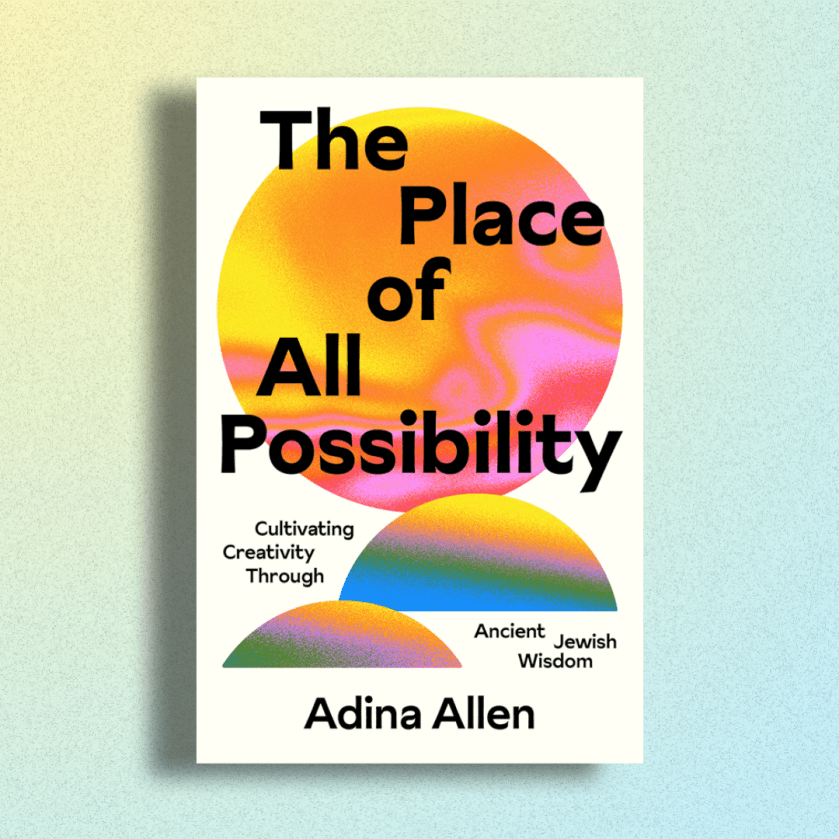
BIO: Rabbi Adina Allen is a spiritual leader, author, and educator. She is cofounder and creative director of Jewish Studio Project (JSP), an organization that is seeding a future in which every person is connected to their creativity as a force for healing, liberation and social transformation. Adina is the author of The Place of All Possibility: Cultivating Creative through Ancient Jewish Wisdom (Ayin Press, 2024), from which this excerpt is taken.
Discover more from Feminism and Religion
Subscribe to get the latest posts sent to your email.
 Feminism and Religion
I wish you a happy New Year. However. What about the Palestinians, the Lebanese and Iranians? I went to a celebration last night and there was no mention, and no mention here. I realize this is your faith not politics. I pray for peace . I pray Israel will see there’s no peace unless they learn to be a good neighbor. Not a neighbor who bullies, who takes water and land that is not theirs. Think about a new year with a new attitude. Think about being respectful.
LikeLike
I don’t see how we as a people can even think about birth and renewal when continue to deny what’s happening to this planet that we continue to ignore. Our obsessive focus on humankind that scientist Merlin Sheldrake calls “species narcissism” has brought us all to the edge….
LikeLike
Thanks for your comment Sara. I hear your pain and sadness, and feel that, too. It’s interesting, my reading of Sheldrake and others like Sophie Strand and Emanuele Coccia and Andreas Weber all who write about our relationship with the living world within and beyond us lead me to see it a different way — being connected to the more than human world — both the diverse microbiome that exists within us and constitutes us — and the natural world around us reminds me in every moment that rebirth and renewal are foundational to what it means to be alive. I see this is the plants, flowers, fungi, birds, insects, in mold and yeast and bacteria that blossom and bloom and soar and sing and proliferate in the face of all our human folly. May this be a year in which we recognize our interdependence and interconnection with all life and in which this leads us to shift the ways we live, act, learn, create, speak, share, govern and more to be one in which is more sustainable for more life to live with more ease, beauty and joy.
LikeLike
I didn’t mean to imply that I don’t see the earth and all her sentient beings as evidence of rebirth and resilience because I do. One reason I spend so much of time in the woods. There I FEEL that interdependence. Evidence of the continuation of life is all around me – but I do not extrapolate this reality to the human condition – in our terrible arrogance we separated from the web of life a long long time ago – I also live in a collective human culture that has gone – insane –
LikeLike
That was interesting. You’ve given me a lot to think about – creation/birth, to be sure, but also death. Recently we celebrated my mother’s 90th birthday and on the same day I learned that she may have colon cancer. Mom doesn’t want to go through a colonoscopy and says what will be, will be, and I support that decision. However, I dread losing her. She and I are extremely close and Mom lives with me. However, death is a part of the circle of life for us all.
LikeLike
Hi Linda, I just wanted to stop in and acknowledge that you have been heard in this difficult time. Facing these tough issues with our parents is one of the hardest things we can go through. It sounds like you are being honest and forthright in facing all these issues. Be kind to yourself and it already sounds like you are beautifully loving to your mother.
LikeLiked by 1 person
Thank you so much, Janet. Blessings and love to you.
LikeLike
Linda, thank you so much for your read of this piece and for sharing what it has evoked for you. I am thinking of you as you navigate your mother’s health issues, and sending prayers for your mother’s health and well-being and as much ease as possible. May her care providers be steady, caring and competent and may you be held and supported by friends and community as you care for and support your mother.
LikeLiked by 1 person
Thank you so much for your kind words. I really appreciate them.
LikeLike
Thank you for these words.
LikeLike