

We met online. Saram College hosted a theology and trauma workshop that Stephanie taught. Ashleigh asked a question. An immediate connection emerged.
The connection consists of mutual interest and passion around bodies, their strength, their vulnerability; around the spirit, its expressions and its intrinsic materiality; and trauma, what violations to our bodies cause to disrupt and annihilate us. Our interests intersect. Stephanie teaches Scripture and the Human Response to Trauma at Fordham; Ashleigh is a Crossfit Coach and Personal Trainer currently pursuing her PhD. She has nine years of experience working with survivors of trafficking and sexual violence. Together, we recorded a few YouTubes on CrossFit and Spirituality, on Crossfit and Community, and one forthcoming with a topic in the works.
A central question surfaces for us. How does CrossFit (exercising the body in a very particular way) address traumatic histories – especially those of sexual violence? The address, we believe, when made explicit, helps the cognitive processing of trauma (think fear or flight/fight/freeze mechanisms) on the physiological level. All of that, cognition and bodies alike, make up our spiritual selves, which is important because this presumption underscores that our material selves, our bodies, exist in conjunction with the spiritual, the divine, and the holy. Most of you reading to this point likely agree.
But why CrossFit, a sport many consider very difficult and sometimes itself threatening? (A myth the industry would like to debunk!)
CrossFit loads the central nervous system. The various exercises include moving a lot! Back and front squats, swinging a barbell overhead, carrying heavy sandbags, rowing, and running. All this speaks to Crossfit’s methodology of constantly varied, functional movements performed at high intensity. Combined in a one-hour session (or more), the chaotic shifts elicit heavy breathing, nervousness, and, yes, panic. Training at our thresholds confronts the flight/fight/freeze mechanism and mimics moving between pain and comfort in other aspects of life.
A theory emerges: asking the body to perform strength movements under cardiovascular duress builds something more than muscle. The fear element surfaces, stimulated by the movements and the high heart rate, yet the body performs in the face of such fear. Having applied this training methodology with survivors, Ashleigh has observed the transformative potential of this form of exercise.
When introducing CrossFit to survivors, patience is essential. Initially, some may feel apprehensive about stepping into a discomfort zone, and training must be approached with care. Gradually, however, survivors navigate these challenging spaces. Over time, they develop a sense of curiosity and a desire to push themselves further. The critical aspect lies in recognizing personal agency and empowerment: the survivor maintains control over how far she is willing to go and chooses when she feels ready to engage with discomfort. This sense of ownership fosters not only self-confidence but also a deeper resilience, transforming her relationship with both her body and her limits. The exercise form ultimately translates into facing fear in everyday experiences – the physical and the mental kind.
CrossFit’s design, though, contains an essential element. It embeds community in the chaos: facing fear never happens alone in the sport when done rightly. People surround each other as they push themselves, celebrating at the end the completion of any given workout.
We believe that CrossFit reveals new knowledge about the body, breathing capacity, personal thresholds, and spiritual life. For Ashleigh, CrossFit helps her connect deeply with her humanity, supporting her staying curious about her body. For her, this is the most spiritual experience. For Stephanie, the relatively new discovery of CrossFit has exposed her to two elements indelible to her spiritual life: people, amazing people who want to see each other grow better, and Mary Daly’s sense of the Absolute as a “Be-ing,” immanent and actualized through women’s creativity, in this case, how she moves her body.
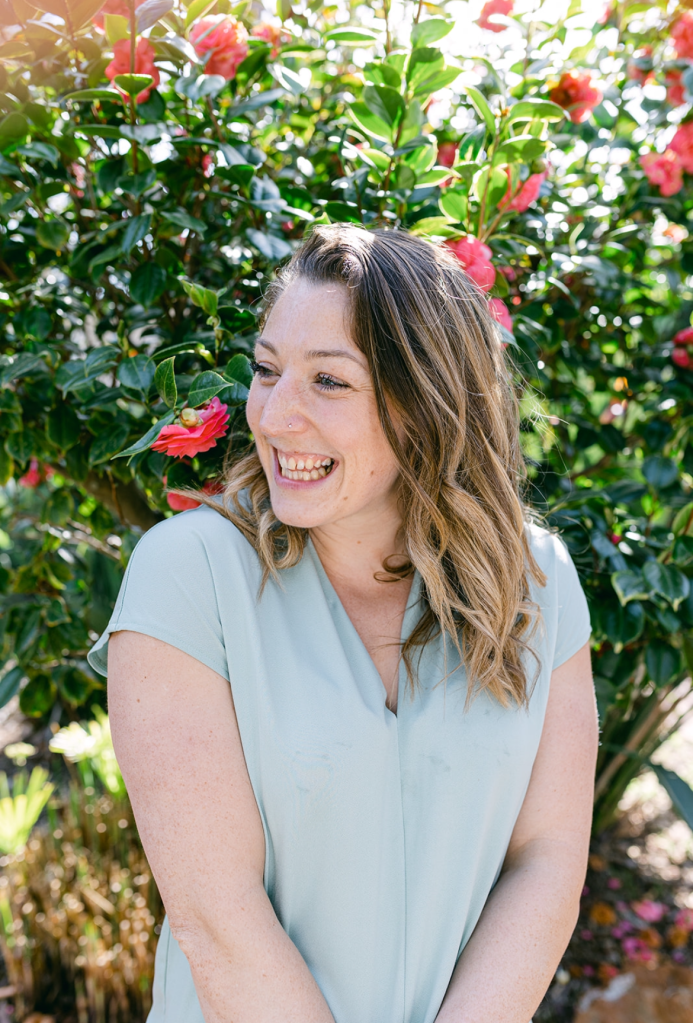
BIO: Ashleigh Gibb is a Trauma-Informed Crossfit Coach and Personal Trainer with a passion for the intersection of fitness, spirituality and trauma. Having worked with survivors of human trafficking for the past seven years, she has been on a journey of researching how to integrate spirituality and fitness as a catalyst for reconnection with self, others and the divine. With a keen interest surrounding attitudes to the body, she spent a year living in a safe house completing research for her masters as well as working for various anti-trafficking organizations in the US, UK and Thailand. Ashleigh has started pursuing her PhD in Practical Theology, Clinical Spiritual Care and Counseling at the Claremont School of Theology.
Discover more from Feminism and Religion
Subscribe to get the latest posts sent to your email.
 Feminism and Religion
Wow, this is very cool and makes a lot of sense. I know I’ve heard you talk about Crossfit and its value for women, and the productive intersection with trauma, but I didn’t quite ‘get it’ until this post, with these details. Now I’m so intrigued! And I’m glad you and Ashleigh found each other. I look forward to learning more. Thanks, friend.
LikeLike
I enjoyed reading this blog a lot. I agree that our bodies do hold traumas, and, exercise, or attention to the body is important. I’m going to share this post with two people I know who will appreciate it.
LikeLike