

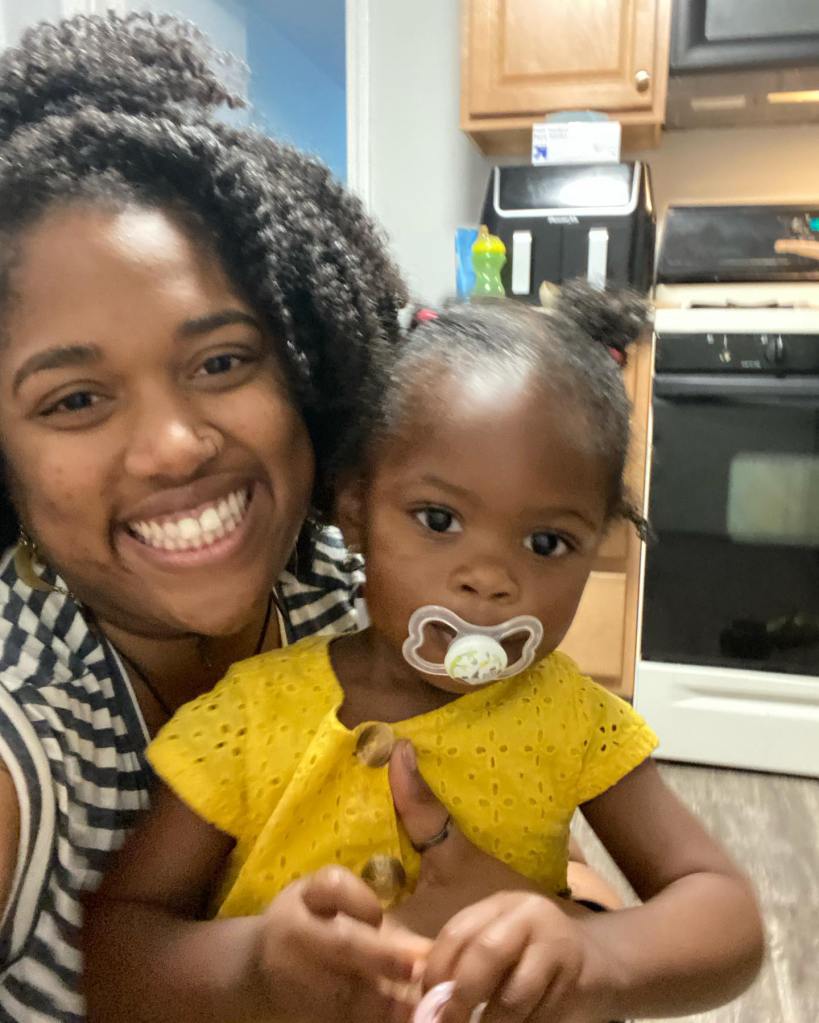
*When I refer to Black women, I am referring specifically to descendants of African peoples that were forced to experience the dehumanization of chattel slavery in the United States. I refer to those who would build the foundation of the country, uncredited. Those whose descendants continue the legacy of fighting for liberation.
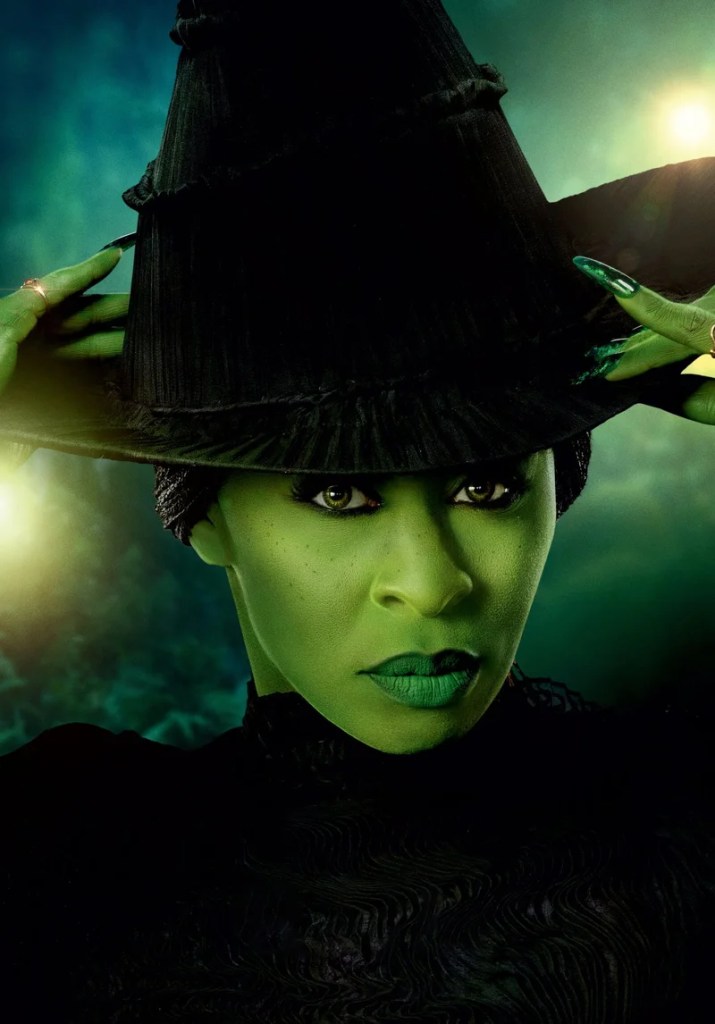
When a sister-friend invited me to see Wicked, I was hesitant. I’d never seen the show, and my attention span hadn’t even allowed me to finish The Wizard of Oz or The Wiz (the Black rendition). However, seeing the wicked witch, Elphaba, portrayed as a Black woman changed everything. It felt deeply personal; a reflection of my own life as a Black woman in predominantly white environments. As a womanist theologian, centering Black women’s experiences is central to my daily and theological framework, and this felt like a powerful synchronicity and spiritual experience aligning with my newly entered villain era!
Womanist theology cradles the heart of Black womanhood— the weight of otherness, the sting of exile, the echoes of not belonging, etched on skin. Womanism is our defiant soul song. A current flowing long before these shores, before the first foot fell in chains. We are the keepers of this river, for if we don’t, it will run dry. Womanism is a hurricane of Black women’s pain and rage; destroying the land built by our bloodied hands while shackled as property. Womanism is a culmination of storms animated by the spirits of those of us who jumped into the Atlantic – who succumbed to the insurmountable violence of colonization and capitalism. They reclaimed death as liberation. Womanism is also the soul song of those who refused to die.
Our stories are seeds scattered on barren ground infinitely threatened by the weeds of minimization and intentional deception – white lies. We hold this truth, for if we don’t, who will? Our stories, whispers in the wind, threatened by erasure and death (which has already claimed our Indigenous culture). Uncensored, we document and preserve, lest we vanish like smoke.
Womanist theology: a searchlight in the darkness. It illuminates the hidden currents that pull us under— not just the surface waves of sadness, rage, injustice, but the deep, unseen riptides of collective perception. Assumptions about Black women, like phantom limbs, constrict our movement, our breath. Our rights, enshrined on paper, become distant stars, unreachable. Education, a closed book; mental health, a locked room; resources, a mirage oasis. The future of our children, a fragile seed struggling to sprout. This poison seeps into our souls, a colonization of the mind, shaping our choices, our lives, our very selves.
Yet we refuse to die.
Wicked is a mirror into the Black women’s liberation movement: a storm that clears the air, washing away the distortions of the collective gaze. It empowers Black women to reclaim their narratives, to author their own destinies.
Elphaba owned her power, her gift since birth, first feared, then coveted by thirsty powers. Her emerald hue, a mark of distinction, became a beacon of strength when embraced as her own. The irony; to embrace her power she had to first embrace her skin. She was coerced into resenting her own essence, constricting the flow of her power. Only in the full bloom of self-love did her true potential unfurrow like a flower.
“Wicked”—a Black woman’s innate power, coveted and then branded evil. This speaks directly to Black Girl Magic. This phrase resurged in our recent pro-Black awakening due to public injustice concerning fatal state violence/police brutality and the 2016 elections (my timeline starts around 2016). It struck a chord on a soul level. Because I embody it. I am Black Girl Magic!
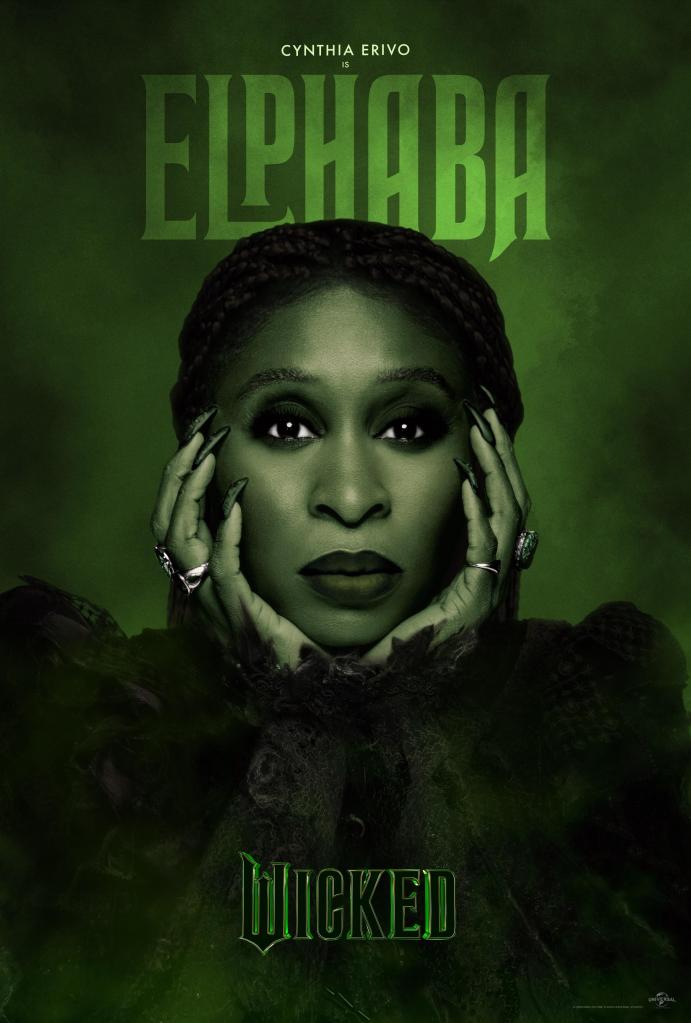
She spent her whole life unwanted. Belonging: the air we breathe, the water we drink—essential for life. Not a mere comfort, but the very ground beneath our feet – a bone-deep human need. A primal yearning, absence of which inflicts real pain— a wound not of flesh, but of the soul. Loneliness, a constant ache, a stifled scream from the core of being, a gaping void.
Wicked: a stage where Black women can finally breathe, unbound by the expectations of a world that seeks to define and demonize us. It is a dance of sisterhood, a delicate balance of individual growth and shared strength. Elphaba’s autonomy to choose purpose as her compass, not a lover’s hand. Her purpose became her lover. To see her navigate the “angry Black woman” archetype, while embodying tenderness, love, & vulnerability—a balm for weary souls attached to weary feet, heavy shoulders, and broken backs. It is a delicate dance indeed.
Her ultimate sacrifice, embracing the “wicked” cloak and hat to shield her friend, is a bittersweet symphony of love and loss (a melody too familiar to Black women, whose lives have been a constant offering of sacrifice). She lays down everything—life, family, support, fame, reputation, sisterhood, safety— to rise into the fullness of her own being.
The final scene, a mirror reflecting my own heart’s desire: LIBERATION. Elphaba’s song, a soaring anthem of defiance, touched the very core of my being. She chooses to defy gravity, to transcend the confines of expectation, shattering the glass ceiling that held her captive. She pioneers a freedom trail through a landscape of judgment, a journey echoed in the wisdom of The Matrix: liberation is not bestowed, but seized—a choice we claim as our own.
She who is cast out, the ostracized, the discriminated, the wicked- she who embodies the weeping and power of Black women sings,
“So if you care to find me
Look to the western sky
As someone told me lately,
Everyone deserved to fly
And I’m flying solo
At least I’m flying free
To those who ground me, take a message back from me
Tell them how I am defying gravity
And soon, I’ll match them in renown
And nobody in all of Oz
No wizard that there is or was
Is ever gonna bring me down.”
Bio
Chaz J is a Womanist theologian, Interfaith spiritual advisor, spiritual therapist, intuitive, yoga teacher, mother, lover, liberationist, spiritual decolonizer that lives at the intersection of spirituality, psychology, and wellness.
Discover more from Feminism and Religion
Subscribe to get the latest posts sent to your email.
 Feminism and Religion
Stirring, inspiring post. Thank you!
LikeLike
Stirring, inspiring post! Thank you!
LikeLike
I loved the movie and I really appreciate your insights. Thanks so much for writing this.
LikeLike
/
LikeLike
All I can say is WOW! WOW! WOW! Thank you so much for writing and sharing this. I haven’t seen the movie yet, but it just moved up on my list.
LikeLike
Moving post…’Our stories are seeds scattered on barren ground infinitely threatened by the weeds of minimization and intentional deception – white lies.’ oh YES – The same holds true for Indigenous cultures throughout this land who were it’s original inhabitants – every attempt to destroy them has ultimately failed and now that we are facing a sixth extinction the hope comes from these people whose relationship with the land has kept them whole and VERY MUCH ALIVE – though completely invisible which is why we talk about Indigenous people in the PAST tense. – Even after being ripped away from homelands they lived on. I shudder yo think what’s ahead but I have a strong feeling that our defiance as you put it must be tempered with a humility most westerners can’t conceive of.
LikeLike