

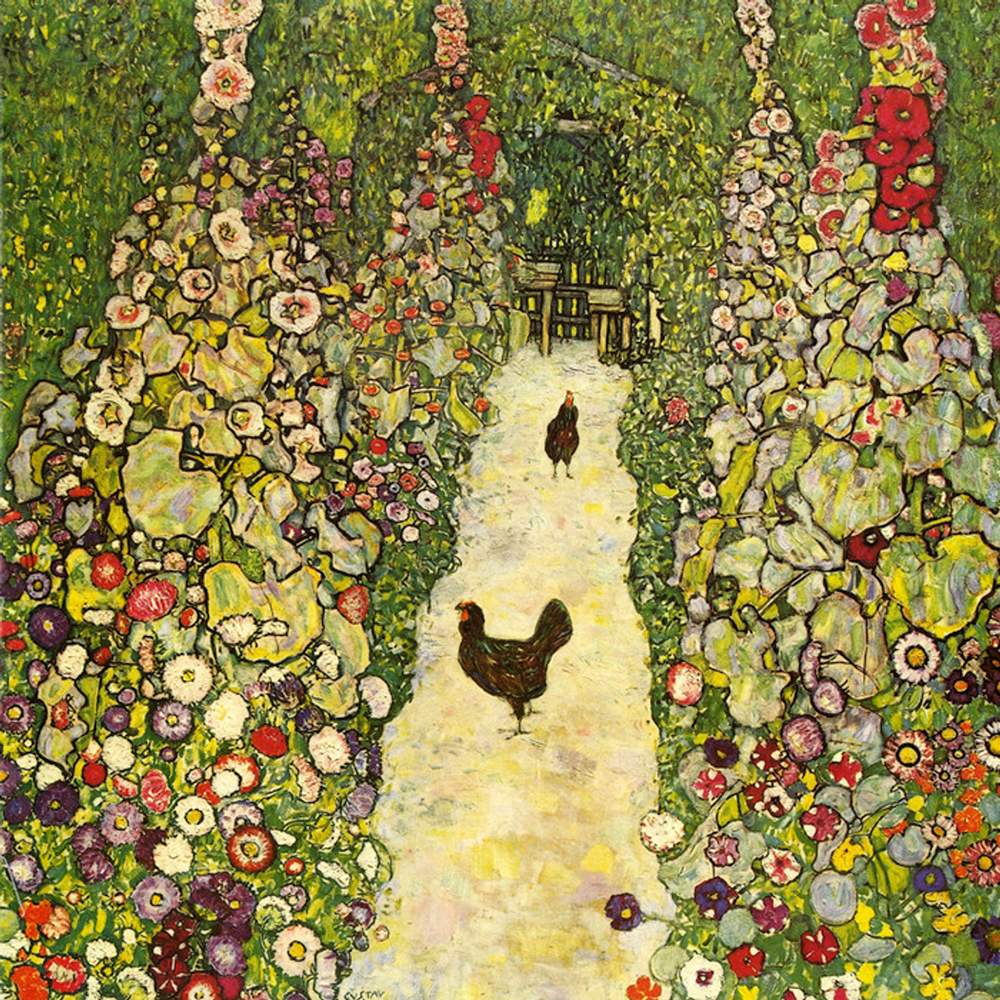
In the early years of my childhood, my family lived for a short time on a poultry farm in Bandırma. Hens wandered freely, unconfined. The contours of that land have long since changed, replaced by refrigerated depots and industrial freezers that hum along the highways, the relentless march of capital. In the Gospels of Luke and Matthew, Jesus laments: “How often have I desired to gather your children together as a hen gathers her brood under her wings, and you were not willing.” These days, I find myself returning to the image of the mother hen—a figure who embodies a special wisdom that is seldom named, yet deeply and instinctively known.
Although I did not have a religious upbringing, I grew up embracing aspects of many faiths. My spiritual background is Alevi, and after inviting the Presbyterian faith into my life following my marriage, I find these layered identities influence each other in ways that are both intricate and transformative. In her sermon Who Is Jesus? Mother Hen, Reverend Agnes Norfleet lingers on the vulnerability of the mother hen metaphor, questioning what strength a hen can possibly offer in the face of the fox—Herod—and, more broadly, in the face of violence at large. Reverend Norfleet asks why Jesus does not invoke a more forceful or fiercer maternal figure—a lion, perhaps, or a bear? What does this choice imply for our activism and understandings of leadership? What unique wisdom does the mother hen offer?
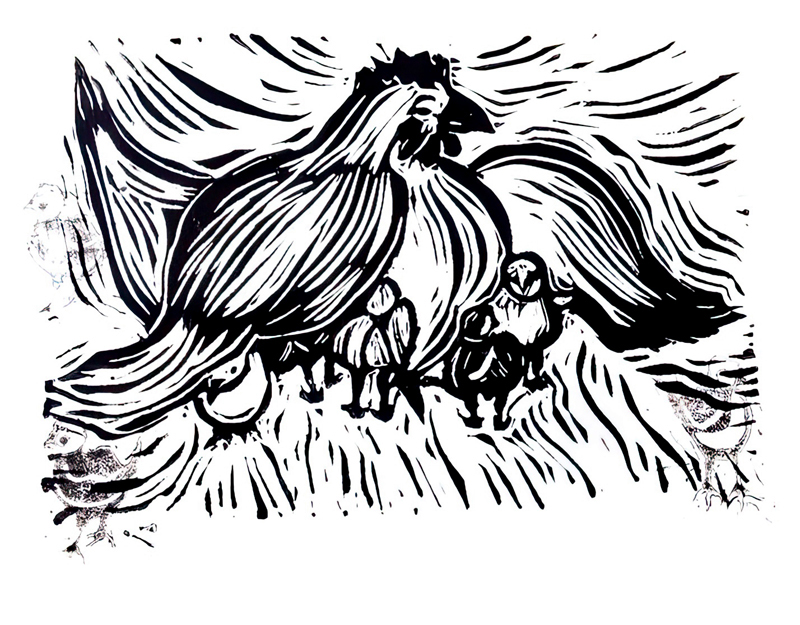
I’m not a theologian or a biblical scholar—I am a mother and a teacher—and yet, the image of the mother hen provides me with a nuanced meditation on how attention, love, care, creativity, and vulnerability move and guide my life’s daily unfolding. It gestures toward a faith not of certainties, but of presence: a way of showing up, of bearing responsibility in these liminal, delicate, and precarious hours. Every day and during each long night, my experience as mother to an infant requires deep attentiveness and profound reserves of energy. At every moment, I must remain poised for interruption, my consciousness stretched across a multitude of simultaneous concerns. I’ve long chased abstract signposts—“healing,” “connection,” “authenticity,” and in being a parent, my spirit discovers its full expression and experiences the joyful humility of its mysterious unfolding.
Jenny Odell suggests that when we resist arcs of linearity and the “grand narrative” of success or outward achievement, we can make space for a vision of ourselves that regenerates, that is not dependent on a particular version of success. The value I place on relationships and interconnectivity is central to the meaning and wisdom I find in caring for a baby—and, by extension, in all forms of care work, whether it involves children, the sick, or the elderly. Yet even within systems of care, power dynamics persist, shaping who is recognized, who is heard, and whose labor is legitimized. This type of work—and the labor it entails—has historically been rendered invisible and undervalued within outward-facing capitalist systems that value competition, rugged individualism, the pursuit of status, productivity, profit, and quantifiable measures of success and achievement. I did not thrive in those spaces, and only later did it occur to me that my desire to hold on to my sensitivity was an act of resistance to a world in which disposability, hostility, violence, and carelessness run rampant.
In The Mother Artist, Catherine Ricketts explores the intersection between labor, motherhood, and creativity: “We need artists who have tamed their egos enough to care for others, then revived their ambitions to be generous with their talents.” At this chapter in my journey, I cherish my creativity—but even more so, I am unapologetic about my deeper ambition: to love with an open heart. To love requires its own kind of rigor and labor; I believe that in loving, we have the potential to disrupt, and interrupt generational patterns and systems rooted in trauma, pain, and violence, where love has been withheld and denied.
At this point in his ministry, Jesus risks attack and loss of life. A delicate tension emerges—deep sorrow amid profound conflict, and a longing to unite people, even as he knows that his words, intentions, and actions may be dismissed or misunderstood. This kind of love honors free will and embraces risk. It is given freely, without needing to be earned, yet it always makes space for choice. As Barbara Brown Taylor writes, “If you have ever loved someone you could not protect, then you understand the depth of Jesus’ lament. All you can do is open your arms. You cannot make anyone walk into them. Meanwhile, this is the most vulnerable posture in the world – wings spread, body exposed – but if you mean what you say, then this is how you stand.” When Jesus confronts his own vulnerability on the cross, he, too, is bare breasted, his arms outstretched like wings.
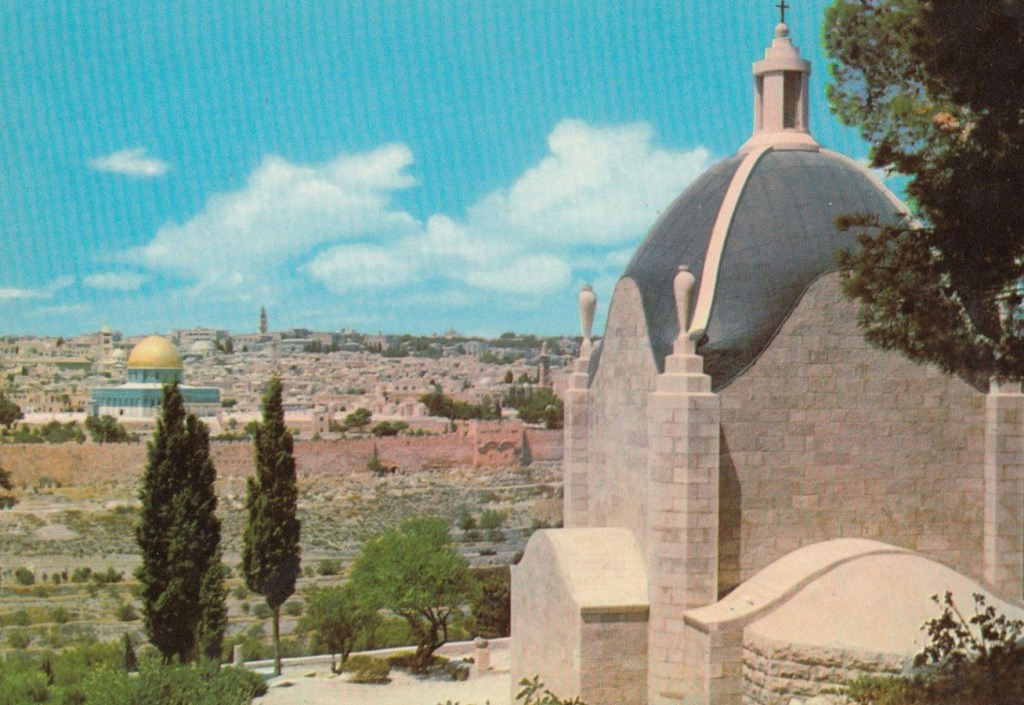
Reverend Cara B. Hochhalter offers these insights: “It is said that Jesus looked down from a hill above Jerusalem in his final days, filled with sadness over the oppression and injustice inflicted on the people by Roman rule. Despite the violence, Jesus tenderly expresses the desire to gather them all as a hen gathers her brood. There is a beautiful chapel on this hill today called ‘The Church of Dominus Flevit’ (where Jesus wept). The dome of the church is shaped like a tear drop. I believe Jesus longed for the people to come together peacefully within the love of an inclusive God.”
It’s not uncommon for metaphors about motherhood to be approached with skepticism. I believe it’s important to be critical about the ways in which we talk about motherhood, to examine the weight of our metaphors, and their implications. Although Jesus’ metaphor may not seem fierce enough when confronted with the despair and violence being experienced in our communities today, the mother hen offers a unique kind of vision and posture that may bring us nearer to the inner heart of the God(s) of our understandings, if we suspend our judgements long enough to listen. When we gather under the wings of the mother hen, we are held. I have found that courage often takes this open, vulnerable posture, and hope itself becomes strongest when called upon in times of extreme volatility and uncertainty. During times like these, we may feel keenly aware of our vulnerabilities. We may sense that we, along with our loved ones—both those we know and those we have yet to meet—are vulnerable to harm and hurt. This awareness may lead us to yearn for a quieter, kinder existence, or it may provoke feelings of defensiveness and aggression. No matter which way we feel, we are all seeking shelters of some kind; however, the mother hen cannot stop the danger, nor can she offer full safety from it. What she gives is instead is unconditional love—a love that respects choice, and boundaries. There was once a time when I wanted to be tough as nails. I wanted to show the world I, too, had convictions. But I have since learned that in my defenselessness, my courage lies. Perhaps we may be emboldened when we take the posture of the mother hen, and when we try to approach each other, and the world, through her maternal vision.
A note on terminology: I use the words “mother,” “maternal,” and “mothering.” In my use of these terms, I wish to acknowledge the limitations of language and the full spectrum of reproductive experiences. The ways we talk about motherhood can be deeply alienating; the term “mother” cannot, and should not, be confined to a female who births a child, and I am committed to gender inclusivity. I affirm this vision is accessible to all, regardless of whether one identifies as “mother.”
References and Further Reading:
Art in the Christian Tradition, As A Hen Gathers by Cara B. Hochhalter:
Agnes Norfleet, “Who Is Jesus? Mother Hen”
Bio: Elanur Williams writes from New York City, where she lives with her husband and daughter. A teacher by profession, she has taught in elementary and adult education contexts, specializing in reading and writing instruction.
Discover more from Feminism and Religion
Subscribe to get the latest posts sent to your email.
 Feminism and Religion
What beautiful observations about motherhood! Thank you, Eleanur. ❤️
LikeLike
Thank you so much. In my experience, motherhood is a tapestry of quiet miracles and fierce love — I simply tried to weave a few of those threads into words, and I’m honored it resonated with you!
LikeLiked by 1 person
You did so exquisitely! And apologies for misspelling your name. ❤️🍃
LikeLike
❤️
LikeLiked by 1 person
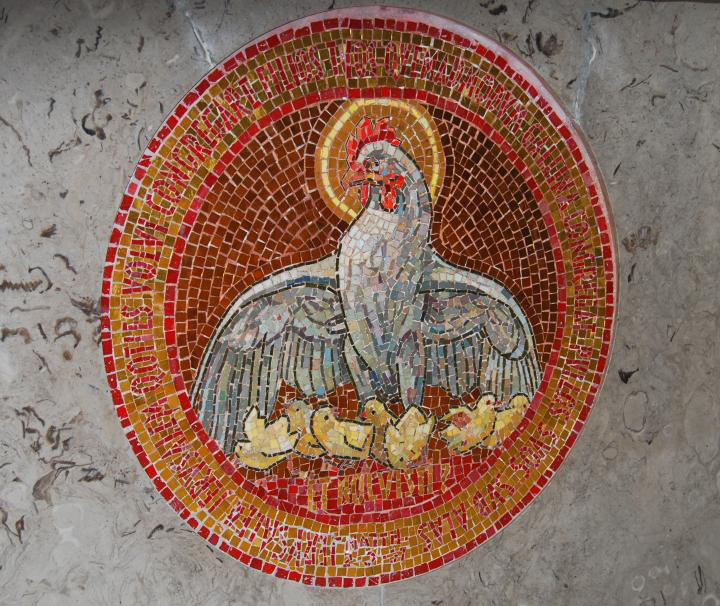
What a beautiful, moving post. Thank you! I love the Dominus Flevit mosaic.
LikeLike
Thank you! I deeply appreciate your thoughtful comment, and I’m so glad the piece resonated with you. Indeed, it’s a remarkable mosaic!
LikeLike
“I did not thrive in those spaces, and only later did it occur to me that my desire to hold on to my sensitivity was an act of resistance.” A useful insight.
Note: Genevieve Vaughan, from the Maternal Gift Economy Network, uses the word “motherer” for someone who acts as a mother whether or not they have birthed a child.
LikeLike
Thank you for your thoughtful comment! I appreciate your engagement with the piece, and I’m glad that line resonated with you. It took me a some time to recognize sensitivity not as a weakness to overcome, but as a form of resistance — and even strength. Recognizing sensitivity as a form of resistance is an important reframing, one that speaks to the complexities of personal resilience in environments that often devalue such qualities. I also value your reference to Genevieve Vaughan’s concept of the “motherer.” Her framework invites a nuanced understanding, emphasizing the role of nurturing and care as fundamental acts of resistance and empowerment, regardless of biological motherhood. Thank you for that!
LikeLike
Wearing the Mother – “Hood” may be a choice or a vocation and often has little to do with biological mothering. In the world of exploding humans and rapidly disappearing species (only 4 percent on non human species are left on this planet – the other 96 percent belong to humans and their food animals like cattle and industrial raised chicken etc…… horrifying when you think about it) We may mother our children and or the rest of nature. The hen is a wonderful symbol/species of good mothering – so is the goose. I am struck by our cultural obsession with ‘saving’ our predators like the eagle and hawk and shooting the matrifocal birds and animals like wild geese, and black bears who are prey animals who live in matrifocal families. Motherhood is indeed a loaded word… and holding on to our sensitivity although incredibly painful is definitely an act of resistance. One we often ignore – thank you.
LikeLiked by 1 person
I agree wholeheartedly that motherhood — as a concept, a practice, and an act — is deeply loaded, and holding onto sensitivity, despite its discomfort, becomes a key form of resistance in a world that often seeks to suppress it. Your comment offers so much to reflect on — thank you for sharing these insights. You highlight critical intersections between mothering, both human and non-human, and the broader ecological context that is often overlooked. The contrast between the reverence for certain predator species and the vilification of matrifocal animals like geese and bears speaks volumes. Thanks so much for your comment!
LikeLiked by 2 people
I feel heard and appreciated – thank you
LikeLike
I loved your post — especially the way you described “bearing responsibility in these liminal, delicate, and precarious hours,” and the way this “requires deep attentiveness and profound reserves of energy,” as well as being “poised for interruption, my consciousness stretched across a multitude of simultaneous concerns.” Though it was many years ago, I still remember the attentiveness and energy required throughout the night especially, but also the day. Now, as the grandmother of a toddler for whom I was often responsible in the middle of the nights of his infancy, and still occasionally today, that reality of responsibility — the ability to respond — is ever present. The greatest gift I can give this now two-year-old is abundant attention — a model of how to give love to anyone at any age.
I’d love to know the source of your Barbara Brown Taylor quote. Thank you.
LikeLike
Thank you so much for your beautiful response. I’m deeply moved by the way you describe responsibility as “the ability to respond”—what a grounding and powerful way to name it! The image of you offering that same care now, as a grandmother, is a powerful testament to love’s enduring, generational strength.
The Barbara Brown Taylor quote is from The Christian Century (February 25, 1986). You can find it online here: http://www.edgeofenclosure.org/lent2c.html
It’s in the section titled Meditation Three (Integration): Fox and Hen. I wasn’t able to find the full article—only the excerpt.
Thank you again for sharing your thoughts and insights on the piece. Wishing you all the best!
LikeLike
I really enjoyed your post, Elanur. Beautifully said. It is never JUST as a metaphor or a symbol that the Bible uses these images, such as of the mother hen. It is out of great, deep respect for actual mother hens. It is no accident that Mary is featured so heavily in the gospels, as compared to Joseph. Jesus was raised by Mary to be a humble and courageous prophet. No one who understands motherhood in Animalia would ever underestimate just how powerful and important it is. Your post also reminds me of the Mother’s Day Proclamation. Peace to you, friend.
LikeLike
Thank you so much for your thoughtful response! I really appreciate the depth and care in your reflections. You’re absolutely right—the imagery used in the Bible, like the mother hen, holds a reverence not just symbolically or metaphorically, but for its reality and its lived implications. There is genuine respect there. I also love the attention you bring to Mary’s presence and the Mother’s Day Proclamation! Peace to you too, friend, and thank you again for sharing your thoughts.
LikeLike