

Part 1, appeared yesterday.
There are many women named Rose in the ledgers of unfree people in Charleston around 1850. The defining feature to find the Rose mentioned on this sack is that her daughter is named Ashley, not a common name for Black female children of the time. Miles finally locates a Rose and an Ashley in the inventory of Milberry Place Plantation, a country estate of a man named Robert Martin. When Martin died, his estate was liquidated and thus the mention of the sale of Ashley.
“Ashley is listed among one hundred unfree people in the inventory of Martin’s enslaved property taken in the year 1853. Her attributed value of $300, in comparison to that of other women listed at $500 and $600 in the cotton boom decade of the 1850’s, suggests that she may have been a younger or relatively unskilled worker”(69).
Things were bad enough for unfree people but the disruption that came like a tsunami through their lives when an enslaver died and his property was sold was a fear most carried and trembled at the thought of. Unfree families were always being torn apart in the time that slavery was legal and allowed in this country, but when estates were being divided up, it became particularly excruciating and this is what came to pass for Rose and Ashley.
“Martin’s house in town was inventoried in a separate appraisal upon his death. Here, he owned pricey china, fashionable carriages, a pair of horses, one cow, stocks and bonds in numerous companies, and seven enslaved men and women, one whose name was Rose.
This Rose, listed with the value of $700 beside her name, was the most expensive woman on Martin’s urban estate. She must have been in her prime age of life. She may have been highly skilled. However much we hate to confront it, she may have been priced this amount because of her sexual appeal to white men”(70).
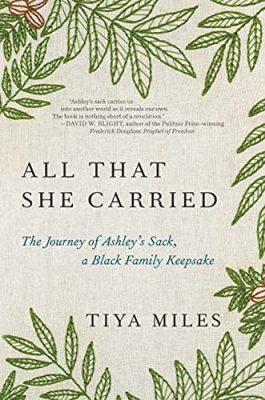
What we learn from the above is that by this time already, Rose was in the town house and Ashley was in the country plantation. They were separated by distance before Ashley was sold. Still, they may have seen one another now and then or at least heard tell of one another. Upon Martin’s death, Rose knew the delivery of the sack could very well be the final act she would do for her daughter. She planned and plotted and was able to create and fill the sack as well as get the sack to her before both of their impending sales.
I am sure there was hope in both of their hearts that they would somehow be able to see one another again at some point but we read on the sack that never happened. And so it is even more important to know that Rose’s efforts were successful in getting at least something to Ashley for some kind of amelioration, mitigation and comfort for what was in front of her. And something to remember her, Rose, with. Something to make Ashley confident that she was dearly loved.
“Ashley, the inheritor, then became a standard bearer for the survival of her kin. We might even see Ashley as a mythic heroine: the seed carrier who totes a sack and plants new story lines. Much of our cultural lore lionizes male heroes wielding weapons of death, but an alternative archetype exists in history and myth the world over. Novelist Ursula Le Guin describes this second sort of protagonist as a gatherer instead of a hunter, a collector of wild plants rather than a shaker of spears. This alternative figure totes a bag as her principle object and tells stories as her primary mode of communication”(276).
Within the chapter about locating Rose and Ashley, Tiya Miles makes a statement of such importance and a plea of such worth that we must stand up and take notice. We must follow its direction:
“We know so much about Martin from his records and the imposing house he built. Historians follow paper trails. Since Rose left none, it is easy to let her fade into the margins of this record driven chapter, to let the Martins take center stage in our time as in their own. There is a centrifugal pull, in reconstructing enslaved lives, toward telling the stories of their owners primarily or instead. This is a default we must resist—but how? Not one record in the Martin family papers describes Rose or the life she lived. Her cares and her kindnesses, fears and frailties, fade behind a wall of silence. Can we scale it?
. . . We cannot know Rose but we can draw on resources at our disposal —documents, cityscapes, architectural records and the built environment she inhabited, slave narratives, and Ruth’s inscription on the sack—to picture the woman she might have been and summon the shape of her daily life”(78).
This is the main thesis and mission of #Nastywomenwriters: to not fall into the default that erases everything and everyone except white men in its wake. We must tell the whole history, the whole story. We must include those who are not included, reintroduce those who are erased on purpose or by omission. As Miles urges we must draw on resources at our disposal to replace the distorted history we tell ourselves, our children, the world; to tell instead the truth and wholeness that includes all voices, all experiences, all races, sexes, classes and sexual orientations. In this case, history is told by and about the enslavers. We must resist this default, Miles urges. Though we have more information on them, more records and so it is easier to construct, it does not tell the truth.
“Who was Rose? We know at least this: Rose refused to submit to the lie that said she had no right to love her daughter. Instead, she claimed her child, sought to shield Ashely, and provided a priceless inheritance, which she folded into a sack. Rose’s radical stance, obfuscated in the archives, reveals to us the potential force of human will against the odds”(90).
In this book, Miles offers us a template of how to tell the stories: using “documents, cityscapes, architectural records and the built environment she inhabited, slave narratives, and Ruth’s inscription on the sack” is how she did it. Writers, artists, painters and historians, can do the same for their subjects.
Miles does an amazing job finding, locating and describing the women’s stories hidden in the male narrative. She discovers that Ruth moved to Philadelphia from South Carolina and had one daughter named Dorothy who died in 1988 “with no known lineal descendants. Afterward the textile was lost, perhaps boxed, dated, or sold with other items once attached to these lives as ephemeral as our own. But the bag Rose packed, the cloth Ashley kept, and the tale Ruth told live on to declare the staying power of love’s ties and women’s stories”(264).
Tiya Miles is a #Nasty Woman Writer
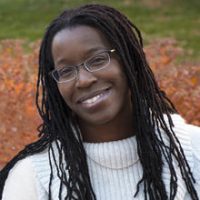
Tiya Miles is the author of five other books including a novel The Cherokee Rose: A Novel of Gardens and Ghosts. She is a professor of history at Harvard University. She created ECO Girls: an environmental and self-esteem building program for girls in Urban Southeast Michigan. She lives in Cambridge, Massachusetts. Learn more about Tiya Miles here.
© Theresa C. Dintino
Works Cited:
Miles, Tiya. All That She Carried: The Journey of Ashley’s Sack, a Black Family Keepsake. Random House, N.Y. 2021
Discover more from Feminism and Religion
Subscribe to get the latest posts sent to your email.

 Feminism and Religion
“This is the main thesis and mission of #Nastywomenwriters: to not fall into the default that erases everything and everyone except white men in its wake….Though we have more information on them, more records and so it is easier to construct, it does not tell the truth.”
Theresa, so much appreciate knowing about Rose and Ashley! Will look for Miles’ book.
LikeLike
Thank you for telling us about this beautiful gathering of love and story and lasting gifts, woman to woman, mother to daughter.
LikeLike