

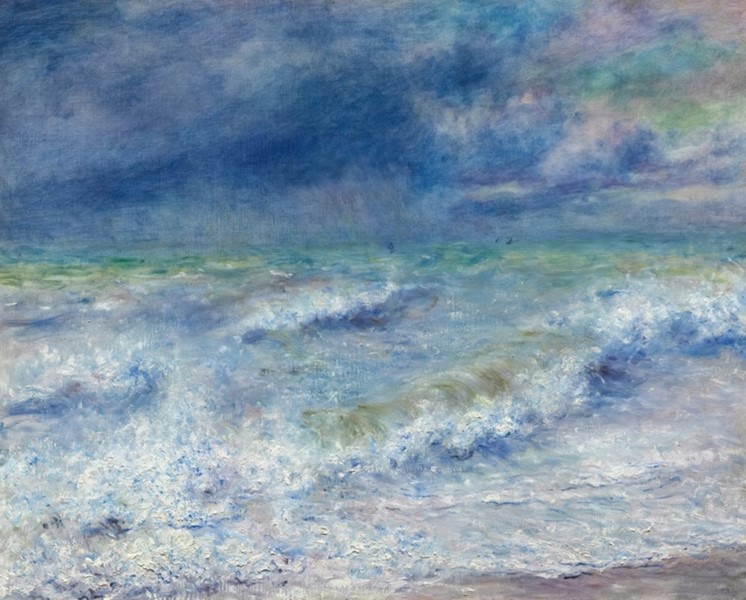
I am drawn to the sea not for its grandeur, but for what it returns: small, broken things that once had sharpness. As a child, I remember walking along the shore searching for glimmers, glass fragments dulled into misty greens, smoky ambers, pale blues. I wanted to gather the pieces of what had once been whole and what had once been contained. I collected the way a child collects secrets, each piece a contradiction. Maybe I thought I could make something from these fragments; after all, I was the kind of child who looked for meanings and signs in everything. It is in part what drew me to literature and writing.
There is a piece of sea glass I remember more than the others: an opalescent shard, a piece of moon. That piece became a metaphor for the self I hadn’t yet become. Like those fragments, I too had sharp edges once. Pain teaches that: the need to defend, to protect oneself from further breakage, carves us into angular shapes. I learned early how to brace for fracture, and there was a comfort I found in control, a fierce desire for wholeness that was often mistaken for strength. But there is a brittleness to that kind of armor, and eventually, it begins to break. It took years of undoing for my edges to soften.
In my writing classes, I was taught to avoid the word “soft.” I was encouraged to strive for precision and impact. As a word, soft is vague and suggests lack of resolve. A word like “soft” risks undermining the strength a writer may wish to convey, and due to its frequent use, it’s become somewhat of a cliché, leading to writing that can feel predictable and uninspired. Yet the most pivotal moments in my life have been anything but precise. Grief and lived experience have gradually worn away the sharpness I once thought I needed. My need to be perfectly contained and unbroken has faded. I see healing not as a return to what once was, but as a necessary erosion. The process of becoming something made gentle by the very forces that once threatened to undo it. It reminds me wholeness is not the opposite of brokenness. It is what brokenness becomes when it is held long enough by something vast and forgiving.
In her poem “Remembering,” published in Finding Water: The Art of Perseverance, Julia Cameron writes: “Surely you came like the rest of us / from that dark sea of souls, / that sighing that brings us forth / and calls us back—we all share that. / If this is true, and it is—even for you / why are you a broken glass smashed against / the floor? Why not the sea’s grass on / the ocean floor? Why not a smooth stone, a willow / in the wind? Why do you break, not bend, and / even broken, why not mend? You do not know how.”
September marks both the anniversary of my grandmother’s passing and the birth of my daughter. I was with my grandmother the night she passed. I remember the night coming in through the window, the sound of cicadas, the texture of quilts, Johnny Cash on the stereo. There are questions I didn’t ask—about childbirth, motherhood, marriage, ambition, and what it felt like to live far from family. I never asked whether she had once mistaken sharpness for strength, too. I didn’t need to. Her life was the answer. And my daughter’s is, too.
I called my grandmother Aynene, a name inspired by the Turkish word for moon and nene, a colloquial term for grandmother. Together, it means “Grandmother Moon.” When my grandmother moved into assisted living and later to hospice in 2023, my sister painted seashells and hung them alongside her delicate paper cranes. My grandmother had a gift for treasuring what others might overlook: the lost, the discarded, the forgotten. The sea, in its own way, does the same, taking what has been discarded and reshaping it through persistence.
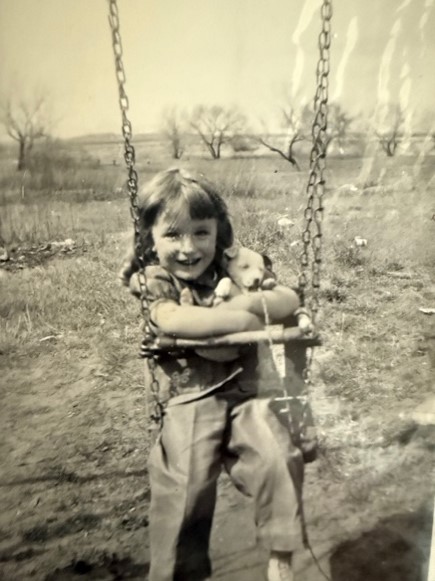
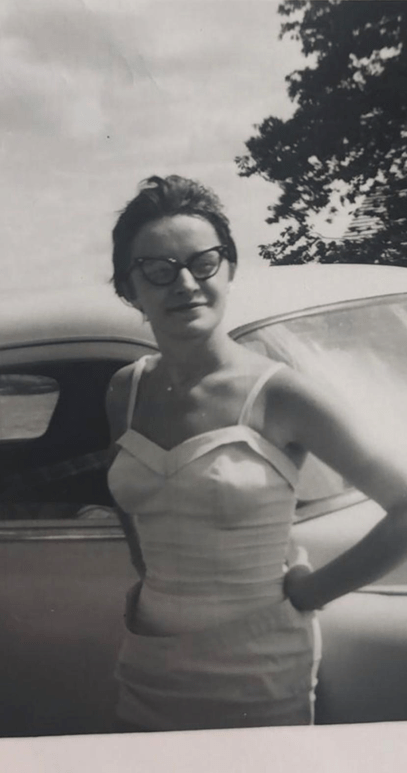
My grandmother was born in North Dakota in 1941. The eldest in a Catholic family, she attended nursing school in Montana, where she met and married my grandfather, a Muslim man from Turkey who was a student at the School of Mines. She wore green velvet shoes the night they met. In the 1970s, my grandmother moved to Istanbul. I imagine her then: in her early thirties, with three children, living near the water’s edge. After living in Istanbul, she eventually returned to the United States, where she worked as a nurse in veteran hospitals and oil refineries. My first home was hers, an apartment overlooking the Delaware River.
On my own wedding day many decades later, I also wore green shoes. My husband and I chose the darkest, longest night of the year to get married, a night that also coincided with Rumi’s Wedding Night. We spent our honeymoon on the Jersey shore at winter solstice. I remember the ocean’s edge in the cold, reflective light. Its impact sharp and crushing, yet in that water, I felt a buoyancy.
My daughter was born in the midnight hours, after two long days of stalled labour and a double dose of epidural. Shoulder dystocia turned the room tense and urgent, and I suffered serious complications directly after giving birth. I was high on something I still can’t quite name. Drugs, maybe, or something deeper, and it felt like I was floating in a strange, sacred stillness, yet I was fully present. And then my child was suddenly here, drawn from the depths, luminous.
I once thought that being whole meant achieving a perfect version of myself, an ideal I have since released. In The New Yorker, Leslie Jamison writes in her article “The Pain of Perfectionism” (August 4 2025) that mattering is “a counterpoint to perfectionism, a more viable way to arrive at a sense of self-worth…Perfectionism may arise as an attempt to overcome a sense of insignificance, but it’s a poor strategy, because each step toward perfection is a step away from distinctiveness, from the flawed, messy unrepeatability that we crave in others and want others to witness in us…Mattering grants everyone dignity, even as it brings with it a certain humility.” Jamison’s words remind me, too, of sea glass, and how beauty can be found in what’s broken and incomplete. Wholeness, I’ve come to realize, isn’t about assembling all the perfect pieces, but about accepting the fragments for what they are. Like sea glass shaped by time and tide, made meaningful not by perfection, but by presence. We don’t have to be whole to matter; it’s enough to just be here.
I still collect sea glass, though less frequently now. I am focused less on the act of receiving and more on the act of returning. But whenever I do find a shimmer among the rocks, I recognize it instantly. I know it by heart.
Bio: Elanur Williams writes from New York City, where she lives with her husband and daughter. A teacher by profession, she has taught in elementary and adult education contexts, specializing in reading and writing instruction.
Discover more from Feminism and Religion
Subscribe to get the latest posts sent to your email.
 Feminism and Religion
What a beautiful essay, Elanur! This, in particular, resonated with me: “My grandmother had a gift for treasuring what others might overlook: the lost, the discarded, the forgotten. The sea, in its own way, does the same, taking what has been discarded and reshaping it through persistence.” I also love the beach–any beach. I search for treasures there. Love the analogy you make using those beach treasures as a metaphor for “life.”
LikeLike
Thank you so much for your comment! I appreciate your kind words.
LikeLike
Beautiful!
LikeLike
Thank you!
LikeLike
My mind drifted on a beautiful sea while reading your article. And ironically, I watched a show on PBS last evening that was about the fist to be found near the NC coastline. One of the repeating themes for the vulnerable fish were sharp fins that they could lift if they were in danger. The poem by Cameron made me think of someone’s need for self-protection turning into sharp actions.
Thank you for sharing these memories.
LikeLike
Thank you for sharing your thoughts and reactions to the piece!
LikeLiked by 1 person
“I see healing not as a return to what once was, but as a necessary erosion. The process of becoming something made gentle by the very forces that once threatened to undo it. It reminds me wholeness is not the opposite of brokenness. It is what brokenness becomes when it is held long enough by something vast and forgiving.” This will stay with me for a very long time. Thank you!
LikeLike
❤️
LikeLike
Moving essay – I love these stories we tell about our lives – I see circles that overlap…
LikeLike
Thanks so much!
LikeLike
Thank you for these words. “. . . wholeness is not the opposite of brokenness. It is what brokenness becomes when it is held long enough by something vast and forgiving.” and “. . . how beauty can be found in what’s broken and incomplete.” My version of this is that I have been creating a mosaic in my garden out of broken pottery and crystals/stones.
LikeLike
I love that you’re creating a mosaic in your garden! What a beautiful and tangible expression of this truth.
LikeLike
What a great piece! To me wholeness means healing from a patriarchal script I swallowed whole, that has nothing to do with God, who, I am. Re-membering I am God, supports my healing process, knowing I believed a bunch of lies and taking back my sovereinty .
LikeLike
Thank you! I really resonate with what you said about healing from the patriarchal script and reclaiming sovereignty. The journey of re-membering who we truly are is such a sacred one. It’s inspiring to read how you’re embracing that truth and using it to heal and grow. Thank you for bringing that light into the conversation.
LikeLike