

A woman’s body has become a site of commodification to such extreme that even her most basic necessities are not spared. Products meant for hygiene or comfort ; razors, deodorants, tampons, shampoos are packaged, scented, and coloured in ways that signal femininity, pushing them into a hyper-aesthetic zone of the departmental store. This creates a glaring economic contradiction: men’s products, often identical in function, are sold cheaper, while women pay a premium simply for their gender. But the exploitation is not merely financial. By demanding that her essentials adhere to socially approved standards of beauty, the market sends an unambiguous message: a woman’s needs, her very body, are only legitimate when they are commodified, beautified, and consumed in accordance with society’s expectations. The Pink Tax is thus not just a matter of inflated prices, it is a subtle enforcement of control, conditioning women to invest continuously in an ideal that is neither natural nor negotiable.
But this exploitation extends far beyond commercialized markets and seeps into the routines of everyday life. A tailor may charge different rates for the same shirt depending on the gender it is intended for, while a simple haircut at a salon can cost women far more than men, despite the identical service. Men’s consumption remains largely practical, functional, and unembellished, whereas women are expected to pay for aesthetic compliance at every turn. This raises the question: is the female market driven merely by trends or gullibility, or is it a reflection of deeper societal pressures — an unspoken demand that a woman’s body and appearance must conform to rigid standards of femininity in order to be socially acceptable? Is the answer in the very language and design of advertising Taglines like “You’re worth it” or “Strong is beautiful” which carry a psychological imperative, subtly instructing women to compare, conform, and continually invest in their appearance as a measure of worth ? These subliminal marketing strategies are deeply rooted in social comparison theory, objectification and fear appeal/protection motivation theories.
What drives these trends and this pervasive atmosphere of aesthetic pressure is complex, but Bollywood emerges as a central amplifier. It does not merely participate in the beauty economy but it scripts the very ideals it propagates. A heroine is considered desirable only within certain limits of youth, height, body shape, and glossiness; she must embody a narrowly defined standard of perfection to occupy the screen. In contrast, the male hero faces no such constraints , he can be rugged, unshaven, or rough around the edges, yet remain socially and cinematically attractive. It legitimizes and perpetuates a system where women’s bodies must conform, while men remain free to exist in natural variance.
The pressures scripted by Bollywood do not remain confined to the screen; they extend into real life, shaping expectations of the female body in ways that are both cultural and corporeal. What began as inflated prices on products and services has now seeped into medicalized beauty, where women feel compelled to inject, sculpt, and chemically alter their flesh to remain socially desirable. Botox, lip fillers, fat-dissolving injections, and waist trainers have transformed the pursuit of beauty into a literal taxation of the body. The ethical question becomes unavoidable: where do we draw the line between choice and coercion, enhancement and harm? When a neurotoxin is normalized as a cosmetic tool and surgical interventions are valorised as routine, the body itself becomes a commodity, an arena where societal expectations and corporate profit intersect and women are left paying the ultimate cost, not just in money, but in autonomy, health, and identity. Botox, derived from the neurotoxin produced by Clostridium botulinum, is in essence a biological poison masquerading as a cosmetic indulgence. Its clinical purpose is to paralyze facial muscles and has been co-opted into the aesthetics of youth, presenting a perfect example of scientific villainy marketed as self-empowerment. What begins as a beauty trend quickly transforms into a gothic extension of the body: expressions freeze, wrinkles vanish, and the subtle movements that communicate emotion and humanity are chemically silenced. Our faces, once maps of experience, memory, and social connection, are rendered static, producing what might be called a “living mask” of perfection. The social and cultural implications are profound: the frozen visage becomes a symbol of conformity, a shell shaped to meet an external ideal, while erasing the very signs of individuality and lived experience. Many iconic public figures, became embodiments of this paradox the human body reduced to a display of chemical control, a haunting illustration of how aesthetic obsession can strip away the expressive, vulnerable, and ultimately human qualities of the self. Botox is thus not merely cosmetic; it is an ethical, philosophical, and neurological commentary on the ways in which society scripts the human form, demanding that even biology yield to the imperatives of beauty. Shouldn’t we be asking questions, that how come we are trivializing medicine for vanity ? Is natural ageing a flaw framed to be fixed ? In masking age with toxins, do we risk letting appearance define our being, questioning the very locus of identity?
to be continued tomorrow
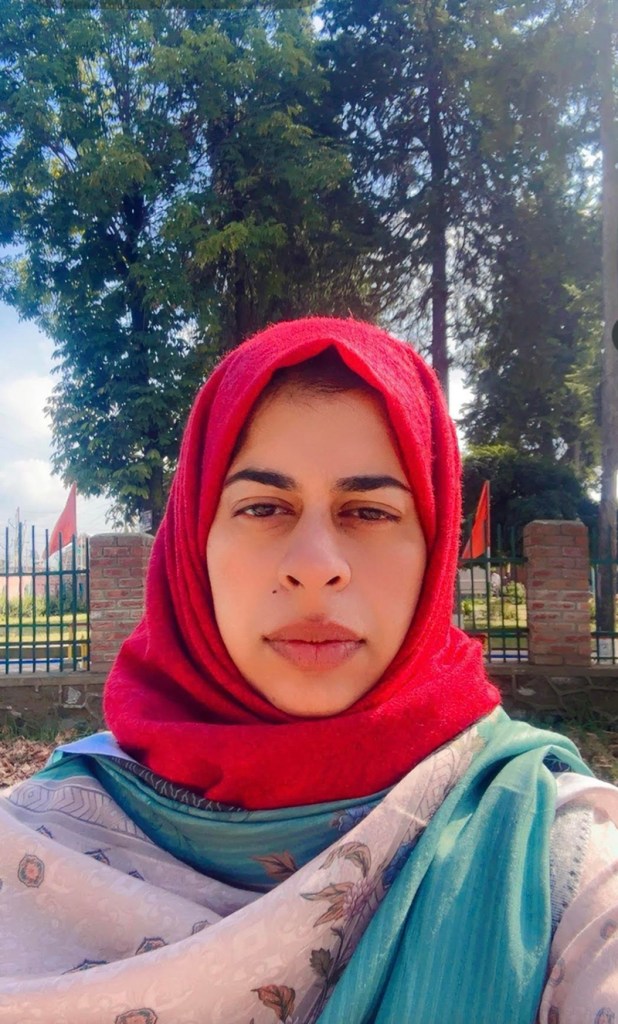
Bio: Sabahat Fida is an educator based in Kashmir with masters in the field of Zoology and Philosophy. She writes at the crossroads of philosophy, metaphysics, science and religion aiming for common ground for spiritual insights and human flourishing. Her work has appeared in Daily philosophy, Metapsychosis,Interalia and The Wire .
Discover more from Feminism and Religion
Subscribe to get the latest posts sent to your email.


What a great article, it feels like women are going backwards today rather than forward. I would love to learn more about your work.
LikeLike