

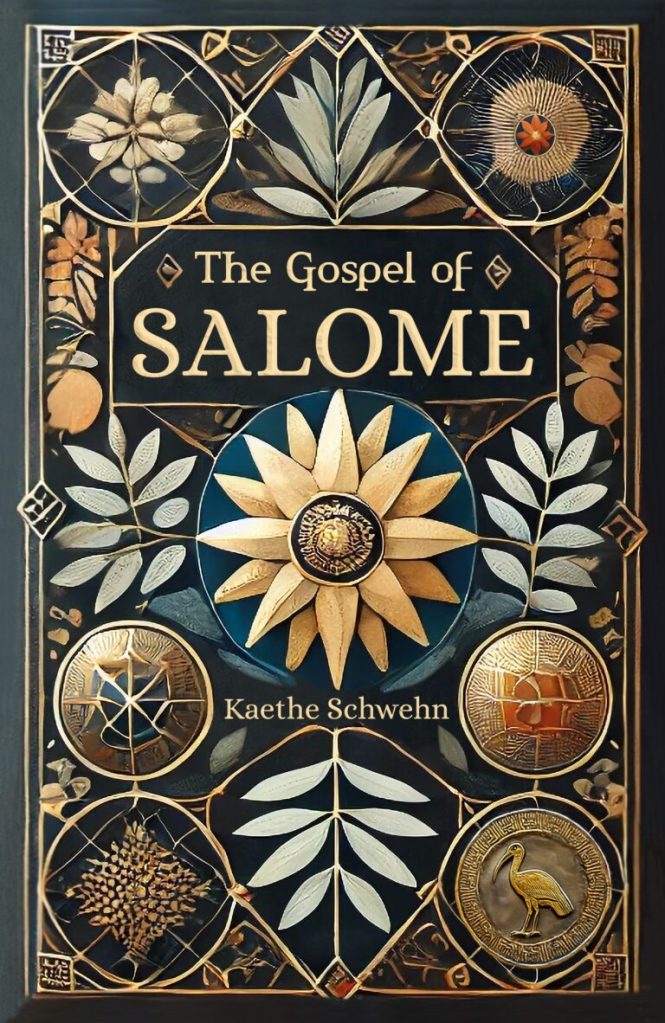
What would happen if you were a disciple of Jesus and you had an encounter with someone who told you a different narrative than what you had heard in the past? How would you react? What would you preserve? How would you reconcile the stories you have been told and have told others as an apostle with what someone is now proclaiming?
The Gospel of Salome is a work of Biblical fiction focused on Salome, a character who we hear of being present at the crucifixion and the empty tomb in the Gospel of Mark. Some scholars have connected her with “the mother of Zebedee’s children” in the Gospel of Matthew or “his mother’s sister” (i.e. Mary’s sister) in the Gospel of John. Schwehn takes a different approach, portraying Salome as a woman who was sought out for her skills in medicine, finds herself in the presence of John Mark, one of Jesus’s disciples who has come to Alexandria.
Going back and forth between speaking to John Mark in the present and living in her memories of the past, Salome tells the apostle that she is the true mother of Jesus. However, there is another factor to consider in her proclamation – Salome’s dementia, which is threatening to steal her memories. Memories about Salome’s agreements with Mary about Jesus’s desire to learn how to heal or Mary asking Salome to not be present in Jesus’s life. Memories of being at the cross and the empty tomb.
When asked to read a copy of The Gospel of Salome prior to its release, I readily agreed. I am drawn to Biblical fiction as an avenue to open one up the creative power of the Divine. I also find deep meaning in extra-canonical gospels, such as the Gospel of Thomas, to consider both academically and devotionally. Yet, I will confess when I got to Salome’s statement that she was Jesus’s mother, my first thought is ‘this is going to make some people uncomfortable.’
Yet, into that discomfort comes great blessing – space for the consideration of what one believes and why. With any faith, it can become so easy to believe what you have always believed or fall back onto what you have been told, without taking time for careful examination. The Gospel of Salome invites readers into that type of examination, not for the sake of dismissing beliefs, but rather reflection. It is not any surprise that Schwehn won first place first place in the 2024 Wildhouse Fiction Contest, because good fiction should not just invite us into a story for the sake of the narrative, but help us to examine our own narratives for the sake of the story we tell.
In a world where each of our memories are fragile to the marching of time, Schwehn explores what happens when one begins to lose memories that are critical to who you are and how you see yourself – for Salome, particularly her identity as a healer. I volunteer with hospice and the bulk of the people whom I have sat with over the last four years have dementia. I come in as volunteer and encourage the telling of stories, even if family members know that they are not true, and it makes the family either uncomfortable or angry – because their loved one’s reality is not their reality, not their version of truth. Yet, part of care is to meet people where their memories are and allowing their story to unfold, for even in what the family would say is not true, are emotions that are valid and need expressed. This leaves the reader wondering if what Salome is lifting up as her memory is the most accurate understanding of events (i.e. historical truth) or her truth, deeply formed within her own understanding and woven together fragments of memories, placing the reader in the role of the interpreter of Salome’s memories, along with John Mark.
A review of The Gospel of Salome would be incomplete if it did not mention Schwehn’s masterful use of language. It did not feel as if you were reading prose, but poetry in the way that she wove together words and concepts across the pages. I will also admit that I am usually not a fan of narratives that jump between time, but she handled the transition so seamlessly that it was easy to stay engaged.
If you are looking for a book that makes you think and examines the role of memories in our life, I would highly recommend Kaethe Schwehn’s The Gospel of Salome.
The Gospel of Salome can be purchased at Amazon or directly from Wildhouse Publishers
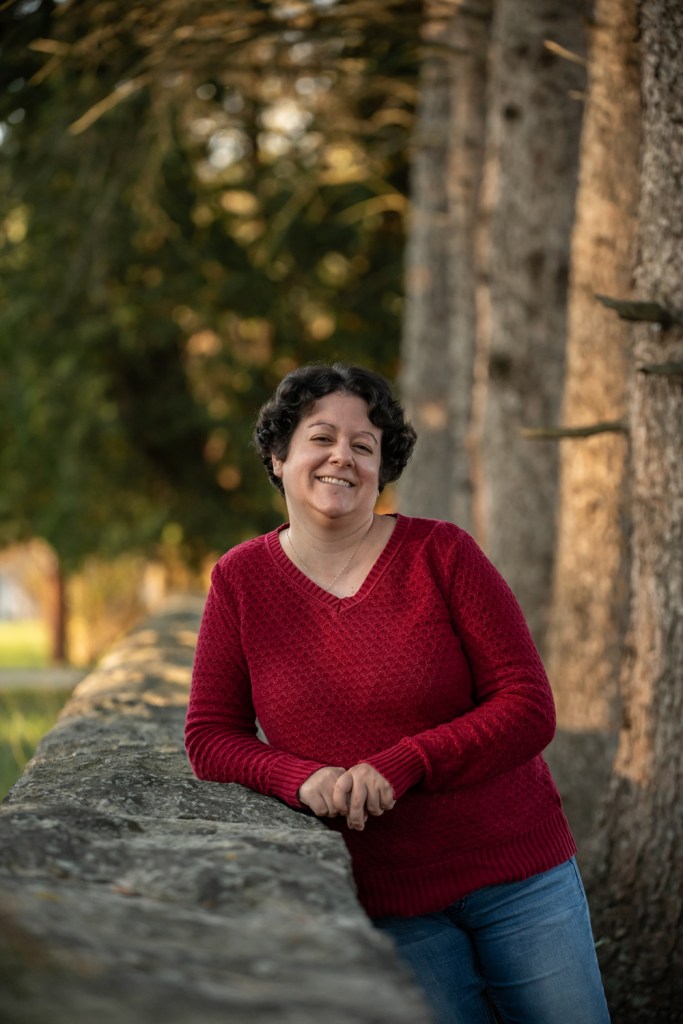
BIO: Michelle Bodle is an ordained elder in the Susquehanna Conference of the United Methodist Church and founded Abide in the Spirit, a ministry focused on creating sacred spaces for holy listening through spiritual diction, supervision, and particular seasons of need.
Discover more from Feminism and Religion
Subscribe to get the latest posts sent to your email.
 Feminism and Religion
My first gut level response to the idea that someone else is Jesus’s mother is that the same dynamic – an archetypal one – Mother Son Loss – is being replayed or recast – so what difference does this make?
LikeLike