

Traditional women’s dances of Greece, the Balkans, and the Near East have roots in the early Neolithic era, ca. 9,000 years ago. Yosef Garfinkel, Elizabeth Wayland Barber and others have shown that circle dance spread through the ancient world with agriculture – which, Carol Christ explains, was invented by women, along with pottery, weaving, and Neolithic religion. Links between women’s work – gathering and preparing food, spinning and weaving, ceremonial dancing and drumming – have thus been established for thousands of years.
Ritual circle dances surviving today are directly descended from peaceful Goddess cultures of indigenous Old Europe. Now as then, they are based on reverence for mothers, the Mother Earth, and the mothering principle – the highest ideals of matriarchal cultures. Whatever our own background, we are all born from mothers and live from the gifts of the earth, so this is our inheritance also.
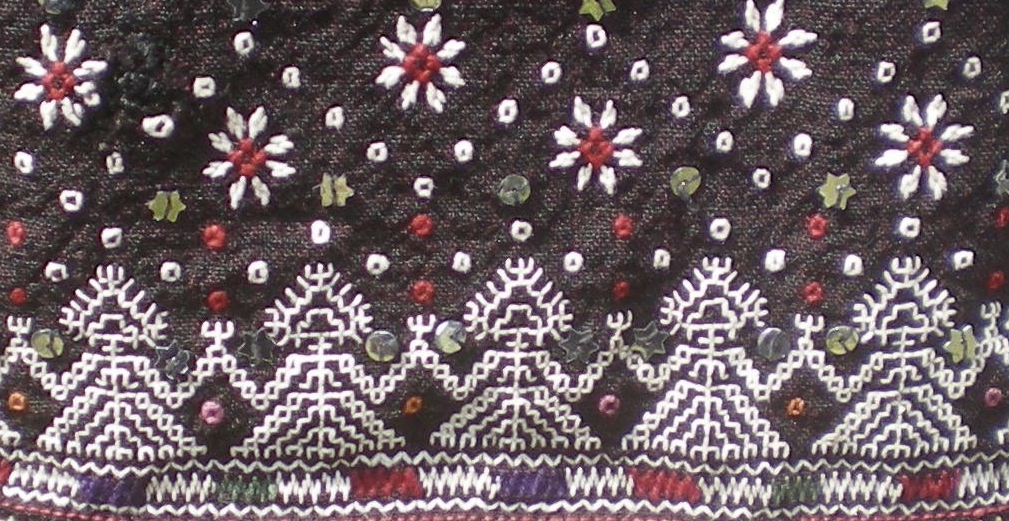
Communal circle dance is simple: we join hands in a circle and repeat steps in synchrony, forming patterns such as the zigzag, spiral, serpent, crescent, and Tree of Life. These symbols are reflected in the songs which accompany the dances, and in the textiles made and worn by the women who dance and sing. This continuity of motif since antiquity shows that women transmit meaning through their ritual arts with conscious intent.
Many ritual rhythms are irregular or uneven, very different from the 4/4 time typically predominant in Western music, which features even beats like a ticking clock. Uneven or irregular meters, in contrast, combine slow and quick beats in repeating patterns. These can be counted in time signatures of 3/4, 5/8, 6/8, 7/8, 9/8, 10/8, 11/8, 12/8, etc., while even ‘regular’ meters such as 2/4, 4/4, and 8/8 can be syncopated in various configurations of slow and quick.
Every uneven dance meter offers physical and psychological holding in a different way. Some patterns emphasise the quick steps, encouraging us to move forward without hesitation, while others teach the power of a timely pause. As we become familiar with different rhythmic patterns, we also learn about ourselves: is my usual preference to rush ahead, or do I prefer to take my time? How do our natural tendencies play out in daily life? As we learn to dance in a range of rhythms, we develop a range of responses to life’s challenges, so we can hurry when we need to, but also to slow down – discerning what is needed in every situation.
Slowing down, we could say, is the greatest gift of irregular meters. By definition, an uneven meter contains one beat which is longer than the others. In a dance sequence, this recurring slower step helps us practice regular rest in the rhythm of our lives.
As Sufi master and musician Hazrat Inayat Khan observes, “from the point of view of rhythm and balance, there is far too much activity in the life of the West.” Rhythms which restore our capacity to balance action and rest, therefore, offer an invaluable antidote to the non-stop pace of the modern world, by inviting us into moments of mindfulness. When we do this together in a circle, the process of neural entrainment regulates our nervous system, lowers anxiety, and fosters mental clarity, emotional stability, and feelings of calm. These are the same benefits babies receive when being held and rocked in the arms of their mother.
Many uneven ritual dance rhythms have a ‘slow-quick’ pulse, like a heartbeat. These ‘heartbeat’ rhythms (which be found in 3/4, 5/4, 6/8, and 7/8 meters) allow us to experience the embodied pulse of Mother Earth, as babies do in utero. The dance circle thus serves as a symbolic womb, where every dancer can receive support and sustenance, nourishment and rebirth. Furthermore, many ritual dance songs address the divine Mother in her various names and aspects, so again we see evidence of conscious intent.
The mystery goes deeper: when we dance together in rhythms received from the distant past, we ourselves create the circle in which the heartbeat of the Mother manifests. Together we both hold and are held by the embrace of the Mother Earth, Creatrix and primordial Source. Carol P. Christ describes it thus: “The power of the Goddess is the intelligent embodied love that is the ground of all being. This intelligent embodied love undergirds every individual being including plants, animals and humans, as we participate in the physical and spiritual process of birth, death and renewal.” In the dance circle, we know ourselves as part of the power of Creation, and part of the great goodness of the dance of life.
The process of birth, death and renewal lies at the heart of the mystery of agriculture, which has been profoundly connected with communal dance since the early Neolithic era. Both agriculture and dance are concerned with fertility, of the earth and the women who cultivate the grain. These connections have been celebrated since ancient times, for instance in the Haloa (Ἁλῶα), the women-only winter festival which took place in Eleusis and Attica at the end of the sowing season. The Haloa famously celebrated fertility and sexuality with unrestrained ribaldry and bawdy humour, not unlike that expressed by the figure Baubo (Βαυβώ), who brought Demeter out of her trance of grief in the story at the heart of the Eleusian Mysteries.
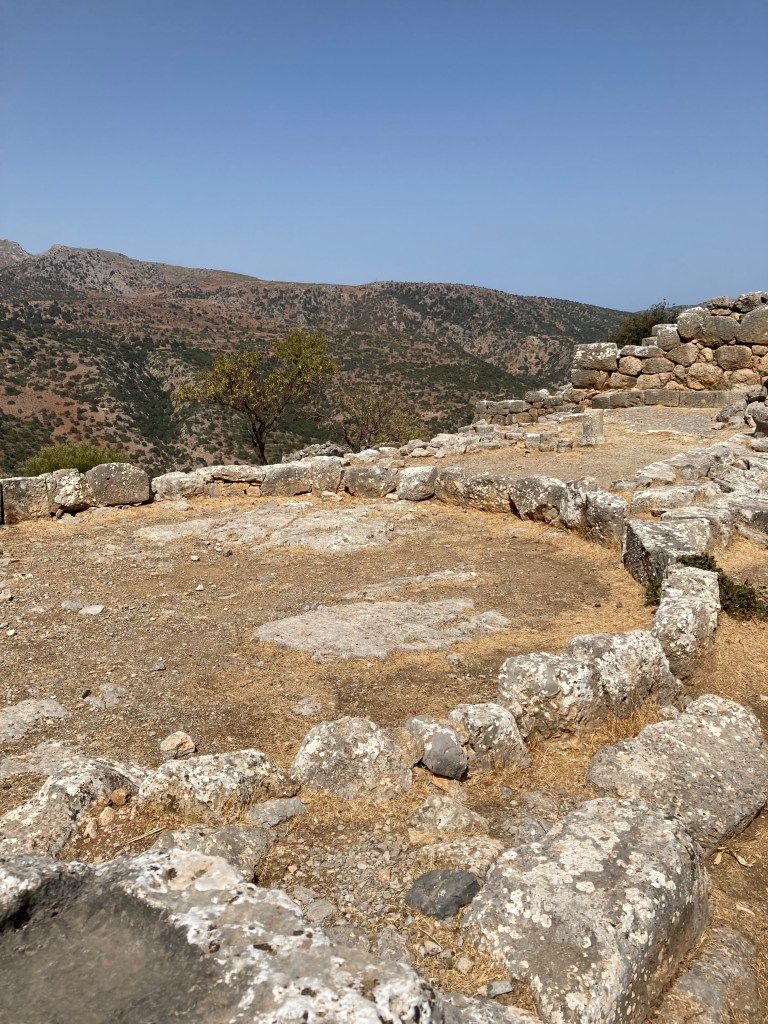
The name Haloa derives from the ancient Greek álos (ἅλως), the circular threshing ground where the festivities took place. Today in Greece, threshing circles are known as alónia (αλώνια), and are still used for ritual dance, not only because they are round and flat, but because the work done there concentrates the fertile power of Mother Earth most intensely.
After grain is threshed, before it can be stored, it must be dried, cleaned, and winnowed. Special winnowing baskets – large shallow bowls or trays – are held horizontally and used to toss grain into the air, so the breeze blows away the lighter chaff.
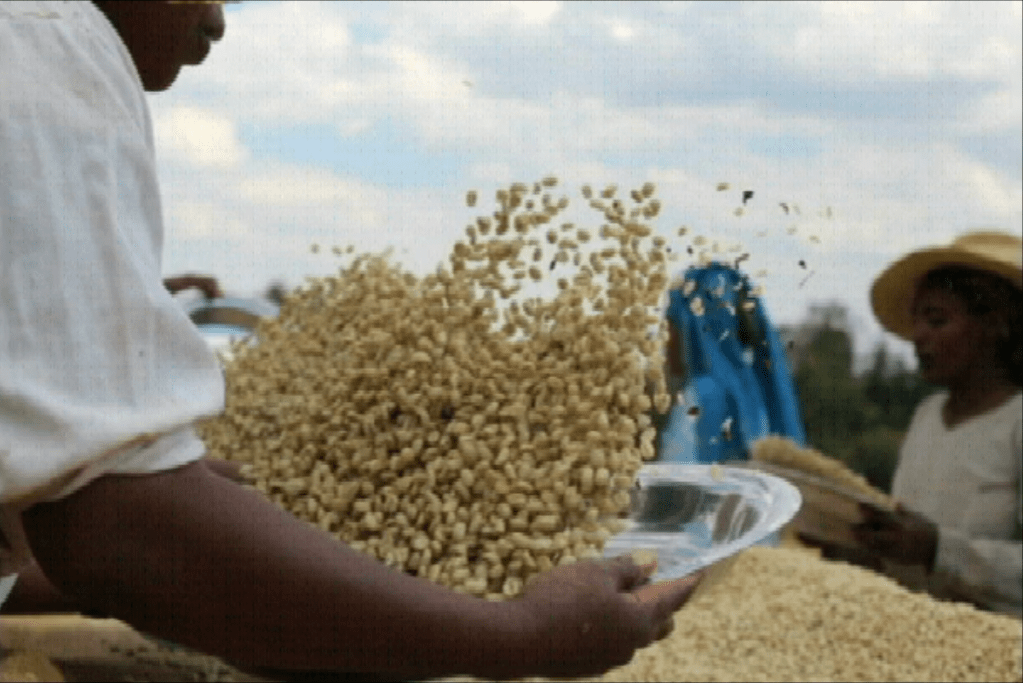
I believe the origin of uneven dance rhythms lies in the work of winnowing, which also combines quick and slow beats in different ways: typically, the winnower will toss and catch the grain in quick beats several times in succession, followed by a longer beat when she shakes the grain in the tray to loosen the chaff. We can imagine the collective rhythms made by this communal activity, and how easily they might lend themselves to singing and dancing.
This picture is even more compelling when we realise that frame drums were also used for winnowing. Winnowing was largely women’s work, and indeed, archaeological finds show frame drums almost exclusively in the hands of women and priestesses. Frame drums were associated with Goddesses of the earth and the harvest including Rhea, Cybele, and Demeter; Isis and Hathor; Inanna, Ishtar, and Asherah.
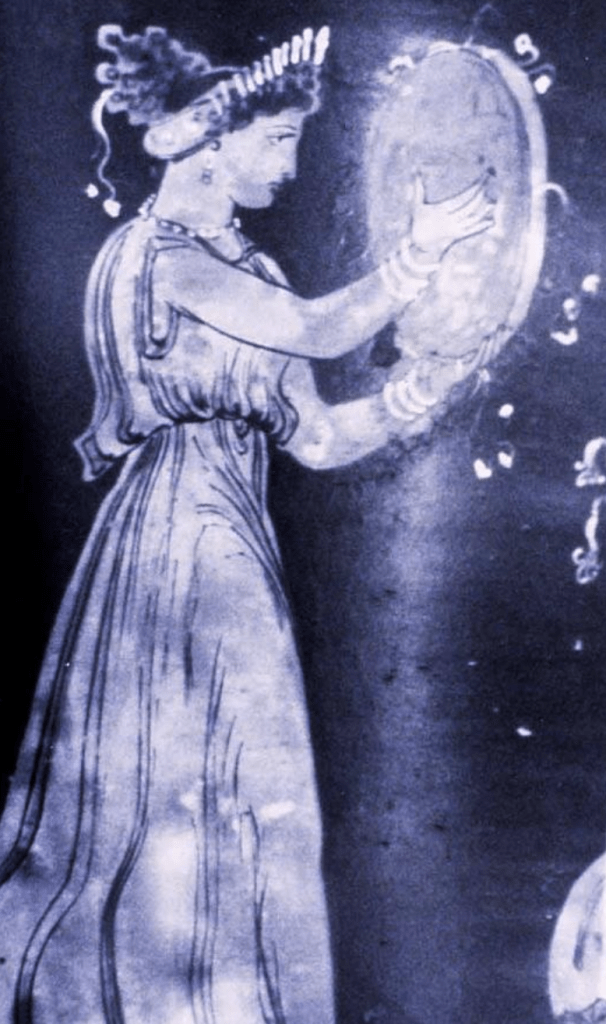
When we form a dance circle, we activate a deeply-ingrained muscle memory that for many women instantly feels like coming home. As we stand upright and hold our drums, we embody an archaic stance reflected in many pre-patriarchal figurines. This ‘posture of power’ takes us back to the time – reflected in the title of Layne Redmond’s groundbreaking book – when the drummers were women.
Drumming, dancing, and singing in a circle, we follow in the footsteps of the dancing grandmothers of the human family. Special dress and ritual foods are also part of festive celebrations. Thus we rekindle connections between the Mother Earth, whose gifts of food sustain us; the women whose hands bring those gifts out of the ground and onto the table, and also create beauty by spinning and weaving; and the ceremonial circles which since ancient times have brought the Great Mother to life. Through dancing and drumming, we re-create for ourselves and each other the loving embrace, the warm round womb, and the living heartbeat of the Mother.
I will be teaching a Master Class on Women’s Ritual Dances in Uneven Rhythms, combining traditional circle dance with frame drum technique, on the Greek island of Lesvos, April 22-29, 2026. From April 4-22, also on Lesvos, I will offer a 2-week seminar of Women’s Ritual Dances to celebrate Greek Easter, exploring both pre-Christian and Christian myth and lore with guest teachers including Greek grandmothers. Please contact me if you are interested.
Selected References:
Barber, Elizabeth W. (1994), Women’s Work: The First 20,000 Years. New York: Norton.
Christ, Carol P. (2020) ‘Women Invented Agriculture, Pottery, and Weaving and Created Neolithic Religion‘.
Christ, Carol P. (2018) ‘What Is “Egalitarian Matriarchy” and Why Is It So Often Misunderstood?‘
Christ, Carol P. and Judith Plaskow (2016), Goddess and God in the World: Conversations in Embodied Theology. Fortress Press.
Garfinkel, Yosef (2003), Dancing at the Dawn of Agriculture. Austin: University of Texas Press.
Göttner-Abendroth, Heidi (ed.), (2009), Societies of Peace: Matriarchies Past, Present and Future. Toronto: Inanna Publications & Education.
Inayat Khan, Hazrat (1998), The Music of Life: The Inner Nature and Effects of Sound. Omega Publications (p. 13).
Redmond, Layne (1997), When The Drummers Were Women. Random House.
Shannon, Laura (2026), ‘The Hidden Gifts of Uneven Dance Meters: Rest in the Rhythm’ in The Grapevine: UK Journal of Sacred/Circle Dance, Spring 2026.
Shannon, Laura (2019), ‘Symbols of the Goddess in Balkan women’s dance’ in Spiritual Herstories: Call of the Soul in Dance Research, eds. Amanda Williamson and Barbara Sellers-Young. Intellect.
Shannon, Laura (2016), ‘Women’s Ritual Dances: Secret Language of the Goddess‘ in Hwang, H. H., Beavis, MA. & Shaw, N. (eds.) She Rises: How Goddess Feminism, Activism and Spirituality (Vol 2). Mago Books.
Shannon, Laura (2014), ‘Sacred Space and Postures of Power: Conscious Circle Dance for a Better Future‘, in Neue Kreise Ziehen Fachzeitschrift für meditativen & sakralen Tanz (2-2014, 6-9).
Shannon, Laura (2011), ‘Women’s Ritual Dances: An Ancient Source of Healing in our Time’, in Dancing on the Earth: Women’s Stories of Healing Through Dance. Eds. Leseho and McMaster. Findhorn Press.
Thaut MH, McIntosh GC, Hoemberg V. (2015) ‘Neurobiological foundations of neurologic music therapy: rhythmic entrainment and the motor system‘. Front Psychol. 2015 Feb 18;5:1185. doi: 10.3389/fpsyg.2014.01185.
‘Top 3 Ways Of Using Winnowing Tray: African Culture And Nature, Episode 9‘ , Kennedy Bobie Entertainment, 2023.
Discover more from Feminism and Religion
Subscribe to get the latest posts sent to your email.

 Feminism and Religion
“This continuity of motif since antiquity shows that women transmit meaning through their ritual arts with conscious intent.” Yes indeed – fascinating post – it’s been a while (since I lived among Indigenous peoples in NM) since I have been able to participate in these women’s circles but I will never forget the first time I did. about 40 years ago. All the hair on my arms rose up and I had chills that ran up and down my spine as I was swept into the dance – I knew that something was coming through – and that it had everything to do with genuine community and the goddess as Carol defines her. Everything about Woman’s Way is about circles – oh how far away we have drifted..
LikeLiked by 1 person
Yes! I remember experiencing the same reaction with women’s circles at the Pueblo dances, probably about 40 years ago. I think our bodies recognise the truth of the ancient ways we when encounter them again as something living – as you say, ‘something coming through’. Yes, things have drifted, but such circles are still to be found. What a blessing.
LikeLiked by 1 person
This is such a beautiful weaving of history, body, and spirit.❤️
LikeLiked by 1 person
Thank you, LaDonna! I’m glad you named these 3 strands – for me, 3 sacred strands of feminism and religion.
LikeLiked by 2 people
🩷🩷
LikeLiked by 1 person