

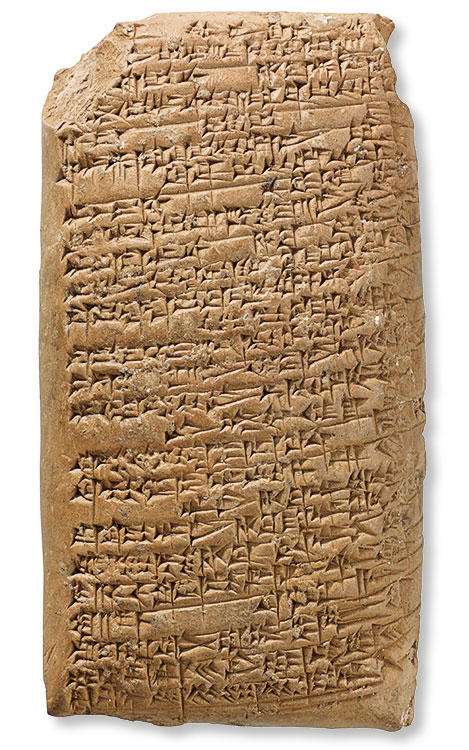
Those of us on the paths of the Divine Feminine can go to great lengths to approach Her. We might read and study hard-to-find books, invest time and money to visit temples and museums, and seek out Goddesses-related power spots around the world. We might acquire ceremonial jewelry and devotional artworks, attend conferences, track down Goddesses-inspired music, and apprentice with teachers from spiritual traditions that may be far removed from our own heritage. We might invest in supplies and training to craft devotional music, art, sculpture, and apparel, and create or attend performances, healings, and rituals honoring the Feminine Sacred.
Yet there is one important ritual activity that we routinely forget and ignore, one that we know was key to Goddess worship whenever we have written prayers, from Demeter to Inanna, Isis to Freyja, Hekate to Sarasvati. This time-honored practice is simple to learn, costs nothing to use, and quickly, safely, and legally creates an altered state of mind that brilliantly and efficiently connects us with our spirits, the natural world, the Divine Feminine, and each other. And furthermore, this ancient sacred craft is not limited to indigenous or ancient cultures but is already part of the familiar heritage of anyone who speaks English, so there is no danger of cultural appropriation in using it.
This amazing, almost entirely overlooked gateway into the Sacred Feminine is the original language of the Goddesses: the pulse of poetic meters. These repeating patterns of rhythmical language are uniquely equipped to dance our minds—along with our bodies, hearts, and spirits—into a Goddessful state of communion. This makes sense, since it seems that long before writing was invented, oral-based, matriarchal societies around the world developed meters for use in ceremonial chants, songs, and prayers. So close is the connection of poetic meters with matriarchal ritual that the word “meter” derives from the same proto-Indo-European root as the word “mother.”
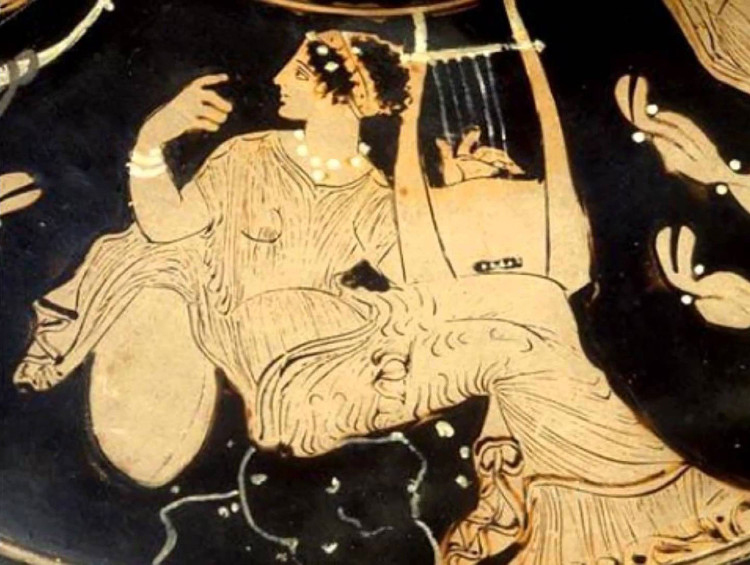
And yet, almost everyone who writes Goddess-centered poetry nowadays avoids the treasure trove that is meters. It’s no surprise, really. Pioneering feminist poets such Adrienne Rich (whom, full disclosure, I studied with in graduate school) rejected meter in the 1960s as a patriarchal tool and claimed free verse (poetry with no regular rhythmical pattern) as the default feminist style. Poetry at the time was dominated, in true hierarchical patriarchal fashion, by a single controlling meter, iambic pentameter. The imperialist, patriarchal meter of Milton’s Paradise Lost reigned alone, and other meters, such as the anapests of Dr. Seuss’s The Cat in the Hat or the trochees of Poe’s ‘The Raven,” were dismissed as vulgar or childish curiosities. When the only serious choices for a poet were iambic pentameter or free verse, free verse was an understandable choice. But how much ritual spiritual energy was lost through that move!
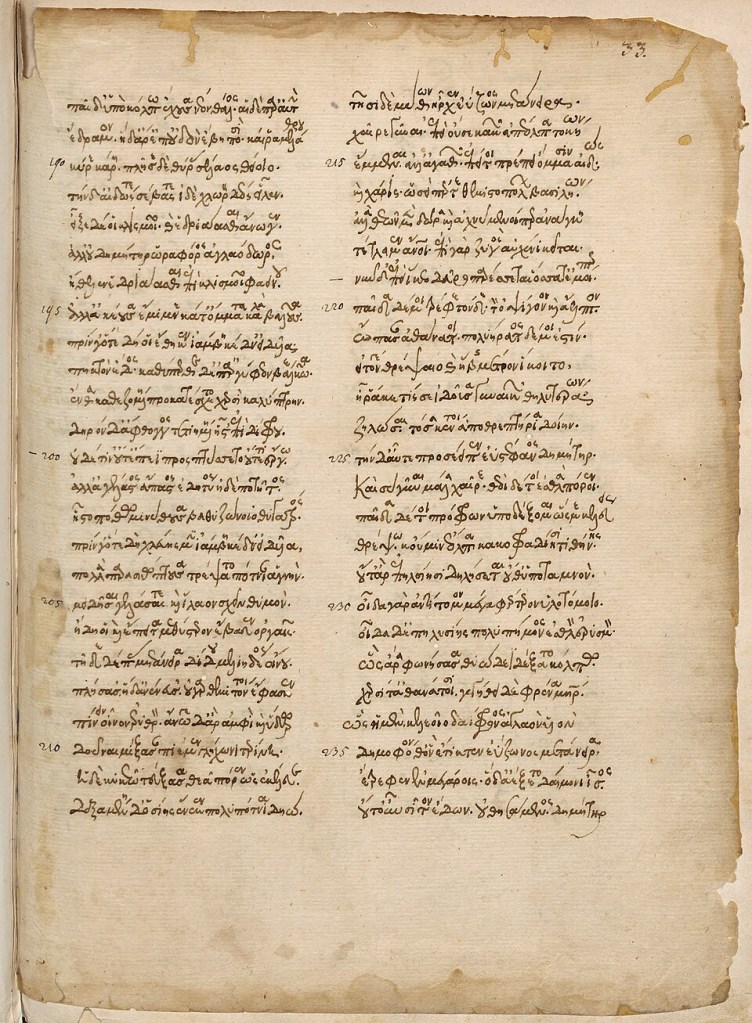
When I began writing poetry a decade or two later, although my teachers pressured me to write in free verse, I loved the magical way meters made me feel. I didn’t know yet that I was basking, body, heart, and spirit, in the languages of the Goddesses. But I persisted, studied meters in depth (coining the term “metrical diversity” to distinguish my approach to meters from the iambic-dominated hierarchy), and went on to teach this amazing craft to hundreds of poets.
In my teaching, we use an array of meters, giving each its own voice and meaning, a practice that, although I developed it independently in my own ritual circles, I have since discovered we share with ancient oral-based cultures. In Yoruba ritual, different meters are used to evoke the energy of different goddesses and gods in ritual. Traditional Hindu rituals draw on hundreds of Sanskrit metrical patterns. Sacred Huichol ceremony uses a different meter for each of the five directions and elements—the same exact system that I developed in my own sacred circle. There’s not much scholarship about such things for a number of reasons (if you are familiar with the uses of meters in an oral-based tradition, I’d appreciate if you would get in touch with me about it!). But I’ve learned enough to know that meter, like the Divine Feminine, is our birthright as human beings no matter into which culture we have been born.
Intrigued? If you are a poetry lover who’d like to invite the Goddess languages of meters into your life, I invite you to try these tips:
Speak It Thrice: Poetry in meters is designed to be spoken aloud. Try saying a poem in meter three times, like a spell, and notice how the words feel in your mouth..You’ll find some brief sample lines below.
Memorize: Oral-based Goddess cultures depend on Memory—who is, after all, the mother of the nine Muses. Memorize your own poems in meter, or those you love by others, and notice how that enhances your devotional experience of poetry.
Invite Your Body In: Whether you’re dancing around a fire or tapping your fingers, give your body permission to play with the meters as well.
Consider Community: Gathering with others, as you dive into the meter of the poem together, you will feel the rhythms of your breaths and heartbeats join in your timeless shared experience of the Goddesses (even on Zoom, where I leave microphones on so we can enjoy the sacred cacophony!)
Honor the Meters: In my meter teaching community, Meter Magic Spiral, we close each “meter of the month” by thanking and honoring the divine rhythm that has inspired us that month. If, like those who work with me, you find meters to be magical, matriarchal, and spiritually liberating, why not let the meters know?
Sample Passages Speak each thrice, noticing the meter’s energy. Then write a second line to match.
Ancient mother, let my body be a temple for your heartbeats.
May my fire arise with the pulse of Your voice, sparking high with the flames of Your love!
Weave in us, mothering meters, and carry us home with your magical languages!

BIO: Annie Finch is a poet and ritual performance artist, the award-winning author of seven books of poetry including Spells: New and Selected Poems, Eve, Calendars, and Among the Goddesses. She also edited the pioneering Choice Words: Writers on Abortion and has published books of poetic translation, poetry anthologies, poetry criticism including The Ghost of Meter and The Body of Poetry, and the poetry-writing guidebook A Poet’s Craft. Founder of Poetry Witch Ritual Theater, she collaborates frequently with music, theater, and dance and offers workshops and performances worldwide.
Finch earned a Ph.D from Stanford University and shares her teachings online at Poetry Witchery Substack and MeterandMagic.com.
Discover more from Feminism and Religion
Subscribe to get the latest posts sent to your email.

 Feminism and Religion
Brilliant, Annie! Thank you for invoking meters for the mater and reminding us of the importance of our voices, bodies, and memories!
LikeLiked by 2 people
Dear Annie, Joy-FULL to be reminded HERe of endless possibilities. Such beauty-FULL writing you have shared.
Sawbonna, Margot/Raven Speaks. Heyoka.
LikeLiked by 1 person