We Are Not Oppressed Because We Remember pt. 3: Sowing Seeds and Braiding Hair by Chasity Jones

Today, once again, I got to touch the earth!

While planting and constructing my indoor container garden, I thought about how my ancestors put seeds into their children’s hair so that in case they were taken away to live and die in chains, they would at least be able to sustain themselves with a piece of the motherland. Rice, okra, yams, watermelon, and so MANY more crops that would go on to make white slaveholding Americans so rich (passing their wealth to their descendants and zero reparations for the descendants of enslaved Africans), that they were willing to fight a war to sustain their evil practices of owning human beings as chattel (Check out High on the Hog Netflix documentary which was adapted from a book by Dr. Jessica B. Harris). Enslaved Africans brought these foods to the new world, a direct result of slavery.

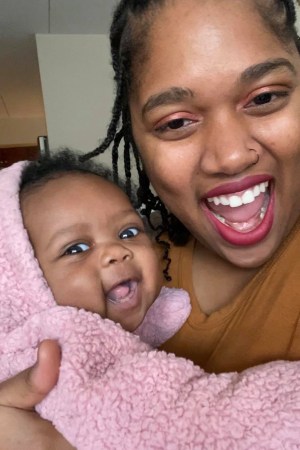
As I wash my daughter’s hair (which for Black women and girls is a PROCESS!!), as I moisturize her hair, and as I braid my hair, I am thankful that no one has a right to my child and that I do not need to fear her enslavement. Instead, I manifest her revolutionary future to carry the torch of our ancestors. A Torch and a commitment to elevate our community and move the community forward. I leave it up to her to choose how she will carry that torch forward!

Continue reading “We Are Not Oppressed Because We Remember pt. 3: Sowing Seeds and Braiding Hair by Chasity Jones”
We are Not Oppressed Because We Remember Part 2 – Diaries of a young black woman by Chasity Jones

Read Part 1 here.

One of the 18 characteristics of Africana Womanism is being a self-definer. This piece is a sliver of my process to do and be exactly that.

I am striving to be a whole Black woman. I have an awareness that I am a whole person and transcend the role that Amerikkkan* society has given black women. Wholeness is justice and justice/liberation is wholeness. We are unaware of the full extent that racism has impacted Black women psychologically and emotionally. I’m saying racism constricts us in exhausting ways- the results have been wearing on our mental and sexual health, senses, nerves, physical health for years. And it still is.

Continue reading “We are Not Oppressed Because We Remember Part 2 – Diaries of a young black woman by Chasity Jones”

We Are Not Oppressed Because We Remember by Chasity Jones

Many questions are asked of us as a community, but the answers which are so complex that we should be commended for even attempting to answer, are heard- if they are not interrupted- but rarely understood. As a Black mother and wife, I have accepted the fact that no one will understand my struggle outside of other Black mothers and wives. After being asked questions about how my community relates to slavery, I am convinced that no one outside of my Black American community will ever understand how slavery has impacted our lives, identities, family structures, trauma, and deaths. Furthermore, it has yet to be understood how the past of slavery continues to impact these areas as a people.

Firstly, although slavery has left an immense imprint on our racial memory, the Black community is not stuck in slavery simply because we bring it up. It is brought up because it is a part of our story and we should not be made to feel ashamed of it. Just because you are tired of hearing about it or uncomfortable does not mean that Black Americans should be made to feel as though should avoid speaking of our history. Some many pro-Black groups and movements emphasize and celebrate the achievements of Black Americans before, during, after, and despite slavery. However, these movements threaten the dominant culture, and much of their achievements are ignored or perceived as threats and terrorism. It is hard to educate ourselves and our children about our ancestor pre-enslavement because our legacy, history, sacred knowledge, and culture were destroyed and our memories were erased and replaced with the bible and colonialist interpretations of scripture. Many of these scriptures are interpreted to justify slavery and are still used to justify police brutality, mass incarceration, and psychological warfare on Black Americans. Nevertheless, we do what we can to celebrate ourselves and our heritage. In doing so, we cannot ever forget slavery.

Continue reading “We Are Not Oppressed Because We Remember by Chasity Jones”

A Problem of Design by Laura Casasbuenas


When I was invited to create this post, a number of topics came to mind. But I decided to start our conversation with my response to the question: why do I write?

I am a Colombian woman designer who promotes venture projects in a region in which it is difficult to grow a business. In my daily work life, I ask entrepreneurs why they do what they do; why do they take the risk of possible failure? Usually, once we know the why, finding the how is much easier.

Continue reading “A Problem of Design by Laura Casasbuenas”

Sleeping Beauty: An ancient tale for these challenging times by Diane Perazzo

Fairy tales are intwined in our imagination and our spirituality. As Jane Yolan writes, one of the subtlest and yet most important functions of myth and fantasy is to “provide a framework or model for an individual’s belief system.” (1)

In the Reclaiming spiritual tradition, we often use fairy tales in healing and self development work. These stories act as warp and weft as we weave and spin complex ritual arcs and other events that take place at extended Witch Camp sessions. In Twelve Wild Swans, Starhawk points out that fairy stories are “more than just encouraging and inspiring. They are also templates for soul healing from Europe’s ancestral wise women and healers. When the ancient Earth-based cultures of Europe were destroyed, these stories remained.” (2)

Continue reading “Sleeping Beauty: An ancient tale for these challenging times by Diane Perazzo”

Touch the Earth by Chasity Jones

I was recently asked how I reconcile being a Christian with also being a critic of Christian theology, traditions, and culture. I am asked this often and my answer is always the same. I have not found reconciliation and might always be finding a way to reconcile this – an endless cycle of trying to make my heart fit into a structure in which centers whiteness and domination.

This time is different though. When I was asked my mind immediately returned to the Earth. Nature. Creation. How I have always longed for a plot of sacred Earth of my own in which I would continually give birth to and create life in various ways. How so far this dream has seemed from my brown fingertips. Never in my almost twenty-nine years, have I imagined I would have the opportunity to own my own land. However, in the last few years since I worked and lived on a farm and have been manifesting with lunar energy and ritual that one day I would harvest and care for a land of my own. A land that I would pass down to my children. A land in which we would find God. A land which would sustain us.

Continue reading “Touch the Earth by Chasity Jones”

C.G. Jung and the Heroine’s Journey by Sally Abbott


I was intrigued by the discussions of Jung and Jungian motifs, such as the sacred marriage, that sprang up in response to Mary Sharratt’s wonderful post “The Via Feminina:  Revisioning the Heroine’s Journey,” partly based on Maureen Murdock’s book. Carol Christ pointed out the problematical nature of the whole notion of the sacred marriage, relying as it does on our stereotypes of the masculine and feminine.

Sara Wright reported that her sense of the dangers of Jungian thought led her to change her profession; she had once been a Jungian analyst. Barbara McHugh put forward a well-thought out and articulate version of the Heroine’s Journey, corrected for sexist thought.

Continue reading “C.G. Jung and the Heroine’s Journey by Sally Abbott”

An Untitled Poem for Unanswerable Questions by Eva Espinoza

Thinking about the discourse between spiritualists and victims of harm
Thinking about accountability and prison abolition
Thinking about how white supremacy tells us people are disposable
That they–that we, don’t matter
Thinking about “don’t speak ill of the dead”
Thinking about “honor your ancestors”
Thinking about what else is possible beyond prisons, cages, and borders
Thinking about abusers who refuse to take accountability
Thinking about where that leaves us when we die
Throat’s closed
Stories Untold
Thinking about how death is possible for the living
Thinking about how redemption is possible for the dead
Thinking about, what the fuck even is Salvation, anyway?
Thinking about binaries and how exhausting it is to think of these two things as mutually exclusive to each other
Thinking about how many of us are dissociating because cognitive dissonance is hell on earth
Thinking about the waging of war and how it lives in the body
Thinking about how rage turned inwards is depression
Thinking about the will to live and the will to die
Thinking about the sleep of death and the dreams that come from dying
Thinking about regret
Thinking about when an abuser becomes an ancestor
Thinking about where the guilt goes in the afterlife
Thinking about hell
Thinking about eternal suffering
Thinking about conversations of the reconciliation that is possible between an abusive ancestor and those they’ve abused
Thinking about who the hell said this shit was tied to the land of the living

This poem is a birthing after months of sitting in grief circles and bible studies and with the ancestors.This poem is short but holds so many wrestlings. It holds the wrestling between me and my daddy, now an ancestor, who I could never come out to while he walked this earth. It holds the waiting for my biological father’s passing to reconcile the ways in which he harmed me and my mother and my sister, the ways in which he abandoned and neglected us. It holds the wrestlings of iconizing Kobe Bryant after his death while also naming and recognizing him as the sexual predator he was. It holds the wrestlings of what happens in the afterlife, blending theologies of indigeneity and christianity.

Continue reading “An Untitled Poem for Unanswerable Questions by Eva Espinoza”

A Shared Bridge by Lou Hartmann and Diana


A fellow college classmate, Diana, and I wrote this poem together as we were inspired by the likes of Adrienne Rich and Sara Ahmed. We wanted to touch on the animosity between trans folk and cis women that often exists between them, and bridge our collective and often shared feelings of joy, rage and injustice into writing. We welcome you to walk the bridge with us. 

Pt. 1

What is a woman? A woman can’t satisfy.
Because if she’s not “woman” enough in one aspect or the other she’s not deserving of that title at all.
Gender is a societal construct so I wouldn’t really know how to define a woman.
For many, being a woman means that her brain is in between her legs but how do we persuade them that it’s fucking not?
I know a lot of women who aren’t born with the biology of what a woman is expected to be
I know a lot of women who don’t have breasts, who don’t carry typical reproductive organs within their systems.

Continue reading “A Shared Bridge by Lou Hartmann and Diana”

Grown Little Girl, Grow Little Girl by Chasity Jones Selenga


I have newly found myself a wife and in the throes of motherhood. In many feminist circles, I have encountered anti-family and anti-wifehood sentiments. The understanding is that to be a wife, and, to be a wife that chooses to start a family, is an oppressive position to occupy as well as the antithesis of the feminist movement. Though I am not typically a fan of tough physical, emotional, soulful labor, these two positions have been the highlights of my life so far.

My daughter embodies both my husband and me, physically. However, she is and will become her own person-soul. She is so young, but her soul is eternal, and has experienced eternity. I am here to help her navigate remembering who she is. She inhabits the intersection of Blackness, divinity, femininity, and infinity. Motherhood has greatly increased my capacity of appreciation for women and what women are capable of doing. Especially from the intersection of Blackness and woman-ness. From the capacity to create, labor, and deliver life to the task of raising Black children in a country that would have them annihilated, emotionally traumatized, and made to accept they are inferior.

Continue reading “Grown Little Girl, Grow Little Girl by Chasity Jones Selenga”