

Moderator’s Note: This post has been posted in cooperation with the NCRI women’s committee. NCRI stands for the National Council of Resistance of Iran. This was first posted on their website on May 18, 2026. You can learn more information as well as see this original article by clicking by link below. A description of their Council can be found at the end of this post. We feel it is especially important to hear women’s voices from Iran esp here in the United States where a lot of misinformation is being disseminated along with the guns and bombs of war.
Introduction
Life for the Iranian people under the religious dictatorship is fraught with hardship and peril from every perspective. Whether through the lens of economic deprivation, poverty, and unemployment; the degradation of the environment and infrastructure; crises involving water, electricity, and air pollution; or devastating floods and earthquakes—the current generations of Iranians are experiencing a living hell. This suffering is further compounded by the comprehensive violation of human rights, characterized by suppression, torture, and executions, as well as the squandering of national wealth on nuclear and missile projects and terrorism, which has effectively led to foreign conflict.
Female Heads of Household_ENDownload
Despite these universal hardships, the misogynistic nature of the ruling clerics ensures that women bear a double share of these calamities. Yet, among women, whether in urban centers, rural areas, or marginalized outskirts, there is a growing demographic known as female heads of household, who are considered the most deprived and oppressed members of Iranian society. This is particularly stark given the reality that in present-day Iran, even conventional families where both parents are employed remain incapable of providing the basic necessities for a middle-class household.
In these households, the woman bears the primary responsibility for the family’s livelihood in addition to her traditional caregiving roles. (ISNA, February 23, 2026)
The complexity of women’s poverty under this regime is the result of an intertwining of economic, social, cultural, and psychological factors.
1. Statistical Estimates
Mousavi Chalak, Deputy for Social Health, citing data from the “Iranian Welfare System” in 2025, announced that female heads of household constitute 22.5% of all households in the country; a figure signifying that women lead one out of every 4.5 Iranian households. These statistics indicate a 121% increase in the number of these women compared to 2016. (IVNA, February 7, 2026)
According to information from the Iranian Welfare System, approximately 6.5 million women are registered as heads of household. (Jam-e Jam, February 23, 2026)
These statistics, like all government-issued data, are opaque and unreliable. For instance, on July 13, 2025, the Khabar Online website reported the number of elderly women living alone at 3.5 million individuals. Meanwhile, Shahla Kazemipour, a state-affiliated demographer, stated that the largest group of women living in “permanent celibacy” belongs to the 1980s generation (born in the 1980s), who are currently under 45 years of age. (Jamaran, August 3, 2025)
Previously, the state media outlet Eghtesad-e Jame’eh on December 2, 2024, reported the number of female-headed households as 7 million, while Donya-e-Eghtesad cited the figure as 6 million on May 3, 2025.
Beyond the regime’s statistical deceptions, being a female head of household in Iran represents an abyss of suffering, oppression, and defenselessness that is constantly deepening.
Crucially, out of these at least 5 million women, only about 2 million, less than 25%, are covered by state support institutions. Approximately 285,000 are under the care of the Welfare Organization and 1.5 million under the Relief Foundation; the rest have been abandoned to their fate. This occurs while approximately 55% of these women are classified in the first decile of society, the absolute poorest. (Jam-e Jam, February 23, 2026) It is worth noting that even the limited number of women covered by the Welfare Organization or the Relief Foundation receive a meager allowance that is exhausted within the first day or two of the month, leaving them empty-handed for the remainder of the period
2. Poverty and Economic Inequality
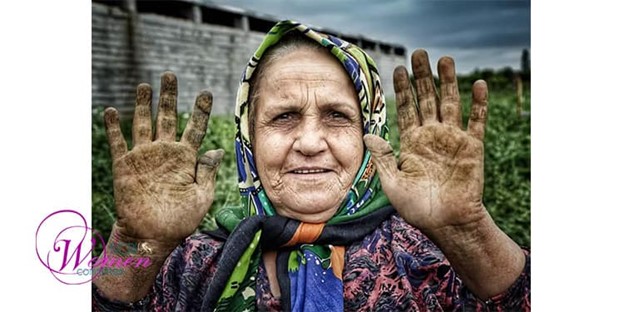
Female heads of household are significantly more impoverished than their male counterparts within the same income decile. Poverty among these women is complex and multi-layered, stemming from pervasive social constraints, diminished access to social capital, and severely restricted employment opportunities.
Regarding access to financial resources, state media frequently touts the availability of low-interest loans, for example, at 14% interest. However, these women are often excluded from such facilities. A primary barrier to entry is the lack of formal guarantor and the absence of established communication networks. (Jam-e Jam, February 23, 2026)
Similarly, government propaganda regarding the establishment of “Job Guarantee Funds for Women” and other such initiatives typically remains confined to the realm of rhetoric. In the few instances where they are implemented, they provide recourse only to a select few with direct ties to the regime.
3. Employment and the Labor Market
While the global economic participation rate for women stands between 47% and 50%, the Iranian labor market maintains a starkly masculine character. The participation rate for men is approximately five times higher than that of women. In Iran, women constitute only one-sixth of the total active population of 27 million; this represents roughly 4.5 million women, accounting for both those currently employed and those seeking work. (Aftab-e-No, February 19, 2026)
Female heads of household are predominantly relegated to low-skill, unstable, and part-time occupations.
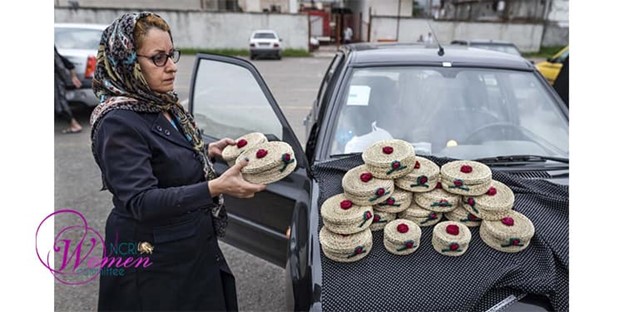
In early 2025, Zahra Behrouz Azar, the Vice President for Women and Family Affairs, noted that the majority of these women are employed in service sectors, manual labor, sales, domestic cleaning, home-based production, or street vending—sectors that are acutely vulnerable. These women generally operate without formal contracts or insurance coverage. Deprived of even minimal job or economic security, they drift closer to the brink of financial collapse each day. Furthermore, many remain unregistered in official systems and lack coverage from any supportive institution. (Eghtesad 24, June 21, 2025)
4. The Double Burden (The Second Shift)
Employed women, and female heads of household, shoulder the full responsibility of domestic labor in addition to their external work. Tasks such as childcare, cleaning, meal preparation, and managing the medical needs of family members consume the remainder of their 24-hour day. Many are also burdened with the care of elderly or disabled family members, further exacerbating the physical and mental exhaustion of their lives.
Behind every weary face is a child waiting for a mother who no longer has the capacity for affection.
This situation leads to chronic exhaustion, heightened levels of anxiety and depression, and a decline in life satisfaction. It inevitably results in the straining of familial relationships, particularly with children and the ill, and ultimately precipitates a multitude of physical health crises for these women. (ISNA, February 23, 2026)
5. Health and Illness
The prevalence of chronic diseases among female heads of household is higher than the societal average. This issue is a direct consequence of excessive physical and psychological pressure. Another contributing factor is that these women often do not prioritize their own health.
In one instance, the screening of 22,000 women revealed that the prevalence of certain diseases—particularly cancer—is higher in this group compared to other women. On one hand, female heads of household neglect medical follow-ups and screenings due to prioritizing their dependents; on the other hand, financial poverty or a lack of awareness prevents them from seeking care. Furthermore, the fear of a diagnosis—driven by the inability to afford treatment costs—leads them to forgo monitoring their health altogether.
Maryam Khakrangin, Director General of the Office of Women and Family at the Social Health Department of the Welfare Organization, has reported the existence of 7,600 female heads of household suffering from special (refractory) diseases. (ILNA, December 29, 2025)
6. The Impact of Crises
Following events such as internet shutdowns due to uprisings, followed by war and rising costs, there have been widespread reports of mass layoffs and increased job insecurity. These conditions primarily target women working in informal and unstable sectors, many of whom are also the sole providers for their households.
As a result of successive crises inflicted upon the Iranian people due to the regime’s anti-people and destabilizing policies, female heads of household have, more than ever, become victims of downsizing and job loss. Their income has become increasingly unstable, and their ability to withstand the economic shocks resulting from these crises has drastically diminished.
Part 2, tomorrow
INFO: NCRI The NCRI Women’s Committee works extensively with Iranian women outside the country and maintains permanent contact with women inside Iran. The Women’s Committee is actively involved with many women’s rights organizations, NGOs, and the Iranian diaspora.
The NCRI Women’s Committee is a major source of much of the information received from inside Iran with regard to women. Attending meetings of the UN Women, the UN Commission on the Status of Women (CSW), the Human Rights Council, and other international or regional conferences on women’s issues, and engaging in a relentless battle against the Iranian regime’s misogyny are parts of the activities of members and associates of the NCRI Women’s Committee.
The NCRI Women’s Committee is one of the 25 committees of the National Council of Resistance of Iran.
For more on this women’s committee click here.
If anyone wish to support our work, you may consider donating via this link. Your support is entirely optional and greatly appreciated.
Discover more from Feminism and Religion
Subscribe to get the latest posts sent to your email.


It’s all so sad. Gives more weight to what we hear in the news about Iranian-born Marjane Satrapi who died a few days ago of “sadness.” She lived in exile in France so she could work more creatively with her art, but “home” was always Iran. Her best known work is probably the graphic novel PERSEPOLIS. I used this brilliant book when I taught “Women in Islam.” It gave insight to the recent history of Iran and some of the horrendous conditions Iranian people have endured and continue to endure.
LikeLiked by 2 people
Yes, Marjane was a symbol of a rebellious woman standing against the oppression and exploitation of women. In her graphic memoir Persepolis, she portrayed what she experienced as a girl growing up in Iran under the rule of a misogynistic clerical regime.
Marjane declined France’s Legion of Honour. Do you know why? It was a protest against what she viewed as France’s policy of appeasement toward the misogynistic rulers of Iran. It was a remarkable and courageous act.
LikeLiked by 1 person
I read this essay saying to myself that I cannot bare one more…it’s not that we don’t know – I believe most if all the women are FAR are aware of what’s going on with women EVERYWHERE – Including Iran. What we need is to get this minority view into the public eye. And frankly I don’t see this happening though I applaud all the efforts…..Some of the students I taught were Moslems and they stand out because they worked so hard and were so bright…
LikeLiked by 1 person
I completely agree with you, Sarah. We need to strengthen our efforts.
Personally, I work to amplify the voices of Iranian women because, like them, I have experienced and felt their pain and suffering. That is why I am reaching out to you—to help reflect and amplify the voices of Iranian women.
I am sure that women in other countries have also chosen the path of struggle for their rights, justice,equality and freedoms. That is why we must do more, stand more united, and work together more effectively.
LikeLiked by 1 person
More reflection is needed for sure – sadly – the people who need to do it the most – well – I’ll say no more.
LikeLiked by 1 person
Iranian women are victims of the misogyny of the mullahs’ regime. They are women who carry the burden of supporting their families and receive no support; on the contrary, their rights are taken away from them.
LikeLiked by 1 person