 Roughly seven hours prior to my composing this blog, a report was disseminated across the Internet offering what is being called a first-hand account of Mosul women’s prison currently in Iraq where possibly thousands of Yazidi, Christian and Muslim women are being held. After these women are rounded up and sent to various prisons across Iraq and parts of Syria, they are given a choice to either abandon their religious tradition and convert to Islam or be sold to ISIS soldiers for roughly 30 dollars whereafter they will be raped, forced into marriage, and in some cases will later be tortured to death. After the women have been sold they are forced to call their families and offer detailed descriptions of what has just occurred. This sort of psychological warfare is why many UN aid workers are calling ISIS more diabolical than al-Qaeda.
Let me back up here. A couple of years ago, while researching religious freedom abuses in Iraq, I came across a small religious group called the Yazidi. Having never heard of this religious sect before, I took interest in why the United States Commission on International Religious Freedom, USCIRF, was highlighting specifically this group, naming religious persecution by Sunni militants in Iraq against the Yazidi as a reason for citing Iraq as a CPC, or Country of Particular Concern, making Iraq uniquely vulnerable to U.S. government sanctions. The Yazidi have been given the unfortunate nickname, “Devil Worshippers” in Iraq because their God is known as both Malak Taus and Shayton (or Shaitan), the latter meaning Devil in Arabic. The Yazidi are known to be highly secretive regarding their religious praxis which allegedly incorporates elements of Islam, Judaism and Christianity; hence, there is much confusion about who the Yazidi are and what they stand for. Articles from the BBC’s World Report and the Daily Mail in the UK have both pointed out that one of the few known cornerstones of the Yazidi faith is that one cannot be converted to the faith – one must be born a Yazidi and one may not ever denounce one’s faith. If a Yazidi woman were to claim another religion, she would be expelled from her community not only for the rest of her life, but eternally. This should help elucidate why imprisoned Yazidi women refuse to convert, choosing instead rape, slavery and ultimately death.
Now, who and what is ISIS and why is ISIS targeting the Yazidi among other minority groups in Iraq and Syria? ISIS or IS represents the Islamic State of Iraq and Syria or the Islamic State of Iraq and the Levant. The leader of this militia goes by the name of Abu Bakr al-Baghdadi. A religious fundamentalist, al-Baghdadi is fighting for the systematic removal of the Yazidi along with all other religious minority groups in Iraq and Syria. ISIS controls major cities on both sides of the Iraqi border which have allowed them to mobilize and procure enough weaponry to arm their fight across the entire region. The Huffington Post has reported several incidents of Sunni Muslim insurgents celebrating mass murders of the Yazidi and other minority religious groups by shooting massive weaponry in the air and parading through the streets.
The United Nations, along with Human Rights Watch, released a statement calling the current systematic murder of Yazidi men and the imprisonment and rape of Yazidi women, “religious extermination” and an “ongoing genocide”. An official spokesperson for Iraq’s Human Rights Ministry has said that, “the terrorists by now consider [the women] sex slaves and they have vicious plans for them…these women are going to be used in demeaning ways by those terrorists to satisfy their animalistic urges in a way that contradicts all the [sic] human and Islamic values.” The U.S. and France have been delivering aid to those minority groups that have fled to and are attempting to survive the harsh Mt. Sinjar climate. U.S. drone attacks along with missile strikes have flooded the areas where the ISIS militia is fighting. But is this enough?
The U.S. has an inarguably complicated political history with Iraq and many, including some UN representatives, wonder if the U.S. and its allies are truly doing enough to help the Yazidi women. There are multiple reports across social media, claiming family members in Iraq and in the U.S. are receiving phone calls from female relatives who have managed somehow to retain their cell phones. The women detail similar accounts of being captured, separated from their husbands and children, forced onto trucks and taken to abandoned schools and mosques. Some have witnessed other women being sold in the marketplace to ISIS men. One woman describes witnessing a pregnant woman being shot on sight for refusing to get into a truck headed to the now infamous Mosul prison. Certainly, the U.S. has many decisions to make regarding how and to what extent the U.S. government should help the plight of a religious minority in Iraq. The Yazidi community is being targeted directly, but so are many other religious minority groups in Iraq. The Yazidi specifically have been targeted by Islamic extremists for centuries in Iraq and many Yazidi have found refuge in Syria, until now. Women are undoubtedly being targeted by ISIS in this genocide as women are so often the target in religious conflict across the globe.
The USCIRF has named Iraq a CPC since 2008 and has detailed the ongoing Yazidi religious persecution in almost every annual report. What more can the U.S. government and U.S. allies do for the minority citizens of Iraq? They must take the threat of religious persecution seriously and understand that when religious freedom is not equally protected and valued by the government then basic, universal human rights are equally disvalued. When women’s rights are not protected, basic human rights are not protected.
Michele Buscher, PhD, received her degree from the Claremont Graduate University in 2013. Her PhD is in Religious Studies with an emphasis on Theology, Ethics and Culture. Her dissertation titled, Commission Impossible: The International Religious Freedom Act and its Impact on U.S. Foreign Policy with Particular Reference to Iraq and Burma, 1999-2012 explores the relationship between the International Religious Freedom Act of 1998 and current U.S. foreign policy abroad. She is interested in the role religion plays in the development of U.S. foreign policy particularly in the Middle East and how this contributes to human rights. Additionally, her scholarly interests include Feminist Theologies and Modern Catholic Studies. She received her BA from Seattle University in Creative Writing and her MA from Union Theological Seminary in Theological Studies. Michele works at Pitzer College as the Language & Cultural Lab Coordinator, Instructor for the International Fellows Program and Program Coordinator for the Kobe Women’s University visiting Cultural Program.




 Mars Hill Church in Seattle has been a large-scale experiment to shape the future of the Evangelical Movement, for good or ill. In recent months the controversy surrounding the Mars Hill founder, Mark Driscoll, gained national attention. Driscoll’s version of radical conservatism wherein he advocates a return to more conservative and traditional faith (with a particular emphasis on gender and gender roles), has long drawn criticism from more mainstream Evangelical factions, but it endeared him to many young Evangelicals.
 In contrast to the linearity of our time concept in the West, Indians view life as infinite and cyclical. Although Hindus, like ancient Greeks, believe in four ages of humanity (the so-called yugas), these occur not just once, but repeat cyclically every several million years. Similarly, the creator god Brahma is said to have a daily cycle which has recurring effects on the existence of the world. When Brahma awakes the world is created anew, and when he falls asleep it dissolves once again into the primal waters of eternity. Fortunately for us, Brahma’s day lasts 4,320,000,000 human years.

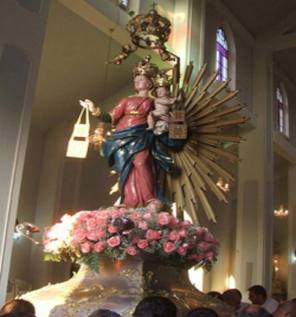
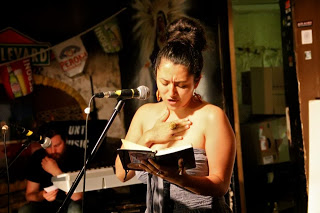 On a corner adjacent to a cantina, across the street from a home full of barefoot children running through open doorways, and a few houses down from a paleteria y fruteria in San Antonio, Texas, sits a bright white house dressed up in orange trimmings – Casa Coatlicue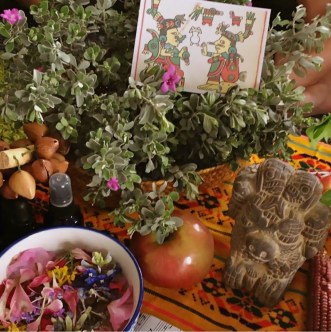
 It is heartening to hear the many condemnations Muslim scholars have issued of ISIS and its methods and actions. One of the latest attempts comes in the form of an open
  It’s been almost two years since I lost someone I loved. The relationship was short, tortured, unhealthy (as all my romantic relationships have been, but that’s another story…) However, I fell particularly hard for this one. When we separated, the pain was unthinkable. I was surprised by how deep it ran. I didn’t know until he was gone how much I really cared about him. I became physically sick, and even now there are days when I only have to bring him to mind to conjure a familiar pressure behind my eyes and in my throat.
 Ramakrishna was one of the major poets who popularized Kali’s worship in Bengal, the northeasternmost province of India. Born in the early part of the 19th century, he was a Hindu saint in a tradition known as bhakti, where devotees lovingly surrender their hearts, minds and spirits to their chosen deity in a practice which leads to ecstatic union with the divine. Such devotion is easier for us in the West to imagine when the beloved is the playful Krishna with his sublime flute-playing and sacred lovemaking. But in Ramakrishna’s case, the object of his devotion was the fierce Kali, the wild and uncontrollable aspects of the sacred, to whom he devoted himself as a child would to its mother.