“The pictures that line the halls speak volumes about the history of racism and sexism and they shape the future in powerful ways.”–Simon Timm
The author of these words recently posted a short video on Youtube entitled “Mirror Mirror on the Wall: The Legacies of Sexism and White Supremacy at Yale Divinity School.”* The video begins with a catchy little ditty with the words, “God is not a man, God is not a white man.” It tracks paintings and photographs of professors and other luminaries in the field of theology on the walls of the Yale Divinity School. By Timm’s count: 99 white males, 6 women, and 3 blacks. The single black woman is counted in both categories.
Someone I dearly love recently lent me a very sensible piece of advice: “You should forgive.” I know he resorted to these words out of love because he didn’t like seeing me in pain, a sentiment for which I was and remain grateful. I also know he wasn’t judging me when he brought it up, nor was he pressuring me into doing something I wasn’t ready for.
I truly understand how forgiving someone who has deeply hurt you can set you on the path to freedom. In the sense that forgiveness can loosen the chains that bind you to the past, the anger, the deep sense of betrayal, helping you learn to live again; that forgiveness is not so much about the other person but about the self. I have watched shows in which victims of horrific crimes or their family members have chosen to forgive, not always out of a sense of human bonding towards the aggressor, but because they could not live with the debilitating anger and hatred festering inside, and so chose to forgive to set themselves free. Continue reading “Forgiveness is a *choice* by Vibha Shetiya”
In recent years “the Sacred Feminine” has become interchangeable with (for some) and preferable to (for others) “Goddess” and “Goddess feminism.” The terms Goddess and feminism, it is sometimes argued, raise hackles: Is Goddess to replace God? And if so why? Does feminism imply an aggressive stance? And if so, against whom or what?
In contrast, the term “sacred feminine” (with or without caps) feels warm and fuzzy, implying love, care, and concern without invoking the G word or even the M(other) word–about which some people have mixed feelings. Advocates of the sacred feminine stand against no one, for men have their “sacred feminine” sides, while women have their “sacred masculine” sides as well.
Nothing lost, and much to be gained. Right? Wrong.
Perseus with the Head of Medusa: Sacred Masculine and Sacred Feminine?
When Goddess feminism emerged onto the scene early in the feminist movement, it had a political edge. It was about women affirming, as Meg Christian crooned in “Ode to a Gym Teacher,” that “being female means you still can be strong.” Goddess feminism arose in clear opposition to patriarchy and patriarchal religions. It was born of an explicit critique of societies organized around male domination, violence, and war; and of the male God or Gods of patriarchal religions as justifying domination, violence, and war. In this context, “the sacred masculine” was not understood to be a neutral or positive concept. To the contrary, the male Gods of patriarchy were understood to be at the center of symbol systems that justify domination.
The terms “the masculine” and “the feminine” were floating around and sometimes evoked in early feminist discussions, but when examined more closely, they were rejected by most feminists as mired in sex role stereotypes. The psychologist Carl Jung, for example, associated the masculine with the ego and rationality and the feminine with the unconscious. True, he argued that modern western society had developed too far in the direction of the masculine and needed a fresh infusion of the feminine in order to achieve “wholeness.” This sounded good, but when feminists looked further, they discovered that Jung and his followers harbored a fear of the uncontrolled feminine.
Jungians consider the unconscious to be the repository of undisciplined desires, fears, and aggressive feelings that require the rational control of the ego. Though strong and intelligent women were among Jung’s most important followers, Jung and his male companions retained a fear of independent women, speaking of women who developed their rational sides fully enough to argue with men and male authorities as “animus-ridden,” a term not meant as a compliment.
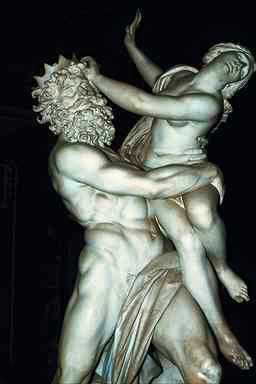
Hades Abducting Persephone: Marriage of Sacred Masculine and Sacred Feminine?
Jungians, following Erich Neumann, understand the progress of history through an evolutionary model in which humanity began in a matriarchal stage in which the unconscious reigned. This period of culture, which spawned the image of the Great and Terrible Mother, was primitive and irrational. Matriarchy was naturally superseded by patriarchy, in which the individual, the ego, and rationality emerged. In the patriarchal stage of culture, male Gods and heroes were the primary symbols, and rationality reigned supreme.
The patriarchal stage of culture had its limitations, which were revealed in the two World Wars of the twentieth century and the nuclear and environmental crises that followed. Rational man, Jungians argued, had come to the point where he needed to reconnect with his feminine side. The unconscious feminine was now understood to be a nurturing matrix that included the body, nature, and feeling, from which rational man should and could never fully separate himself.
The great archaeologist Marija Gimbutas also spoke of two cultures within Europe, an earlier matrifocal one she called Old Europe and a later patriarchal one. The Jungian Joseph Campbell endorsed Gimbutas’ work, leading some to assume that Gimbutas and Jungians hold similar theories of human history. In fact they do not: Gimbutas did not subscribe to an evolutionary theory of culture. She would never have said that the earlier matrifocal culture “had to be superseded” by the later patriarchal culture “in order for civilization to advance.” The clear conclusion to be drawn from Gimbutas’ work is that the patriarchal culture was in almost every way inferior to the one it replaced.
For Gimbutas, the agricultural societies of Neolithic Old Europe were peaceful, egalitarian, sedentary, highly artistic, matrifocal and probably matrilineal, worshiping the Goddess as the powers of birth, death, and regeneration. These societies did not evolve into a higher stage of culture, but were violently overthrown by Indo-European invaders. The culture the Indo-Europeans introduced into Europe was nomadic, patriarchal, patrilineal, warlike, horse-riding, not artistic, worshiping the shining Gods of the sun as reflected in their bronze weapons. Gimbutas did not look forward to a new “marriage” of matrifocal and patriarchal cultures. Rather she hoped for the re-emergence of the values of the earlier culture. Her theories had a critical edge: she did not approve of cultures organized around domination, violence, and war.
This critical edge is exactly what is lost when we begin to substitute the terms “sacred feminine” for “the Goddess” or “Goddess feminism” and “sacred masculine” for “patriarchy” and “patriarchal Gods.” When we allege that we all have our “masculine and feminine sides,” and that it is important “to reunite the masculine and the feminine,” it is easy to forget that in our history, the so-called sacred masculine has been associated with domination, violence, and war.
If we hope to create societies without domination, violence, and war, then we must transform the distorted images of masculinity and femininity that have been developed in patriarchy. We must insist that domination, violence, and war are no more part of masculinity or male nature than passivity and lack of consciousness are part of femininity or female nature. It may feel good to speak of reuniting the masculine and the feminine, but feeling good will not help us to transform cultures built on domination, violence, and war.
Last week I was finally able to see “Spotlight“, the recent movie depicting the true story of the Pulitzer Prize-winning Boston Globe investigation into the priest pedophilia abuses. What makes “Spotlight” so compelling is the shared burden of culpability by those outside the organized Catholic Church. While hunting down the priestly offenders, including Cardinal Bernard Law, “Spotlight” also takes calculated aim at those official offices and individuals that turned a blind eye from the sexual abuse of children. In his NCR review, film critic Steven D. Greydanuspraises the film for its ability to include such collaborators as “Lawyers, law enforcement, family members and friends, and pointedly and repeatedly, the fourth estate itself—the press and specifically the Globe – are all implicated.” Which is to say, the sin of silence through a misguided sense of protection of the institution is as damaging as the act itself.
In the Globe’s investigative work, ateam of four reporters begins the difficult work of interviewing survivors of sexual abuse. What moved me deeply was the recurrentsyllogism expressed by each in their retelling of the abuse at the hands of their parish priest. In the first statement of a syllogism, the major premise is the articulating of the moral principle. Step two, the minor premise, is the particular act to be judged. Step three is the logical conclusion inferred between the major and minor statements. With regard to the Catholic Church’s doctrine of the priesthood and views expressed by survivors, the syllogism looks like this:
Step 1:“By ordination one is enabled to act as a representative of Christ, Head of the Church in his triple office of priest, prophet, and king” (Catechism of the Catholic Church, # 1581)
Step 2: All priest (as males) reflect Jesus Christ in word and deed.
Step 3: When a priest abuses children it is as if Jesus Christ is also the abuser.
For those survivors interviewed by the Globe, their early religious teaching of the priest as Jesus made Jesus as God a participant in the abuse. Cries of anger over the abuse at the hands of priest who stood in the place of God turned to lament at the losing of ones faith and belief in a benevolent God. Continue reading ““Spotlight” and the Recovery of a Lost Faith by Cynthia Garrity-Bond”
On CNN’s State of the Union, Donald Trump reiterated his call to bar Muslim immigration to the U.S. and predicted that his fellow presidential candidates would soon come around to his position.
This prompts me to declare a theological state of emergency. And I urge religious first responders to step forward.
His anti-Muslim rhetoric has caused Muslims to fear for their lives and well being—and it runs counter to the American Constitution on matters religious, although that does not seem to deter its adherents.
Because the content of these statements is focused on a specific world religion, I believe that scholars and activists of many religions need to step forward in concrete, educational ways.
Theologians must be among the first responders on this one. And we need to start at the beginning since Mr. Trump’s ignorance of the Muslim faith mirrors that of many Americans. “Islam” has become a code word for terrorism. In fact, it is the name of a monotheistic faith tradition based on the Qur’an which is practiced by more than 1.6 billion people, nearly a quarter of the world. Its practitioners are referred to as Muslims.
So our popular pedagogy must begin in order to right the wrongs of misinformation and demagoguery. Just as Christianity and Judaism have many expressions, so too with Islam. It is for Muslims to sort out their internal matters—but it is incumbent on global citizens to inform ourselves so as not to be cowed by the likes of Trump.
For example, a group of Muslims, including feminist journalist Asra Nomani, is calling for a new movement:
“We are Muslims who live in the 21st century. We stand for a respectful, merciful and inclusive interpretation of Islam. We are in a battle for the soul of Islam, and an Islamic renewal must defeat the ideology of Islamism, or politicized Islam, which seeks to create Islamic states, as well as an Islamic caliphate. We seek to reclaim the progressive spirit with which Islam was born in the 7th century to fast forward it into the 21st century. We support the Universal Declaration of Human Rights, which was adopted by United Nations member states in 1948.
We reject interpretations of Islam that call for any violence, social injustice and politicized Islam. Facing the threat of terrorism, intolerance, and social injustice in the name of Islam, we have reflected on how we can transform our communities based on three principles: peace, human rights and secular governance. We are announcing today the formation of an international initiative: the Muslim Reform Movement.”
Do Mr. Trump and the sector of the American public that agrees with him have any such information? I doubt it. Nor do they apparently have much experience with Muslim neighbors who live and work peacefully in virtually every part of the country.
Ignorance of religion is an acute problem in the United States. We have a lack of basic education about religion. Few school districts venture into the topic with their students. So it is not until tertiary education that most American young people have any formal instruction, if then, about religions other than their own. There must be a better way.
I propose that religious professionals, whether educators, pastoral people, or activists, become part of the solution by engaging in a massive, differentiated educational campaign to counter the negative narratives about Islam. This does not mean that anyone need convert to Islam. It is simply that in a democracy we owe one another a fair rendering of our faith traditions. That Mr. Trump’s remarks about Islam have caused such damage already, and could give license for more violence, add urgency to this task.
It is time for community forums where the basics of Islam can be explained in every part of the country. Radio shows, teleconferences, videos, social media posts, religious education classes, community group meetings might usefully focus on the basics of Islam. Simply to demystify the terms and show how ordinary Muslims go about their ordinary law-abiding lives would go a long way toward stemming the current tide.
I do not expect Muslims to educate the rest of us. But those who want to collaborate with other religious first responders are more than welcome. Among feminist colleagues, plans are afoot to launch some modest efforts, but we recognize and respect the need for safety and security for those who have been put in harm’s way by ignorant rhetoric and unconstitutional proposals.
It is non-Muslims who must bear the burden of this education about religion.
Not since the Nazi period has the specter of religiously-based oppression taken on such a heightened profile, with the potential for such devastating results. I believe it is a true emergency for which strong and constructive countermeasures are necessary.
Mary E. Hunt, Ph.D., is a feminist theologian who is co-founder and co-director of the Women’s Alliance for Theology, Ethics and Ritual (WATER) in Silver Spring, Maryland, USA. A Roman Catholic active in the women-church movement, she lectures and writes on theology and ethics with particular attention to liberation issues.
“Is that your wife or your girlfriend?” These words were addressed to my husband a few weeks back as I walked up to a podium, where I was to sit on a panel and give my views on the relationship between the Church and Generation X. The event was a well-attended and well-funded initiative by a well-known organization, celebrating its multi-decade long history of supporting progressive action and vision for the future the Roman Catholic Church. After accolades, awards, and a stirring keynote, I and two others were to address in cross-generational perspective, the needs of changing populations of Catholics.
It was a slightly uncomfortable event for me because I was not sure who my audience was, but I was pretty certain early on in the night that everyone in the room had more or less acquiesced to the same set of ideas, framed in the same ways, and represented by the same heroic champions of women’s ecclesial vocations and same-sex unions. I knew basically what this group was about, but I had not prepared remarks specifically aimed at women’s ordination or homosexuality. I focused on the issues of authority, ambiguity, and ambivalence as historical-situational markers for Gen X (that is, to the extent that I felt that I could say anything collectively about or for Gen X at all), and as a result I was not sure that my words, perhaps misaligned, would really add too much to the evening.
As it turned out, it did not matter what I had prepared to say because I didn’t have a chance to say it. The accolades, awards, and stirring keynote went way too long, and the panel had fewer than fifteen minutes total, including Q & A, to address the perspectives of representatives of three different generations on the status of the Roman Catholic Church. Ah, the best laid plans, right…
So, it felt a little like a bust, but at least at first I thought it was still a nice enough night. The location was a bit of a drive from my house, but it happened that my mom was visiting AND my husband was free. This meant that my mom could watch the kids and William could drive with me – a rare thing for my speaking and even rarer on a random, unplanned weekday. As we were getting ready for bed, as I often do, I asked William to tell me a joke. He hesitated for a moment, and then this exchanged followed: Continue reading ““Is that your wife or your girlfriend?” by Natalie Weaver”
The pastor couldn’t have been more than five minutes into his sermon when I starting getting antsy. I leaned over to my husband and whispered, “He needs to be careful with this.” We were visiting a new church, an experience that nearly always puts me on edge. Whenever I attend a worship service for the first time, I come prepared with my mental checklist of liturgical offenses, ready to check each one off, so I can tally them up later and justify why we need to eliminate yet another congregation from our list of possibilities.
I recognize that my attitude about church is downright terrible, and that if I want to participate in a faith community, I have to find a way to deal with this impulse to judge so quickly and fiercely. Up until that point I had been working really hard that morning not to go to that negative place in my mind. If that meant cutting the pastor some slack, then so be it. “Give him a chance,” I said to myself.
The sermon was the first in a series about church membership and was loosely inspired by the story found in both Mark and Matthew in which a man is healed of demons which Jesus casts into a herd of pigs. When the man begs to stay with Jesus, Jesus says that he must go back to his community and share about how God had healed him. The pastor spoke about this as an example of when God calls us not to a new place, but to remain where we are. To stay put.
The pastor spoke about his own affinity for fleeing, how almost like clockwork every four years he gets the itch to move to a new place. Speaking to a congregation of mostly young adults, he talked about the generational shift among millennials who unlike their older counterparts no longer expect to live in a single place for their entire lives, nor to work for a single employer for their entire careers. Millennials, of which I am technically a part, have grown so accustomed to upheaval and transition that fleeing has become our default mechanism for coping with boredom, conflict, and discomfort. When the going gets tough, the millennials get going…out the door.
This trend among young people is particularly alarming for institutions like the church, so it’s no wonder that a pastor preaching a sermon on church membership would focus on it. He talked about how over the last few decades our collective understanding of what it means to be a regular church attendee has shifted from showing up weekly to showing up a few times a year. To commit to a church, the pastor continued, means that we agree to show up and stay put.
Remain where you are. Commit.
Gazing around the packed room I looked at all of the women, men, and children taking in his words. How many of them, I wondered, were in situations of abuse that they are trying to flee? What were these words on the virtue of staying put doing to them? Didn’t the pastor know that this was the first Sunday in October, and that it was Domestic Violence Awareness Month? I prayed a quick prayer that his words wouldn’t cause them harm.
Stay put. Commit.
As he continued talking, I couldn’t help but return to that my mental checklist of typical church behavior that irritates me: a white, privileged man not acknowledging his bias, referencing only biblical men, male scholars, and other male ministers. Check. Check. Check! The more he talked, the more agitated I became. But since the sermon was about staying, I stayed even though his words made me squirm. I listened even though I wanted to disengage completely. I tried my best to give him the benefit of the doubt. I waited patiently for the caveat that would surely come. But it never did.
Resist the urge to flee. Commit.
I’ve grown weary of the notion that church decline is due solely to my generation’s fear of commitment and nomadic tendencies. It’s also that we no longer subscribe to the notion that we ought to preserve the institution for the institution’s sake. As I’ve journeyed with my sisters and brothers who have made the decision to leave the church, I have witnessed their arduous struggle to break free. Sometimes leaving is a moment to be both grieved and celebrated at the same time.
Over the last few weeks I’ve had difficult, important conversations with close friends and colleagues who are in the midst of huge transitions in their lives. In their own ways, each of them has mustered up the strength to move on from their present circumstances, either to seek something they desperately need or to leave behind something that is sucking them dry. None of them is doing so without tremendous courage.
I know that this pastor had every good intention. In many ways his words were a much needed counterbalance to a culture that lures us into a perpetual search for “elsewhere.” But I also know that “for everything there is a season,” and there is both a time to stay and a time to leave. We must honor both.
Katey Zeh, M.Div is a strategist, writer, and educator who inspires intentional communities to create a more just, compassionate world through building connection, sacred truth telling, and striving for the common good. In 2010 Zeh launched the first and only denominationally-sponsored advocacy campaign focused on improving global reproductive health for The United Methodist Church. She has written extensively about global maternal health, family planning, and women’s sacred worth for outlets including Huffington Post, Sojourners, Religion Dispatches, Response magazine, the Good Mother Project, Mothering Matters, the Journal for Feminist Studies in Religion, and the United Methodist News Service. Find her on Twitter at @ktzeh or on her website www.kateyzeh.com.
Raised in an evangelical, Protestant Christian tradition, I was repeatedly told that “God is love.” God is love. While much of my Christian experience was difficult and even abusive, I have always interpreted this teaching—while sometimes confusing to me, and other times, fueling my spiritual inquiry—as a positive thing. When learning to shed the abusive contexts in my life, I did so encouraged by those who knew that love and god/dess shouldn’t be abusive. When challenging and responding to abusive paradigms within Christianity through my dissertation writing process, I reflected on how leaving an abusive cycle can feel like a hiccup from love, a frozen breathlessness and confusion on how to access love in new ways; but I also had to conclude that love hadn’t really been absent, even if hard to find.
God/dess is love—even when the dominating power celebrated within a particular religion, family or society distorts access to god/dess-loving. Yet, this issue with access, the trained approach to receiving love that is taught in an abusive context, is a habit that I have had to continually and consciously shed. I catch myself falling into patterns of get-love-through-control or get-love-through-performance behaviors. I try to be someone or something to ensure my access to what I perceive as love, sometimes finding it hard to accept that I am loveable without performance, role-playing or being someone that somebody else wants me to be. The more I experience mutual loving—or as Carter Heyward puts it, “godding” –the less I fall into this trap of performance; and the more I realize that my “performing” who I think others want me to be actually hinders my most loving relationships. However, while living outside of the abusive context has become easier in my life, sometimes I panic. Sometimes I hold on too tightly, afraid of the reality of loving without (the illusion of) control. Continue reading “Holding On Too Tightly by Sara Frykenberg”
My husband, who is American, first introduced me to the word “negging.” Although I hadn’t come across it before setting foot in America, I soon came to realize it was a concept that knew few cultural bounds. The Urban Dictionary (UD) defines negging as “[when] you use remarks to tap into female insecurity; shake their confidence…neg is a negative remark wrapped in a back-handed compliment.” In the West, as I have learned, negging tends to target a woman’s physical attributes, often as a pick up line. Thus, as the UD again illustrates: “You are nearly as tall as me. I like tall girls (LIFT). Are those heels 4 or 5 inches (DROP)?”[1]
I’m from India and thought I’d provide an example of negging to illustrate its varied and glorious forms. Back when I was growing up, dating wasn’t socially acceptable in my culture – it often had to be done on the sly which probably explains why negging as a pick up line wasn’t the smartest choice. But we South Asians had and continue to have our own cultural equivalents of underhand methods specifically designed to erode a woman’s sense of self. Continue reading “The Guessing Game by Vibha Shetiya”
Bas relief of Atropos, shears in hand, cutting the thread of life
In Greek myth, the Fates, the Moirai, are three sisters – Clotho, Lachesis, and Atropos – who spin, measure and cut the thread of life for every person born. Their rule is law; even the gods, so the legend has it, have no power to bargain with the one who cuts the thread and ends the life. Her name, Atropos, means ‘she who cannot be turned’.
In Greece today, others are making the life-or-death decisions. It is not the three sisters of ancient folklore, but a bunch of men in suits now wielding the power to uplift or cast down an entire nation and its millions of citizens. I would like to shine a little light on just two of these groups of (mainly) men who have had the most impact on the recent decisions to bring Greece to the brink of bankruptcy, default and catastrophe. Continue reading “The Unelected and Unaccountable Men Who Decide Our Fate by Laura Shannon”


 Someone I dearly love recently lent me a very sensible piece of advice: “You should forgive.” I know he resorted to these words out of love because he didn’t like seeing me in pain, a sentiment for which I was and remain grateful. I also know he wasn’t judging me when he brought it up, nor was he pressuring me into doing something I wasn’t ready for.
 ears “the Sacred Feminine” has become interchangeable with (for some) and preferable to (for others) “Goddess” and “Goddess feminism.” The terms Goddess and feminism, it is sometimes argued, raise hackles: Is Goddess to replace God? And if so why? Does feminism imply an aggressive stance? And if so, against whom or what?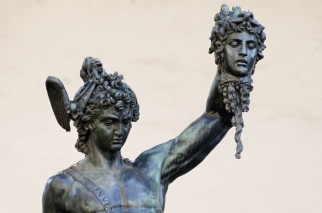
 A Serpentine Path: Mysteries of the Goddess
 Last week I was finally able to see “
 On CNN’s
  “Is that your wife or your girlfriend?” These words were addressed to my husband a few weeks back as I walked up to a podium, where I was to sit on a panel and give my views on the relationship between the Church and Generation X. The event was a well-attended and well-funded initiative by a well-known organization, celebrating its multi-decade long history of supporting progressive action and vision for the future the Roman Catholic Church. After accolades, awards, and a stirring keynote, I and two others were to address in cross-generational perspective, the needs of changing populations of Catholics.

 My husband, who is American, first introduced me to the word “negging.” Although I hadn’t come across it before setting foot in America, I soon came to realize it was a concept that knew few cultural bounds. The Urban Dictionary (UD) defines negging as “[when] you use remarks to tap into female insecurity; shake their confidence…neg is a negative remark wrapped in a back-handed compliment.” In the West, as I have learned, negging tends to target a woman’s physical attributes, often as a pick up line. Thus, as the UD again illustrates: “You are nearly as tall as me. I like tall girls (LIFT). Are those heels 4 or 5 inches (DROP)?”
 Feminism and Religion