In a previous FAR post, I talked about the newest trend in sports of including women in marketing strategies for American football. Today I have decided to throw my hat into the ring regarding the recent polarizing “Kneeling” protest taking place at NFL games. I started writing this on the morning that the current Vice President walked out of a NFL game due to players ‘taking the knee’ during the National Anthem; a protest which has been reported to cost TAXPAYERS $200,000. Weeks have gone by with the issue getting bigger and bigger. I can no longer stay silent.
This protest started when NFL quarterback Colin Kaepernick took a knee during the National Anthem in August of 2016. He stated he was taking a knee to stand for people that were being oppressed. It has since exploded as a social movement/protest.

It has become a highly sensitive and polemic topic. And it is polarizing bcause the two groups which are opposing each other are actually, talking about two different things. The group that supports the kneeling protests understand that this ‘peaceful, and respectful’ act during the National Anthem is an important way they can voice their solidarity, take a stance, and bring awareness to the violence and injustices that minority groups face, especially African Americans. The group that radically opposes this protest only see it as a disrespecting act of our country, our flag, our troops, and their faith. Thus, the arguments and pseudo-discussions are not getting anywhere. Continue reading “Kneeling as Protest by Anjeanette LeBoeuf”


 Tomorrow being Thanksgiving in the United States offers an opportunity to reflect on gratitude. With so much anger bubbling up on all fronts is it possible that gratitude could be the salve to heal our wounds?
 We treat the physical assault and the silencing after as two separate things, but they are the same, both bent on annihilation.
 Two weeks ago, I spoke at a conference entitled “The Role of Academia and Religious Leaders in Relation to Refugees and the ‘Refugee Crisis,’” in Bratislava, Slovakia. One of the main questions of the conference was: what role do academics play in the refugee crisis? Are academics activists? Many conference presenters and attendees directly linked the two ideas. However, there were some who voiced their concern as to how in-touch academics actually are with reality and surmised that because of this academics probably weren’t activists. Wait! What? How can we not be activists?
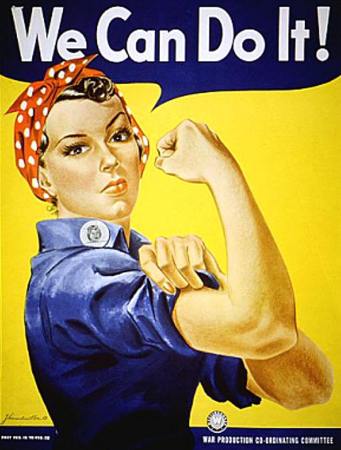 Betty Friedan interviewed the unhappy housewives, their human potential unfulfilled by a lack of vocation outside the home. I wonder if her claim was just a premise of the lawn being more manicured on the other side. The book received criticism by reviewers asking who was really oppressed and what perspectives were ignored. I’ve been on a few lawns, and I am here to confirm there is no true green grass anywhere. Mostly it’s either covered with the blood of women who die in the Global South because of the poor working conditions that pay them too little to support their families or laced with pesticides for profit or sheets of concrete to the dismay of our feet. I suppose there might green grass somewhere, but it costs more than some of us can afford, meaning a woman would have to earn more than what is only enough to rent a room in someone else’s house, an apartment of her own being too expensive much less any sort of fund for a cabin in the woods.
 I was asked by my sculpture teacher to make a monument. “A monument to what,” I asked? “Anything,” he answered. The only parameter seemed to be that the work was produced in wood. Having seen some interesting stone and marbleizing paints, I had the immediate idea to transform the wood into a marble-like appearance. Marble, for some reason, probably because it is the cemetery standard, seemed like the right medium for a monument to me.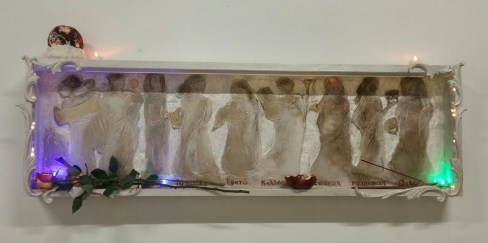
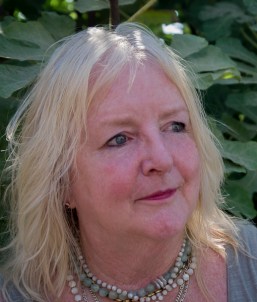 I was at a dinner party for twelve lovingly prepared by two ex-pat friends, when the subject of Woody Allen’s most recent film came up. I don’t remember which one of them it was, because, as I said at the time, “I vowed never to see a Woody Allen film again as my response to the way he treats women in his films and in his personal life.” I was immediately challenged by–it seemed to me at the time–everyone else at the table.