

 I watched this short video on facebook about Sisa, an Egyptian woman who spent forty years a man in order provide for her family. There is a longer version on YouTube. Sisa, a widow, decided to work to feed her children, and consequently grandchildren. In Egypt, a woman can only do unpaid jobs within a home. So Sisa had to pretend to be a man by wearing male clothing and head wear. She takes casual jobs, such as shoe shining or brick laying.
 Then Sisa made the news and was honoured by governmental officials. There is footage in the report of Egyptian men watching that footage. Apparently, the men were impressed by Sisa’s efforts and they developed respect for her. One man, who knows Sisa personally, says for camera: “I treat her like a man, because she works like a man”.
The implication being, I assume, that Sisa is only worthy of respect because she acts like a man is expected to act. And another implication is that Sisa is an exception. He only prepared to treat her differently, as all the rest of the women in Egypt apparently cannot work as men.
Continue reading “Householders’ Superstitions and the Higher Truth by Oxana Poberejnaia”
 When I was in high school, I remember being preoccupied with being my “authentic” self. I am quite sure I had little idea of what that meant because I think it was akin to knowing the content of my ego, my likes and dislikes, and simply being honest about them. For someone who avoids confrontation and tends to hide or lie about the truth far too often with the more persistent people in her life, this might not have been a bad ethics to practice; although, if that was what I was aiming for, I didn’t achieve my goal then and still have not.
 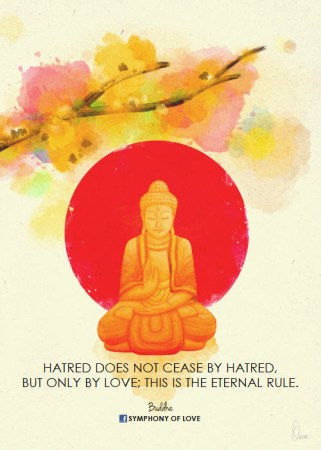 However, as one of the most famous verses of Dhammapada goes:
 Another joke that captures this paradox perfectly is:
 I thought: “Yes, precisely.”
 This saying is one of those that sound a bit curious to a Western ear. It is almost as if the Buddha was against fun or humour. However, we all are familiar with the Buddha’s depictions where he smiles. The canonical texts also bear witness to the Buddha’s smiling.
 Feminism and Religion