Amy Wright Glenn’s Birth, Breath, & Death: Meditations on Motherhood, Chaplaincy, and Life as a Doula is a mid-life memoir of the author’s personal encounters and professional insights drawn from her work in the spaces of birth and death. Glenn gleans from her formative experiences as a daughter and sister, her trained experiences as a teacher and doula, and her wisdom experiences as a mother, chaplain, and friend. In an accessible voice, Glenn reflects compassionately on her early life in a Mormon family. She considers critically the nature of religious worldviews that are doctrinally dualistic and apocalyptic. Glenn further describes the therapeutic and illuminating value she found in the scholarly study of religions as an anthropological phenomenon. Glenn explores how religious discourse both expresses human joy and grief and also aids us in our encounters with life and death. Glenn intertwines her academic study with personal narrative and achieves a professionally-informed and experientially-based “thinking out loud” about the bookends of human life. Her writing is tender, and her vision is thought-provoking.
Continue reading “BOOK REVIEW: Amy Wright Glenn’s Birth, Breath, & Death by Natalie Weaver”
Category: Childbirth
Encountering “the Change” as a Personal Exodus and Liberation by Michele Stopera Freyhauf
 The story of Exodus, through a liberation lens, has different meanings depending on the person’s experience in life. I recently experienced my own kind of liberation, a freedom from decades old enslavement. Through this realization, I celebrated with many other women with the reminder – you are not alone!
The story of the Exodus is a familiar one. It is a text of oppression, journey, and freedom – a freedom that finds us in new surroundings, a place of revelation and transformation. Many have written about the Exodus text found in the Hebrew Scriptures from different ideological lenses and social locations. For me, I propose to apply this to menopause (also known as the “change”).
It is not too far fetched to look at menopause as a transformative event in a woman’s life. For a woman like me, who struggled with the disease Endometriosis since my teen years, menopause it is not only transformative, but liberative. The only effective treatment for this disease (for me) was the injections of Lupron Depot that put my body in “medical menopause.” Because of that experience, I felt like my body was being liberated from disease – this disease that debilitated me monthly or, at the very least, caused me tremendous pain.
A few weeks ago, I had the experience of attending a musical with a group of friends. I am not in the habit of blogging about my personal life, but I cannot help but wonder if my story and experience might help another. The problem about “the change” is that we joke about it and usually face it with unbelievable dread. I propose to look at the “change” as a positive – a new beginning, with a reminder to all women out there – you are not alone!
I received this revelation several months after my surgery at a musical named – you guessed it – Menopause! What started out as a much needed get together of friends turned into an awakening and celebration. Something that has me celebrating the change – even as I fan myself through the hot flashes (I prefer “personal summers”), tear-up during emotional commercials for no reason (something I haven’t experienced since pregnancy), clinching my teeth due to a quick-igniting temper that causes me to exercise remarkable restrain (and you thought patience was a gift to children and teens), to searching every cabinet for that holy grail of comfort food – chocolate. As I reflected on that evening, it occurred to me that I was living my own exodus story and the very thing that enslaved me can no longer hurt me – I am now free – renewed and emerged, but still in a strange wilderness that holds different challenges. Continue reading “Encountering “the Change” as a Personal Exodus and Liberation by Michele Stopera Freyhauf”
Early Marriage and Early Islam by amina wadud

This week, in the state where I am living, Kerala, India:
“…nine prominent Muslim (sic) organizations have decided to approach the Supreme Court to exclude Muslim women from the law prescribing a minimum marital age. According to them, the present Prohibition of Child Marriage Act, 2006, which prescribes 18 as women’s legal age and 21 for men, violates Muslims’ fundamental right to practice their religion.”
Let me try to step back and formulate this in plain English.
India is a secular democratic nation-state, with a population of over 1 billion, a poverty rate at best estimated at 22%. It ranks as the 55th worst country with regard to its maternal mortality rate with estimates as high as 450 per 100,000, and has an infant mortality rate of 44-55 per 1000. All the above factors have a direct corollary to child marriage: poverty, maternal mortality (think babies having babies), and thus, infant mortality is directly related to the national age of marriage.
Thus, one way to eradicate poverty, save mothers, and save infants is to prevent child marriage. It is no wonder preventing child marriage is a leading strategy for development organizations, human rights organizations and even the World Bank. In 2006, India passed the Child Marriage Act which states, “This legislation is armed with enabling provisions to prohibit child marriages, protect and provide relief to victims and enhance punishment for those who abet, promote and solemnize such marriages” (pg 1). Continue reading “Early Marriage and Early Islam by amina wadud”
Birth Warrior by Molly
 “In this culture…a woman can be made to feel foolish for emphasizing the centrality of giving birth to her identity or her personal religiousness, her ‘womanspirit…’” –Stephanie Demetrakopoulos (Listening to Our Bodies)
After the birth of my daughter in 2011, I received a small package from a Birthing from Within mentor friend. In it was a sweet little t-shirt imprinted with the words, My Mama is a Birth Warrior. The words on the shirt surrounded a labyrinth image, which I love as a metaphor for birth and life.
Written on the enclosed card was the following:
Imagine a tribe in which a woman is prepared for childbirth in the same way warriors are prepared for battle. Imagine a Ceremony for this woman before she gives birth, a grand send-off with holy songs and fire. Imagine a feast, prepared just for her.
Her tribe tells her, they say to her “Go to your journey, you have prepared. We have prepared you. If you fall from your horse once or a hundred times, it does not matter. All that matters is that you come back to us, that you come home.
Throughout your journey–your labyrinth of Great Love, Great Determination, Great Faith and Great Doubt—you rode on!
The Great Tribe of Mothers welcomes you back from your birth journey with honor.

Imagine, indeed. After I read this note I reflected that I did feel I embarked on a mighty journey during my last pregnancy, I did pass through those Gates, and I did ride on. I AM a birth warrior! Continue reading “Birth Warrior by Molly”
5 Interesting Facts about Women and Religion by Kile Jones
 Part of my research is focused on how the social sciences relate to “religion” and religious studies. More specifically, I spend time examining the sociology of religion. I look at stats, demographics, and polls. I look at rates of attendance, frequency of prayer, levels of “religiosity,” apostates (or the less religiously-loaded term “exiters”), and political outlooks. I also look at how bias this area of study is in favor of religion. One facet of this work that has always interested me, is the differences in “gender” and “sex” as they relate to religious beliefs and observances. Accepting the fact that there are spectrums of sex, gender, and identity, and the presence of difficult philosophical questions surrounding self-identification and the limits of labels, some really interesting facts and statistics crop up time and time again. In what follows I will lay out a couple of these interesting facts, along with some thoughts on them: Continue reading “5 Interesting Facts about Women and Religion by Kile Jones”
Blindness of the Gals by Oxana Poberejnaia
 Women (and men) are often blind to women’s inequality. I, as a Buddhist practitioner, have been blind to the reality of women’s second-class status in sacred texts of Buddhism and practice.
In her book “Buddhism After Patriarchy” Rita M. Gross describes how her fellow western Buddhist women completely overlooked the fact that women are not allowed into Rumtek Buddhist monastery in Sikkim, even after watching a video of a woman leaving an offering outside the gate and walking away.
Continue reading “Blindness of the Gals by Oxana Poberejnaia”
Menstruation for Buddhist Women by Oxana Poberejnaia
Not all, but many women menstruate. The menstrual cycle is a contentious areas for feminists. Even men who aspire to be a feminist tend to find it difficult to deal with it. Inappropriate jokes ensue, and completely ignoring the issue is also a popular option.
My journey along a feminist path and toward the Sacred Feminine necessarily included working with my menstrual cycle. In this, Women’s Wisdom and the Menstrual Cycles articles and Womb Blessings by Miranda Gray have been most helpful.
Continue reading “Menstruation for Buddhist Women by Oxana Poberejnaia”
Birth as a Shamanic Experience by Molly
“Childbirth is a rite of passage so intense physically, psychologically, emotionally, spiritually, that most other events in a woman’s life pale next to it. In our modern lives, there are few remaining rituals of initiation, few events that challenge a person’s mettle down to the very core. Childbirth remains a primary initiatory rite for a woman.” –Maren Hansen (MotherMysteries)
When I was pregnant with my first baby, I read an article with the theme of “Birth as a Shamanic Experience.” I can no longer find the exact article (online or printed), but I distinctly remember my feeling upon reading it: I was entering into a mystery. Giving birth was big. Bigger than anything I’d ever done before and it went beyond the realm of a purely biological process and into something else. Like shamanic experiences, giving birth is often described as involving a sense of connection to the larger forces of the world as well as being in an altered state of consciousness or even a trance state. While shamanic experiences may involve “journeying” to other realms of reality, giving birth requires the most thoroughly embodied rootedness of being that I’ve ever experienced. It, too, is a journey, but it is a journey into one’s own deepest resources and strongest places. The sensation of being in a totally focused, state of trance and on a soul work mission is intense, defining, and pivotal.
Shamanic journeys may be embarked upon for the purpose of soul retrieval and I can’t help but think that this is the purpose of giving birth as well—the birthing woman travels into herself to bring forth the soul of her child. Continue reading “Birth as a Shamanic Experience by Molly”
Genetic Testing: The Ethical Implications of Expanded Newborn Testing – Who Benefits? (Part One) by Michele Stopera Freyhauf
 With Angelina Jolie’s electing to have a double mastectomy because she carried the BRCa Gene, and her mother and aunt died at a very early age of the disease, the issue of genetic testing is in the forefront again. This is a three-part essay explores genetic testing when it comes to newborn testing (part one and part two) and concludes with exploring personal choices, availability, and psychological ramifications of genetic testing.
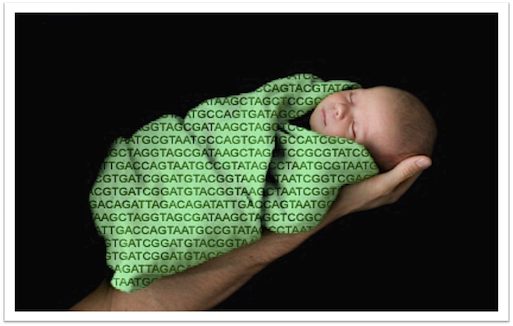
After nine months of worrying and diligent pre-natal care, the day to meet your unborn child is here. Labor is long and for hours you lie in the birthing suite riding out contraction after contraction. The moment finally arrives and you discover you have a son; ten fingers, ten toes and seemingly healthylungs by the cry that you hear. He is then quickly taken over to the nurse’s station and a drop of blood from his heel is placed into a machine that in seconds will decode his entire genome. Soon your son’s future will be written in stone; he has a life expectancy of 30.2 years and has a 99% chance of dying from heart failure. In that instance, your son has been labeled as an in-valid and he is now doomed to exist within a lower class of society, one that will prohibit him from pursuing his dreams. Society has discriminated against your new baby boy based solely upon his DNA. A new form of eugenics is born.
This was the opening scene of the 1997 science-fiction movie called “Gattaca.” Besides pushing the bounds of human imagination, science fiction can serve as a warning about a future caused by the abuses of humankind. The opening birth scene in this movie is quickly becoming a potential reality. Now, a person’s entire genome can be decoded and in an instant, a person knows whether he or she will be susceptible to Parkinson’s disease, Alzheimer’s disease, Cancer, or other life threatening conditions. Proponents of genetic sequencing believe that this is the holy grail of medical care and tout phrases like “personalized medical care” and “significantly reduced costs of healthcare.” There is a rapid movement towards this goal through the proposed expansion of newborn screening for eighty-four conditions, most of which are not understood or have no known treatment. Continue reading “Genetic Testing: The Ethical Implications of Expanded Newborn Testing – Who Benefits? (Part One) by Michele Stopera Freyhauf”
Protecting our Families: How the U.S. Falls Short in Protecting New Mothers (and Fathers) by Michele Stopera Freyhauf
Last weekend, I had the privilege of speaking at the National Convention for American Mothers, Inc. about motherhood in the 21st Century. Because this is such a vital issue for mothers that live in the U.S. (since a large majority of families have two full-time wage earners), I thought it would be appropriate to share my speech here. With the understanding that this a forum for feminism, I believe that this topic fits this forum because it continues to show how unequal the treatment is between the sexes – whether it is pay, position in employment, healthcare, education, or simply balancing the responsibilities of family/career. For those that live in the United States, there is often a sense of exceptionalism, and as I clearly demonstrate in this speech, we are certainly a far cry from being role models that when it comes to protecting mothers (whether by birth or adoption) and families.
As a side note: One topic that was not explored, due to lack of data, is how maternity/paternity leave impacts same sex couples who become new parents – I have to believe that this is a topic to also examine (and I am would encourage any feedback here).
Recently the United States ranked 25 out of 165 countries for being the best place to live if you are a mother. This number is up from 31 a year ago and places us between Belarus and the Czech Republic.
You may be asking yourself, Why isn’t the United States in the top five or even in the top ten? The answer to that question becomes evident once we examine how that determination is made. The categories examined are:
- Mother’s education;
- Child’s Health;
- Economic status;
- The Election of women to government office;
- Breast feeding programs. In the United States 75% of mothers breastfeed their babies, 35% continue to breastfeed after six weeks. The number shrinks because mothers usually return to work and find it difficult to to pump at the office;
- Maternal death rate is another factor, which stunned me when I found out that the US has the highest maternal death rate of any industrialized nation. Approximately 1 in 2,100 women are at risk of dying during child birth;
- Infant death rates is another category. Infant deaths are estimated to be 8 per 1000 births – a number that throws us behind 40 other countries;
- The final item is maternity leave benefits for mothers working outside the home. This seems to be one of the biggest problems. That is why I think it is important to take a closer look at this issue with the hope of educating ourselves so we can perpetuate change. Continue reading “Protecting our Families: How the U.S. Falls Short in Protecting New Mothers (and Fathers) by Michele Stopera Freyhauf”
 Feminism and Religion