TOXIC POSITIVITY by Esther Nelson

Psychotherapist Whitney Goodman popularized the phrase “toxic positivity” on Instagram—the ideas of which she eventually gathered into a book with that same title (Penguin Random House LLC, 2022).  The term itself may be fairly new, however, being and staying positive “no matter what” goes way back.

Psychological exploration of the “concept of unrealistic optimism” goes back to at least 1980.  [The] “term toxic positivity first appeared in J. Halberstam’s 2011 The Queer Art of Failure, a work that poked ‘holes in the toxic positivity of contemporary life.’” (Wikipedia) 

Many of us remember Stuart Smalley on the TV show “Saturday Night Live” looking at himself in the mirror while giving himself positive, yet cringe-worthy, affirmations.

My yoga classes are full of vapid affirmations and arrogant advice.  “You are a beautiful person—inside and out.” “You are kind.” “You are caring.” “You love fiercely.”  “You can do ANYTHING you set your mind to.” Really?! Sappy shibboleths and saccharine-laced sayings don’t reach me, other than to make me uncomfortable and squirmy.

Continue reading “TOXIC POSITIVITY by Esther Nelson”
Healing What Ails Us and Coming Together: Politics and Other Forbidden Subjects by Caryn MacGrandle

I met my best friend growing up in Third Grade.  I moved around the country after high school, but regardless, her and I have managed to stay in touch.  I spoke with her last weekend and asked about her parents.  Even though its been years since I’ve seen them, I remember them as if it were yesterday. Going out to their cabin at Lake Texoma. Seeing them around the house. 

You see Kim and I were tight.  We saw each other pretty much daily for years.  In some ways it was a much more innocent time.  I remember summers leaving the house in the morning and not going back until sunset, muddy and barefoot.  Crawdads and horse models.  Playgrounds and baseball games.  

But in some ways, it was a much less innocent time. We dabbled in quite a lot that we should not have as the term helicopter parent was unheard of.  Our skies were wide open.  The good and the bad. The large majority of us were latch key kids, and we raised ourselves.  No apps to tell our parents where we were or check in. We went as the wind blew us.

Continue reading “Healing What Ails Us and Coming Together: Politics and Other Forbidden Subjects by Caryn MacGrandle”

The Blessing of the Elders by Rachel Thomas

, elders are people who have illuminated my path, inspired me to see my own potential. To open my eyes, all my senses, even those I did not know I had. Elders show bravery and model for us how to be strong.

What is an Elder?

The word elder comes from an Old English word which also meant ancestor or chief. A lot can change in a thousand years and many of us no longer honor older people or seek out them out for advice.

In my experience, elders are people who have illuminated my path, inspired me to see my own potential. To open my eyes, all my senses, even those I did not know I had. Elders show bravery and model for us how to be strong.

My first wise woman teachings came from my family. My mother, and her mother, taught me to be myself, to love being outdoors and the importance of having a garden. Feeling the joy of flowers, cooking with fresh herbs, planting a tree to honor the dead. These are a few ancient traditions of my ancestors that have survived even in a modernized and urban setting.

Continue reading “The Blessing of the Elders by Rachel Thomas”

As I rediscover my connection with the earth, my eco-consciousness inspires me to transform. As I go back to nature, I re-awaken my ancient cellular memories of living in harmony with the earth. I feel called to dance barefoot, play drums, make offerings, bathe in moonlight, harvest with my own hands. As I move forward on a path which is both new and old, it is my beloved elders who have shown me how to find my way.

What is an Elder?

The word elder comes from an Old English word which also meant ancestor or chief. A lot can change in a thousand years and many of us no longer honor older people or seek out them out for advice.

In my experience, elders are people who have illuminated my path, inspired me to see my own potential. To open my eyes, all my senses, even those I did not know I had. Elders show bravery and model for us how to be strong.

My first wise woman teachings came from my family. My mother, and her mother, taught me to be myself, to love being outdoors and the importance of having a garden. Feeling the joy of flowers, cooking with fresh herbs, planting a tree to honor the dead. These are a few ancient traditions of my ancestors that have survived even in a modernized and urban setting.

Continue reading “The Blessing of the Elders by Rachel Thomas”

Reshaping Our World with Words by Carolyn Lee Boyd

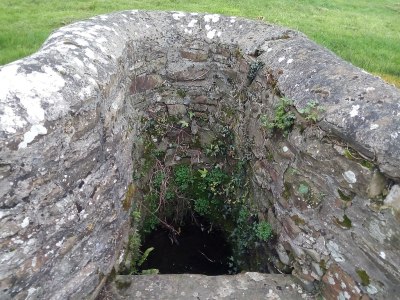
Holy well of Saint Scoheen

Pagasasthai, kernos, thiosos, sloinneadh, taibhsear.  These are centuries-old words that help describe and create a world in which the Earth is sacred and receives gratitude, people revere the wisdom of their ancestors, and those who see beyond our everyday reality are honored. 

Every day we build the world around us with words. Their tone and subtle meaning tell us who we are, what our place in society is, and how we should live. Which objects and concepts become common words indicate what is “real” and important or not. When an object or concept has its own word it gains clarity and power. Here at FAR, for example, we have had many wonderful posts about rewriting religious texts and liturgy to re-invigorate them with the sacred female spirit and be resonant with female presence. 

Continue reading “Reshaping Our World with Words by Carolyn Lee Boyd”

Carol Christ Symposium ~ Call for Papers by Mara Lynn Keller ~ Deadline for Proposals this Week!

Carol P. Christ
A Symposium in Celebration of Her Spiritual-Feminist Activism and Women’s Spirituality Scholarship

“The Goddess is the intelligent embodied love that is in all being.”
~ Carol P. Christ

Free Symposium via Zoom hosted by
Women’s Spirituality Graduate Studies Program California Institute of Integral Studies
October 22, 2021. 10:00 am to 4:00 pm

Call for papers focusing on Carol P. Christ’s scholarship and activism in the key areas of Women’s Spirituality, Goddess Studies, Ecofeminism, and Women and Religion.*

Please speak to what you think and feel are Carol P. Christ’s most important contributions to one of the academic fields listed below, and then also, to how her writings are important to you personally. We will arrange papers into the following six panels of 3-4 presenters.

  1. Ecofeminist Philosophy and Activism 
  2. Goddess Studies and Egalitarian Matriarchal Studies 
  3. Spiritual Feminism and Peace Activism 
  4. Spiritual Feminist Literary Criticism  
  5. Women and Religion
  6. Women’s Spiritual Pilgrimage 

Please send an abstract of your proposed paper (in 300 words or less) to Mara Lynn Keller at mkeller@ciis.edu, by Wednesday, September 16, 2021. Acceptances will be sent out Friday-Monday, 9/24-27/2021. Papers are to be 12 minutes in length.  

*Primary Sources include:

  1. Diving Deep and Surfacing: Women Writers on Spiritual Quest (1986)
  2. Woman Spirit Rising: A Feminist Reader in Religion, anthology co-edited with Judith Plaskow (1992)
  3. Odyssey with the Goddess: A Spiritual Quest in Crete (1995) 
  4. Weaving the Visions: New Patterns in Feminist Spirituality. Anthology co-edited with Judith Plaskow (1989) 
  5. Laughter of Aphrodite: Reflections on a Journey to the Goddess (1987)
  6. Rebirth of the Goddess: Finding Meaning in Feminist Spirituality (1998)
  7. She Who Changes: Re-imaging the Divine in the World (2004)
  8. Goddess and God in the World: Conversations in Embodied Theology. Co-authored with Judith Plaskow (2016) 
  9. Carol’s blogs on Feminism and Religion can be found at: Carol P. Christ (feminismandreligion.com)

In addition to the panels, the Symposium will include:        
In Memoriam: Ritual Honoring Carol’s Life and Death (1946-2021)
Circle of Remembrance: Personal reminiscences and reflections on Carol’s life and work.


Singing Is a Sacred Power by Carolyn Lee Boyd

Carolyn Lee Boyd

A moss-soft ballad sung from a mountain top to the sunrise.  A parent’s lullaby to soothe a newborn to sleep. Thousands of voices rising together to banish injustice from our planet. A single wavering melody infusing inspiration into a moment of despair. Whenever we open our mouths to sing, no matter how tuneful or discordant our song, we have instant access to a well of power to transform ourselves and others.

Over the years, I’ve been amazed at how often singing denotes spiritual power in myths and stories about goddesses and holy women from across the globe and throughout time. These are just a few examples from around the world. You may know others.

Continue reading “Singing Is a Sacred Power by Carolyn Lee Boyd”

Dancing for Forgiveness and Reconciliation – Part Two By Laura Shannon

In Part One of this article, I described dancing Jewish, Romani, and Armenian dances for forgiveness and reconciliation with groups in Germany and all over the world. I also offered danced rituals of remembrance at former concentration camps and other places scarred by the atrocities of war.
I went to camps including Dachau and Auschwitz, to genocide memorials and sites of massacre throughout Eastern Europe, in Australia, and the Americas. At first, my prayers were private: I brought flowers, lit candles, danced my grief, and spent time in meditation. I tried to visualise the prisoners in those places, sending them my deep sorrow and regret back through time. I wanted to let them know that they are remembered and mourned by people from their future. My prayers contained a fervent apology as well as a soul commitment to do my part in this lifetime to overcome prejudice and stand for peace.
In time I invited others to dance with me for healing and peace. We danced at former camps in Germany, including Bad Gandersheim, a subcamp of Buchenwald, and on many occasions in Steyerberg, a former prison camp and forced-labour munitions factory which is now the site of an intentional community called Lebensgarten (‘Garden of Life’), a centre for permaculture, non-violent communication, and other ecologically and spiritually oriented ways of living.

Continue reading “Dancing for Forgiveness and Reconciliation – Part Two By Laura Shannon”

Mis(sing)Understanding: Kobe, Pompeo, and a Paper Towel by Marcia Mount Shoop

mms headshot 2015Who knows when each of us first learns that sensation—the sensation of being misunderstood.  My hunch is that it comes early on in our lives, maybe even before our brains are making narrative memory, maybe even before we have begun to understand much of anything about ourselves or the world. But it doesn’t take much for the seed to be planted in us that the world won’t always understand us.

My mom has long told me a story about me as a frustrated toddler trying to be understood. I was sitting in my high chair, the story goes, and I started saying “puppy touw.” My mom was not sure what I wanted, but I became more and more adamant, saying “puppy touw” over and over again.

She brought the dog over thinking I might mean I wanted the dog. She showed me all kinds of toys and nearby objects in an effort to understand and respond to my increasingly urgent request. I became more and more frustrated, kicking the high chair, moving my body in the chair, saying “puppy touw” louder and louder through tears. Continue reading “Mis(sing)Understanding: Kobe, Pompeo, and a Paper Towel by Marcia Mount Shoop”

The Lady Be With You – A Closer Look at Liturgical Idolatry by Tallessyn Zawn Grenfell-Lee

Even though I realized at least 17 years ago that it makes no theological sense to limit our symbols of the Divine to male symbols – Lord, God, Father – it took several years for this idea to embed itself into my subconscious. Over time, male language moved from ‘unnoticed’ to ‘noticed’ to ‘distracting’ to, eventually, ‘oppressively violent when used exclusively, without female images to balance out millennia of the idolatry of maleness.’

One of my favorite ways to dislodge this subconscious, internalized patriarchy has involved rewriting favorite old hymns. I usually try to incorporate a combination of images, to represent the incarnate divinity of all genders and all Creation. But let’s be honest: female terms for the Divine remain startling in many religious and secular, cultural contexts. In my own Methodist tradition, even though progressive Methodists sign up on paper to the idea that “God” (there we go again with the male terms) is bigger than any symbol or gender, I’ve as yet only ever been to one Christian church that used balanced gender images of the Divine, and that was a queer welcoming Methodist ministry with intentionally inclusive theology and liturgy.

I think that church saved my life. Some days, I also think it ruined my life. It showed us all what Methodism can be; and then, its time ended, and we alums drifted into the diaspora to try to take the hope and healing we experienced there into our own journeys. Some of us remain within Methodism and continue to work for the vision of welcome, of the kin-dom, that we sought together there. Personally, I love being Methodist. Grace, the journey, grace, the quadrilateral, grace.

Continue reading “The Lady Be With You – A Closer Look at Liturgical Idolatry by Tallessyn Zawn Grenfell-Lee”

On Guilt and G-d, the Parent by Ivy Helman.

29662350_10155723099993089_8391051315166448776_oSometimes, being overwhelmed with guilt makes one unable to act.  Other times, guilt manipulates and attempts to control.  It might offer a sense of responsibility and concern. More often than not, guilt comes bundled in small doses of should-haves and could-haves.

For example, when you feel guilty for skipping exercise and instead lay in front of the television binge-watching your new favorite show.  It’s not the end of the world, but you really should have gone and exercised.  Or, when you feel bad for getting into a fight with a friend and saying something mean when you could have done otherwise.  In general, I think there is such a thing as a healthy amount of guilt which spurs right actions, sincere apologies, forgiveness and knowledge of the good.

Jewish tradition generally agrees with me that a measured amount of guilt is often quite helpful.  Guilt instructs us in right and wrong and guides us to be more responsible, more mature individuals.  Indeed, it even clues us into a better understanding of G-d.   Continue reading “On Guilt and G-d, the Parent by Ivy Helman.”