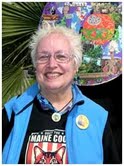
I read some wonderful posts last spring and summer about the beauties of the outdoors. One that especially inspired me was by Molly Meade. If you missed Molly’s description of how she goes out to the “priestess rocks,” read it now.
But as much as I admire people who like to spend time outdoors in gardens or the wilderness or national parks or anywhere else without kitchens and bathrooms…well, I just don’t like to get the outdoors on me. Most Pagans I know like to camp and hold grand outdoor rituals. Not me. I get lost. I trip over tree roots and get allergic in some large gardens. I don’t like to climb or hike and I stay away from the beach because it’s got all that icky, dirty sand all over it. Although I send money to the Wilderness Society and Friends of the Earth, the wilderness does not need my footprints in it.
So here’s another of my weird little stories. This one’s a fable I wrote several years ago for a friend who was holding regular ceremonies at Joshua Tree National Park in the SoCal desert. (I went to some of those ceremonies. My friends were very proud of me.)
The Association for the Study of Women & Mythology (ASWM) will be hosting this year’s Conference, “Seeking Harbor in Our Histories: Lights in the Darkness” at the Boston Marriot Burlington Hotel on 1-2 April 2016.
ASWM conferences strive to support the scholarship, artistry, & practice of those who explore and engage the sacred feminine through study and creativity. Offering keynote presentations at this year’s conference are Dr. Elinor Gadon, Dr. Margaret Bruchac, and Dr. Lucia Ciavola Birnbaum.
On Friday night, there will be a plenary session and book-signing moderated by Miriam Robbins Dexter and Vicki Noble and featuring Max Dashu, Starr Goode, Mama Donna Henes, Donna Read, Genevieve Vaughan, Cristina Biaggi, Lydia Ruyle, Miranda Shaw, Elinor Gadon, and Susun Weed. They will be sharing stories from the anthology, Foremothers of the Women’s Spirituality Movement: Elders and Visionaries. FAR contributor Carol P. Christ has a chapter in the book.
FAR is excited to share that three of our contributors are on this year’s conference schedule!
Nancy Vedder-Shults will be joining the “Artists, Activists, & Scientists and the Lineage of the Goddess” panel with her presentation, Science and Divination: The Blurring Lines between the Secular and the Sacred.
Jill Hammer will present The King and the Priestess: Mythic Motifs and Motives in the Tale of Judah and Tamar as part of the “Male-Female Relationships in the Hebrew Texts: Three Feminist Analyses” panel.
Kate Brunner will be participating in the “Women’s Spirituality, Transformative Scholarship and Personal Quest” panel with Rhiannon, Great Queen of the Mabinogi: Ancient Mythology in Modern Context. She will also be offering her meditative writing workshop, Becoming Branwen the Peaceweaver.
In addition to the main conference, there will be a Matriarchal Studies Day seminar and celebration, in the same location the day before (31 Mar). Hosted by Vicki Noble and Lydia Ruyle, the program looks to be a great addition to the weekend. Dr. Heide Goettner-Abendroth, founder of Modern Matriarchal Studies will present via Skype. Other presenters will include Max Dashu, Polly Wood, Beverly Little Thunder, and Genevieve Vaughan, exploring woman-centered arts, themes of motherhood, and the gift economy. There will be a keynote presentation by Lucia Chiavola Birnbaum, and evening entertainment by folksinger, Julie Felix.
Feminism & Religion Project contributors past, present, & future interested in connecting with FAR at the conference, are encouraged to get in touch with Kate Brunner at feminismandreligionblog@gmail.com. If there is enough interest, we may be able to organize meeting up for a meal together some time during the weekend.
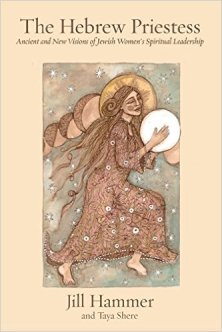
Weaver, Prophetess, Shrinekeeper, Witch; Maiden, Mother, Queen, Midwife; Wise-Woman, Mourning-Woman, Seeker, Lover, Fool . . . .Thirteen possibilities for the female self, thirteen aspects of the Goddess, thirteen archetypes for the Hebrew (or any other) Priestess . . . thirteen fact- and dream-filled chapters in Jill Hammer and Taya Shere’sthrilling—and much-needed—new book, The Hebrew Priestess: Ancient and New Visions of Jewish Women’s Spiritual Leadership.
Nearly fifty years ago, anthropologist Raphael Patai introduced readers to the Hebrew Goddess, documenting the influence of Near Eastern Goddess religions on the practices and beliefs of the ancient Israelites. Since then, feminist scholars of religion, along with poets and novelists, have offered brilliant new interpretations of Torah and Talmud, creating feminist midrash and liturgy that open the ancient patriarchal faith to modern (and perhaps also ancient) notions of female authority and autonomy. At the same time, the increasing presence of women rabbis has transformed the congregational, communal Jewish experience for many women and men.
But what we have not had is a shamanic, visionary form of Jewish practice—“earth-based, embodied, ecstatic, energetic” (9)—that integrates ancient and contemporary Goddess spirituality with Judaism: while we have had female rabbis, we have not had formally trained and recognized Hebrew Priestesses.
JillTaya
Enter Jill Hammer, who in the compelling Introduction to her book recounts with passion and precision her own meandering but steady journey to the Goddess and her establishment, with co-author Taya Shere, of the Kohenet Hebrew Priestess Institute, a school dedicated to ordaining contemporary Hebrew Priestesses, kohanot. “Kohenet,” although it does not appear in the Bible, is the ancient Hebrew word for “priestess.” Continue reading “The Hebrew Priestess: A Book Review by Joyce Zonana”
If you ever eavesdrop on a conversation between my husband and me around the clamor of our four children’s voices, you will probably hear me making a tired lament: “All I want is a broad swath of uninterrupted time.” In listening to Elizabeth Gilbert’s newest book, Big Magic, on audio book I was interested by her mention that many creative people lament not having long stretches of uninterrupted time available in which to work. She quotes a letter from Herman Melville to Nathaniel Hawthorne, lamenting his lack of time and how he is always pulled “hither and thither by circumstances.” Melville said that he longed for a wide-open stretch of time in which to write. She says he called it, “the calm, the coolness, the silent grass-growing mood in which a man ought always to compose.”
…I do not know of any artist (successful or unsuccessful, amateur or pro) who does not long for that kind of time. I do not know of any creative soul who does not dream of calm, cool, grass-growing days in which to work with- out interruption. Somehow, though, nobody ever seems to achieve it. Or if they do achieve it (through a grant, for in- stance, or a friend’s generosity, or an artist’s residency), that idyll is just temporary—and then life will inevitably rush back in. Even the most successful creative people I know complain that they never seem to get all the hours they need in order to engage in dreamy, pressure-free, creative exploration. Reality’s demands are constantly pounding on the door and disturbing them. On some other planet, in some other lifetime, perhaps that sort of peaceful Edenic work environment does exist, but it rarely exists here on earth. Melville never got that kind of environment, for instance. But he still somehow managed to write Moby-Dick, anyhow.
When I create a new sculpture, I am most often creating something that I need to remember or want to learn. The original figures for my Centered Mama sculpture and my Meditation Goddess sculpture were both created while at a friend’s house for a weekend work exchange as my baby toddled around. While I love making figures of mothers and babies, I was feeling a strong urge to make a goddess representation complete unto herself. It felt like a reclaiming of my non-maternal identity and a declaration of self-sovereignty. She turned out a little bigger than some of my other figures, strong and secure and independent. Then, the baby crawled over and knocked off one of her breasts, knocked her over on the tray, smashing the side of her head. I came close to crying. I felt annoyed with my husband who’d “let” him come over and destroy my work rather than noticing him doing it and stopping him. I was frustrated, dismayed, and my feelings felt hurt in a sense. First I felt like, Argh! This is a metaphor for life! And, then I realized it was not just a metaphor for life, it is my actual life! I pouted a bit and said I was just going to smash her and give up and I made some bitter faces at my husband and some long-suffering huffs and signs, but then the baby fell asleep in the Ergo, held close against my chest. I kissed his soft hair and I took my clay and started again. I reclaimed her from the smashed parts and she sat stronger and taller than ever.
She reminds me not to give up and that beautiful work can come from struggle, but also of interdependence (not just the independence I was going for!), co-creation, and tenacity. When the finished version of her, cast from the original sculpt, sits by my bed at night or overlooks my dinner preparations, she reminds me that I am strong and that persistence is worthwhile. She also tries to remind me to be calm and steady, centered and Zen, even though I more often feel like a whirlwind.
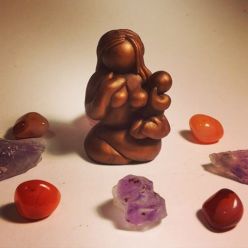
That same Saturday at my friend’s house, as my baby tentatively toddled around the kitchen, chewed on a piece of watermelon, and snoozed on my chest, I felt moved to begin creating a new Centered Mama sculpture. I had been going through an emotional rough patch, feeling buffeted by variable emotions and erratic and unpredictable in my enthusiasm and confidence. I was also feeling impatient, snappy, and irritable.
“I will be gentle with myself. I will be tender with my heart. I will hold my heart like a newborn baby child.”
This song by Karen Drucker replayed in my mind as I sculpted. The baby woke, the watermelon got dragged along the floor collecting dust, and it was time for our collaborative dinner, so I had to put her away unfinished. When we got back to our own home, I was compelled to finish her, working feverishly as the baby pulled on my legs and I said, “just a few more minutes!” to the older kids who were trying to play with him to let me work. Again and again I re-rolled the clay baby’s head, trying to make it “perfect,” and worked to lay down the strands of her hair, against of the backdrop of this often-chaotic, noisy, home-based life we’ve consciously and intentionally created together. She was created to represent holding my own center in the midst of motherhood. I will be tender with my heart. I don’t create sculptures like this because I AM so “Zen” and have life all figured out, I make them to remind me what is possible if I listen to my soul.
As I do extensive rearranging, construction, and reconstruction on my slowly ongoing dissertation project, I typed out a quote from the book Priestess: Woman as Sacred Celebrant by Pamela Eakins about her past life memories of making clay goddess figures as a temple priestess:
…to me it brought a continuation of the energy of the sacred objects of the grandmothers. I contained this energy in a new form in the dolls that would be placed upon the altars and in the graves of the daughters living now and the daughters to come…
I felt this process made my own clay stronger, too. Some of the pieces cracked in the fire because of the added ‘impurities’…but, in this case, I felt the impurities were the purest of pure and I worshipped each crack knowing the crack contained the wisdom of the priestesses who had occupied the doll-making table for more moons than I could even imagine. It contained too, the devotional energy of every grandmother who had held it in her hands or placed it on her altar. Sometimes ‘impurities’ sanctify further that which is holy to begin with.
While I tend to have a knee-jerk skepticism about past-life memories, there is something in Eakins’ words that I know at a bone-deep level as I do my own work with goddesscraft:
…Each goddess was imprinted with the sound of sacred life coursing through the Universe. I changed with the priestesses as the figures came through my hands. Each doll received the sacred vibration of life…For seventy-seven moons I made the dolls at the long table with the young Sisters of Nun. My hands were so fast. I made thousands of figures: beautiful little faces, etched collars of gold plates, pubic hair swirled into tiny rows of connecting spirals. They were so precious. At the end of the day, my baked clay shelves were covered with little women.
The clay goddesses healed…
This is how I apprenticed. I learned, in this manner, the art of healing. I learned that to heal means to make whole, and that becoming whole involves learning many levels of purification, balance, and reformation” (p. 32-33).
In Anne Key’s marvelous priestess memoir, Desert Priestess, she makes this important point: “It is of course no small wonder why graven images are so tightly controlled by religious traditions.” (p. 52) Sometimes I feel like this is what I’m tapping into when I make my own goddess sculptures—a resistance to tight control over graven images and over personalization of divinity as male.
I occasionally get requests to make bigger goddesses–-people ask about figures that are large altar pieces 12-18 inches tall or taller. The goddesses I make are all about three inches tall and there’s a reason for that: they fit in the palm of my hand. When I create them, I feel as if I’m part of an unbroken lineage stretching back 30,000 years to the person who carved the Goddess of Willendorf. I feel connected to the priestesses of the Mesopotamian temples who sculpted hundreds upon hundreds of tiny clay goddesses. Someone commented on my sculptures once saying, “echoes of Mesopotamia.” And, I said, “exactly.” I feel the connection between the clay in my hand and the clay in their hands, running through the ripples and eddies of time.
I’ve been inspired recently to re-read Starhawk’s The Spiral Dance, finding new bits of wisdom from it that speak to something different in me than they did the first time I read it. She writes of the attempts to discredit Goddess religion by invalidating the historical narratives or archaeological evidence: “The idea seems to be that if they can disprove our origin story, they can invalidate our spirituality…Is Buddhism invalid if we cannot find archaeological evidence of Buddha’s existence? Are Christ’s teachings unimportant if we cannot find his birth certificate or death warrant?…the truth of our experience is valid whether it has roots thousands of years old or thirty minutes old…a mythic truth whose proof is shown not through references and footnotes but in the way it engages strong emotions, mobilizes deep life energies, and gives us a sense of history, purpose, and place in the world. What gives the Goddess tradition validity is how it works for us now, in the moment, not whether or not someone else worshipped this particular image in the past” (p. 4).
The ancestry of my goddess sculptures may not be the same energy that raised temples and built monuments (or walls), it is the energy that carried a baby on one hip and a basket of supplies on the other and needed a goddess just the right size to tuck down the front of a shirt…
Sometimes I describe my life in the woods as being held in the hand of the goddess. And, I make goddesses that I hold in my hand. Am I in the palm of her hand or is she in the palm of mine? The answer is both.
(One of my all-time favorite fan photos–a rainy day traveling goddess picture, taken by my friend/SIL (this one is only an inch tall, but look how she calls in the waters of the world!)
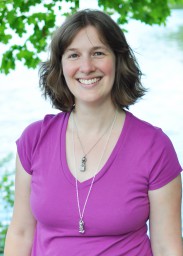
Molly has been “gathering the women” to circle, sing, celebrate, and share since 2008. She plans and facilitates women’s circles, seasonal retreats and rituals, mother-daughter circles, family ceremonies, and red tent circles in rural Missouri. She is an priestess who holds MSW and M.Div degrees and she is finishing her dissertation about contemporary priestessing in the U.S. Molly’s roots are in birth work and in domestic violence activism. She has worked with groups of women since 1996 and teaches college courses in group dynamics and human services. Molly is the author of Womanrunes: a guide to their use and interpretation, Earthprayer, Birthprayer, Lifeprayer, Womanprayer, and The Red Tent Resource Kit, as well as three social service oriented booklets and a miscarriage memoir. She has maintained her Talk Birth blog since 2007 and writes about thealogy, nature, practical priestessing, and the goddess at her Woodspriestess blog. Molly and her husband Mark co-create original birth art, goddess sculptures, ceremony kits, and pendants at Brigid’s Grove.
Old Mother Hubbard Went to the cupboard To get her poor dog a bone; But when she came there The cupboard was bare, And so the poor dog had none.
From her lips to our ears.
Yawanna know why my cupboard’s bare? It’s because we’re poor! Well, not all the time. Mr. Hubbard gets a good job from time to time, and then him ’n’ me an’ the kids an’ the animals have enough to eat. But those jobs never last long enough. And yawanna know why? It ain’t just the economy (which is, yeah, pretty stupid). It’s on accounta we don’t quite look like everybody else ’round here. On accountawe don’t speak the “normal” language at home. We obviously came from someplace else. An’ the folks ’round here are so worried about themselves they don’t care about us. Some of ’em don’t like us at all. (And, I ask you, where’s the folks who look like me in the schools ’n’ the gov’mintan’ on the police force?)
Now we don’t live way out in the sticks like my friend Mrs. Shoe does with all her children. We live in the outskirts of this big city, and we can grow a lot of our own food. Lotsa times, though, we march into the big city and look around for more food. There’s lotsa food that got thrown away, perfectly good food goin’ to waste every day. That’s how I get bones for the old dog an’ good stuff for the cats, too. An’, of course, for the kids an’ the hubby ’n’ me. An’for the homeless folks who show up from time to time. Share ’n’ share alike, that’s my motto. We do what we can for who we can.
And we don’t share the “normal” religion of the folks in the big city. Most of them never heard of the Mother Goddess. Or any goddess at all, for that matter. No, they’re all enthralled by that greedy Mammon or by those other old bearded guys who stand up on top o’ that metaphorical mountain and yell down at their favorite men about invadin’ some foreign land ’r other. An’ya know what? When the folks in the city are havin’ their prayers and we happen to be there, we stand quiet-like and bow our heads (politeness counts, donchaknow) and wait till they’re done before we walk away and go lookin’ for more good thrown-away food ’n’ other stuff to take home with us. But would they stand respectful-like if we started prayin’ in the city to our Mother Goddess? (That’s what they call a rhetorical question. Don’t need no answer.)
Candlemas / Imbolc, the midway point between the winter solstice and spring equinox brings with it (in the northern hemisphere) the first signs of awakening spring. Here in Canterbury, southeast England, where I am living this year, the birds are already starting to sing for mates and build their nests. In Celtic pre-Christian religion, Imbolc is associated with the Goddess Brigid / Bride (and the Christian Saint Brigid), but today I suggest we pay a visit to Brigid’s Slavic sister, the Goddess Mokosh / Mokoš, who is also powerfully associated with emerging fertility in the woman, the land and the year.
As well as fertility, Mokosh and Brigid bless and protect women’s crafts and women’s work, and share attributes of healing, motherhood and midwifery. They are both Goddesses of Fate and of destiny: spinning the thread of creation, giving life and cutting the thread, like the Three Fates of Greek tradition. Both have a special connection with sheep, wool, and weaving, and of course with textiles: Brighde is honoured through the tying of cloths or ‘clooties’ at sacred wells, while a favourite offering to Mokosh was a hank of spun wool dropped into a well. In the Slavic lands, Mokosh is a key figure on embroidered ritual cloths.
Mokosh, like Brigid, is associated with wells, springs and moisture; the name Mokosh comes from the root ‘mol’ meaning ‘moisture’, and is connected with the Slavic words mokry and moknut (‘wet’ and ‘to get wet’) . Mokosh brings the water of life and protects the life-giving waters on which human and animal existence depend. In this way Mokosh gives life to plants and animals, and is often portrayed with them. She is an important Slavic Mother Goddess, embodying fertility, femininity, prosperity, protection, health, good luck, abundance, and a successful future.
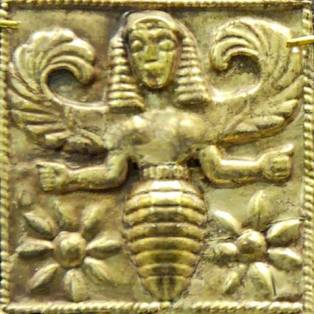
Mokosh is also a warrior goddess, in her fierce aspect as a goddess of protection. One of her epithets is ‘She who strikes with her wings’. The fact that she is a winged Goddess indicates her power and that which she grants to her priestesses and devotees, to travel between the worlds in trance, dream, and vision, for blessing and for healing on behalf of the community and all who are in need. Mokosh is also connected to butterflies, symbols of transformation, and bees, symbols of priestesses in antiquity. The beautiful Slavic embroideries shown here depict some of her typical manifestations as a tree/flower/goddess figure with branches/arms/wings/wheat ears, sometimes all at once.
Slavic Goddess Embroidery
Mokosh is a Slavic sister in the same lineage of water-loving fertility deities who were so important in ancient Greece, the Nymphs and Muses. Mokosh features centrally on women’s aprons, directly over the life-giving place of the womb, on sacred cloths for the icon corner in the home, or on cloth and clothing tied to birch or willow trees in Russia and the Ukraine. All over Europe, these elements of the Goddess and the divine fertile feminine can be found, disguised but discernible, in embroideries, dances, songs, fairy tales, ritual breads and other seasonal customs.
In the Christian era Mokosh continued to be worshipped in the form of the Virgin Mary, and more specifically was transformed into St. Petka / Paraskeva / Paraskevi, ‘Saint Friday’, which links her with the Norse Goddess Freya. Friday is the holy day of both Brigid and Mokosh.
Late winter/early spring, the time of Imbolc, is one of her sacred seasons. Whether you call her Brigid or Mokosh, or by another name or none, now is an opportune time to ask her help and invoke her presence. By lighting a sacred flame, tying a cloth to a tree in a fertile place, honouring the waters of Earth which give life to all, spinning and weaving threads of creation and creativity – literally or metaphorically – we too can connect once again with the source of all, and open ourselves to receiving Her blessings.
We may not be able to see what this year will bring, but we do know that the waters of the earth, the birds, bees and animals, the food sources which nourish all life, and the women of the human family, all need blessing and protection. Brigid and Mokosh can help with this. Reconnecting with these and other Goddesses also helps reawaken the Old European worldview as articulated by Marija Gimbutas, Carol P. Christ, and others: cooperation and community, respect for nature and shared resources, an understanding of our mutual interdependence, the value of craft and creative expression, and the need for social justice to protect what is precious.
As the spring returns, may we all both receive and give abundant blessings of new life and rebirth on every level.
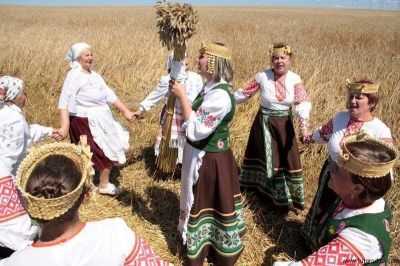
Russian women in ceremony
*****
I will be teaching dances from Greece and Eastern Europe which honour Mokosh and the nymphs and muses at my workshops this year in Greece, Austria, Germany, Morocco and the UK. For details of these dance events, please visit www.laurashannon.net
I thank Sylwia Geelhaar, who researched Mokosh for us in my most recent 2-year training group in Women’s Ritual Dances in Lebensgarten, Germany, and gathered together many of the images shared here.
Further reading: Barber, Elizabeth Wayland (2013). The dancing goddesses. W. W. Norton & Co.
Gimbutas, Marija (1989). The language of the goddess. San Francisco: Harper & Row.
Kelly, Mary B. (1989). Goddess embroideries of Eastern Europe. McLean, New York: StudioBooks.
Rigoglioso, Marguerite (2010). Virgin mother goddesses of antiquity. New York: Palgrave Macmillan.
Shannon, Laura (2011). ‘Women’s Ritual Dances: an Ancient Source of Healing in Our Time.’ In: J. Leseho and S. McMaster, eds., Dancing on the Earth: Women’s Stories of Healing Through Dance. Forres: Findhorn Press.
*****
Laura Shannon has been researching and teaching traditional women’s ritual dances since 1987. She is considered one of the ‘grandmothers’ of the worldwide Sacred / Circle Dance movement and gives workshops regularly in over twenty countries worldwide. Laura holds an honours degree in Intercultural Studies (1986) and a diploma in Dance Movement Therapy (1990). She has also dedicated much time to primary research in Balkan and Greek villages, learning songs, dances, rituals and textile patterns which have been passed down for many generations, and which embody an age-old worldview of sustainability, community, and reverence for the earth. Laura’s essay ‘Women’s Ritual Dances: An Ancient Source of Healing in Our Times’, was published in Dancing on the Earth. Laura lives partly in Greece and partly in the Findhorn ecological community in Scotland.
Standing as a stark and graceful contrast to the corruptions of freedom of religion, expression, and human rights we hear about every day, there was a grand display of feminine empowerment and beauty at the most recent Burning Man festival, an event in Black Rock City, Nevada. It was a magnificent temple created for Mazu—the Chinese Goddess of the Sea. Her temple and its towering lotus flower were built, and soon thereafter ritualistically burnt, in the simplistic beauty of the desert.
An aesthetically calming temple honoring her came about by the collaboration of Project Manager Nathan Parker and Taiwanese arts foundation, the Dream Community. When I arrived at Burning Man and first saw the temple, I was in awe. The open, octagonal building created from bamboo was rustically elegant. It was designed to be indicative of a structure floating in water. Two piers stretched outwards on either side, while an eye-catching arbor framed the path to the entrance. Blue LED lights flickered on the ground in wave patterns around the temple to create the essence of water encircling the goddess’s temple. A towering 40-foot pink lotus flower sat atop the structure, while fire breathing dragon statues flanked the four corners. Once inside, a center pillar held burning incense, notebooks and pens for reflections, and small strips of papers inscribed with prayers for people to take.
Coloring is a fast growing trend among over-stressed adults. “Soothing coloring pages” are a top Google search item. There are coloring books featuring mandalas, garden scenes, inspirational quotes, and even curse words written in fancy calligraphy sprouting branches, flowers, and swirls eager to be illuminated with colored pencils toted by hipsters, young professionals, retirees, clergy, and other adults searching for artistic ways to tap their creative spirit and sooth their jangled nerves. Articles—popular and academic—whose authors range from psychologist to spiritual director purport the power of coloring to calm anxiety, relieve stress, and provide a creative and spiritual outlet. Is this a feminist issue? I’d say so.
There are, indeed, feminist coloring books and goddess coloring books, though I’ve seen very little that fuses together both feminism and religion. In order to fill this gap, while also seeking to expand my own creative expression, I have finally completed the drawings for my forthcoming Holy Women Icons Contemplative Coloring Book. Continue reading “Coloring Holy Women by Angela Yarber”
In 2003, I picked up a collection of essays on little known Ramayanas. Buried within was a poem by Pathabhi Rama Reddy. Pathabhi, a rebel of Telugu literature, defied not just conventional rules of grammar but also those of popular thinking, best exemplified by his poem, “Sita,” the subject of this post.[1]
Rama’s harsh treatment of Sita in the Ramayana epic when he first doubts her purity, compelling her to undergo a trial-by-fire, and then banishing her despite the fact that she had proved her loyalty to him, has attracted criticism from all quarters – how could the “perfect man” behave so callously towards his own wife who had been Ravana’s helpless victim? The fluidity of the story has ensured a visibility for Sita, no doubt. Continue reading “Wifehood Redefined: The Twentieth Century Sita by Vibha Shetiya”
The Year 2015 is coming to a close. It is a time of endings and a time of beginnings. That is the wonderful thing about our cycles. We all have the opportunity to end and begin – over and over. Each day, each month and each year. We all scurry about making resolutions for the new year only to see them fail almost immediately.
This is where a good basic magical practice can lend a hand with our resolutions. In every magical act we must first know what it is we wish to manifest. I am not talking some empty wish here but a real look at what we want – really want – for the new year to bring.


 I read some wonderful posts last spring and summer about the beauties of the outdoors. One that especially inspired me was by Molly Meade. If you missed Molly’s description of how she goes out to the “priestess rocks,” read it now.
 The Association for the Study of Women & Mythology
 Weaver,
 “If there is one chant in the universe it is to create.”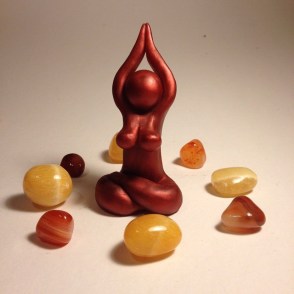
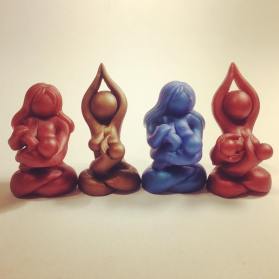
 inches tall or taller. The goddesses I make are all about three inches tall and there’s a reason for that: they fit in the palm of my hand. When I create them, I feel as if I’m part of an unbroken lineage stretching back 30,000 years to the person who carved the Goddess of Willendorf. I feel connected to the priestesses of the Mesopotamian temples who sculpted hundreds upon hundreds of tiny clay goddesses. Someone commented on my sculptures once saying, “

 Candlemas / Imbolc, the midway point between the winter solstice and spring equinox brings with it (in the northern hemisphere) the first signs of awakening spring. Here in Canterbury, southeast England, where I am living this year, the birds are already starting to sing for mates and build their nests. In Celtic pre-Christian religion, Imbolc is associated with the Goddess Brigid / Bride (and the Christian Saint Brigid), but today I suggest we pay a visit to Brigid’s Slavic sister, the Goddess Mokosh / Mokoš, who is also powerfully associated with emerging fertility in the woman, the land and the year.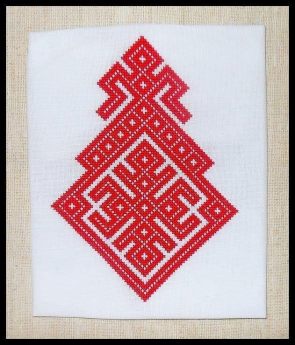
 Standing as a stark and graceful contrast to the corruptions of freedom of religion, expression, and human rights we hear about every day, there was a grand display of feminine empowerment and beauty at the most recent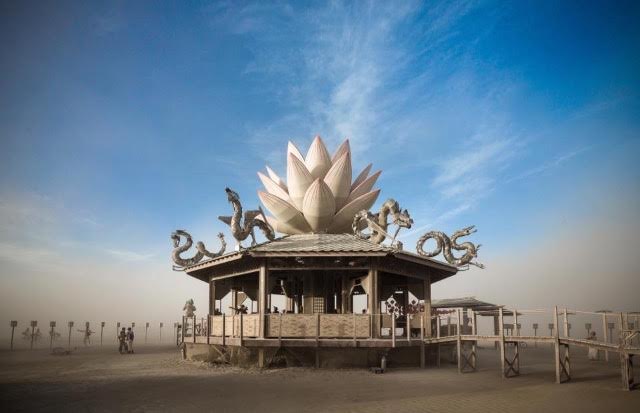
 Coloring is a fast growing trend
  In 2003, I picked up a collection of essays on little known Ramayanas. Buried within was a poem by Pathabhi Rama Reddy. Pathabhi, a rebel of Telugu literature, defied not just conventional rules of grammar but also those of popular thinking, best exemplified by his poem, “Sita,” the subject of this post.
 The Year 2015 is coming to a close. It is a time of endings and a time of beginnings. That is the wonderful thing about our cycles. We all have the opportunity to end and begin – over and over. Each day, each month and each year. We all scurry about making resolutions for the new year only to see them fail almost immediately.
 Feminism and Religion