

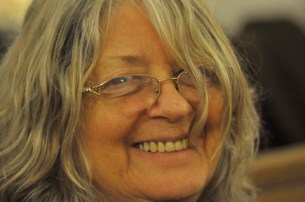
 With everyone talking about it – I won’t. Let’s just say that I am in the “at risk” population and have decided that staying home is my best protection against “it.”
Staying home is what I do most of the time. I am perfectly happy with that. I live on my computer and in the evenings, I take a break as a “couch potato” and indulge in serial watching! I only have one neighbor who comes over and I am keeping him outside and at a 6-foot distance, as he has no sense and is exposing himself in many ways, even though he too, is high risk.
I have been working for a few years on the creation of a group practice that honors Hekate and occasionally Her companions, in ritual. In my seminary, I have developed a Master of Divinity degree program with studies based on Her. All throughout this active work, most has been in researching but also a great deal in writing. I seem to be even more productive in this isolated state. As I am not isolated online, I have been communicating with others and we seem to be “triggering” each other’s creativity. The term “falling down a rabbit hole” has taken on new meaning. Not only am I falling down my own rabbit holes, I am falling down rabbit holes started by other people! Continue reading “A Lovely Self-Imposed Isolation by Deanne Quarrie”
 This post follows last week’s post:
 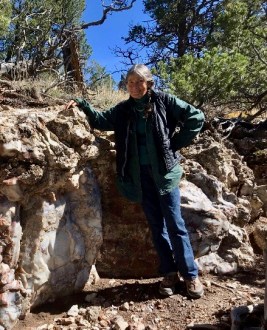 Scientist Diana Beresford Kroeger proved that the biochemistry of humans and that of plants and trees are the same – i.e. the hormones (including serotonin) that regulate human and plant life are identical. What this means practically is that trees possess all the elements they need to develop a mind and consciousness. If mind and awareness are possibilities/probabilities then my next question isn’t absurd: Do trees have a heartbeat?
 Every morning I walk to the river in the velveteen hour between the vanishing blue night and the coming of the first scarlet, pink, lavender, purple or golden ribbons that stretch across the horizon. Sometimes clouds with heavy gray eyelids mute first light. Either way all my senses except that of sight are on high alert; a deep peace embraces me in the dark. My body knows the way. I murmur to the willows as I pass through the veil and under their bowed bridge. Their response is muted, a song beneath words.

 The term “panpsychism” is made up of two Greek words: pan, meaning all, and psyche, often translated mind or soul. Panpsychism is the view that (forms of) soul or mind or consciousness are found throughout the web of life. This view is in contrast to the traditional western philosophical and theological consensus that having a soul or a mind is what sets human beings apart from other forms of life. In contrast, mystics, children, and many indigenous people assume that human beings are not the only form of life with consciousness.
 Scientist Susan Simard is a professor of forest ecology at the University in Vancouver, British Columbia, who has been studying the below-ground fungal networks that connect trees and facilitate underground inter-tree communication and interaction. Over a period of more than thirty years this field scientist and her students have learned how fungi networks move water, carbon and nutrients such as nitrogen between and among trees as well as across species. Her research has demonstrated that these complex, symbiotic networks in our forests — at the hub of which stand what she calls the “mother trees” — mimic our own neural and social networks. This groundbreaking work on symbiotic plant communication has far-reaching implications that include developing sustainable ways to ‘manage’ forests, and to improve tree and plant resistance to pathogens. Although much of Simard’s research occurs in forests, she has also studied the underground systems of grasslands, wetlands, tundra and alpine ecosystems.
 Feminism and Religion