 I don’t do well being cooped up (staying at home) all day and every day. Thankfully the state of Virginia, where I currently live, has kept their parks open during the COVID-19 pandemic. For two months, I intentionally scheduled a “green space” time into my daily routine. Usually I’d hike. Sometimes I’d just sit in the car and look at the natural scenery in front of me.
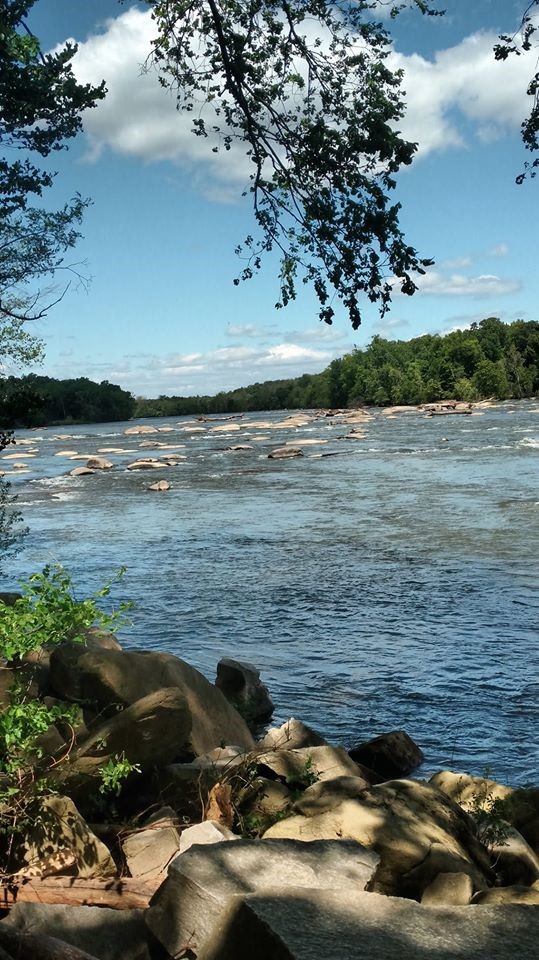
The James River at Pony Pasture Rapids was my “go-to” place during the pandemic lockdown. In addition to refreshing themselves by the river, people use Pony Pasture as their launching point for a variety of floatation devices, but mostly kayaks, to paddle around the river.
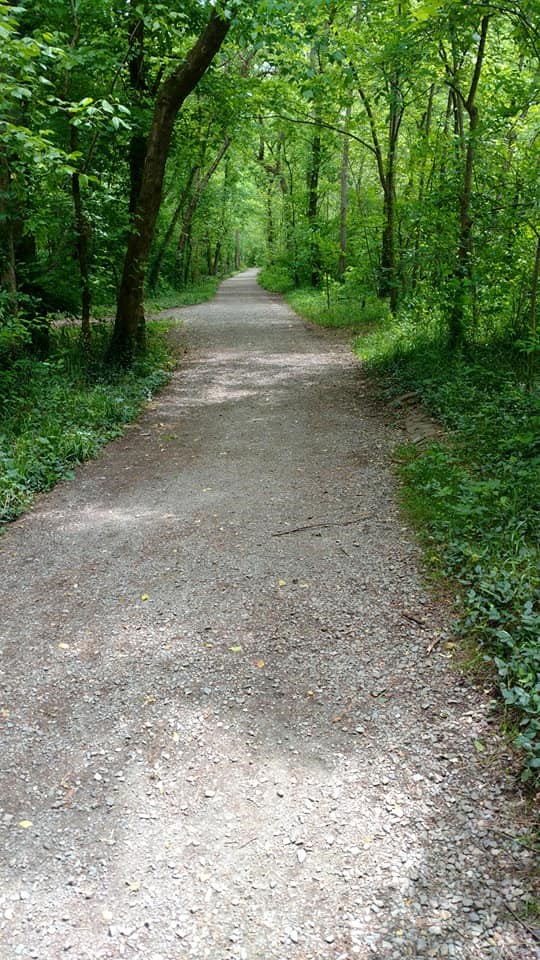
Pleasant Creek Trail is one among many paths along the James River at Pony Pasture. After meandering a half mile or so, I came upon this view. I call this scene “Entering the Emerald Forest.”
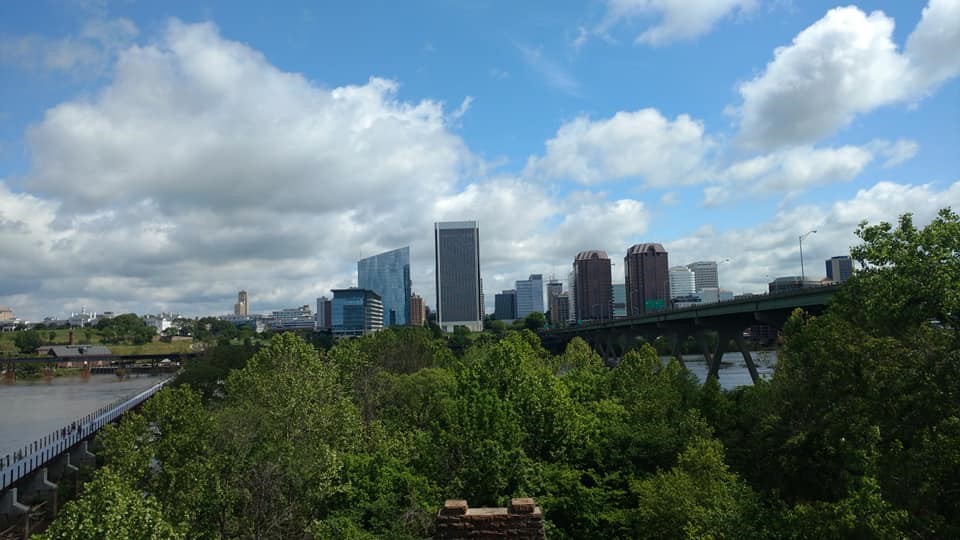
Showcasing Richmond, Virginia, in an attractive cityscape. I walked along the floodwall to capture this Richmond skyline.
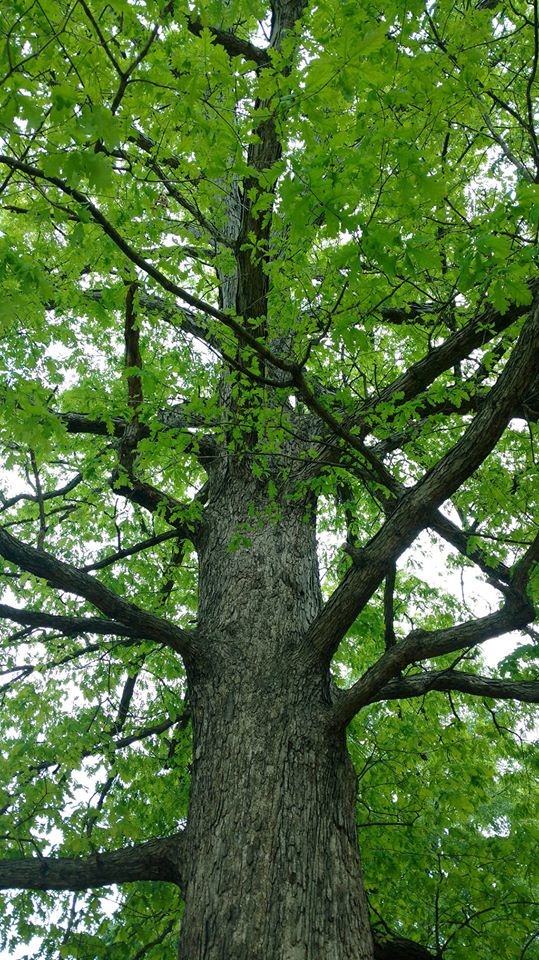
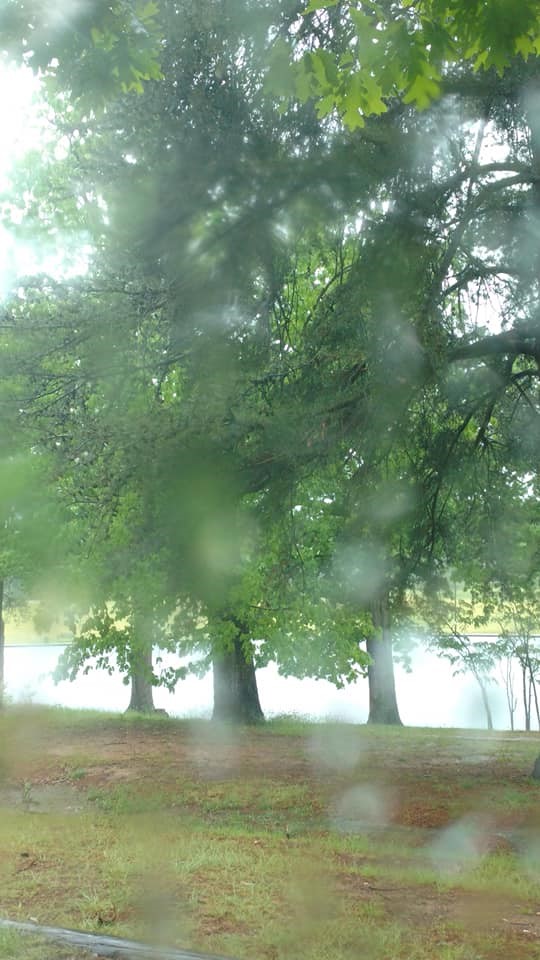
One day, I went to a local park (Maymont) and stared up at this tree like infants do with their mobiles hanging over their cribs.
Straight, sturdy tree trunk
Spreading its leafy branches
Green shelter in place
Richmond has had a goodly amount of rain this spring. This is the James River after several inches of rain throughout the state.

Even when the rain came, I made it a point to get out of the house, sit in my car, dream a bit, and read from my Kindle for two or three hours.
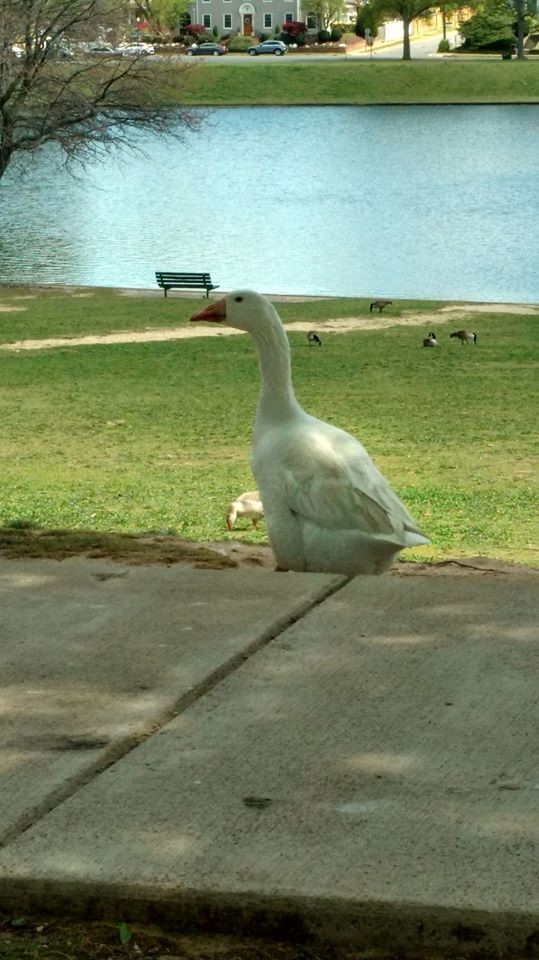
Had a visitor one day while enjoying the sunshine and breathing in fresh air at Byrd park.
Bench-sitting alone
Cold winds blowing through the trees
Mother Goose visits
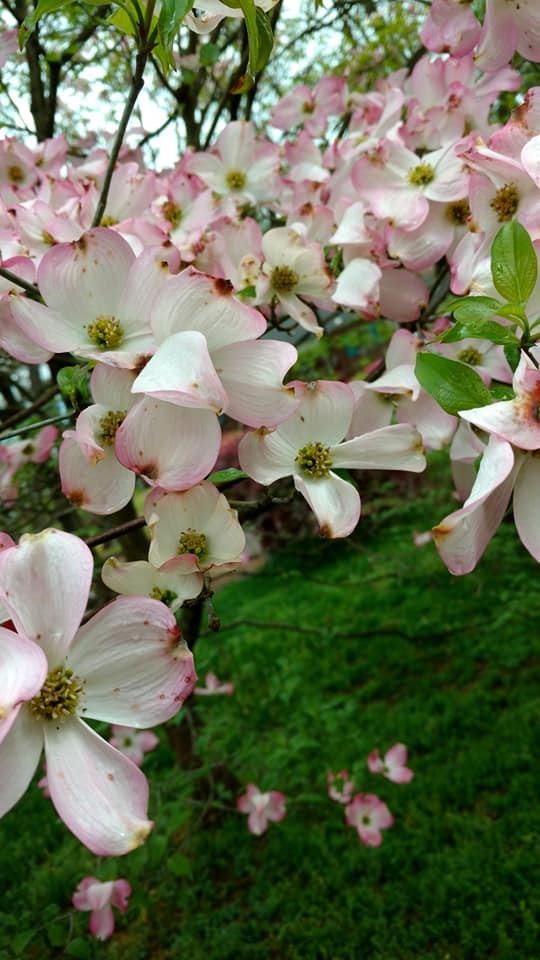
Earlier in the spring, I watched the dogwood tree bloom in my front yard.
Amidst clouds and chill
Nature still blooms pink and white
In my damp front yard
One of my favorite days at Pony Pasture Rapids put me in touch with this family.

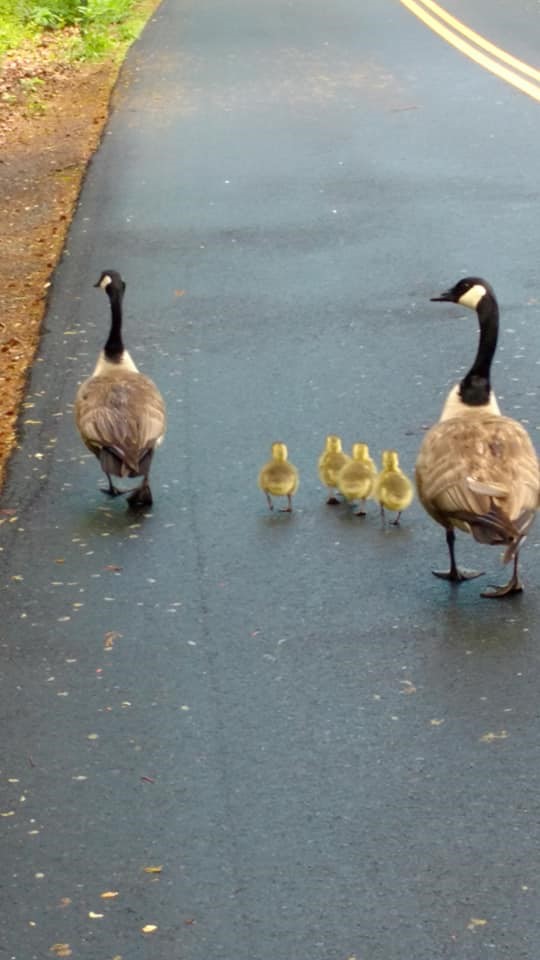
Blessed be!
In sunnier weather, I’d visit beautiful, old Hollywood Cemetery in Richmond. From the web: “Hollywood Cemetery was designed in 1847 as a “rural” style garden cemetery to escape the grid-like monotony of city cemeteries. Landscape architect, John Notman, specifically left trees and other plants untouched when designing the cemetery’s landscape in order to create a peaceful haven for Richmonders. Today, our 135 acres of valleys and hills are covered with heritage roses, stately trees, and other blooms that live up to the name of a garden cemetery. In 2017, Hollywood Cemetery was named a recognized arboretum with the ArbNet Arboretum Accreditation Program.”
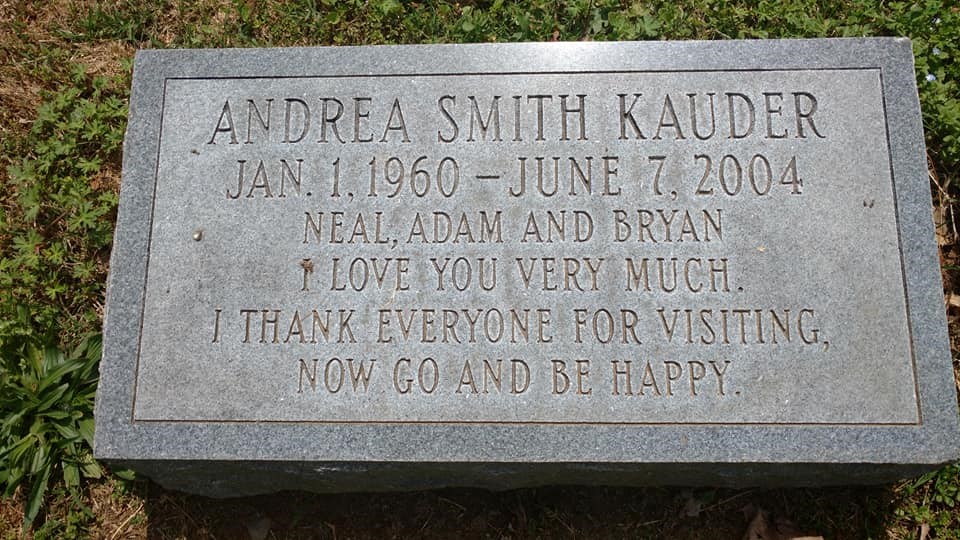
One day I went hunting (and I did have to hunt!) for inscriptions that made me take notice. There’s such a paucity of creative, interesting text on tombstones. Of those I’ve seen so far, Andrea Smith Kauder’s is my favorite. “Neal, Adam and Bryan–I love you very much. I thank everyone for visiting. Now go and be happy.” Andrea died as a relatively young woman—44 years old. I think I would have enjoyed knowing her.
And, I’m moving again! Going to a condominium just three miles down the road from my current address in Richmond, Virginia. Wonder where in the world I will eventually land. I can’t seem to settle down in any one spot. Here I am scrubbing the floor of my new condo in preparation for move-in. My only green space on this day was the green gloves I used to protect my hands during the onerous chore.

My grandmother, Jessie, often told me, “Only way to clean a floor, honey, is to get on your hands and knees and scrub.” Jessie was right. Perhaps a fitting text on my tombstone might reflect the necessity of women’s domestic labor to keep the wheels of society moving.
She cleaned like a fiend
Hoping…yes, always hoping
For a little dirt.
Esther Nelson is an adjunct professor at Virginia Commonwealth University, Richmond, Va. She has taught courses on Human Spirituality, Global Ethics, Christian-Muslim Relations, and Religions of the World, but focuses on her favorite course, Women in Islam. She is the co-author (with Nasr Abu Zaid) of Voice of an Exile: Reflections on Islam and the co-author (with Kristen Swenson) of What is Religious Studies? : A Journey of Inquiry.


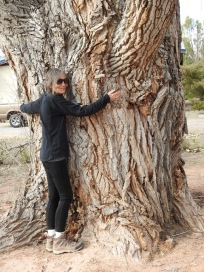 It is past “midsummer” and we are moving into the hottest time of the year without a drop of nourishing, healing rain… When I walk around outdoors I find myself focusing on the many different ferns that grace the forest edges – ferns that hold in precious moisture creating damp places for toads and frogs to hide, places for young trees to sprout, places for the grouse and turkey to hide their nestlings, ferns whose lacy fronds bow low as if in in prayer. Sweet fern covers the hill above and around the brook.
 Sara is a naturalist, ethologist ( a person who studies animals in their natural habitats) (former) Jungian Pattern Analyst, and a writer. She publishes her work regularly in a number of different venues and is presently living in Maine.
 I spend a lot of time thinking about gardens. I think there might be something to them.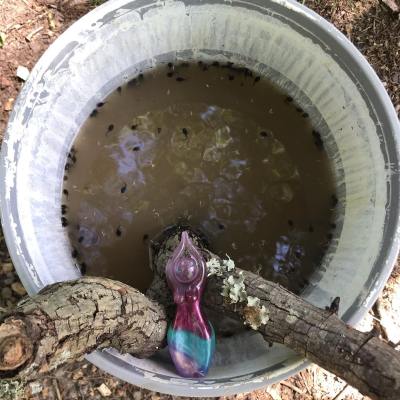
 My ancestors built great circles of stones that represented their perception of real time and space, and enabled them to tell time: the
  Amongst Celtic peoples, the capacity to speak poetically was a divine attribute, regarded as a transformative power of the Deity, who was named by those peoples as the Great Goddess Brigid: She was a poet, a Matron of Poetry (along with her capacities of smithcraft and healing). And at Delphi in Greece, the oracular priestesses delivered their prophecies in poetic form: Phemonoe invented the poetic meter, the hexameter. And from Sumeria, humans have the first Western written records of literature, which is poetry written by the High Priestess of Inanna, Enheduanna in approximately 2300 B.C.E.. Poetry has been recognised as a powerful modality: Barbara Mor and Monica Sjoo described “poetic thinking” as an wholistic mode, wherein “paradox and ambiguity … can be felt and synthesized. The most ancient becomes the most modern; for in the holographic universe, each ‘subjective’ part contains the ‘objective’ whole, and chronological time is just one aspect of a simultaneous universe” (
 Brother Francesco, known to the world as Saint Francis of Assisi, left us many sweet and lovely poems and songs. In “The Canticle of the Sun,” he wrote about the gifts of nature. Brother Sun, his light and radiance.
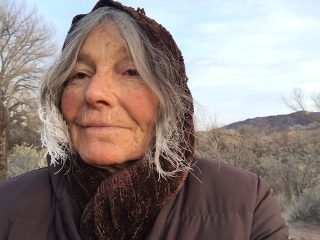 I recently returned to Maine after what can only be called a harrowing journey from the Southwest. Grateful to feel beloved earth under my feet, I walk along the pine strewn woodland paths to keep myself sane. My animals have been ill, my neighbor was hospitalized briefly, other neighbors deliberately destroyed my garden wall crushing a baby balsam, and used this property as their personal ski slope, the threat of the C/virus looms – there are no words to describe this kind of exhaustion. As a PTSD survivor all my senses are on permanent scream. The simplest task has become monumental. And I am only one of so many…
