Sea Glass by Elanur Williams

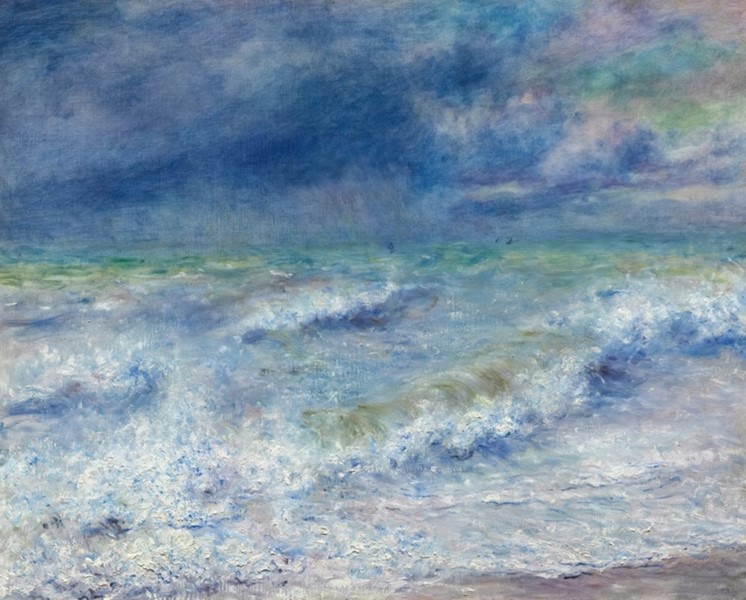
Image Credit: Seascape, 1879, Pierre-Auguste Renoir (available on public domain).

I am drawn to the sea not for its grandeur, but for what it returns: small, broken things that once had sharpness. As a child, I remember walking along the shore searching for glimmers, glass fragments dulled into misty greens, smoky ambers, pale blues. I wanted to gather the pieces of what had once been whole and what had once been contained. I collected the way a child collects secrets, each piece a contradiction. Maybe I thought I could make something from these fragments; after all, I was the kind of child who looked for meanings and signs in everything. It is in part what drew me to literature and writing.

There is a piece of sea glass I remember more than the others: an opalescent shard, a piece of moon. That piece became a metaphor for the self I hadn’t yet become. Like those fragments, I too had sharp edges once. Pain teaches that: the need to defend, to protect oneself from further breakage, carves us into angular shapes. I learned early how to brace for fracture, and there was a comfort I found in control, a fierce desire for wholeness that was often mistaken for strength. But there is a brittleness to that kind of armor, and eventually, it begins to break. It took years of undoing for my edges to soften.

Continue reading “Sea Glass by Elanur Williams”

Showing Up, by Molly M. Remer

When we return home, I see a meme on social media that says: “Ten minutes online will show you everything that is wrong with the world. Ten minutes outside will show you everything that is right.” I think about the students and professors, each one alight with enthusiasm, with passion, for their work, their projects, their art, the contributions they are making. This is what we need. We need to see, spend time with, and BE people who are involved, connected, committed, and passionate. People who are creating instead of destroying. People who are connecting instead of controlling. People who are reaching out to offer what they can, who create and care, and who show up.

We may let connections thin
and interests slide,
forgetting that it takes work
to nurture and tend
to what we love,
that following what is easy
can be the wrong direction,
one that eventually leads
to the withering of what we value
and to the shrinking of our worlds.
We must evaluate the balance
between effort and ease,
yes,
but let us remember
that both are essential to thriving.
Let us lean into effort sometimes,
when there is meaning on the line,
put our backs into it,
feel sweat on our brows
and the satisfaction that comes
from choosing to immerse ourselves
in wholehearted living,
in presence,
in the work of reaching out
and holding on.

This past weekend, I went to my oldest son’s next college campus. The green spaces were filled with students working on art. The halls of the buildings were lined with art by high school students there for a visiting show. The art gallery was filled with diverse works of many mediums. The speakers for the day were filled with enthusiasm for their subjects, talking about study abroad trips to Paris and being part of the chorus or the band. We pass the student theater, abuzz with activity, and listen to a young man playing rippling tunes on the piano in the atrium of the library. This school is in a rural Missouri farming community, where we passed tractors laden with hay on the potholed road. Their mascot is a mule (“the only college with live mascot in Missouri!” they proudly report. The mule’s name is Molly, so I like her right away). Missouri is a “red state” and yet the students handed me the school paper with a front page story about protests at the capitol and a large color photo of someone holding an “Impeach Elon” sign. I happily picked up a library button proclaiming “libraries are for everyone” and another saying “what’s more punk than a library?” as well as snagging a “plant queer” sticker from the LGTBQ+ alliance table for my sister. The History table gives me a bookmark reading: “Don’t make me repeat myself.” –History

Continue reading “Showing Up, by Molly M. Remer”

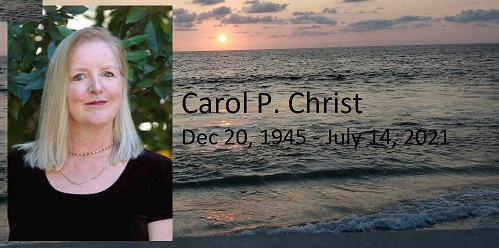
Legacy of Carol P. Christ: Home for the Holidays

This post was originally published on Dec. 16th, 2011

Yesterday I was watching an episode of Grey’s Anatomy in which George’s father said to him, “you’re not like us, you’re a surgeon.” “And,” George’s father added, “you don’t like to do the things we like to do.”  It is not easy not being like your family and not liking the things they like.  When my mother was alive, she was the glue that held us together. Since then, my sheer presence in the lives of my father and my brothers and their families is disruptive. No matter that I try not to make waves, I make them all the same. I do keep my mouth shut about politics and religion and feminism. Even so, the last time I was home for the holidays my father asked me to stay in a hotel because having me in the house made him nervous and uncomfortable. To be fair, how would you feel if your daughter was 6 feet tall and you weren’t, she had a PhD and you didn’t, and even if she didn’t open her mouth at all, you knew that she didn’t agree with your political views or your everyday assumption that men make the final decisions on all important matters? Or if you were my brother who does not have a college education and who feels that women and minorities and gays have taken something from him? Or if you were my Mormon brother who is trying to keep his three daughters on the straight and narrow and not on the path chosen by their aunt? On the last Christmas day I spent at my brother’s house, I did not mention any of the obvious things, but it was hard to hide being astonished by the number of presents and the amount of money spent on them, and I simply could not force myself to watch football.   Continue reading “Legacy of Carol P. Christ: Home for the Holidays”

From the Archives: Writing Through the Body: Betty Smith’s A TREE GROWS IN BROOKLYN by Joyce Zonana

This was originally posted on April 29, 2017

In her 1975 manifesto, “The Laugh of the Medusa,” French feminist Hélène Cixous urges women to write: “Writing is for you, you are for you; your body is yours, take it. . . . Women must write through their bodies, they must invent the impregnable language that will wreck partitions, classes, and rhetorics, regulations and codes . . .”

“The Laugh of the Medusa” remains a thrilling essay, challenging and inspiring women to “return to the body” and to language.  “Woman must write woman,” Cixous insists, “for, with a few rare exceptions there has not yet been any writing that inscribes femininity.”

Continue reading “From the Archives: Writing Through the Body: Betty Smith’s A TREE GROWS IN BROOKLYN by Joyce Zonana”

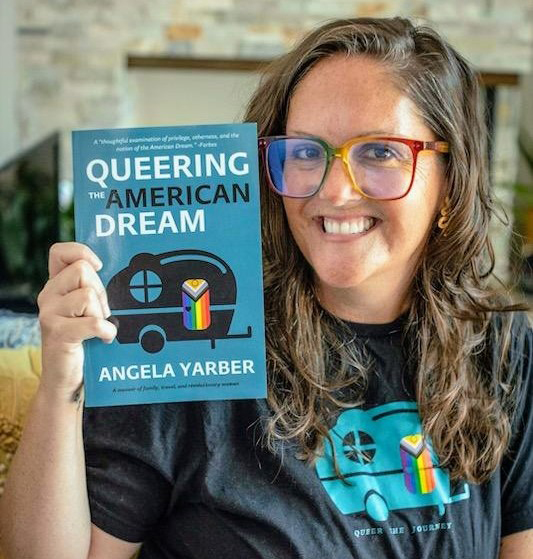
Why I Wrote Queering the American Dream by Rev. Dr. Angela Yarber

Like most authors, I had grand plans for Queering the American Dream. Heeding the wisdom of the venerable black, queer writer, Pauli Murray—“One person plus one typewriter constitutes a movement”—I committed, not simply to writing and publishing a book, but creating a movement. With my modern-day typewriter (laptop) in hand, I dreamed of readers throwing off the shackles of an ill-suited dream, galvanizing retreats, coaching to help other marginalized creatives queer their own iterations of the so-called American dream.

I tried learning about book marketing and pitching companion essays and creating a launch team and all those things small-time authors without expensive publicists on retainer do. I tried so hard.

Continue reading “Why I Wrote Queering the American Dream by Rev. Dr. Angela Yarber”

Legacy of Carol P. Christ: Touching Roots: An Incredible Lightness Of Being

This was originally posted on Jan. 7, 2o13

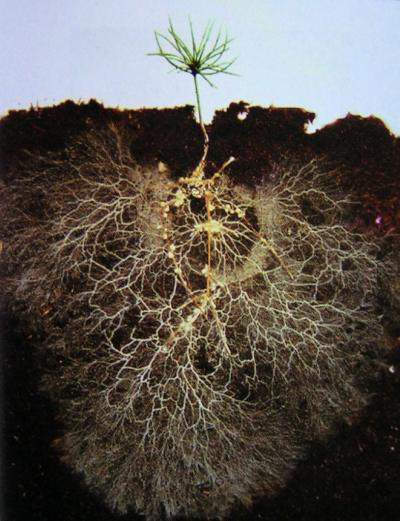
A few days ago, a German-speaking friend spoke with an Eiloff relative of mine who lives in St. Nikolaus, Saarland.  My relative remembered hearing the story that Heinrich Eiloff, my 2x great-grandfather, emigrated to the United States in the mid-1800s.  Since we connected, I am experiencing an incredible lightness of being.

This is the first time my two years of genealogical research have led to a “Kunta Kinte” moment, a connection with a relative in “the old country.”  I have been unable to trace most of my ancestors back to the places of their birth. 

My relative in St. Nikolaus was perplexed by a call from Greece from a woman claiming to represent his American relative. But when she explained that I only want to find my roots and perhaps visit relatives in St. Nikolaus, he said, “that would be very nice.”  He promised to speak with other living relatives and said we should call in a month or two and he would tell us what he found.

Continue reading “Legacy of Carol P. Christ: Touching Roots: An Incredible Lightness Of Being”

Legacy of Carol P. Christ: LET’S ASK MITT IF MORMON PATRIARCHAL BELIEFS AFFECT HIS VIEWS ON WOMEN’S EQUALITY

This was originally posted on September 10, 2012. Moderator’s Note: While Mitt Romney is not running for office at this time, there are many politicians, of varying religions, who are and who deserve to be questioned in this manner.

Why has Mitt Romney’s Mormon faith mostly been a non-question in his political life?  John Kennedy was asked if he would obey the Pope or make his own decisions, Jimmy Carter was asked how his Baptist faith would affect his Presidency, and Barack Obama was asked if he agreed with the sermons of his preacher.  Why is the press afraid to ask Mitt Romney if he agrees with the patriarchal teachings of his church and if so, if this affects his views on the rights of women?

Like other patriarchal institutions, the Mormon Church believes that women’s place is in the home.  Every Mormon man is a priest and a patriarch in his own home.  Mormon belief teaches that men are to make the final decisions in the family, that only they can be leaders in the church, and that they are the members of the Mormon community who should speak and act in the public (non-home) dimensions of life.  Traditional Mormons believe that “ [The] LDS [woman is] always [to] accept counsel from her husband, and not as just his opinion, but as God-inspired revelation.” 

Continue reading “Legacy of Carol P. Christ: LET’S ASK MITT IF MORMON PATRIARCHAL BELIEFS AFFECT HIS VIEWS ON WOMEN’S EQUALITY”

Legacy of Carol P. Christ: Body, Nature, Ancestors

This was originally posted on January 23, 2012

Some years ago, womanist theologian Karen Baker–Fletcher asked about ancestors following a lecture I gave on the body and nature.  I have since come to realize that ancestors are a missing link between the two:  we cannot speak adequately of embodiment and interdependence in the web of life without recognizing the ancestors whose lives made ours possible.  Our mothers quite literally gave us our bodies.  All of our ancestors gave us their genes.  Care and callousness with origins going back longer than conscious memory was imprinted on the psyches of our parents and grandparents and transmitted to us.  All of our ancestors give us connections to place.  While many black people in America can recite oral histories that begin with slavery in the United States, I come from a family where stories of origin for the most part were not valued or told.  Both of my father’s parents lost their fathers when they were very young, and my father, who was raised Catholic at a time when Catholics were discriminated against, preferred to think of our family as “American now.”  Like the hero of the film Lost in America, most members of my family dreamed of “melting right into that pot.” In the process we lost stories we need to help us to understand ourselves and the complex realities that “becoming American” involved.

Continue reading “Legacy of Carol P. Christ: Body, Nature, Ancestors”

THE OTHER SIDE OF THANKSGIVING by Sara Wright

THE GRANDMOTHER THREAD

November is the month when the veil is thin and permeable and it is possible to engage with the ancestors …I recently received information that for me November’s moon belongs to the grandmothers, and the liminal space in between and not to the hunter/killers. How is it that what seems so obvious was wrapped in the shroud of my unknowing?

On all hallows I crossed a threshold when the hunters moon transmuted from male to female. trusting my senses, I called up the archetypal grandmothers while grieving my lost connection to my own grandmother. I honored these elders as a powerful force of nature… and left it at that.

Continue reading “THE OTHER SIDE OF THANKSGIVING by Sara Wright”

Identifying the Drama Triangle in Fiction and Reality by Stephanie Arel

Are you planning to gather with family or friends to celebrate during the holiday season?  For many, this idea elicits joy, but for others, it evokes tension, dread. Some may even think, “Ugh, I don’t want to deal with the drama.” The reaction is real. Elucidating a psychological concept related to such dread sheds light on this “drama” and may help you manage tense and potentially provocative situations over the holidays.

Stephen Karpman developed the concept of the drama triangle in his 1968 essay, Fairy Tales and Script Drama Analysis. He looked at the stories that cultures tell, considering how these stories instill images, roles, and demeanors in the social imagination, which then manifest in individual and group behavior. The narrated plot lines work on the unconscious to provide attractive stereotypes: the helpless (as a human) mermaid Ariel makes a deal with a Sea Witch for legs; she becomes human but loses her voice in exchange – a voice restored due to the true love of a prince. Cinderella, the stepdaughter working amidst the ashes for the evil stepmother, wishes for more, and viewers watch as a prince eventually arrives. Stereotypical Barbie faces an existential crisis; she, like Ariel, finds power in human form, and corrects the wrongs of patriarchal society against both doll and owner. Every drama presents a triangle.

Continue reading “Identifying the Drama Triangle in Fiction and Reality by Stephanie Arel”