Legacy of Carol P. Christ: Woman and Nature: Our Bodies Are Ourselves

This was originally posted on June 26, 2017

This earth is my sister; I love her daily grace, her silent daring, and how loved I am how we admire the strength in each other, all that we have suffered, all that we have lost, all that we know. We are stunned by this beauty, and I do not forget: what she is to me, what I am to her.

These words are from Susan Griffin’s Woman and Nature which I often recommend as one of my favorite books. Over the years I have read this passage and others from Woman and Nature aloud with my students, and we have always been moved, most  of us to tears. More recently these words have become the center of the “Morning Blessing” on the Goddess Pilgrimage to Crete.

Continue reading “Legacy of Carol P. Christ: Woman and Nature: Our Bodies Are Ourselves”

Rhiannon by Diane Finkle Perazzo

This poem is dedicated with gratitude to my “Women in the Mabinogi” writing group…


Rhiannon comes to me in my dreams.
She ebbs and flows like the waxing and waning  
of the moon.

Steady hoofbeats, 
clop, clop, clop  
and then, in a rush of beating wings
she vanishes,
leaving a swirl of tiny white petals that spiral like stars.

Continue reading “Rhiannon by Diane Finkle Perazzo”

Woman’s Sacred Hand – and Handkerchief by Laura Shannon

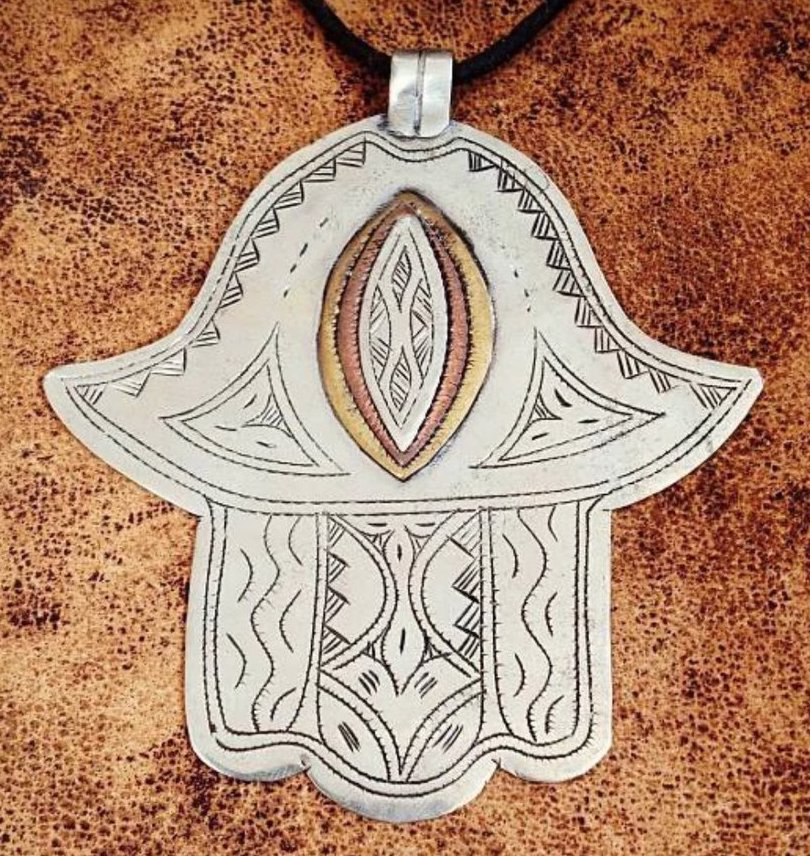
Berber Hamsa. Photo: public domain.

In my recent post ‘Forty Days After Childbirth, Mary Returns to the World,’ I wrote that ‘the woman’s power to bless and protect, as well as to create, is shown in the symbol of her hand.’ We see expressions of this power in the Orthodox Christian icon of the Three-Handed Madonna, whose third hand is over her womb, and the Hamsa, the hand-shaped talisman common to Jewish, Christian, and Islamic traditions. Also known as the Hand of Fatima, Miriam, or Mary, the Hamsa often incorporates eye or vulva motifs, which also offer protection.

Hand, womb, and eye all signify female creative power, personified in the image of Goddess and revered in Neolithic Old Europe. This life-giving principle is expressed in many ways apart from childbearing: as Carol Christ affirms, early technologies of spinning, weaving, pottery, and agriculture, along with Neolithic religion, were most likely invented by women. 

Continue reading “Woman’s Sacred Hand – and Handkerchief by Laura Shannon”

Legacy of Carol P. Christ: Speak the Truth about Conflict, Pain, and Suffering: It Is Not All Love and Light

This was originally posted on July 23, 2018

Nurture life.
Walk in love and beauty.
Trust the knowledge that comes through the body.
Speak the truth about conflict, pain, and suffering.
Take only what you need.
Think about the consequences of your actions for seven generations.
Approach the taking of life with great restraint.
Practice great generosity.
Repair the web

Continue reading “Legacy of Carol P. Christ: Speak the Truth about Conflict, Pain, and Suffering: It Is Not All Love and Light”

From the Archives: Brigid, Goddess of Healing, Poetry, and Smithcraft by Judith Shaw

This was originally posted on January 31, 2013

Brigid, the Celtic Goddess of Healing, Poetry, and Smithcraft, begins her reign on Imbolic, February 2, the midpoint between winter solstice and spring equinox. On this day the ancient Celts held their Fire Festival in honor of Brigid and the growing light. In Scotland, as recently as the mid-twentieth century, houses were cleaned and the hearth fires rekindled on February 2, to welcome in  Brigid.  Remnants of this festival are found in America today on Groundhog Day.

Like the Cailleach, She existed in many places and  was known by many names.  The Irish called her Brighde; she was Bride in Scotland,  Brigantia in Northern Britain, and Brigandu in France.  Some called her Brid, Brig or Brighid.  Later she was transformed by Christianity into Saint Bridget.  Her older name was BREO SAIGHEAD.   Her name has various interpretations, many relating to fire – “Power,” “Renown” “Fiery Arrow of Power ” “Bright Arrow”, “The Bright One”, “The Powerful One”, “The High One” and “The Exalted One”.

Continue reading “From the Archives: Brigid, Goddess of Healing, Poetry, and Smithcraft by Judith Shaw”

Legacy of Carol P. Christ: “What Would Happen If One Woman Told the Truth about Her Life?”

This was originally posted on September 24, 2018

According to poet Muriel Rukeyser, “the world would split open.”

This poem accurately describes what many women experienced in consciousness raising in the 1970s and what many women experience today in the #MeToo movement.

For many of us the world did split open. We began to take ourselves and our experiences seriously. To do so we had to question received wisdom encoded in such questions as: “What was she doing there in the first place?” “Was she drinking too?” “Why didn’t she change out of her bathing suit?” Underlying these questions is the assumption that: “whatever happened, she must have asked for it.”

A lot of people are wondering why congressmen and voters who claim to uphold Christian principles are not more outraged about credible allegations of sexual assault against a child whose name was Christine Blasey. What this question fails to address is the fact that the Christian principles (if any) held by conservatives are steeped in patriarchy. Liberals may argue that Jesus would have cared about the girl, and I believe they are right. But the Christianity that developed after his death was centered on the Father, Son, and Holy Spirit, all of whom are male. This Christianity is patriarchal to the core: its deep message is that power belongs the hands of males and that male power is not to be questioned.

Continue reading “Legacy of Carol P. Christ: “What Would Happen If One Woman Told the Truth about Her Life?””

Legacy of Carol P. Christ: The Mountain Mother: Reading the Language of the Goddess in the Symbols of Ancient Crete

The blog was originally posted on May 22, 2017

Before he told the story of how his people received the sacred pipe, Black Elk said:

So I know that it is a good thing I am going to do; and because no good thing can be done by any man alone, I will first make an offering and send a voice to the Spirit of the World, that it may help me to be true. See, I fill this sacred pipe with the bark of the red willow; but before we smoke it, you must see how it is made and what it means. These four ribbons hanging here on the stem are the four quarters of the universe. The black one is for the west where the thunder beings live to send us rain; the white one for the north, whence comes the great white cleansing wind; the red one for the east, whence springs the light and where the morning star lives to give men wisdom; the yellow for the south, whence come the summer and the power to grow.

But these four spirits are only one Spirit after all, and this eagle feather here is for that One, which is like a father, and also it is for the thoughts of men that should rise high as eagles do. Is not the sky a father and the earth a mother, and are not all living things with feet or wings or roots their children? And this hide upon the mouthpiece here, which should be bison hide, is for the earth, from whence we came and at whose breast we suck as babies all our lives, along with all the animals and birds and trees and grasses. And because it means all this, and more than any man can understand, the pipe is holy. [italics added]

In this passage Black Elk illustrates the multivalency of symbols: the sacred pipe does not have a single meaning, but many meanings, in fact, more meanings than anyone can understand.

Continue reading “Legacy of Carol P. Christ: The Mountain Mother: Reading the Language of the Goddess in the Symbols of Ancient Crete”

Legacy of Carol P. Christ: Mountain Mother, I Hear You Calling

This was originally posted on July 7, 2014

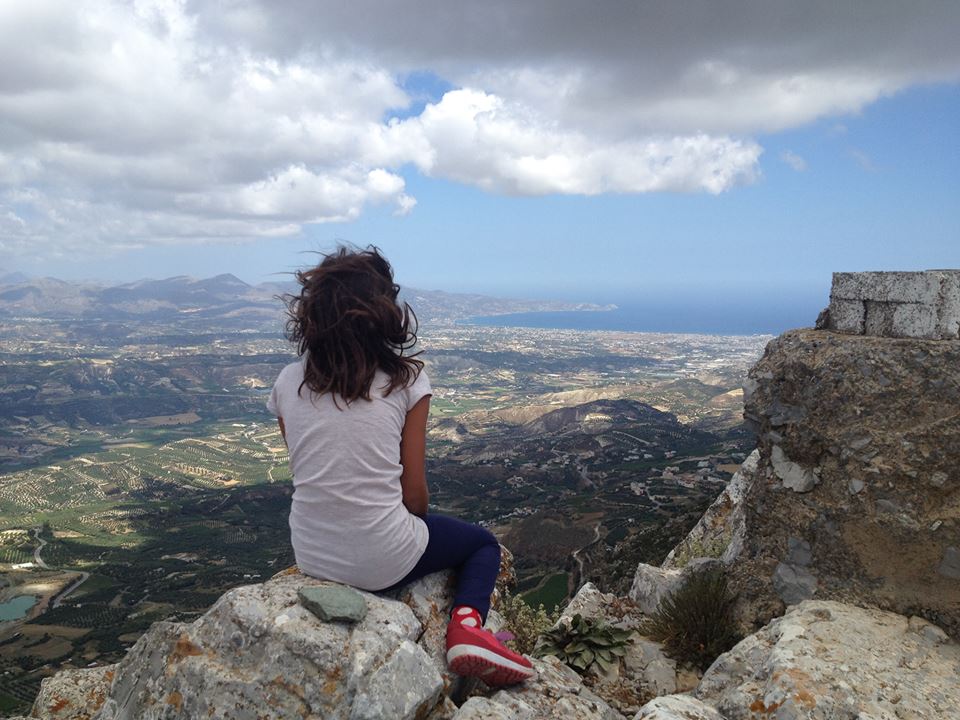
The mountaintop shrines of Mount Juctas in Archanes, Crete are situated on twin peaks, which may have symbolized breasts. Ancient shrines on the northern peak date from 2200 BCE until at least the end of the Ariadnian (Minoan) period in 1450 BCE. A crevice in the rock was filled with offerings of pottery, clay images of women and men in ritual dress, diseased bodies and body parts, sheep and cattle, and other objects. Excavations to a depth of 13 meters did not reach the bottom layers. Many offerings had been burned, suggesting that the objects were first thrown into fire and then dropped into the crevice. People who climbed the mountain for the festivals would have spilled over both peaks and there may have been shrines as well as fires on both of them.

Continue reading “Legacy of Carol P. Christ: Mountain Mother, I Hear You Calling”

Legacy of Carol P. Christ: Think About the Consequences of Your Actions for Seven Generation

This was originally post on Aug 6, 2018

Nurture life.

Walk in love and beauty.

Trust the knowledge that comes through the body.

Speak the truth about conflict, pain, and suffering.

Take only what you need.

Think about the consequences of your actions for seven generations.

Approach the taking of life with great restraint.

Practice great generosity.

Repair the web

In Rebirth of the Goddess, I offered Nine Touchstones of Goddess Spirituality as an alternative to the Ten Commandments. The Nine Touchstones are intended to inform all our relationships, whether personal, communal, social, or political.

Continue reading “Legacy of Carol P. Christ: Think About the Consequences of Your Actions for Seven Generation”

From the Archives: “The Importance of Religion for Ecofeminism,” by Ivy Helman.

Author’s note: Originally published on January 8, 2017, this post still speaks to me 6 years-to-the-day later. Now, when I teach ecofeminism, I dedicate a week to religion as we cannot deny the way in which Western patriarchy and religion have coexisted and often fed off each other. The only distinction I would add to this original post is that not all religions are equal when it comes to patriarchy and its misdeeds. Christianity has had more power and influence than others. However, Christianity is not the only religion to hold patriarchal views. That needs to change. May the New Year bring more of that needed change.

“Why is religion important to ecofeminism?” A student, in the Master’s course I teach at Charles University, asked this as we began the class session dedicated to the topic. Given the overwhelming presence of atheism in the Czech Republic, I wasn’t too surprised by the inquiry.  Nonetheless, the idea has been at the back of my mind ever since: what does religion have to do with ending patriarchy and bolstering the health of the planet? While I may take the connection as obvious, it is clearly not for many feminists out there. Here is how I understand it.

Continue reading “From the Archives: “The Importance of Religion for Ecofeminism,” by Ivy Helman.”