A Message from the Ancestors by Carol P. Christ

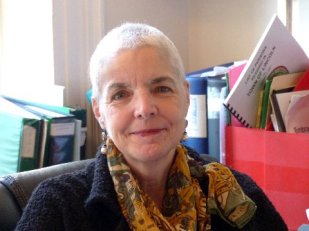
carol at green party 2014 croppedIn recent weeks and even months I have not been my usual cheerful self. After returning from sharing companionship and spiritual vision with a group of wonderful women on the Goddess Pilgrimage to Crete, I have been feeling lonely. This feeling came to a head on December 7 when it was cold and grey here in Lesbos, as had it been for weeks.

Feeling particularly sad that morning, I realized that December 7 was my mother’s Yahrzeit, the twenty-third anniversary of her death. The fact that I must use a Yiddish word to speak of this important day reflects the fact that we do not have a word (let alone a ritual) in the English language, in our versions of the Christian tradition, or in Goddess feminism to recognize the day a loved one died. As we Americans all know, we are supposed to get on with it and not dwell on death and dying.

A friend called that day to let me know that she was planning to visit me for few days during the holiday season, adding that she was looking forward to enjoying my tree and holiday decorations. “Oh,” I said, “my (live) Christmas tree is so heavy and hard to get into the house, I was thinking of not even bringing it in this year.”

That afternoon, I girded my loins and knocked on a neighbor’s door to ask for help. Of course one of the reasons that I was feeling sad is that as I live alone, I have no one to help me move a heavy tree. The neighbor’s shy son was more than willing to help, and we were lucky that we got the tree in a day before the pounding rains that would have doubled the weight of the soil in its pot.

001dec 2014 232As I decorated my tree over the next two days, memories of my mother flooded into my mind. How I miss my mommy. “Do you still think of your mother?” I asked an older friend shortly after my mother died. “Yes,” she replied, “Every day.” Me too, I thought, as I unwrapped the Christmas tree skirt, one of the last gifts Mom had given to me, and the dolls and pink doggie she had saved for me.

The ritual of decorating my tree for Christmas is my memorial to my mother’s love. How much fun we had choosing what was usually a scrawny tree—the largest we could afford, but not the smaller prettier one my mother would have preferred. How I remember baking and decorating cookie cutter cookies—eating the raw dough, licking the sugar icing from our fingers, and always putting what Mom said were too many red hots and silver dots onto the cookies.

My mother’s memories of Christmas were not all happy. But my Mom tried her best not to dwell on sadness. Shortly before she died, I found my mother baking cookies for a man who also had cancer. “I was feeling sorry for myself,” she said, “so I decided to do something for someone else.” I could hear my mother’s mother speaking through her in that moment.

My grandmother’s attitude, which was Midwestern, Christian, and deeply female, was nearly lost to me, for I come from the generation that discovered therapy. In the process of dealing with our feelings, we criticized our ancestors for not doing the same. As Christmas approaches this year, I wonder: were my Mom and my Grammy right? Is there a profound truth in their knowledge, transmitted through the generations, that the best way to deal with one’s own sorrows is to do something for others?

***

011If so, then I guess it is time to plan my winter solstice birthday party (which I was also thinking of cancelling this year)–pick up the phone and start inviting friends over to enjoy my home, my tree, and my food, the gift of life shared with others.

Happy Winter Solstice to all and to all a good night!

***

Carol leads the life-transforming Goddess Pilgrimage to Crete (facebook and twitter) spring and fall–early bird discount available now on the 2015 tours.  Carol can be heard in interviews on Voices of the Sacred Feminine, Goddess Alive Radio, and Voices of Women.  Her books include She Who Changes and Rebirth of the Goddess and with Judith Plaskow, the widely-used anthologies Womanspirit Rising and Weaving the Visions and the forthcoming Turning to the World: Goddess and God in Our Time. Photo of Carol by Michael Bakas.

Revolution Through Rituals by Jann Aldredge-Clanton

Jann's pictureA revolution is happening through Divine Feminine rituals! More and more faith communities are reclaiming the power of the Divine Feminine in sacred rituals.

Rituals move feminist theory and theology/thealogy from the head to the heart. Words and visual symbols in rituals shape our deepest beliefs and values, which drive our actions. Multicultural female divine images in our sacred rituals affirm the sacred value of females throughout the world who continue to suffer from violence, abuse, and discrimination. For feminism to transform our culture, we need Divine Feminine rituals in faith communities. In Women-Church: Theology and Practice, Rosemary Radford Ruether writes: “One needs communities of nurture to guide one through death to the old symbolic order of patriarchy to rebirth into a new community of being and living. One needs not only to engage in rational theoretical discourse about this journey; one also needs deep symbols and symbolic actions to guide and interpret the actual experience of the journey from sexism to liberated humanity” (p. 3).

As I was growing up in the Baptist tradition, hymns were my favorite part of our rituals. One of the hymns I loved singing was “He Lives,” increasing in volume along with the congregation as we came to the refrain which repeated over and over the words “He lives.” Not until many years later could I even imagine singing or saying, “She lives.” I had learned to worship a God who was named and imaged as male. But while studying in a conservative seminary, I was surprised to find Her. I discovered female names and images of Deity in scripture and in Christian history. As an ordained minister, my call has included writing, preaching, and teaching to persuade people that we need multicultural female divine names and images in rituals if we are to have social justice, peace, and equality. My call expanded to writing Divine Feminine rituals, including lyrics to familiar hymn tunes. Continue reading “Revolution Through Rituals by Jann Aldredge-Clanton”

Awake! Awake! A Reflection on the Awakening of Conscience and Advent by Elise M. Edwards

Elise Edwards‘Tis the season to be…?

For me, this has not been a season to be jolly. I teach at a university, and again, I’m in the midst of the most hectic time of year of grading and exams and wrapping up projects due at the end of the calendar year. There have been moments of joy and rest. But I’ve been more reflective and sorrowful. This year, my heart and mind and soul have been opened up in new ways and I feel more urgency and need for social change. I’ve been experiencing “conscientization” during the time of year many Christians refer to as Advent.

I was introduced to the concept of conscientization in the work of Christian feminist and womanist ethicists like Beverly Wildung Harrison and Stacey Floyd-Thomas. Other feminist and liberationist thinkers had already convinced me of the vital role that critical thinking, consciousness-raising, and action occupy in ethical reflection and social change. In a chapter on “Feminist Liberative Ethics” in a textbook on liberative approaches to ethics, Michelle Tooley explains the meaning of conscientization:

“Activists speak of conscientization as waking up to the injustice in the world—or seeing it for the first time. It is not that the injustice is beginning; it is that you encounter oppression, injustice, violence yourself or you see it in a person or situation. You may have seen the same situation many times before, but for some reason you begin to connect the event with a deeper recognition that the injustice is wrong.”

(p. 185, Ethics: A Liberative Approach, Miguel A. De La Torre, Editor)

I was conscientized the night I heard that a grand jury did not indict Darren Wilson for killing Mike Brown, an unarmed black man. I was horrified to learn that this police officer doesn’t even have to stand trial for his violent and deadly act. Now it wasn’t like before grand jury’s decision I thought that black lives were given equal value in the US justice system. After all, for months I have been researching and preparing a paper called “When the Law does not Secure Justice or Peace” about artistic and religious responses to the dishonoring of black male personhood. I have been mourning the loss of Trayvon Martin and others as I write. But this decision left me sobbing in a hotel room as I watch the events unfold in Ferguson, Missouri. I gained a deeper social awareness about the depths to which the demonization and disregard of the lives of black women, men and children are entrenched in American life and the institutions within it.

I gained deeper self-awareness too. One reason the tragedy of the grand jury’s decision became so palpable to me is that just hours prior, I witnessed former president Jimmy Carter address the American Academy of Religion. He spoke passionately about the proliferation of violence, mistreatment of women, climate change, and other social concerns. To put it plainly, I was floored to see a white man in his 90s who was raised in Georgia and was a Southern Baptist until his 70s state without any qualms that people in power intentionally misinterpret religious texts to support the domination of women and nonwhites because those they do not want to lose their privilege. Yet he also called himself, like Archbishop Desmond Tutu, a “prisoner of hope.” He believes that things will change, and draws from his Christian convictions to sustain hope and motivate his work to fight injustice.

I was electrified by his words. I, too, had hope. In the days prior, I had gotten a break from my daily life, connected with friends, and conversed with like minds. I had been thinking about art and love. I had learned strategies for de-centering dominant narratives in the classroom and I was hopeful that I could use them to make a difference in my students’ lives. But mere hours later, while watching the news, the self-awareness I came to is that my hope is more fragile than I wish it to be. Futility consumed my hope.

A few weeks later, I can assert that my faith in God is not shaken, but my hope in humanity’s goodness has as much stability as a house of cards. In my present state of mind, I’m grateful that we are at a point in the church year that provides me with an opportunity to mourn the brokenness of our world. Christmas is approaching, but that doesn’t mean I have to sing merry carols. Advent is a season when Christians reflect on why the world needs God’s miraculous action and what it means to wait for light to emerge in the darkness. In the church calendar, it is a time when Christians re-enact and re-experience the anticipation of Jesus’ coming. Advent songs have a different character than Christmas carols. Many of them have a haunting tone or an eerie, sad, or mysterious sound. The lyrics of these songs place exhortations to “Rejoice!” next to pleas of “O come, o come, Emmanuel!” Emmanuel, also spelled Immanuel, means “God with us.” Christians draw this name from the Hebrew prophecies in Isaiah that are cited in the Gospel of Matthew’s account of Jesus’ birth. Matthew describes Jesus’ birth as the fulfillment of prophecy.

My conscientization allows me to hear these prophecies anew. They are familiar to me, as they are repeated often this time of year in Christian settings, but I hear them in new ways. I hear Isaiah 9:6 quite differently: For to us a child is born, to us a son is given, and the government will be on his shoulders. And he will be called Wonderful Counselor, Mighty God, Everlasting Father, Prince of Peace.

“The government will be upon his shoulders” likely means that this child will have authority. But as I hear those words this year, I imagine the Prince of Peace in the choke-hold of a law enforcement officer. I think of a little baby who are welcomed into the world with joy but who grows up only to be killed at a young age by threatened authorities and crowds of supporters. This is the story Christians tell about the God who is with us, the God who is also fully human. And this is the story we tell about Michael Brown, Eric Garner, Tamir Rice, Alesia Thomas, Aiyana Stanley-Jones and far too many others.

This Advent, I’m making a real effort to hold hope and despair together. I don’t want to become hopeless. I don’t want to think that my work in the classroom, in my church, in my community, on this site and in the printed page have no meaning. Hope is what sustains us to work for justice. I want to believe in that transformation of hearts and minds and souls is possible and immanent even when it emerges through sorrow and struggle. Suffering, sorrow, and killing without consequences must not be acceptable. With my new eyes, I see just how terrible they are.

Elise M. Edwards, PhD is a Lecturer in Christian Ethics at Baylor University and a graduate of Claremont Graduate University. She is also a registered architect in the State of Florida. Her interdisciplinary work examines issues of civic engagement and how beliefs and commitments are expressed publicly. As a black feminist, she primarily focuses on cultural expressions by, for, and about women and marginalized communities. Follow her on twitter, google+ or academia.edu.

The Cop on the Beat is Not Ice-T, the Prosecutor Is Not Sam Waterston, and Mariska Hargitay and S. Epatha Merkerson Are Not in Charge, by Carol P. Christ

carol at green party 2014 croppedI have watched every episode of Law and Order and Law and Order SVU, and most of them more than once. Though there is police violence on these programs, it is usually investigated, and viewers are given the sense that it is not OK. Not living in black America or even in the United States, I guess I was under the illusion that police forces are no longer primarily white and male, that police reforms advocated decades ago have had some effect, and that cops cannot get away with murder.

This despite the fact that I knew that inmates in US prisons are far more likely to be black than their numbers in the population warrant, and that I knew that stop and frisk and arresting black men for petty crimes are ordinary police policies.

For readers who don’t watch MSNBC as avidly as I do, stop and frisk, now banned in New York City, is the policy of searching (primarily) young black men hanging around on street corners to see if they have illegal drugs or weapons on their persons. This policy can lead to the incarceration of young black men for having one or two marijuana cigarettes intended for personal use in their pockets. Stop and frisk is not a policy on college campuses, where police are just as likely to find young white men and women in possession of illegal drugs. Why? Because college authorities and parents of white college students simply would not allow it. Continue reading “The Cop on the Beat is Not Ice-T, the Prosecutor Is Not Sam Waterston, and Mariska Hargitay and S. Epatha Merkerson Are Not in Charge, by Carol P. Christ”

Dance of the Bees: Reading the Language of the Goddess by Carol P. Christ

bee women dancing croppedThe image from an ancient Cretan bowl (c.1700 BCE) from the Sacred Center of Phaistos pictured here has often been interpreted as an early depiction of Persephone’s descent or rising. But are clues from later Greek mythology pointing in the right direction in this case?

Recently, my colleague Mika Scott posted the Phaistos bowl image on our Goddess Pilgrimage Facebook site in conjunction with the bee pendant from Mallia. This juxtaposition led me to think again about the importance of bees and pollination in agricultural societies and to offer an alternative reading of the symbolism on the bowl. Continue reading “Dance of the Bees: Reading the Language of the Goddess by Carol P. Christ”

A Women’s Mosque: An Interfaith Space for Feminist Spirituality by Vanessa Rivera de la Fuente

Vanessa Rivera de la Fuente. A Women MosqueIf you thought that all I could do in regards to feminism and religion is challenge Patriarchy and tease around ladies and gentlemen of good temper and better reputation with my corrosive comments, this post may change your mind.

As I said in a previous article, this year I started, with a small group of people, a social project called Imaan, whose goal is centered on inter-faith dialogue and better visibility of the actions and contributions of women in Islam (and religion in general,) plus critical thinking on religion from a feminist and progressive perspective.

As part of the activities of Imaan, we are developing “A Women’s Mosque” project; an initiative that aims to create a meeting place for women and our spirituality. The idea came after a reunion to talk on Islam and inter-faith dialogue with women from different denominations. At one point in the discussion, they asked me about sex segregation in mosques, which led us to a broader reflection on the position of women in the religious space, both material and symbolic, and how uncomfortable we were with that.

We realized that, in a variety of ways, places of worship displace women. Whether they relegate us to separate rooms, or refuse to allow us to speak, limiting our participation to “strictly female” issues such as maternity, caregiving, the role of wife and – of course- clothing, these prohibitions are always from a patriarchal “canonical” perspective.

So we decided to join together to create our own space. Continue reading “A Women’s Mosque: An Interfaith Space for Feminist Spirituality by Vanessa Rivera de la Fuente”

Is it a Feminist Act to Stay in a Patriarchal Tradition? by Gina Messina-Dysert

Should women (or men) maintain a religious identity within a patriarchal tradition?  Is it a feminist act to stay? Or is it only a feminist act to leave?  These are questions that regularly surface in conversations related to religion and are often the center of dialogue here on Feminism and Religion.

I have often thought that change can only take place from within.  Certainly we can see the progress made by foresisters who have struggled within their traditions for change; Rosemary Radford Ruether, Mary Hunt, Amina Wadud, Judith Plaskow, and the list goes on.  These women have greatly impacted our understanding of misogynistic practices within their respective traditions and have educated us on how religions need to live out their teachings. Continue reading “Is it a Feminist Act to Stay in a Patriarchal Tradition? by Gina Messina-Dysert”

Are We Living in a Rape Culture? by Carol P. Christ


rape in the military rape in war rape in sports rape in the university rape in fraternities rape at parties rape on the way home rape in the car rape on the street rape in the park rape in the home rape on the couch rape on the bed rape on the floor rape in a closed room rape in the dark rape in the light rape in marriage rape on the job rape in the bible rape on tv rape in great works of art rape by a friend rape by a neighbor rape by a friend of the family rape by a member of the family rape by men with power rape by men without power rape by someone you know rape by someone you do not know rape as power rape as domination rape as humiliation rape as violation

.

.

.

silence Continue reading “Are We Living in a Rape Culture? by Carol P. Christ”

Stop. Drop. And Pray. by Valentina Khan

543296_10151140607043082_1192980077_n

The other night, it was close to 11:00 pm and I was finally enjoying my own little ‘midnight’ snack and a healthy dose of reality TV when I got a phone call from a cousin I haven’t heard from in quite some time. He is in the East Coast and it seemed too late for a leisure phone call from him. So I answered in a panic, yet, all he wanted was to say “hi” and to talk a little bit about the obligation of a Muslim to pray the five daily prayers. OK, this is odd, I thought, but I guess I could entertain this topic for a few minutes. Might be better for me than the junk TV I was winding down to anyway.

We chatted for a few minutes and he started to get very heated about the requirement of the five daily prayers.  To back up a little, let me paint a quick picture of this eccentric cousin of mine. He is smart.  A New Yorker.  Middle-aged. He has studied at prestigious universities, has traveled the world, and even delved into religion so much so that he used to give sermons on Fridays, the holy day of the week for congregational prayer in the Muslim tradition. His main question for me, “Do you really believe in the flying white horse story?” Continue reading “Stop. Drop. And Pray. by Valentina Khan”

Responding to Human Suffering by Elise M. Edwards

Elise EdwardsIn the past few weeks, there have been renewed debates throughout the US about death with dignity laws and the role of government is providing or securing access to health care. The tragic story of Brittany Maynard and the incessant election-year politicking about the Affordable Care Act (Obamacare) have made issues about human suffering more visible and volatile than usual. These are topics I deal with in two courses I am teaching this semester–one about Christian ethics and the other about bioethics.

I truly admire those who work in the presence of suffering daily by caring for others.   It’s difficult to even talk about suffering in the classroom day after day. My intention behind doing so is for my students to resist simplistic responses by either valorizing human pain and suffering or retreating to escapism. I caution them about using religion to legitimize suffering when it accompanies from evil, yet encourage them to see the meaning in suffering as well. We try to maintain the fine line of affirming the experiences of those who claim to gain strength or some other good from their pain without crossing into discourse that names the pain itself as something good. We debate whether there can be any way of discussing suffering as redemptive. We discuss disparities in medical treatment and health care along economic, racial, gendered, cultural, and international divides and what the responses of clergy, medical providers, and everyday people to remedy them.

Through these heavy debates, I’ve gained more clarity about the ways that suffering is often a result of human injustice and I’m deeply saddened by it. Continue reading “Responding to Human Suffering by Elise M. Edwards”