Legacy of Carol P. Christ: Practice Great Generosity

This was originally posted on August 20, 2018

Nurture life.

Walk in love and beauty.

Trust the knowledge that comes through the body.

Speak the truth about conflict, pain, and suffering.

Take only what you need.

Think about the consequences of your actions for seven generations.

Approach the taking of life with great restraint.

Practice great generosity.

Repair the web

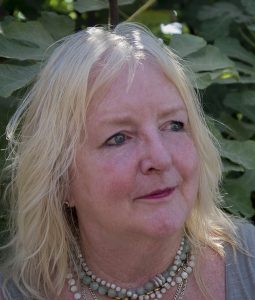
In Rebirth of the Goddess, I offered Nine Touchstones of Goddess Spirituality as an alternative to the Ten Commandments. The Nine Touchstones are intended to inform all our relationships, whether personal, communal, social, or political.

The eighth touchstone asks us to practice great generosity.

Continue reading “Legacy of Carol P. Christ: Practice Great Generosity”

For Mahsa by Lori Stewart

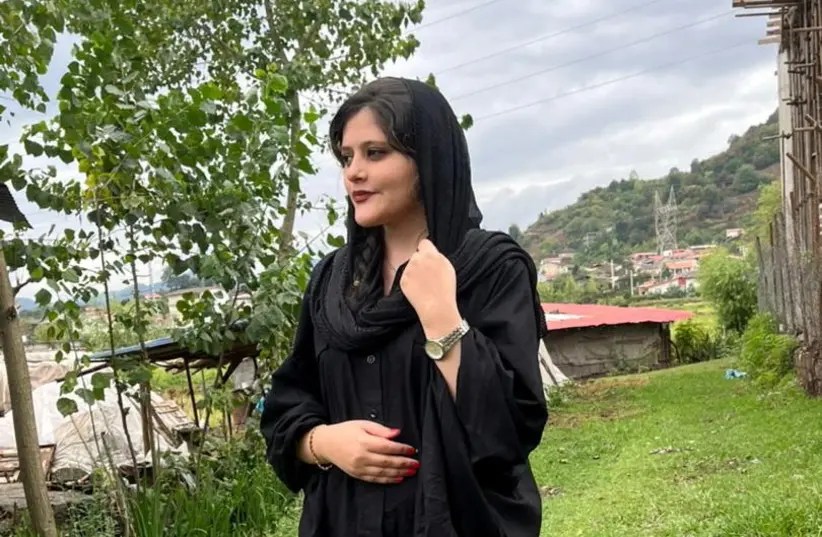
On Friday, September 16, 2022 Mahsa Amini died in a Tehran hospital having been arrested by Iranian morality police on September 13 for wearing “inappropriate attire”. She was 22. Mahsa’s family claims she had bruises to her head and limbs from being beaten. The Iranian police dispute that claim saying Mahsa died from a pre-existing health condition.

Mahsa’s death sparked major protests against the Islamic Republic in Iran and protests of support are occurring around the world. Women are burning their hijabs, which they are mandated by Iranian law to wear, chanting, “Women, life, freedom”. They are cutting their hair which is a longstanding symbol of protest and loss in Iran’s history. This action harkens back to the epic Persian poem “Shahnameh” by Ferdowsi in which hair is a theme and the cutting of hair a symbol of mourning. Around the world, people have followed suit by cutting their hair in solidarity with the protesters in Iran. A recent chant by the protesters is “it’s the beginning of the end” as they challenge their theocratic government.

Continue reading “For Mahsa by Lori Stewart”

Remembering “The Burning Times,” Part 1 by Beth Bartlett

I first saw it when looking at their faces while showing The Burning Times in class — the blank stares, the pained expressions, the tears, the looking away. The scenes and sounds of women tortured and burned alive touched something deep and ancient in them.  Here it was — the historical trauma of women.[i]  The lasting impact of historical trauma is experienced by subsequent generations for hundreds of years, manifesting in such things as depression, PTSD, self-destructive behaviors, anger, violence, suicide, and more. As Native LGBTQ activist and writer Chris Stark so eloquently put it: “The experiences of our grandparents and great-grandparents are written into the library of our bodies . . . . My ancestors’ loss and screams are written in me – their pain and murder and rape merged with my own as a child. . . We carry them through time. We remember.”

Continue reading “Remembering “The Burning Times,” Part 1 by Beth Bartlett”

Revisiting Our Sisters’ Feminisms by Xochitl Alvizo

This post draws much from a previous post I wrote back in 2013, which generated great discussion in the comments. I came back to it as I was reflecting on our sisters’ revolution in Iran, Women, Life, Freedom, following the death of Mahsa “Zina” Amini while she was in the custody of the “morality police” in Iran. This woman-led movement has been nonstop for seven weeks. I’m in full support of the women and have continued to learn more about their context and history. The movement is powerful and inspiring, heavy and difficult, but its energy is alive and blazing. There is an impromptu song that has come to represent the movement; the song was created by linking real-time tweets and Instagram posts together – you can hear the song, read the lyrics, and see the screenshots in the video below:

Now the post I’m drawing back to from 2013 – a little different from the original – but one intended to invite us to reflect on our engagement with and support of one another across place and difference. And about the relationship between the local and global, and the need to hold a balance of both.

Continue reading “Revisiting Our Sisters’ Feminisms by Xochitl Alvizo”

Women’s March, October 2022, Long Beach, CA by Marie Cartier

All photos by the author

Marie Cartier

Continue reading “Women’s March, October 2022, Long Beach, CA by Marie Cartier”

Legacy of Carol P. Christ: Tree-Hugging Is About Trees and So Much More Than Trees

This was originally posted March 11, 2019

Not too long ago I heard someone deride members of a seminar who were building labyrinths in the olive groves of Greece as “a bunch of tree-huggers.”  I bristled! I probably first heard of the Chipko tree-hugging movement which is led by women in the 1970s and 1980s. Because I love nature, I naturally assumed hugging trees is a good thing. Originally, I had no idea that the tree-hugging movement was about much more than saving trees from being felled in the interests of short-term profit.

I did not know that the deeper purpose of the movement is to save a way of life based on forest-culture that is being threatened by the imposition of western ideas and practices promoted by colonialism and its successor, the green revolution. Nor did I know that the traditional forest-culture of India is the provenance of women: more than 4000 years of observing and experimenting created a “women’s knowledge” passed down from mother to daughter.

Continue reading “Legacy of Carol P. Christ: Tree-Hugging Is About Trees and So Much More Than Trees”

Beauty in the Heart of the Beholder by Janet Maika’i Rudolph

In the past two years, I began a project which I call biblical poetry. I had been doing my own translations of biblical verse based on the hieroglyphic meanings of Hebrew words. Ancient Hebrew or Semitic Early writing grew out of the hieroglyphs of Egypt. Since hieroglyphs are pictures, we are able to use the rebuses or picture puzzles to glean the original or at least older meanings of words. I have begun to see these a route to interpreting meanings from before the dawn of patriarchy. This door to understanding appeals to my religious/spiritual/feminist sensibilities. At first, I attempted to stay somewhat true to the well-known meanings as they have come down through the ages. When I began my poetry project, I broke out of that structure to reveal the more mystical/shamanic/pagan meanings that I find beneath the words. At the bottom of this post, I have links to a few of my past biblical poetry posts.

The bible is quite large, so this is an encompassing project with lots of material to explore. This month, I wanted to take a look at how the concept of beauty is treated in the bible. The word for beauty is yaphah. Yaphah can also mean miracle and wonder as well as beauty. Let’s stop for a minute to unpack that. When we think of the word beauty in our culture, the thought is generally about how someone looks (unusually a female someone). But just the Hebrew word alone broadens the meaning. If beauty is someone or something that is wondrous and has miraculous qualities than it goes well beyond cultural standards of how someone looks. If you love someone, they would be beautiful to you because they would be wondrous. Biblical usages and translations tend to focus on beauty, mostly women, sometimes cows (yep cows) and a few handsome men in the mix. But I found that yaphah doesn’t have to be a vision that relies on one’s eyes.

Continue reading “Beauty in the Heart of the Beholder by Janet Maika’i Rudolph”

Legacy of Carol P. Christ: The Devil’s Bargain: “If You Can Convince a White Woman”

This was originally posted on August 12, 2019

This week’s news from America. Where to begin? When will it end?

The President of the United States is a racist who incites racist violence. Republicans have been slow to condemn the President and are not likely to pass a complete ban on assault weapons and to make those currently in circulation illegal.

After reading a speech condemning hate speech and gun violence that he obviously didn’t write, the President scheduled a round-up of brown people working in chicken-packing factories in Mississippi to coincide with his unsympathetic visits to the cities of Dayton and El Paso, where two recent mass killings by assault weapons occurred. The next morning, we were greeted by images of little children coming home from school in small towns in Mississippi to find their parents missing. We were told that none of the surviving victims of the El Paso shooting wanted to meet the President.

This is not the America I want. But it is the America that many Americans seem to want. I would like to think that women as a group reject the President and his agenda. Sadly, this is not true.

Continue reading “Legacy of Carol P. Christ: The Devil’s Bargain: “If You Can Convince a White Woman””

Is the Divine the Unknowable Unknown? A Feminist Take by Ivy Helman

I attended a number of High Holy Days services (online) over the past couple of weeks. In one of them, one of the rabbis said that the divine is the unknowable unknown. I cannot remember what the Rabbi said to contextualize or explain their train of thought; I think I was too intrigued by the idea that I got lost in my own thoughts. In fact, I have been thinking about the unknowable unknown ever since.  

As I write this, I’ve come to this conclusion: if the divine is present among us and the world around us, then there is much we can intuit. In addition, there is much that we can experience the more we interact with other humans and nature.  On the other hand, if the divine is understood as a detached, distant being of a completely different essence than humanity, of course, what can we really know about such a divinity?  How would we even know if that divinity even existed? We probably wouldn’t.  Here is the difference between a  feminist understanding of the divine as this-worldly and empowering and a patriarchal conception of a distant divinity wielding power-over. Yet, interestingly, even the most patriarchal image of the divine has insisted on being relatable to human beings. Nonetheless, how we imagine the divine does matter.

In her book, Models of God: Theology for an Ecological, Nuclear Age, Sallie McFague argues that the words and ideas we use to describe the divine are important. She advocates for the use of metaphors to describe the divine, stating that we can only describe what the divine is like, not what divinity actually is. In fact, she warns the reader of long-lasting models for the divine as these can lead to idolatry, an understanding that limits divinity and, because of this, is essentially untrue. She writes on page 99 that, “[i]f we use only the male pronoun [for the divine], we fall into idolatry, forgetting that God is beyond male and female…” In other words, we are limiting the divine and furthermore speaking an untruth.  

This talk makes we wonder if she too is of the camp that we cannot understand divinity; that the divine is quite different from us. I mean if we cannot and should not have any long-standing model for the divine but only use shaky fleeting metaphors, our understanding of the divinity is genuinely limited and amorphous. Yet, there is a difference between some knowledge and experience of the divine and the idea of the divine as the unknowable unknown, isn’t there?

That being said, I find much of what she has to say extremely helpful when it comes to traditional understandings of divinity.  In her book, she implicates as problematic the long-standing models of divinity as Father and King, among others.  These out-dated models move us further and further away from the divine because they are thought to definitively explain who the divine is in relation to us.  

Let us look at Yom Kippur, the Day of Atonement, as an example of this in Judaism.  Here, we have a day in which we are highly vulnerable as we reflect on the ways in which we have not always treated ourselves, others, the world around us, and the divine as we should (had hoped to). Yet, we enter the synagogue and repeatedly address the divine as Avinu Malkeinu (Our Father, Our King).  Why is the understanding of divinity that we approach one of judge, strict parent, and ruler over us?  Does that not drive a wedge of sorts between divinity and humanity? Does that not make being inscribed in the book of life seemingly impossible unless we are non-human-like?

Contrary to what we often hear in shul, Judaism recognizes some 70 diverse understandings, or names for the divine. These names range from Hashem (the Name) and Shalom (Peace) to Shechinah (the in-dwelling) and Kadosh Israel (the Holy One of Israel). And there are many, many more.  

Returning to our example again, instead of the umpteen rounds of Avinu Malkeinu, what would it be like on Yom Kippur if we approached the divine as Shaddai (Comforter), Hamakon (the Present One, literally the Place), or YHWH-Rapha (The One Who Heals)? These understandings seem to offer the compassion we need on a most vulnerable day.  How much easier would it be to connect to divinity that understands us?  Perhaps we could learn a little more about divinity in that case, and we could in the process become much closer to the holy?  And, isn’t that the point of Judaism? To be holy like the divine is holy?  I think so. 

From a feminist perspective, how we understand the divine has real-life consequences which can shape how we understand ourselves and the world around us. Just imagine what Yom Kippur would feel like, if we called on the divine that day as the comforter, the present one, and the one who heals. It would feel totally different, and for very good reasons.

Who would have thought that some three weeks ago or so, I would have heard a phrase about the divine that still has me in a quandary? I mean, in the end, I suppose there are ways in which the divine is unknowable. Importantly, though, that does not make the divine wholly unknown. Rather, it is often the language we use about the divine that puts distance between us and divinity, that makes divinity less and less known.

Ivy Helman, Ph.D.: A feminist scholar and faculty member at Charles University in Prague, Czech Republic where she teaches a variety of Jewish Studies, Feminist and Ecofeminist courses.  

Authenticity by Beth Bartlett

The leaves have finally begun to turn. I’ve been longing for the trees to reveal their true beauty in all their colorful array, and am glad for this beginning. Soon the woods will be filled with the golden, amber, scarlet, and orange glow of the maples, aspen, birch, and oaks of the northern forest.

Hawk Ridge

It is the time of year I would take my Women and Spirituality students to a sacred spot on a ridge high above Lake Superior to explore their spiritual connections with the earth. They would share a particular way they felt a connection to the natural world – often a lake, or a place from their childhood, a tree they loved to climb, their dog, or a stone they carried.   We would circle the large pine and invoke Starhawk’s “Open-Eyed Grounding” practice.[i] They would read and comment on their favorite passages from the readings – selections from Susan Griffin’s Woman and Nature and Carol Christ’s “Rethinking Theology and Nature.”[ii] Then they would disperse across the ridge for their solo encounters with nature, before gathering together again, each returning with something they had discovered during that time.  Then we would talk about the changing colors of the leaves surrounding us and talk about how these were the true colors of the leaves, finally emerging now that the chlorophyll that had disguised them in green was beginning to wane. Taking our cue from the leaves, we would talk about authenticity – about their coming into their own true colors. For that is the work of spiritual growth and transformation — to emerge as our own true selves. Yet, how often our unique and precious beings are taught to mask our true color, blend in — be “green” like everyone else.  What a vivid and beautiful world when we come into our own and share our unique gifts and being with the world.

Continue reading “Authenticity by Beth Bartlett”