

 In a recent blog describing conversations with my friend Rita Gross, I said that I think of myself as a “kind of a Buddhist” because I have given up a great deal of the ego(tism) described by Buddhists. I also remarked that “I must be a Buddhist after all” because I accept my finitude and do not fear death. At the same time, I said that the idea of a relational world coheres with my experience and is more satisfying to me than the Buddhist theory of nondualism. When I speak of a relational world, I am referring to the worldview of process philosophy.
One of the central insights of Buddhism is the concept of “dependent origination.” This means that “no thing” exists in and of itself: “all things” are related to and dependent upon “other things.” One of the key assumptions of western philosophy is that “things” exist in and of themselves: all things have an single, unchangeable “essence” or “nature.” Buddhism considers this assumption to be false: if all things are dependent on other things, then they cannot finally be separated from the web of dependence in which they exist. Buddhism insists, moreover, that the interdependent world is in flux. This means that what a thing-in-relationship is in one moment changes in the next.
Process philosophers, including Whitehead and Hartshorne, recognized that Buddhism affirms a central truth that western philosophy has denied: the truth that life is in flux and that no individual exists apart from or independent of others. Continue reading “Birth, Death, and Regeneration: Why I Am Only a Kind of a Buddhist by Carol P. Christ”
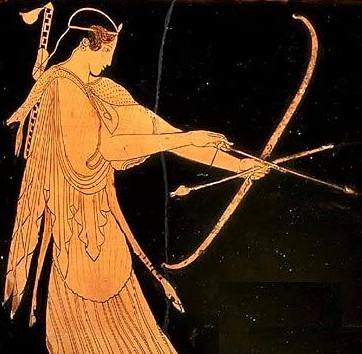

 As war and the fruits of war, including hatred and the desire for vengeance, threaten our human community, I take this opportunity
  In the midst of the Syrian refugee crisis, our humanity is being tested and we are not fairing so well. Twenty-six US senators have called to refuse entry for refugees in their states, presidential candidate and governor of my home state of Ohio, John Kasich included.
 When Rita Gross visited me in Lesbos two summers ago, we spent many long hours discussing our lives and work. Rita and I met at the Conference of Women Theologians at Alverno College in June, 1971 when we were young women. We did not know it then, but our lives would continue to be intertwined through our common interests, first in the Women and Religion section of the American Academy of Religion, and then through our work on Goddesses and feminist theology.
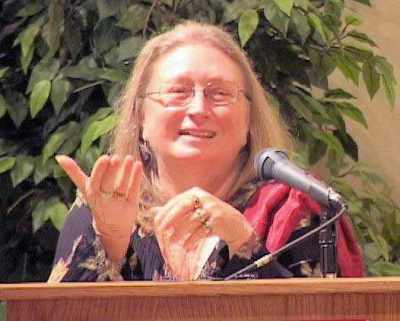 Feminist foremother in the field of women and religion and Buddhist feminist theologian Rita Gross died on November 11, 2015 in her beautiful home in Eau Claire, Wisconsin, surrounded by symbols of Buddhist art and the loving presence of her cats.
  I recently assigned my students an article by Kathleen Erndl – “Is Shakti Empowering for Women? Reflections on Feminism and the Hindu Goddess.”
 Feminism and Religion