

 Society has created this vortex of fear surrounding women aging. Yet, as I turn 30, I am only feeling awe. Awe over everything I accomplished in my twenties and awe in all the things yet to be realized in my thirties. The interesting thing is how other people are experiencing me turning thirty. Some are reminiscent of their twenties or how their experienced their thirties. Others start to bring up certain things which are apparently still lacking in my life. The biggest ones are a husband and children. They look at my eve of thirty-hood as the clock ticking away on me finding love and most definitely on my biological clock.
Category: Feminist Awakenings
Rosh Hashanah and the Goddess by Joyce Zonana
 When I was growing up in the 1950s in my Egyptian Jewish immigrant home, each of the High Holidays was imbued with sacredness, thanks largely to my mother’s commitment to a creating a harmonious and memorable gathering of family and friends. Around a long table, covered with an embroidered white cloth and set with sparkling silver and delicately fluted china, she served at each season the festive meal that made manifest for us the presence of the Divine.
My father, an Orthodox man who prayed each morning and went regularly to the local Sephardic synagogue in Brooklyn, privately followed the tenets of his faith. But it was my mother, unconsciously devout, who brought the public rituals of our religion to life. As a child, I longed to be at prayer with my father and was envious of the men and boys who studied and recited the sonorous ancient Hebrew; I did not want to be confined to polishing the silver and setting the table. But today, as an adult, I am grateful for the silent teachings bequeathed to me by my mother. Continue reading “Rosh Hashanah and the Goddess by Joyce Zonana”
I Am A Woman’s Poet by Marie Cartier
 This is the first poem I ever wrote and had published.
I wrote it in the early 80s at the height of the second wave of Women’s Liberation.
Having just returned from the final Michigan Womyn’s Music Festival, I publish it here with FAR today as an homage to that time period, to those women (myself among them), to many “womyn with a ‘y,’” and what we accomplished—battered women’s shelters, rape crisis centers, health clinics, women’s studies programs, bookstores, festivals, music and culture etc. etc.
Much of what we accomplished is because we learned to listen to each other’s repetition until, as Nelle Morton said, we “heard each other into speech.” Continue reading “I Am A Woman’s Poet by Marie Cartier”
No Longer Moved … by Symbols that Once Moved Me Profoundly by Carol P. Christ
 This week Judith Plaskow and I submitted the final version of our new book Goddess and God in the World to our publisher at Fortress Press. Just before completion, I added a shorter version of the following passage to my final chapter. In it I tried to describe the odd feeling of not being moved any longer by a religion that once moved me profoundly. Our book, which explores an embodied theological method, will be out in the summer of 2016.
I have never regretted my decision to leave Christianity. Although I have a sentimental attachment to Christmas trees, Christmas dinners, Christmas carols, and some hymns, I miss little else about Christianity. At a distance of several decades, I find that I quite simply have no feeling for the Christian edifice of doctrines and rituals based on the life and death of a single individual. Jesus was a visionary, but there have been many others like him—including Martin Luther King, Elizabeth Cady Stanton, and Gandhi, all of them flawed, as Jesus must have been as well.
A few years ago, I decided to participate in the Greek Orthodox Easter week services, because they are attended by so many of my neighbors. But while enjoying the company of the women who decorated the epitaphios (tomb for Jesus), the procession through the streets of our town on Friday night, and the lighting of candles at midnight on Saturday, I came to a clear understanding that the Easter drama is no longer my drama. During the Thursday night services, I realized that many of the women were openly grieving the death of Jesus. Though intellectually I could understand that the Easter drama allowed my friends to release pent-up and repressed feelings, I found their deeply emotional response to the re-enactment of the death of Jesus bizarre.

In leaving Christianity, I had gained the freedom to name the sacred in my own experience, confirmed my deep inner knowing about the human connection to nature, and found the power to create and participate in rituals that have meaning in my life. For me now, the rituals on the Goddess Pilgrimage to Crete are at the center of my spiritual life. To listen to Alice Walker’s words, “We have a beautiful/mother/Her green lap/immense/Her brown embrace/eternal/Her blue body/everything we know”* on a mountaintop or to repeat Ntozake Shange’s cry, “we need a god who bleeds now/whose wounds are not the end of anything”** at the mouth of a cave, moves me more than any passage from the Bible.
Singing “Light and Darkness” in the depths of caves is an embodied act of reclaiming the womb as a symbol of creation and the darkness as a place of transformation. I still enjoy singing the Doxology (Hymn of Praise)—and doing so connects me to my history. But I now sing it in front of altars laden with summer fruits or winter vegetables and with words that express my spirituality: “Praise Her from whom all blessings flow/Praise Her all creatures here below/Praise Her above in wings of flight/Praise Her in darkness and in light.”***
*Alice Walker, “We Have a Beautiful Mother,” Her Blue Body Everything We Know: Earthling Poems 1965-1990 (New York City and Orlando, FL: Harcourt Books, 1991), 459-460.
**Ntozake Shange, “we need a god who bleeds now,” A Daughter’s Geography (New York: St. Martin’s, 1983), 51.
***See Carol P. Christ, She Who Changes: Re-imagining God in the World (New York: Palgrave Macmillian, 2003), 238, for a discussion of the meaning of the new words.
Carol P. Christ leads the life-transforming Goddess Pilgrimage to Crete (facebook and twitter). Carol’s books include She Who Changes and and Rebirth of the Goddess; with Judith Plaskow, the widely-used anthologies Womanspirit Rising and Weaving the Visions and forthcoming in 2016 from Fortress Press, Goddess and God in the World: Conversations in Embodied Theology. Explore Carol’s writing. Photo of Carol by Maureen Murphy. Photo of Idean Cave by PJ Livingstone.
The Wonder that is Being Born: How to Live Out Loud? Sacrilegious or Evolution? by Karen Moon
 Yesterday, I went to a Women’s Circle, the description follows:
Our next circle will honor this journey of Venus or Innana as she was known by the ancient Sumerians. We will gather on Sunday, July 26th at 3 PM at my house. We will celebrate the divine feminine energy of Innana/Venus through meditation, song and dance. I encourage you to dress as your inner goddess, embracing your personal divine feminine energy. We will have our usual potluck munchies afterward.
I had spoken to the host on the phone previously and know her via Social Media. My husband gave his helpful advice to be sure that it was not a “cult,” and yes, I do think any time you find things via social media, a big dose of common sense is needed. Continue reading “The Wonder that is Being Born: How to Live Out Loud? Sacrilegious or Evolution? by Karen Moon”
Barth and Woman at Yale by Carol P. Christ
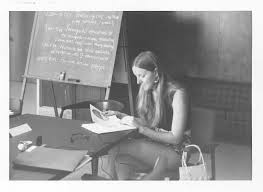
I recently located a copy of an essay on Karl Barth and women that I wrote as a graduate student at Yale University in the Alverno College archives. Rereading it decades later, I am a-mazed at the brilliance and tenacity of my younger self. Had I been a male graduate student, I imagine that I would have been encouraged to publish this paper. Instead, though distributed by Alverno College after the Conference of Women Theologians, it was never published. I am correcting that oversight here. Read A Question for Investigation (Barth and Women)-Carol P. Christ (1971) and view the original typescript Barth’s Theology and the Man-Woman Relationship by Carol P. Christ (1970). Please note that the essay does not restrict itself to Barth’s view of women, but rather uses Barth’s view of women to raise questions about his theology and theological method. Continue reading “Barth and Woman at Yale by Carol P. Christ”
If You Don’t Believe Women Are Fully Human, Can You Be a Great Pope? by Carol P. Christ
 In recent weeks I have felt compelled to respond to a series of “Great Pope” photos and stories praising Pope Francis for his stands on poverty and climate change appearing on my facebook page. In every case I added something like: “Let’s not go overboard about a pope who does not believe women are fully human.”
I am referring of course to Pope Francis’s reiteration of the Church’s prohibition of women in the priesthood. But just as important–and perhaps more important–is the role the Roman Catholic Church has played and continues to play to prevent women from having access to contraception and abortion.
Control over our own bodies is a fundamental right that undergirds every struggle for women’s equality and liberation. But the pope does not want women to have the right to use contraception to prevent unwanted pregnancies, nor does he want us to have the right to abortion if contraception is unavailable or fails—not even in cases of rape or incest. Continue reading “If You Don’t Believe Women Are Fully Human, Can You Be a Great Pope? by Carol P. Christ”
Women Fighting Patriarchy … Against Each Other by Vanessa Rivera de la Fuente
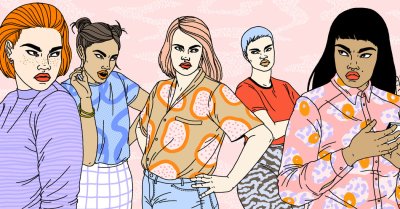 It is painful to find out the lack of understanding among feminists when controversial issues are discussed, to the point that it seems we have failed in achieving a key factor: transforming the way women perceive and interact with each other. I have been in discussions that begin with great aptitude for addressing issues about which a voice is needed, to finish in symbolic violence by stances in which I can hardly find a trace of feminism. I offer here just a few examples.
Invisibility: At least in two situations
Case nº1: “No. A woman like you can’t be feminist. That doesn’t exist.” Denying my existence as a feminist is to deny that there are women in the world able to empower themselves, beyond your permission, in their contexts. No one owes you an explanation, by the way.
Case nº2: “She is not my ally (because she is not like me),“ say feminists who do not accept Muslim women as such, but praise the pro-women statements uttered by a privileged man, well advised by his publicist, because “Everyone can be feminist.” Continue reading “Women Fighting Patriarchy … Against Each Other by Vanessa Rivera de la Fuente”
Where does your conviction come from? By Oxana Poberejnaia
 I sometimes feel a bit awkward about not having read a lot of feminist books and not knowing a lot of feminist theory. However, I draw support from the example of Zen, “the teaching beyond letters.”
 The number and scope of different Buddhist traditions might overwhelm non-Buddhists reading my ramblings or any other writings about Buddhism. Even Buddhists, as those who come to Manchester Buddhist Convention, of which I am a co-organiser, every year discover new Buddhist groups that have been hitherto unknown to them.
All these traditions claim to be an authentic form of Buddhism and those that are concerned with such things, trace direct lineage of teaching coming all the way from the Buddha. As the editor of the volume “Buddhist Scriptures” Donald S Lopez Jr notes (Penguin Classics, 2004), such diversity requires certain means of ensuring that this school’s particular teachings are still in line if not with the letter, then with the spirit of the historic Buddha’s teaching.
Continue reading “Where does your conviction come from? By Oxana Poberejnaia”
The Power of Female Friendship: Remembering Karen McCarthy Brown by Carol P. Christ

News of Karen Brown’s recent death came via email from a mutual friend of ours, Christine Downing.
There are many things that can be said about Karen’s life and career, including that she won prizes for her life’s work Mama Lola in scholarly associations in the fields of religion and anthropology, that her work has been influential in bringing the study of Vodou into the scholarly mainstream, and that it has been inspiring to women of color.
Here I will focus on the years when our friendship provided crucial support for our audacious scholarly work. I first met Karen through the New York Feminist Scholars in Religion, a group Anne Barstow and I organized in 1974 that nurtured work on women and religion for many of us, including besides me and Karen, Judith Plaskow, Naomi Goldenberg, Ellen Umansky, Lynn Gottlieb, Beverly Harrison, Nelle Morton, Elisabeth Schussler Fiorenza.
My friendship with Karen was sparked by the explosion that occurred in the New York feminist scholars group when Anne Barstow and I spoke in the fall of 1976 about our attractions to the Goddess. Our presentations evoked a great conflagration, which I remember as coalescing around Beverly Harrison’s authoritative and authoritarian statement that there can be no ethics in Goddess religion because ethics comes from a transcendent source—not from nature. Karen was among those who responded tentatively that she was not so sure Beverly was right.
In the discussions that continued over the academic year, Karen and I exchanged meaningful glances, supported each others’ comments, and finally met for a few longer conversations shortly before I left New York to take up a new teaching position in California. Karen was then in the process of leaving her husband and moving into the magnificently quirky loft apartment that she would decorate with Haitian art in Tribeca on the lower west side of New York City.
I offered to do a house blessing for Karen’s new apartment, and she agreed. We blessed the thresholds and the corners of each room with salt and water and incense, and Karen spoke of the new life she hoped to begin in her new home. Later Karen told me that Alourdres (Mama Lola) insisted on blessing the house again and that the rituals were nearly the same.
During the years Karen lived in the Lower West Side from 1977 to 2001 or 2002, I stayed with her several times a year when conferences and lectures brought me to and through New York and on my way back and forth from teaching in Greece in the summers. During that time we had many long and intimate conversations in which the details of our lives were interwoven with the details of our work.

Our friendship was important to both of us, not only because we were pioneers in the study of women and religion, but also because within it we were becoming a minority within a minority as our work took us outside an increasingly Christian-dominated field. Our conversations ranged fluidly around many subjects including: leaving Christianity; the importance of female symbolism for divinity; whether we need male Gods of war or not; religions that focus on the divine and human connection to nature; similarities and differences between Goddess and Vodou rituals and altars; healing; female leadership styles; the experience of living between cultures; and our common struggles to find a voice in which to write about what we were discovering.
Karen and I were in the process of rejecting the dispassionate voice of scholarly objectivity and searching for a way to write that combined scholarly research with the passion to know the world more deeply and to think about it clearly that inspired our work. Our conversations with each other were a lifeline, as we had no role models for the personal paths we were exploring or for the new ways of writing our scholarship with which we were experimenting. We quite literally “heard each other into speech” to quote the phrase Nelle Morton used to name the importance of our female conversations.
I happened to visit Karen shortly after she underwent her initiation into Vodou, which was at about the same time that I experienced what felt to me like revelation at the temple of Aphrodite in Lesbos. We both felt that we must incorporate these moments into our writings, but we also were afraid to do so because we feared that others would call us heretics and dismiss our writing as unscholarly. Karen and I spoke publicly of these experiences on a panel organized by Rita Gross at the American Academy of Religion in 1985 that was published in Journal of Feminist Studies in Religion 3/1 (1987).
Karen received more scholarly recognition for her transgressions than I have. This is in part due to a greater interest in difference among anthropologists than among theologians. However, Karen often told me that scholarly recognition is not the only way to judge the importance of feminist contributions and reminded me that my work has had a major impact within and outside the academy.
One day Karen and I were discussing whether she could fully embrace Haitian culture and whether I would become Greek. Invoking the Vodou concept of living “between the worlds” of the spirit and ordinary reality, she said that this was how she understood herself: she could never be nor would she want to be Haitian, but neither would she ever be fully American or Christian again. She added that one of the reasons she felt comfortable living between worlds was that she had never felt comfortable in her own culture.
In the intervening years, I have thought about this conversation many times. While there was once a time when I wanted to become Greek and leave my American culture behind, I have come to realize that this is not possible. Like Karen, I live between worlds and find my greatest comfort in belonging to two worlds and to neither. This insight is only one of the many gifts I gained though my friendship with Karen McCarthy Brown.
Remembering Karen, let us bless the Source of Life, and the cycles of birth, death, and regeneration.
Carol leads the life-transforming Goddess Pilgrimage to Crete (facebook and twitter)–space available on the spring and fall 2015 tours. Carol’s books include She Who Changes and and Rebirth of the Goddess; with Judith Plaskow, the widely-used anthologies Womanspirit Rising and Weaving the Visions; and forthcoming next year, Goddess and God in the World: Conversations in Embodied Theology. Photos by Martha Ackelsberg.
 Feminism and Religion