 A few days ago I watched the movie An Unfinished Life starring Morgan Freeman, Robert Redford, and Jennifer Lopez. Though it was recommended as a sensitive psychological drama, and though on the surface level it criticizes (male) violence against women and animals, on a deeper level, it confirms the association of masculinity with violence, suggesting that violence is the way men resolve their problems with each other.
At the beginning of the film, Robert Redford, who lives on a ranch in Montana, picks up his rifle with the intention of shooting a bear who mauled his friend Morgan Freeman. This act of violence is stopped by local authorities who arrive to capture the bear. However, the bear is not removed to a more remote area, but rather is given to a local make-shift zoo where it is kept in a small cage. At the end of the movie, Redford frees the bear after Freeman realizes that it should not be punished for injuring him. The bear is last seen crossing a mountain ridge in the distance.
Redford is grieving the death of his only son who died in an automobile accident while his son’s wife (played by Jennifer Lopez) was driving. After being beaten by her current boyfriend, Jennifer Lopez escapes with her daughter and ends up on Redford’s doorstep, announcing that her daughter is Redford’s granddaughter. Redford, who believes Lopez is responsible for his son’s death, grudgingly allows them to stay.
When Lopez’s boyfriend tracks her down in Montana, Redford drives him out of town, threatening to kill him with his rifle. When the boyfriend comes back, Redford shoots out the tires of his car, smashes the car’s windows with his rifle, and beats the boyfriend bloody before putting him on a bus out of town.
The movie asks us to condemn the boyfriend’s violence against Lopez and Redford’s desire to kill the bear, but it also asks us to condone and even to celebrate Redford’s violent acts against the boyfriend. After all, in this case, justice is done. Right? Continue reading “Toxic Masculinity: “Masculinity Must Be Killed” by Carol P. Christ”


 While I am joining the conversation a bit late, I find it necessary to comment on the significance of the “upgrading” of the celebration of St. Mary of Magdala to a feast – on par with the male apostles. While such a day that honors her is quite overdue, I am grateful to Pope Francis for acknowledging this incredible woman and her leadership in the Christian movement.
 History offers few instances of women helping create scripture. Hinduism’s sacred Rigveda may have been partly composed by women, and scholars believe the biblical Book of Ruth was possibly written by a woman, but the evidence for each is wanting. And while Muhammad’s widow was entrusted with the manuscript that would become the Quran, its scribe was a man named Zayd ibn Thabit. The only clear exception to this is the Book of Mormon, which Joseph Smith partially dictated to his wife Emma. The central role of Mormon women in the church was therefore fixed from the start.
 As a practicing witch, feminist, energy worker and a student of life, I am often puzzled as to why, in this day and age, we continue using the terms “masculine” and “feminine” as descriptive modifiers. What exactly does it mean when we call an energy masculine or feminine, anyway? While I understand that these are descriptors that generally address what are typical characteristics – why do we insist on being so vague, misunderstood and perhaps even, insulting, depending on who we are speaking to?
  I have entitled this post
 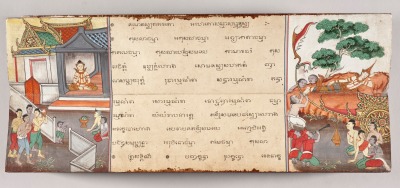 One of the most popular texts in Thai Buddhism (which is of Theravada tradition) is called
  My book club recently read
  ‘Someone needs to gather the stories, to keep the cauldron,’ said the late Goddess feminist artist
  I’ve been asked by both academics and Pagans what inspired me to pursue doctoral research on the British Goddess movement: of the many ways that people first
  For several weeks now, I’ve been going through and disposing of stuff that has accumulated in my house over the past three or four decades. One of the more interesting finds was the following letter, written by my husband, when we lived in Saudi Arabia from 2000 – 2004:
 Feminism and Religion