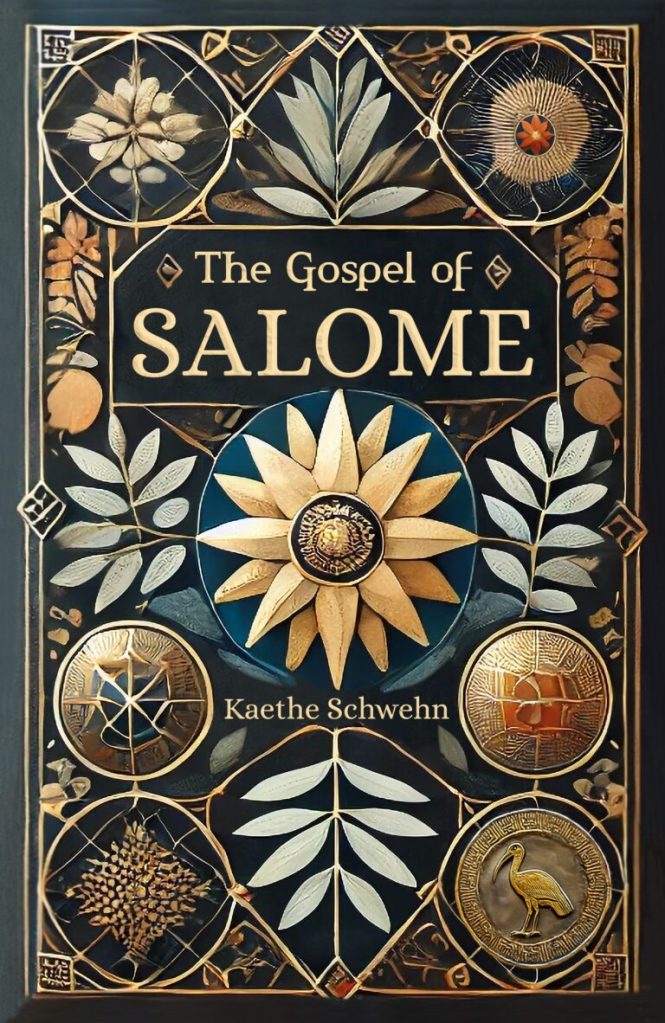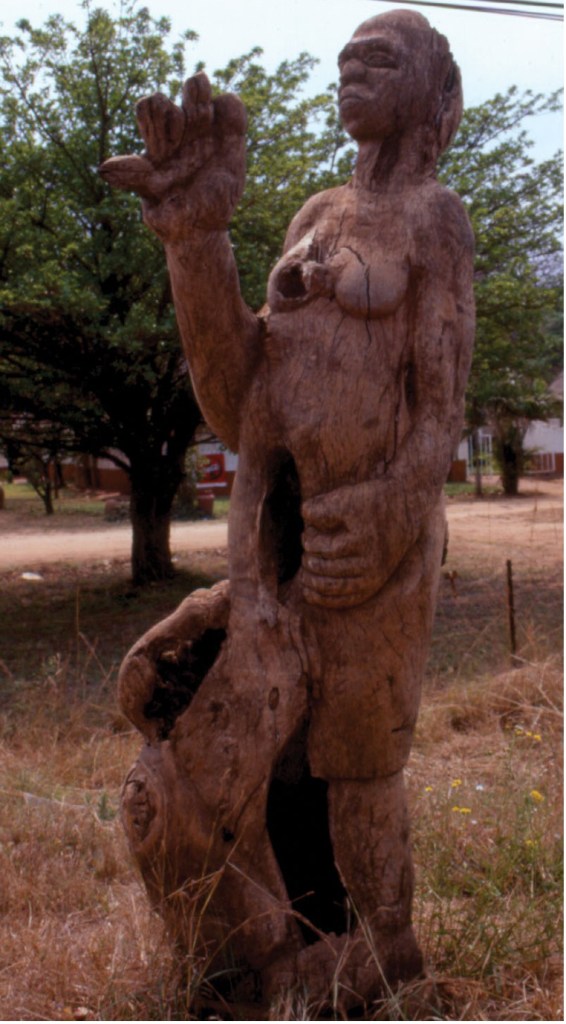
From the Archives: Censored Angel: Anthony Comstock’s Nemesis. A Novel by Joan Koster

This was originally posted on October 10, 2024.

Moderator’s Note: With the Trump administration getting closer and closer to re-establishing the Comstock Laws in their efforts to stop all abortions in the United States, we felt it important to repost this story. It is about Ida Craddock, her life and her efforts to stand against Anthony Comstock. Joan Koster wrote a powerful book about her. This post today is also a prelude to tomorrow’s post which will discuss a new movie Sex Radical that will be premiering this month about Ida Craddock’s life.

“I would lay down my life for the cause of sex reform, but I don’t want to be swept away. A useless sacrifice.” Ida C. Craddock, Letter to Edward Bond Foote, June 6, 1898

In 1882, Ida C. Craddock applied to the all-male undergraduate school of University of Pennsylvania. With the highest results on the entrance tests, the faculty voted to admit her. But her admission was rejected by the Board of Trustees, who said the university was not suitably prepared for a female. (U of P only became co-ed in 1974)

With her aspirations blocked, Ida left home determined to leave her mark on women’s lives by studying and writing about Female Sex Worship in early cultures. At the time, little information was available to women about sexual relations. To do her research, Ida resorted to having male friends take books forbidden to females, such as the Karma Sutra, out of the library for her.

An unmarried woman, she turned to spirituality and the practice of yoga, a newly introduced practice to the American public at the time, as a way to learn about sex. In her journals, she describes her interaction with angels from the borderlands, and in particular, her sexual experiences with Soph, her angel husband through what was likely tantric sex.

Continue reading “From the Archives: Censored Angel: Anthony Comstock’s Nemesis. A Novel by Joan Koster”

The Doorway  by Sara Wright

When my dog Hope told me it was her time I listened and immediately prepared for our leave taking. In 13 years, I had never had  to pry Hope out of her carrier. But this time when we arrived at the vet I did. I knew that Hope knew that she was going to die and that she was afraid, although it was her decision that led us here.

Wrapping her in a fleecy blue blanket I remember little except the precious bundle I held in my arms. Our eight- month ordeal with her exploding heart was about to end. 

Seconds before she slipped away Hope raised her head, stared into my eyes with liquid onyx as she kissed away a flood of tears. Always keyed into my every mood and behavior this final gesture of undying love was no surprise. 

The grave was waiting, but I took my time, feeling the power of Hope’s presence as I bathed and anointed her with sweet lemongrass and then lay with her on the porch preparing us both for the final goodbye. Murmuring repeatedly the words ‘I love you  -we will never be separated’. I believed. 

Continue reading “The Doorway  by Sara Wright”

The Women of Pinchas

The parshah I will discuss this month is Pinchas, Numbers 25:10-30:1.  It was last read in synagogues on the 19th of July 2025.  It covers dealings of a zealous deity, declarations of war, descriptions of animal sacrifices and grain offerings, a census for inheritance and possibly also conscription, and the case of five daughters who seek their inheritance.  As I have done a number of times, I will focus on the women in the parshah using the methodology I have laid out in numerous commentaries (but do not always follow).  

However, before we get into the heart of the matter, I also want to mention that Pinchas also marks the last parshah on my pursuit to comment at least once on each Torah parshah.  Of course, there is so much more that I could say about the Torah and each and every one of its parshiyot (Note 1); from a feminist and ecofeminist perspective, I have just scratched the surface.  Yet, I am also happy to have accomplished this milestone. Now, back to the parshah.

Continue reading “The Women of Pinchas”

From the Archives: Careful Criticism: Resisting Hetero-Patriarchy while Resisting Trump by Sara Frykenberg

This was originally posted on May 2, 2017

My students are taking their final exams this week, which means I will be spending the week frantically, but attentively grading in order to make our grade submission deadline next week. End of semester grading is a mountain of careful criticism we educators scale one step at a time, with deliberateness, towards an ultimate goal of student success (if not in our classes, then in the next, or in life, relationships, etc.). Thus, I often find myself returning to the question: what am I hoping to create in what I say and write, and in how I critique?

One of the goals of feminist pedagogies is to help us prevent recreating the domination of kyrio-patriarchy in classroom spaces. While activism is not the same thing as education, and strategies of resistance are different than pedagogy in important ways, the concern for careful critique is warranted in both praxes. What do we create in how we critique, resist, and protest? What do we recreate, wittingly or no? I have found myself concerned with this since the election of Trump, DT (cause I can only write that name so many times), to the presidency. Continue reading “From the Archives: Careful Criticism: Resisting Hetero-Patriarchy while Resisting Trump by Sara Frykenberg”

Three Poems by Harriet Ann Ellenberger

I Resolve To Speak

There’s a fascist in the White House —
a malevolent clown and front man
for a cabal of the hard right.
Their takeover of the US government
proceeds rapidly, a stunning succession
of defeats for democracy.

The nightmares of fascism
are taking shape in waking reality.
Now is the time, I tell myself,
to speak up, speak out,
name the perpetrators,
name their games.

The bully in the White House
has been called a rapist,
and fascism is patriarchy on steroids,
waging unremitting war on nature,
people of color, and women.

Continue reading “Three Poems by Harriet Ann Ellenberger”

THERE’S ONLY LOVE by Esther Nelson

Charlie Kirk embodied characteristics lauded by people I remember from my fundamentalist, Christian upbringing.  Confident “believer” who knew the absolute “truth,” a willingness to proselytize (or better known in fundamentalist circles as spreading the Good News of Jesus Christ), and a pugnacious personality essential to fight Satan and his minions in this “ungodly” world.

In a New York Times article titled “We Need to Think Straight about God and Politics” (9/25/25), David Brooks writes: “As people eulogized Kirk, it was rarely clear if they were talking about the man who was trying to evangelize for Jesus or the one trying to elect Republicans.” A spokesperson at Turning Point USA said, “He [Kirk] confronted evil and proclaimed the truth and called us to repent and be saved.” Brooks asks, “Is that what Kirk was doing when arguing with college kids about tariffs?”

I want to focus here on some of the brilliantly choreographed, yet deceptively cruel imagery present at Kirk’s memorial service, showing how the MAGA movement uses a religious group’s theology to foment hatred—with the goal of gaining/retaining political power.

Continue reading “THERE’S ONLY LOVE by Esther Nelson”

Fire and Ice by Beth Bartlett

As I paddled the lake this morning, I found myself thinking this is what the end of the world looks like.  The sun was rising red through smoke from Canadian wildfires and a smoky haze engulfed the lake to the point I could barely see the not-too-distant opposite shore.  I was paddling by the state forest, where the March ice storm had stripped the tall pines of their upper branches, bent the birches, and uprooted and sent out to sea the largest of the trees.  The camping spot at the spring was inaccessible so covered was it by downed trees and branches. All was bent, broken, and dying and the forest itself appeared to be weeping. Adding to the surreal aspect of this moment was the plethora of motorboats pulling skiers and jet skis bouncing along on what would otherwise be a quiet, calm lake – oblivious to or simply not caring that they were frivolously burning the very fossil fuels that had fueled this environmental crisis and catastrophe.  It was as if I were watching an Octavia Butler dystopia play out with the rich and privileged burning up the last of the fossil fuels with disregard for the earth and disdain for earth’s advocates.

I began going to this lake in northern Michigan when I was two.  Every year my mother would comment on how blue the sky was, how clear the air – such a contrast to northeast Ohio where we lived with its rubber factories, making the sky a hazy gray, even on the sunniest of days. We would marvel at the depth of the blue.  This visit I never once saw a blue sky, nor even across the lake. I have hundreds of photos of the beautiful vista from the hill upon which our cabin sits, simply because of the stunning blues, but this year I took not a one.

Continue reading “Fire and Ice by Beth Bartlett”

Autumn Equinox 25: The Cutting Away and the Gathering In by Sara Wright

There is something very special about ‘the cutting away and  gathering in’ … my very wild gardens are flattened, my wildflower field has just been mowed,  trees are turning, and I am possessed by joy.

Near and Far Mountains

 It’s at this time of year that the sky opens into a field of dreams. I walk down through the pines to watch the stars appear at dusk – the open field widens my vision. The Great Bear circumnavigates the sky and as other constellations crystalize, I can imagine that it’s possible to re- imagine, to re- weave the threads around the cross-cultural web that is broken. Ordinary perception fails.

I am also reminded that everything changes, and that the seasonal round is the foundation of life.

  In this same field during daylight hours birds feast on thousands of scattered seeds that have been baked in summer heat.

I’m amazed by an illumination.

 At both equinoxes near and far meet.

Continue reading “Autumn Equinox 25: The Cutting Away and the Gathering In by Sara Wright”

Legacy of Carol P. Christ: Segregation

carol-christ

This post was originally published on March 17th, 2014.

As I think about the incarceration of young black men for relatively minor drug crimes, and the murders of Trayvon Martin and Jordan Davis, I cannot help but compare the astonishing progress that Americans have made in overcoming prejudice against gays and lesbians to the astounding lack of progress we have made in overcoming prejudice against black Americans.

It is often repeated that the reason for changes in attitudes about gays and lesbians is the process of coming out—most people in America now know a lesbian or gay family member, friend, or co-worker.  On the other hand, I would dare to speculate that many—perhaps most—Americans who are not African-American do not know a boy like Trayon Martin or Jordan Davis.  If you do—count yourself lucky!  Our society remains divided by race and class divisions (many of them a legacy of racism) that prevent many non-black Americans from knowing a single young black man. Continue reading “Legacy of Carol P. Christ: Segregation”

FAMISHED—ON FOOD, SEX, AND GROWING UP AS A GOOD GIRL by Anna Rollins: Book Review by Esther Nelson, part 2

Part 1 was posted yesterday.

MARRIAGE

“He looked at me without judgment.  With him, I didn’t feel the need to perform.”  Both her future husband (first year medical resident) and she (now studying applied linguistics) disliked fundamentalism’s legalism, but they were still committed to Christianity.  Both were “devoted to [sexual] abstinence.”  Sex did not even happen on their wedding night, but when it did, it hurt.  For years, the pain continued.  Vaginismus.  “I didn’t know there was a name for it.  I didn’t know that…it was twice as common for those who had grown up in religiously conservative households.”  It took years to get through the pain.  “It’s not until we can believe that our bodies are inherently good and worthy of pleasure and joy that we can begin to heal.”

A new pastor arrived at Rollins’ church armed with Christian nationalist ideas and fervor.  It didn’t set right with her.  She was moving toward progressive positions beginning with “my body, my choice.”  She adds, “If there’s anything someone who’s struggled with an eating disorder understands, it’s the concept of bodily autonomy.”  She began to research the Reformers beginning with Martin Luther who said this about women:  “If women become tired, even die, it does not matter.  Let them die in childbirth.  That’s what they are there for.”  Rollins’ husband pushes back, though, quoting Scripture—“there is no male or female…we are all unified in Christ.” Why then, Rollins wonders, does sexism run rampant in the church?

Continue reading “FAMISHED—ON FOOD, SEX, AND GROWING UP AS A GOOD GIRL by Anna Rollins: Book Review by Esther Nelson, part 2”