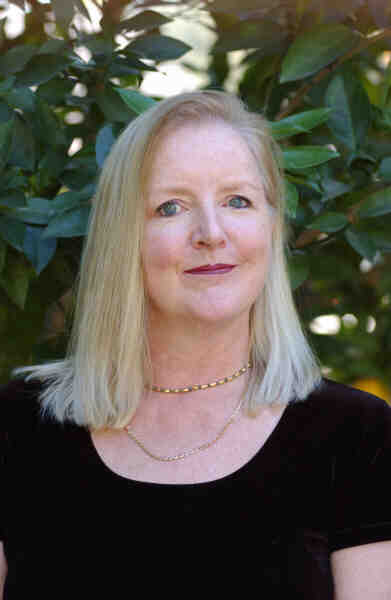
My Funny, Queer Valentine by Marie Cartier

I wrote a short story in the spirit of both my book Baby, You Are My Religion and Valentine’s Day for this month’s blog. Happy Valentines’ month. <3 Marie

She remembered that is what it had said, “To my funny, queer valentine.” She had thought then, as she squatted on the toilet at the If Club in downtown Los Angeles, 1963, trying to read the graffiti in front of her that yes, that is what it said. She thought to herself, Shirl, that is some graffiti. It read, “To my funny, queer valentine: I’ll miss you. I’ll always miss you.” Shirl could hear in the background Lesley Gore singing her new hit, “It’s My Party.”

Continue reading “My Funny, Queer Valentine by Marie Cartier”

From the Archives: Child of the Earth by Elizabeth Cunningham

Moderator’s note: This marvelous FAR site has been running for 10 years and has had more than 3,600 posts in that time. There are so many treasures that have been posted in this decade that they tend to get lost in the archives. We have created this column so that we can all revisit some of these gems. Today’s blogpost was originally posted October 18, 2020. You can visit the original post here to see the comments.

I have a vivid childhood memory of being sick with the stomach flu and standing in the doorway of my parents’ bedroom looking for my mother. Her care for sick children was tender and thorough. She would bring us ginger ale and toast with jelly. When she had time, she read us stories. I can remember her steering me, heavy with fever, back to a bed that she had magically smoothed and cooled. But that day my mother lay in her own bed in an old nightgown, not stirring. She had the flu, too, and could not get up to care for the rest of us. It was a shocking and sobering moment.

As I grew older, I transferred my need for comfort, reliability, and continuity from my mother to the earth, the sure turning of the seasons, beloved trees, waters, and rocks.  As a young mother, I looked forward to sharing my own childhood joys with my children, among them jumping into autumn leaf piles. The first time my children leaped into a leaf pile, they came up covered with the ticks that have now made my region the epicenter of Lyme and other tick-borne diseases. Nor was I able to share with my children the joy of drinking water straight from a stream.

Continue reading “From the Archives: Child of the Earth by Elizabeth Cunningham”

Hawk – A Soaring Visionary by Judith Shaw

Hawk, beautiful and deadly, soars high in the air –  circling and circling –  its piercing eyes focused below. Spotting Hawk, one is amazed by its elegance and power while feeling a strange and ancient connection to this magnificent bird. Yet it strikes fear in the hearts of small animals.  

Continue reading “Hawk – A Soaring Visionary by Judith Shaw”

‘A Wolf in Sheep’s Clothing’ by Sara Wright

The Power of Dreams to Forecast Future Events

I have been a dreamer all my life and within the last six weeks I have had a number of dreams that both frightened and baffled me. How is it possible I ask myself that after 40 years of dream jounraling and being trained as analyst that I am still that stupid?

Part of the answer is that I don’t pay close enough attention to warnings when I can’t make sense of them. For example, when these dreams began someone I didn’t know had contacted me out of the blue and insinuated himself into my life by praising someone I love. The very next night I had a dream that told me that a man was coming to harm me.

Continue reading “‘A Wolf in Sheep’s Clothing’ by Sara Wright”

Carol P. Christ’s Legacy: Women Are Not Sluts, Rush, Douch-Bag Is Not Funny, Jon, And Sexism Is More Than “Inappropriate,” Mr. Whitehouse Spokesperson! by Carol P. Christ


Moderator’s Note: We here at FAR have been so fortunate to work along side Carol Christ for many years. She died from cancer in July, 2021. Her work continues through her non-profit foundation, the Ariadne Institute for the Study of Myth and Ritual and the Goddess Pilgrimage to Crete. To honor her legacy, as well as allow as many people as possible to read her thought-provoking and important blogs, we are pleased to offer this new column to highlight her work. We will be picking out special blogs for reposting.This blog was originally posted March 12, 2012. You can read it long with its original comments here.

Why is it OK to insult women, our bodies, and our sexuality in ways that it is no longer OK to insult other groups?

The recent controversy over Rush Limbaugh’s rant about Sandra Fluke would not be so important if Limbaugh were not the “voice” allowed to say things that Republican politicians cannot say in public. Republican politicians wish to appeal to men who would say exactly what Rush said, while watching Fox News or over a beer with their buddies.

The Virgin-Whore split is alive and well in our culture. Sandra Fluke  finally did get to testify in a hearing called by Nancy Pelosi.  She  assumed a woman’s right to choose when and with whom we have sex and whether and when we will have children, but she did not focus on sexual freedom. One of her examples was a married woman who could not afford birth control and another was a woman who needed birth control pills for reasons having nothing to do with sex or sexual activity. She did not appear in Congress in a mini-skirt (though she should have had every right to do so) but in a business suit. Yet she was called a slut and a prostitute and asked to post porno films of herself on the internet.

Continue reading “Carol P. Christ’s Legacy: Women Are Not Sluts, Rush, Douch-Bag Is Not Funny, Jon, And Sexism Is More Than “Inappropriate,” Mr. Whitehouse Spokesperson! by Carol P. Christ”

From the Archives: Lessons from Candide by Barbara Ardinger

Moderator’s note: This marvelous FAR site has been running for 10 years and has had more than 3,600 posts in that time. There are so many treasures that have been posted in this decade that they tend to get lost in the archives. We have created this column so that we can all revisit some of these gems. Today’s blogpost was originally posted August 5, 2018. You can visit the original post here to see the comments.

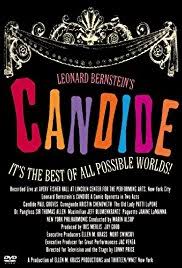
Candide, ou l’Optimisme (in English, Candide, or Optimism) is a satirical, picaresque novel published in 1759 by François-Marie Arouet, better known as Voltaire, who was possibly the smartest author of the Age of Enlightenment…but he annoyed so many courtiers and public officials that he was forever traveling around Europe to get away from their threats of arrest and bodily harm. A picaresque novel is an adventure novel with a clever, tricky hero who somehow survives and makes us like him. Voltaire wrote his novel primarily to criticize the optimism of the German writer Gottfried Wilhelm Leibniz, who said that because God is always benevolent, everything that happens is always for the best. This presumably includes the bloody Seven Years War (Protestant vs. Catholic, fought mostly in Germany and France) and the Lisbon earthquake of 1755, which occurs both in Lisbon and in the novel. Even though Voltaire was accused of blasphemy and heresy, among his other sins and crimes, Candide was enormously popular throughout Europe, a popularity that continues to this day.

Continue reading “From the Archives: Lessons from Candide by Barbara Ardinger”

From the Archives: Slavery and God/dess by amina wadud

Moderator’s note: This marvelous FAR site has been running for 10 years and has had more than 3,600 posts in that time. There are so many treasures that have been posted in this decade. They tend to get lost in the archives. We are beginning this column so that we can revisit some of these gems. Today’s blogpost was originally posted January 28, 2014. You can visit it here to see the original comments.

Well the Golden Globe awards have been handed out.  I don’t have a television, so I didn’t actually watch, but a quick google search gives the results.  Highest honors go to a movie about blacks as slaves and whites as criminals.  That’s appropriate. 

But this is feminism and religion, so let me get to the point.  It’s about a chance discussion on social media about the “merciful god” and historical institutions like slavery (holocaust, or oppressions like misogyny, homophobia, Islamaphobia and others…).

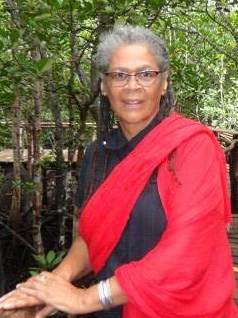
My view of the divine, the cosmos and of the world is shaped by my slave ancestry.  Recent area studies about Islam in America estimate that one third of the Africans forced to the Americas were Muslim.   My first African relative on US soil identified as Moor (another term used for “Muslim”).  But Islam did not survive slavery.

Continue reading “From the Archives: Slavery and God/dess by amina wadud”

From the Archives: The Serpent and the Goddess by Judith Shaw

Moderator’s note: This marvelous FAR site has been running for 10 years and has had more than 3,600 posts in that time. There are so many treasures that have been posted in this decade that they tend to get lost in the archives. We have created this column so that we can all revisit some of these gems. Today’s blogpost was originally posted January 26, 2020. You can visit the original post here to see the comments.

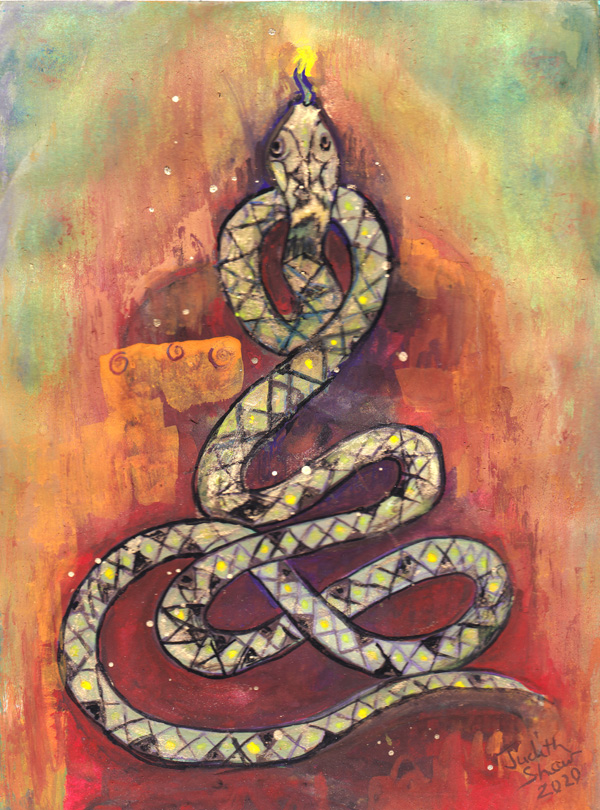
The otherworldly energy of Snake – it’s vitality, its uncanny ability to sense danger, and its ability to shed its skin and reappear as if reborn must have invoked feelings of awe in our ancestors. All across the pre-historic world one finds depictions of Snake and the spiral or meander as Snake’s symbols.

Creation, Primal Energy, Life Force
Snakes are mysterious, cold-blooded creatures –  slithering silently across the land, sleeping with open lidless eyes, hearing without ears but by feeling Earth’s vibrations, and using their forked tongues to smell in lieu of a nose.

Snake Spirit Animal-painting-by-judith-shaw

To the human imagination this enigmatic being is both chthonic and spiritual – tying together Heaven and Earth. Though no stories survive from the early Neolithic period of Old Europe, the preponderance of imagery leads us to the conclusion that the Snake Goddess, often appearing as one with the Bird Goddess, was felt everywhere – ruling earth, water and air – nurturing the world with the feminine principle – Mistress of life-giving cosmic forces.

Continue reading “From the Archives: The Serpent and the Goddess by Judith Shaw”

Behold! The Treasures of Eden by Janet Maika’i Rudolph

The place and purpose of the Garden of Eden is a topic of endless fascination and interpretation. This blogpost looks at two biblical passages and the word eden itself to see what we can learn about its meanings. At its most basic, Eden is a garden of treasure and delight.

As I’ve written before, the written form of Ancient Hebrew words comes from the hieroglyphic tradition of Egypt. The pictures of the letters form a picture puzzle or rebus. The word roots are generally two or three letters. I use script called Semitic Early for my baseline of study.

Continue reading “Behold! The Treasures of Eden by Janet Maika’i Rudolph”

An Experience of the Aphrodisia by Olivia Ciaccia

A warm summer sun smiles down upon the British coastline, the low tide reflecting jewels which are wash up and dispersed upon fine sand. A welcome breeze dances around a gathering of Goddess devotees encircling a small bonfire. Amongst them stands a banner and statue depicting and imitating Botticelli’s Venus and bouquets of roses. Just before the sun sets, those gathered lovingly collect these assembled artifacts, holding them aloft, and begin to process barefoot towards the sea.

Aphrodite-Venus’s banner and sculpted face shines in the low afternoon sunlight. As the procession slowly steps, weaves, and dances, towards the sea to the beat of a drum, the sun reaches further behind the hills, casting a long shadow upon the beach. The Goddess’s image dances with them, banner swaying and statue bobbing with the dance of its carrier. By the time the procession reaches the sea, the sun has dipped behind the now black silhouette of the hills bathing the beach ahead in dusky oranges and brilliant blues. At the shoreline, a priestess steps forward and turns the Goddess’s statue to face the procession, which has now fanning out into a semi-circle.

Continue reading “An Experience of the Aphrodisia by Olivia Ciaccia”