Legacy of Carol P. Christ: In The News – Global Climate Change

This post was originally posted on Nov. 7th, 2012

Climate change is in the news again due to the devasting storm known as Hurricane Sandy.  Scientists, activists, journalists, and politicians are telling us that Sandy is not just another “unpredictable event” brought to us by “Mother Nature.”  Will we listen this time?

Hurricane Sandy is a human-made and entirely predictable and sure to be repeated environmental consequence of the use of fossil fuels, especially oil and coal. Burning fossil fuels puts carbon dioxide into the atmosphere. This raises the global temperature in the air, land, and sea. Melting of polar ice caps is a result of the rise in global temperatures. This will cause a 3 foot or more rise in the seas, leading to the permanent flooding of the seacoasts and sea coast constructions, including homes, restaurants and shops, office buildings, and harbors and ports.

The warming of the seas is also producing extreme weather conditions, including high winds and hurricanes, along with colder winters and hotter summers.  Extreme weather conditions will lead to regular storm-related flooding of rivers and sea coasts, erosion of hills and mountains in winter, followed by catastrophic fires in summer.  Prolonged droughts and unseasonal rains will devastate farms and food production. Wildlife habitats will be destroyed. Places where people live will become too hot, too cold, too wet, and generally unfriendly to life.

Continue reading “Legacy of Carol P. Christ: In The News – Global Climate Change”

On Bechukotai and the Valuing of Females

Bechukotai, Leviticus 26:3-27:34, was read in synagogues around the world on May 24, 2025.  As I have mentioned in past blogs, my timing is somewhat off in my attempt to finish my (eco)feminist commentary on all 54 of the parshot.  Bechukotai discusses the consequences of both following and ignoring the commandments.  For those of you who have been following along with these commentaries, you could probably already tell me how this parshah is going to go.  If you have guessed follow the rules and live and eat well in the land or don’t and be exiled, sick, starving, and so on, then you have guessed correctly.  As this is the case, this thinking betrays a certain logic, common to the ancient world and its understanding of flourishing or lack thereof.  I have written about this numerous times on this site (see here for what is perhaps my most thorough explanation).  Yet, Bechutokai also makes some rather interesting comments about women, and that will be my focus for today’s post.

Continue reading “On Bechukotai and the Valuing of Females”

#ShareTheirStories, June 2025 Edition

Photo from Amnesty International. For more information and to support his petition click here.

This is a project that FAR has started to share the stories of immigrants who are targeted by the US administration. It is our belief that when people are recognized as human beings, it is harder to dehumanize them and to take away their civil rights. We are facing a devastating situation where in the United States people are being “disappeared” without any recourse to the legal system. The viciousness of what is happening is growing. Some of those arrested have been released but it is a small drop in the bucket of the flood of arrestees, most not even receiving a day in court and some caught in legal mazes that show no sign of ending.  

Take Mahmoud Khalil, whom we have already discussed.  He was arrested in March due to his outspoken Pro-Palestinian views. In May, U.S. District Judge Michael Farbiarz in New Jersey ruled that Secretary of State Marco Rubio likely violated the Constitution when he stripped Mahmoud Khalil of his green card and ordered him deported. Even so the Judge declined to release him because he has not proven “irreparable harm” caused by his detention. I think an elementary school child can even understand the irreparable harm one suffers by being detained, esp. in Trump prisons that are designed for harshness. And to add to it, Khalil is a new father who only got to hold his son while in prison after a flurry of lawsuits.

Continue reading “#ShareTheirStories, June 2025 Edition”

Dancing the Stories That Heal

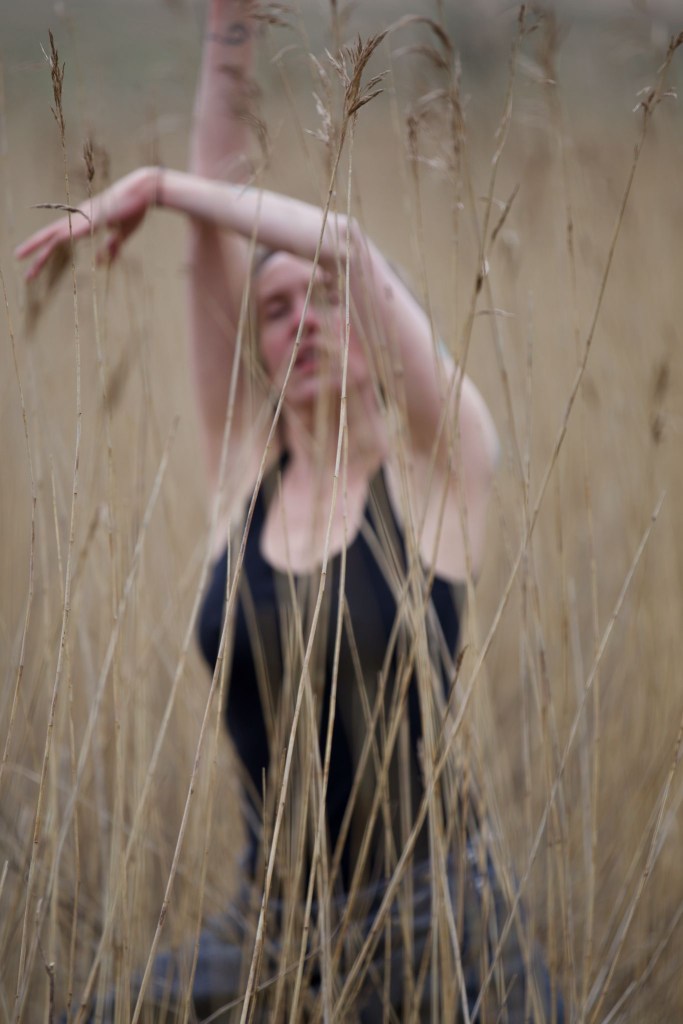
After a near-death experience in 2019, I found myself immersed in myth and movement—sitting with Clarissa Pinkola Estés, dancing archetypes through Movement Medicine, and weaving stories like the Handless Maiden and the Red Shoes into my everyday life. This post shares some of the journey of how myths became embodied allies and an invitation for you too, to remember what lives in your bones.

Tapestry: Le Grand Charniers (1959) by Jean Lurçat, Musée Jean-Lurçat, Angers, photographed in 2024. Image © Eline Kieft.
Continue reading “Dancing the Stories That Heal”

Poetry by Mary Saracino

Mary Saracino’s statement on poetry: Poetry is based on intuition, emotion, something that is not really express-able other than through the poem. It’s a dialogue or conversation between the poet and the Soul (the collective unconscious, in my opinion), which then presents itself to the world. It can be a powerful medium for restoring, reviving, and revitalizing the memories of the Divine Female and reclaiming female sovereignty. Our planet, humankind and our plant and animal kin are in dire need of a paradigm shift, returning us to the time before patriarchy defiled women and usurped the natural order of the world. 

Resurrection By Mary Saracino

Deep in the coils of memory our DNA
sings ancient songs of life, death, regeneration.
We each turn on our own axis,
as the Earth turns through her seasons,
winter’s fallow followed by spring’s eternal greening.
All sacred litanies arise from her soil,
take to the sky, return their blessings
to the wells, the rivers, the oceans.
Why can’t we remember?
Our souls are hung on crosses,
our limbs bound, our hands and feet
nailed to unrelenting dogma,
our tender ribs pierced with thorny spears,
our vulva-wounds ooze with bloody amnesia.
We have forgotten where we come from:
the dank caves of consciousness
littered with the bones of
stone age lovers painted ochre-red
to honor menstrual blood, the original river,
to honor, too, its womb-source, our  primal passageway
the portal from which we all emerged, mouths open, wailing
for our mother’s breast,
seeking the milk that sustains us.
Like spring we are born again and again;
we circumnavigate our lives, spiraling forward,
circling back, orbiting our hearts
until we open to the sun
like red tulips in a once-fallow field,
dancing in the breeze, loose with joy,
sharing our subterranean secret,
reviving the buried bulb’s dormant hopes,
reveling in our resurrection.

Previously published: “Resurrection,” April 5, 2013

Subterranean Rage By Mary Saracino

Deeper than bone
deeper than muscle or sinew
or tenacious tendon
this howl of ages
rivers through bloodlines, ancient as oceans
salty as the primeval seas
this is what happens to women who
out-step their bounds
dare to be bold, brazen
speak up, name the subterfuge
women who grit their warriors’ teeth
fight on, for their children
their lovers, their nation
their homes, their hearts’ desires
branded as heretics: witch, bitch, cunt, whore
they race through forests and fields
trying to outrun the acrid scent of their own sweat
running from the hellish hounds
the priestly proclamations
the wrenching bite of the strappado*
running for their lives
caught between sinner or saint
rarely allowed sovereignty over Self
over mind & womb, over laws meant to undo them
Thousands of straggled cats launched the Plague
tender necks swinging from tree limbs
flaccid, cold paws an omen: the rats will have their day
Crucibles of change, cauldrons
of sorrow, voices stymied for ions by the threat of extinction
womb-wisdom silenced by public outcry
burned at the stake of cultural conditioning
the subterranean outrage
seeps out, sharp as knives
sharp as memory
sharp as justice denied
sharp as the bloodied knives
eviscerating their midnight powers
Deep is this grief
Deep this anger
A dirge of rage lost to the winds of time.
The weeping memory wails, still.
Hear it the moonless night sky,
touch it in the hot light of noon
smell it in the poisoned soil
taste it on your remembering tongue
see it in the burning irises
that bear witness to this unyielding genocide.

* Strappado is a form of torture, employed by the Inquisitional tribunals against women accused of witchcraft. Victims were suspended in the air by means of a rope attached to their hands which were tied behind their backs, causing their arms to be dislocated.

Previously published: “Subterranean Rage,” October 30, 2013

Tharros, Sardegna By Mary Saracino

The stones share their secrets with the sea,
the brilliant blue sky, the tasseled grasses,
the trees—and any humans who will listen—
defying history’s edicts to remain silent.
Parched by the wind and the rain,
the stones speak fiercely of love and of times lost
as outcroppings of brilliant wildflowers
sing sacred songs in the sunlight.
This ancient place is nestled
against a rugged shoreline,
its far-away culture castaway like a forgotten dream,
buried beneath rocks and earth;
here, the outcast souls bloom once more
in the red poppies
whose bloody tongues
whisper: “Remember, remember, remember.”

Author’s note: This poem was inspired by the ruins at Tharros, Sardegna during a visit I made in 2004 as part of a Dark Mother Study tour of that island led by Lucia Chiavola Birnbaum. I think of these ancient places as sanctuaries, containers, wombs, collecting and holding the memory of the Great Cosmic Mother; I see the flowers, the red poppies (sacred to Astarte) sprouting up among the archeological ruins, as Her resurging; blood red poppies, blood lines, blood flow; menstrual memory, carriers of life of memory, of lineage—blood-red, like flowery blooming tongues, telling their stories; reclaiming their truths; waving in the breeze, bending into the wind, but not submitting, allowing the wind to carry their message, carry their poppy seeds of memory out across the fields; kernels of memory—like an amnesic remembering, then speaking.

Previously published: “Tharros”, June 19, 2015

Mary Saracino is a novelist, poet, and memoir writer who lives in New Mexico. Her most recent novel is Heretics: A Love Story (Pearlsong Press 2014). Her novel, The Singing of Swans (Pearlsong Press 2006) was a 2007 Lambda Literary Awards Finalist. She is the author of the novels, No Matter What and Finding Grace, and the memoir Voices of the Soft-bellied Warrior. Mary’s short story, “Vicky’s Secret,” earned the 2007 Glass Woman Prize. Her poetry, fiction and creative nonfiction have been published in a variety of literary and cultural journals and anthologies, online and in print.

Deep Time and Dreaming by Sara Wright

   I am standing on top of a mountain looking over a landscape of unspeakable wild natural beauty that stretches as far as I can see. This is the ‘long view’ the dream -maker tells me. The trees are stretching out their lush green needles to the sky as if in prayer, and they are whole. The forests, clear waters, the animals, birds, insects. All of Nature has been returned to a State of Grace.

An Old red skinned Indian Man appears. He is a Grandfather. He is on the mountain with me but also stands below (both and). He speaks to me.

 “Sit, listen, this is the Song of Life”.

 A finely crafted flowing red clay seat appears below (it flows like a wave) although it is situated a few inches above the earth. Almost hovering. I also see a drum made from deerskin and red clay sitting on the ground. There is a four directional equilateral black cross on the skin of the drum. The cross is thick and around the cross an intricate design is etched/inked into its skin also highlighted in black.

Continue reading “Deep Time and Dreaming by Sara Wright”

Legacy of Carol P. Christ: Cry The Beloved Country

This post was originally published on Nov. 5th, 2012

With the final day of voting in the US election less than 24 hours away, I feel a deep sadness descending on my soul. 

This election will have far-reaching consequences in relation to a number of issues I care deeply about. Among them are health care, social services, a social safety net, a graduated tax structure that taxes the rich and to a lesser extent the middle classes in order to provide services for the poor, equal pay for equal work, a woman’s right to choose, and gay rights.  On these issues there is a clear choice between the two candidates for President and the two parties.

Democrats believe that health care is a human right, that social services should be provided for those who need them, that taxes should be paid by those who can afford to do so, that women have a right to equal pay and control of our own bodies, and that gays and lesbians should have all the rights of other citizens. Republicans believe that government does not need to provide or control health care, that social services are largely unnecessary, that it is unfair to tax the rich, that equal pay is not important if women have husbands, that the church and state should be making decisions about women’s bodies, and that homosexuality is a unnatural.  There is a clear choice on these issues.

For this reason, I urge all of you who have not voted yet—and those of you who are considering not voting–to vote, no matter how long the lines are, no matter what intimidation you may face, and no matter what discouragement and disappointment you may be feeling.*

Nevertheless I feel like crying.

I feel sad that just about half of all Americans who intend to vote will be voting for the rich, against the poor, and against women’s—my–independence.  Continue reading “Legacy of Carol P. Christ: Cry The Beloved Country”

Reconsidering the Venus Myth by Lisa SG

Venus.  The Roman Goddess of the third-party situation.  Lady who wouldn’t stay faithful.  Hoochie who couldn’t, or wouldn’t, keep her coochie home.  Or is this viewpoint on the actions of Venus maligned?  (See Ancient-Origins:  Venus: Eroticized Goddess of Love, Fertility, Agriculture… And Infidelity? by Wu Mingren.)

Venus is often conflated with her Greek counterpart, Aphrodite.  Their myths intertwine in such a fashion that the two figures many times seem to be one; we will honor the ancient commingling in this article. 

Venus’ myth starts with the castration of her father by her brother.  Saturn, the Lord of Time and Karma, usurped his father Caelus (Uranus) (See World History Encyclopedia:  The Mutilation of Uranus by Saturn (Cronus) by Giorgio Vasari).  When Saturn used his sacred scythe to castrate his father, some of the seed of Uranus fell upon the sea and Venus was born from the sea foam (See The Internet Archive:  Theogony by Hesiod).  She rose whole and pure from the ocean and fell immediately under her brother’s care as reigning king of the Gods (See Le Gallerie Degli Uffizi:  Birth of Venus by Sandro Botticelli).

Continue reading “Reconsidering the Venus Myth by Lisa SG”

Interfaith Womanism and Healing Psychology Embodied Through Art by Chaz J.

A thoughtful gesture from a coworker—complimentary tickets to the Isabella Stewart Gardner Museum—stirred a quiet excitement within me. It’s curious, isn’t it, to reside in Boston, a city so steeped in history and intellectual vigor, yet find oneself so often distanced from its beautiful, intricate past? Time, energy, and finances often conspire to keep such access at arm’s length, even for a history buff like myself. It was a welcome reminder of the stories waiting to be discovered, right here in my own backyard.

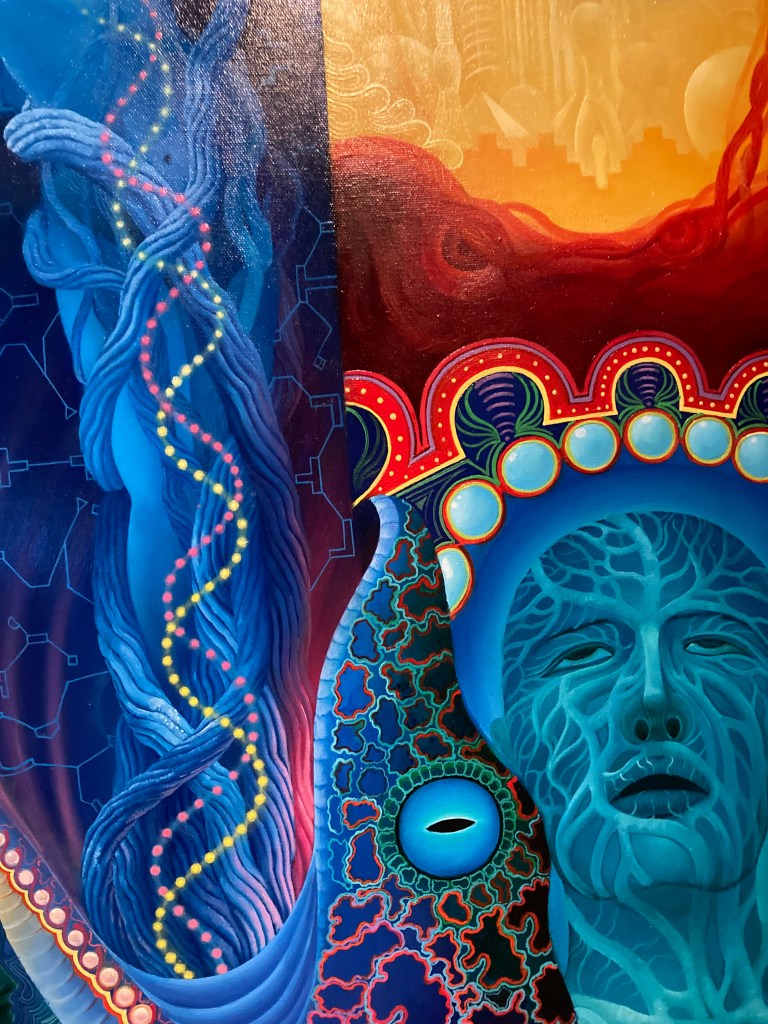
I arrived at the museum expecting to immerse myself in the European art showcased on its website. Yet, to my profound surprise, the featured exhibit immediately drew me into a powerful narrative: one that centered the Black struggle for freedom, dignity, and the reclaiming of ancestral roots, in this case Haitian Vodou. These roots, I believe, have always grounded, protected, inspired, and empowered the African diaspora across the globe.

Continue reading “Interfaith Womanism and Healing Psychology Embodied Through Art by Chaz J.”

The Furious Sun in Her Mane: Nine Poems to Goddesses by Annie Finch

Poet’s Note: I composed this sequence of poems for performance, for chanting, and for devotion. I wanted people who would hear, read, memorize, and speak each poem to channel the original energetic patterns that the poets who best knew that Goddess used to connect with Her. So for each poem, I researched the meter and prosody of the original language in which that Goddess was first worshipped.  Then I carried the exact rhythmical pulse of Her language into my poem to Her in English.

The sequence was set to music by composer Laura Manning and choreographed by Georgia Bonatis, and I directed and performed a devotional dance collaboration version of it in 1994. That archival video of this performance has just been recovered for the first time in 31 years. It is now posted on my Youtube channel.

Continue reading “The Furious Sun in Her Mane: Nine Poems to Goddesses by Annie Finch”