On a hot August day in 2012, I was taking my usual monthly trip to Walgreens to pick up my birth control prescription. As I pulled out my wallet to cover the co-pay, I was pleasantly surprised when the pharmacist informed me that I didn’t owe anything. It was the first month that the contraceptive mandate included in the Affordable Care Act required health insurance companies to provide contraceptives without a copay.
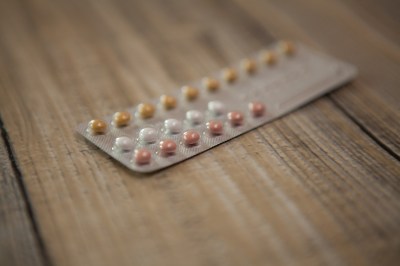
Over the years my birth control pills had cost me between $30-50 a month. It might not sound like much, but as a young professional working in the nonprofit sector, it was something I had to budget for carefully. I was also paying my own insurance premiums at the time. Throughout most of my twenties I worked as a contractor, which meant I didn’t qualify for employer-provided insurance, and with my limited budget, I had to settle for less-than-ideal coverage.
When I discovered that the cost of my birth control would be covered completely under my premiums, I wanted to show my appreciation to the Obama Administration. I quickly snapped a picture of my pharmacy receipt that showed my total as “$0.00” and posted in on Facebook with the simple phrase, “Birth control with no copay. Thanks Obamacare!”
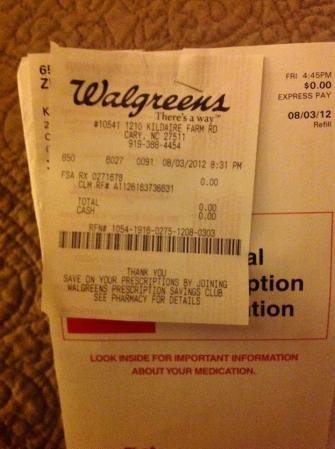
The next morning I woke up to find my image had gone somewhat viral after the Planned Parenthood and Barack Obama social media teams had shared it on their platforms. I had a lot of support, but as you might imagine, the backlash was hellacious. I was incredibly grateful that I’d been wise enough not to capture any of my personal information in the picture I’d taken. Here are a few examples of the messages I got.
“I don’t want to pay for you to have the power to sleep around.”
“It really disgusts me that MY tax dollars are paying for other people to have protected sex and abortions. That money could go into my college fund or help pay for a car or help pay for medication that I actually NEED, but nope. The government decided that my money is better used to pay for someone else to have protected sex. I really hope you all enjoy spending MY hard earned money.”
There’s absolutely nothing factually accurate about these two comments from trolls–I was in a committed relationship and paying for my birth control prescription through paying my insurance premiums–but they do capture some of the most common arguments made against women having the ability to make decisions about our bodies and lives.
- Women who have sex and want to avoid pregnancy should be shamed.
- We should not do anything to support a woman making a decision about her life and body.
- Any social program that supports women’s reproductive decision is a burden on taxpayers.
The pervasiveness of these beliefs and the disdain for women’s autonomy among white conservative men is why the Trump administration has no qualms about its plans to rescind this policy that has helped over 55 million women over the last five years. What is the premise of this decision? Religious freedom.
There is nothing moral about restricting a person’s access to the tools and resources they need to plan their lives, care for their bodies, and dream about their futures.
In March of 2014 I stood outside the Supreme Court building to speak my truth in protest of the argument of “religious freedom” used (successfully, I hate to say) in the Hobby Lobby case. I spoke these words:
As a young woman, a family planning advocate, and a Christian, I stand in solidarity with millions of women in this country whose access to contraception is at stake today. I do this not in spite of my faith, but because of my faith.
I stand upon the firm foundation of my Methodist faith that has declared health care as a right, and access to contraception a moral good that enables women and couples to make responsible, ethical decisions about the timing and spacing of their families. To permit an employer to restrict that access through financial hardship or other means would impose upon my religious freedom—and the religious freedom of millions of other like-minded people of faith.
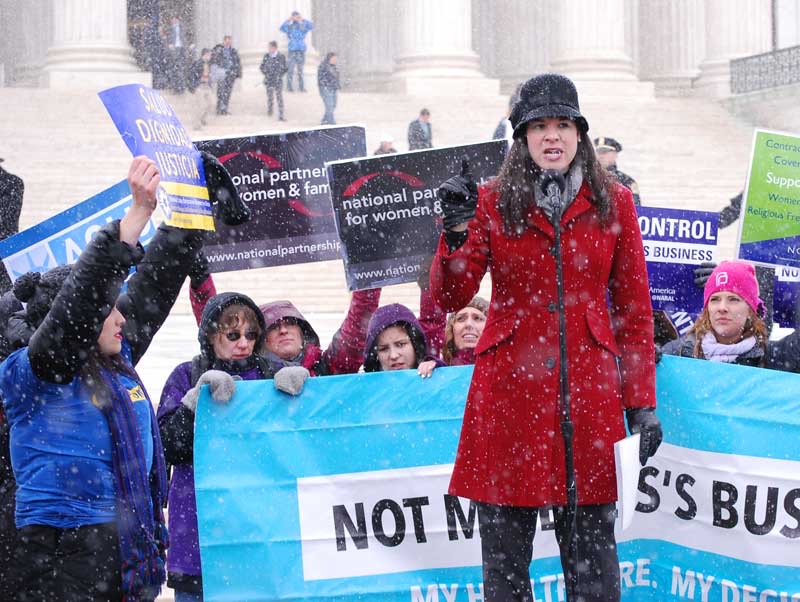 What few people knew at the time was that when I gave that speech, I was 10 weeks pregnant with my daughter who will turn three later this month. It was a planned pregnancy and a cause for joy in my life, even though physically I felt terrible. Looking back now I see how critical access to birth control was in creating the family I wanted. It allowed me to become a parent at the time that was right for me.
Isn’t that what all of us ought to be striving for?
 Katey Zeh, M.Div is a strategist, writer, and speaker who inspires communities to create a more just, compassionate world. She has written for outlets including Huffington Post, Sojourners, Religion Dispatches, Response magazine, the Good Mother Project, and the Journal for Feminist Studies in Religion. She is the co-host of Kindreds, a podcast for soul sisters. Her book Women Rise Up will be published by the FAR Press in March of 2018. Find her on Twitter at @kateyzeh or on her website kateyzeh.com.


 Betty Friedan interviewed the unhappy housewives, their human potential unfulfilled by a lack of vocation outside the home. I wonder if her claim was just a premise of the lawn being more manicured on the other side. The book received criticism by reviewers asking who was really oppressed and what perspectives were ignored. I’ve been on a few lawns, and I am here to confirm there is no true green grass anywhere. Mostly it’s either covered with the blood of women who die in the Global South because of the poor working conditions that pay them too little to support their families or laced with pesticides for profit or sheets of concrete to the dismay of our feet. I suppose there might green grass somewhere, but it costs more than some of us can afford, meaning a woman would have to earn more than what is only enough to rent a room in someone else’s house, an apartment of her own being too expensive much less any sort of fund for a cabin in the woods.

 I was asked by my sculpture teacher to make a monument. “A monument to what,” I asked? “Anything,” he answered. The only parameter seemed to be that the work was produced in wood. Having seen some interesting stone and marbleizing paints, I had the immediate idea to transform the wood into a marble-like appearance. Marble, for some reason, probably because it is the cemetery standard, seemed like the right medium for a monument to me.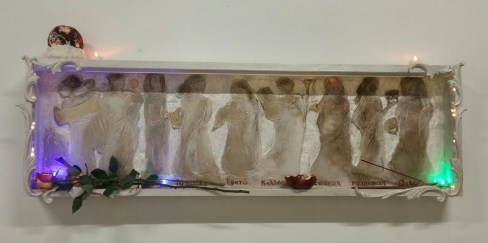
 A few days ago, at the
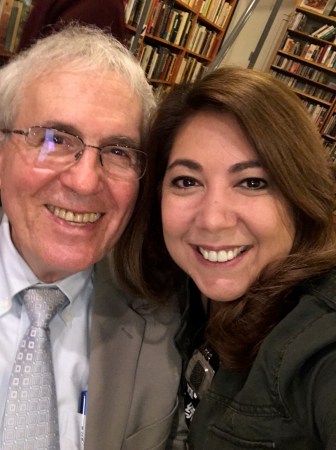 There are so many massive tragedies in the world that need to be addressed at the moment. However, for me, there is only one that I want to write about today and it is the passing of my dear friend,
  Feminism and Religion