

 The Olympics have an illustrious history including historical events taking place during their weeks long events. From Hitler opening the 1936 Olympic games to the terrorist attacks in the 1972 Munich games. The 31st Summer Olympics kicked off officially on August 5th. The Rio Olympics, while being the first South American country to host, has been bogged with controversies and protests. This Rio Olympics are set to etch its own history, but hopefully not for a devastating event but for its progress. Continue reading “I’ve Got that Rio Fever by Anjeanette LeBoeuf”
Category: General
The Blood of Isis by Deanne Quarrie

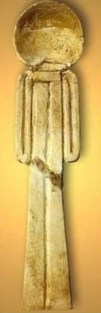 Over the years I have seen the image of the amulet called the Knot of Isis but in all honesty, never paid it much attention. I am on the organizing committee for our annual Goddess Festival here in Austin this year and we have chosen Isis as our Goddess to honor. The intent is to reclaim the Sacred Name of Isis and celebrate Her power, especially for women.
I was supposed to go to Brazil this summer to speak. One thing that was to have happened on my trip was to be my ordination as a Priestess in the Fellowship of Isis. However, because I became very ill and was hospitalized, I had to cancel my trip. In preparation for this ordination, I created an altar for Her and began to get to know Her. I have always had special affinity for Hathor and Sekhmet or as I call them together, HetHeru. And so, began my relationship with Isis. Continue reading “The Blood of Isis by Deanne Quarrie”
Body Sovereignty: Tracing the Relationship Between Feminism & Fat by Sydney Bell
 Acknowledging and responding to feminine divine energy is an inherently radical, feminist act. With age my feminism and spiritual path have become inexorably intertwined and I have become more comfortable and confident in my identity as a daughter of the goddess, a priestess, and as a feminist. My feminism is continually being shaped by a call to serve the goddess in a variety of ways, particularly in response to an activating third element in my feminist goddess path (no surprise for fellow triad lovers who practice a Celtic spiritual path). This third activating element is my relationship with my body and my work to reclaim Body Sovereignty.
As with many readers of this site, mine is not an uncommon journey. I’ve heard the stories of women whose feminism and/or goddess path has either sparked or been sparked by their desire to have a positive relationship with their body and break free from oppressive cultural body norms. I believe many feminists realize societal expectations of beauty are restrictive and contain a harmful element of required thinness. Yet even among feminists there seems to be a reluctance to engage in a collective response to weight stigma and the oppression and injustice faced by fat people. This is perplexing considering the available data demonstrating inequities in areas like educational attainment, employment, income, and access to healthcare due to body size (see list of data sources below).
When trying to understand this strained relationship between feminism and weight stigma I’ve found it helpful to look at the historical relationship between the two. A great resource is Amy Farrell’s book Fat Shame: Stigma and the Fat Body in American Culture. Farrell takes us to the early years of the feminist movement and suggests that the politics of fatness or body size was not explored by the first feminists. Interestingly, as the fight for women’s right to vote raged in the early 19th century, Farrell points out that the attack used by both the suffragettes and those working against women’s right to vote was to publish political cartoons with unflattering ‘fat’ images representing their respective opponents. It wasn’t until the second wave of feminism in the 60’s and 70’s when Susie Orbach’s ground-breaking work Fat is a Feminist Issue opened up the discussion of body size through a gendered lens and set the tone for early feminist thinking about body size. Continue reading “Body Sovereignty: Tracing the Relationship Between Feminism & Fat by Sydney Bell”
Can Good Theology Change the World? Part 1 by Carol P. Christ
 Theology is often viewed as abstract and removed from the problems of the real world. Yet many of the problems of the real world are caused by bad theologies. If bad theologies shape the world, might the same not be true of good theologies?
Opposition to a woman’s right to choose birth control and abortion is fueled by appeals to the command of God to protect life. Opposition to lgbtqi rights is couched in divine authorization of normative heterosexuality. Opposition to efforts to counter climate change are challenged by those who claim to believe in the Bible, not science.
All of these claims are rooted in a prior claim that God is and must be the only source of authority for human beliefs and moral decision-making. This view can and often does lead its adherents to distrust scientific and other humanly created forms of knowledge. In America, supporters of Donald Trump routinely dismiss not only the claims of modern science, but also every attempt to disprove the assertions of their candidate by citing facts. Continue reading “Can Good Theology Change the World? Part 1 by Carol P. Christ”
A Sacred Urban Menstruation Ritual by Elisabeth Schilling
 If I had such an opportunity, I would not hesitate to bleed free in a moonlit forest with other women during the flow of blood from our wombs in sacred ritual. This said, I currently take on a nurturing and maternal role for myself, the earth and humanity through the creation and use of my reusable menstruation cloths.
According to Nina Rastogi of slate.com and Elissa Stein and Susan Kim of Flow, the average American menstruating person could accrue about 62,415 pounds of waste in a lifetime. Continue reading “A Sacred Urban Menstruation Ritual by Elisabeth Schilling”
Planting Roses for Our Daughters: Creating a Community in Time by Carolyn Lee Boyd
 Outside my childhood home grows a yellow rose bush descended from one planted by my great-grandmother, Jennie, a century ago. That bush has given her descendants many gifts of spirit over the years— her love of beauty despite a life of tragedy and constant toil, her deep connection to nature persisting through four generations, her hope for the future inherent in planting anything that will take years to fully develop. When I contemplate my own fall garden and its plants sowing seeds for next year, I ponder the special responsibility we, as spiritual feminists, have for leaving to those who will come after us a legacy of inner resources that they will need to meet the challenges of the planet they will inherit and hopefully make into their own sustainable world of equality, peace and happiness.
In my mind I sit with a circle of spiritual feminists of the future. Around me might be a hairdresser or a President, a doctor, barista, poet, scientist, salesclerk, priestess, or elder. They could be old or young or in-between, from anywhere on Earth, of any spiritual tradition or practice. For one moment of time, I can speak directly to them of what I have distilled from my life that I would like them to know. I say to them: Continue reading “Planting Roses for Our Daughters: Creating a Community in Time by Carolyn Lee Boyd”
Taking Risks to Heal Ourselves and Our World by Katey Zeh
I was in New York having tea with a colleague whose prominence in our field has risen significantly over the last several years. I confessed half-jokingly that had we not known each other before this happened, we probably would not have been sitting there catching up in a coffee shop because I would’ve turned down the invitation. For as long as I can remember I’ve had an aversion to being in close proximity with even moderately well-known people, even if they are known only within our shared professional circles. Continue reading “Taking Risks to Heal Ourselves and Our World by Katey Zeh”
Thinking about Goddess and God by Judith Plaskow and Carol P. Christ
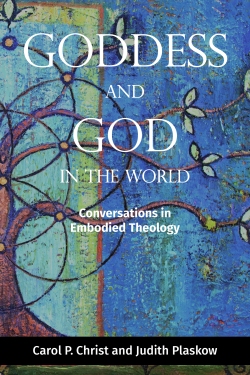
Talking about our deepest beliefs and feelings can be surprisingly intimate. In our new book Goddess and God in the World, we discuss our different theologies and challenge each other’s views. In the conclusion, we consider whether there is any way to judge between our positions. While we believe that theologies are rooted in experience, we also insist that they must make sense of the world we share and provide the orientation we need as we face the social, political, and environmental crises of our time.
Theologically, we disagree on two fundamental issues: whether divinity is personal or impersonal; and whether divinity is good or inclusive of good and evil. Does one of our views meet our criteria for adequacy more fully than other?
Does the notion of a personal or impersonal deity make more sense of our experience of the world? Carol argues that if consciousness and intelligence is a fundamental aspect of human existence and is found in varying degrees throughout the web of life, then it makes sense to think of divinity as also having consciousness and intelligence. Judith responds that the notion of a personal deity seems to her a holdover from the biblical picture of God and that she can find no evidence in her experience or reflection that a divine individual who is conscious and intelligent exists. We seem to be at a standoff here. There is some consolation in recognizing that this is a fundamental divide in the history of religions, but this insight does not resolve our disagreement.
Does one or the other of our views offer better guidance in making moral decisions? Judith argues that her view places moral responsibility firmly in human hands, which is where it belongs. Carol agrees with Judith that humans and other individuals are the ones whose decisions will determine the fate of the world, and she finds recognition of the interdependence in the web of life sufficient grounds for moral decision-making. But she would add that the love and understanding of a divine individual inspires her to love and understand the world and to promote its flourishing. Judith believes that the idea of one divine presence that enlivens and unites the universe is a sufficient basis for ethical action.
Our other major theological difference concerns whether divinity is good or inclusive of good and evil. Judith argues that if divinity is inclusive of the world, it must be inclusive of both good and evil. Carol counters that if divinity is reflective of what is best in ourselves and in other individuals in the world, then divinity must be good, not evil.
Does one of our views provide better moral guidance? Carol argues that a divinity who is good inspires us to try to make the world better. Judith replies that the notion that divinity is good leads us to idealize ourselves and to forget or deny our capacity to do evil. Carol feels that a clear focus on the world is sufficient to remind us of our capacity for evil.
Does one of our views offer a more adequate account of the existence of evil in the world? Judith asserts that the idea that divinity is the ground of both good and evil provides a better answer to the problem of evil: the potential for both good and evil are inherent in the creative process that is the foundation of life. Carol believes that the world is created by a multiplicity of individuals, including the divinity. The capacity for good and evil is inherent in the creative process that structures the world. The divinity is good but not omnipotent. What we call evil is created by individuals other than the divinity. Judith replies that this view does not adequately account for the origin of evil.
Is there any way to choose between our different positions? Each of us is firmly convinced that her view is clear, consistent, coherent, and comprehensive, that it takes full account of the complexity of human experience, and that it provides the moral orientation we seek….Each of us has tried without success to win the other over to her perspective. In the process, we have gained a deeper appreciation of each other’s views and clarified our own. This is as far as we have been able to go. We acknowledge that, in the end, we cannot know which, if either, of our theologies expresses the nature of ultimate reality or provides the crucial ethical guidance we need. Our views have been shaped by our standpoints, including personal, communal, cultural, and historical factors, and this means that they are relative and partial. Because we cannot see into the future, we cannot know the long-term effects of either of our theological worldviews.
At the same time, we are unwilling to throw up our hands and declare that all theological perspectives are of equal value. We firmly reject the fundamentalist insistence that particular texts, traditions, or truths are universally and eternally valid. This position denies that people create and interpret traditions, and it has repeatedly led to intolerance and violence. We continue to insist that the views of divinity we have articulated make more sense of the world as we know it and provide better orientation as we face the problems of our time than the traditional views we have criticized. On the one hand, all theologies—and all worldviews—are relative to experience and limited by human finitude. On the other hand, they can be examined, evaluated, and debated in relation to their understanding of the world and the kind of life they make possible for both the self and others.
Excerpted from Goddess and God in the World: Conversations in Embodied Theology–order now. Ask for a review copy (for blog or print) or exam or desk copy. Post a review on Amazon. Share with your friends on social media using the links below.


Carol P. Christ and Judith Plaskow are co-authors of Goddess and God in the World and co-editors of Womanspirit Rising and Weaving the Visions. Judith wrote the first Jewish feminist theology, Standing Again at Sinai, while Carol wrote the first Goddess feminist theology, Rebirth of the Goddess. Judith is co-founder of the Journal of Feminist Studies in Religion. Carol leads the Goddess Pilgrimage to Crete. Space available on the fall tour!
My Experience at Auschwitz by Ivy Helman
 On August 4th, I visited Auschwitz. In the beginning, the reality of the experience did not match my surrealist expectations of it. I expected to walk onto the grounds and get hit over the head with the heaviness of what happened there, to feel a sense of deep connection to the land covered in the ashes of my people, to have the opportunity to mourn the loss of the members of my family I never met and to be utterly speechless as to the twisted systematization and industrialization of murder that took place there. That blow never came. Why?
The day of my visit was out-of-this-world hot. My guided tour, in Czech, started at 2pm. I was early so I wandered among the crowd outside of the site. There were families lounging on the lawns eating ice creams and drinking cokes. There were tourists taking selfies. There were lots of conversations and lots of laughter. I was pretty convinced that I was the only Jew around.
Upon entering the grounds, I was stunned by how green and lush it was. There were many old brick buildings, seemingly orderly, with lanterns and building signs hanging outside the entrances. Among it all, upwards of 500 people clustered in groups walked from place to place.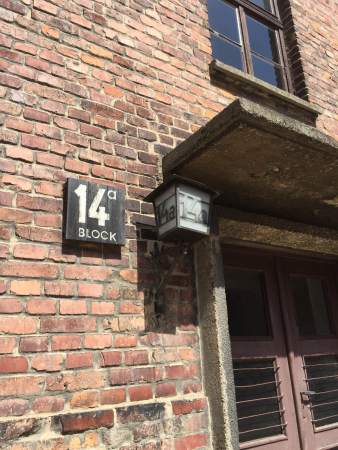
The tour began with a basic history of the events of the Holocaust with “exhibits” contained within 3 or 4 different buildings. The guide seemed to me to have memorized a script in which we went from one building to another looking at the “exhibits,” most of which consisted of nothing more than one or two oversized pictures and maps. Outwardly, I sensed no sentiment in the guide and no spirit in the exhibitions either. Her voice was monotone, pronouncing the Czech in such a syllable-by-syllable fashion that it was nearly incomprehensible. Most exhibition rooms were sparse, if they had any objects at all other than the black and white pictures and maps. The tour and exhibitions portrayed such a distance from the events it was almost as if they didn’t happen there, in that place.
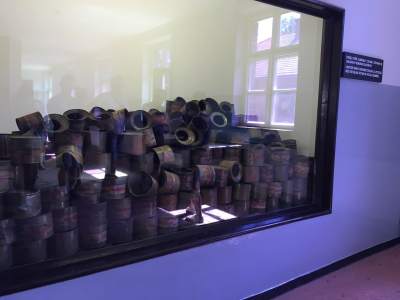
There were a few buildings with objects all hermetically sealed behind glass once again keeping us at a distance. One room housed a display of used Zyklon B canisters and had an artist’s small scale all-white model of the “process of extermination,” meaning the “changing rooms,” “showers” and crematoriums – with tiny people crammed into the areas and bodies piled on the floors next to the ovens. Two other buildings contained large displays, again behind glass and removed from their context, of what the exhibition called “evidence of the destruction:” piles of hair loosened from the burlaps sacks they had been founded in when the camp was liberated; shoes of the victims and a large (two-story) container filled with the pots and pans the victims had packed and brought with them but never used.
After we finished our tour of Auschwitz 1, we were given a 15 minute break and were instructed to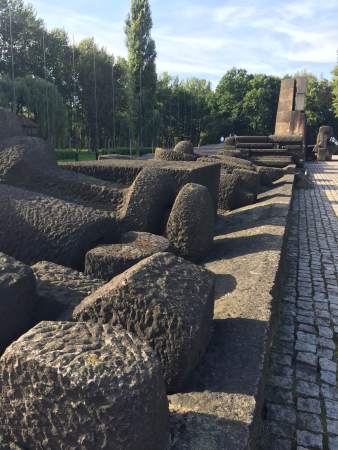 reassemble by the bus that would take us to Auschwitz-Birkenau. Once there, we rushed through the camp at such a pace that we were done in about 45 minutes. In spite of the rush, I did manage to leave two stones on the pillars, which marked where the ashes of the victims were scattered (buried?). We glanced at the memorial at the back of the camp as well as what was left of the bombed-out crematoriums. Returning to the front of the camp, we ducked into a reconstructed dormitory and a reconstructed bathroom building. The guide asked if we had any questions. Silence. The tour was done.
I stood there debating what to do. Do I leave? Do I stay? I was pretty confident that it didn’t feel right to just go. So, I headed back to the memorial. The tour guide had said that each of the smaller stones creating the steps and floor commemorated one of the 1.1 million Jews killed in Auschwitz. Yet, it was unclear as to the meaning of the large stones. After circling the large stones and a futile attempt to make some meaning out of them, I went and sat on the stairs of the memorial and just looked out over the place and the people there.
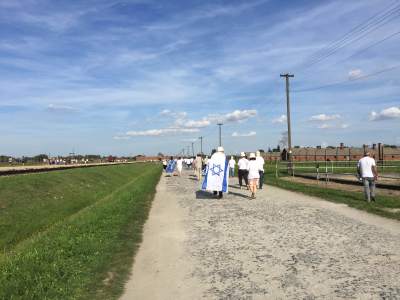 Still puzzled but needing to catch the train, I made my way to the entrance. In front of me was a group of Israeli Jews wrapped in Israeli flags, looking the Superhero part. Something changed. Maybe I didn’t need the sad, mournful, pit-of-the-stomach experience. Maybe I’ve had it enough, learned about it enough, taught it enough and lived with it enough. Maybe my pilgrimage there as a witness to the horrors was enough.
It was those Israeli Jews that I needed. Walking into Auschwitz was one thing, but they were proud Jews walking out. I followed them. We, Jews, were the lucky ones who got to leave. Isn’t that something!
Ivy Helman, Ph.D. is feminist scholar and faculty member at Charles University and Anglo-American University in Prague, Czech Republic where she teaches a variety of Jewish Studies and Ecofeminist courses. She is an Associate of Merrimack College‘s Center for the Study of Jewish-Christian-Muslim Relations and spent many years there as an Adjunct Lecturer in the Religious and Theological Studies Department.
Maiden, Mother, Crone: Ancient Tradition or New Creative Synthesis? by Carol P. Christ
 The image of the Goddess as Maiden, Mother, Crone is widespread in contemporary Goddess Spirituality. The Triple Goddess honors three ages of women, in contrast to the wider culture that: affirms young women as sex objects while shaming them as sluts; celebrates mothers on Mother’s Day, while providing few legal and economic protections for mothers; and ignores older women.
Though Goddess feminists have created rituals for menstruation and birth, I suspect that a greater number of rituals have celebrated “croning.” The reasons for this are twofold. One is that women have time and space to reflect on the meaning of life in middle age. The other is that aging women are not honored and respected in the wider culture–creating a need for rituals that do just that. Many women I know have spoken of the empowerment they felt in their croning rituals.
On the other hand, many women I know have not been particularly interested in a croning ritual. Continue reading “Maiden, Mother, Crone: Ancient Tradition or New Creative Synthesis? by Carol P. Christ”
 Feminism and Religion