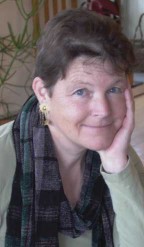
Offering My First Khutba: On Imaan & The Divine Presence by Vanessa Rivera de la Fuente

Vanessa Rivera First KhutbaFor the last 6 weeks, I’ve been living in Cape Town, South Africa. This has been a blessed opportunity to grow, to gain more knowledge, and to reach outcomes that are beneficial both for my work as an activist and for my life as individual. One of the challenges I took up, on Friday, July 24th, was to offer my first Khutba ever: the text of which I share with you:
Invocation

I thank God for this day. I praise Allah for the paths I had to walk that led me to its light and the present day. I ask the protection of the Divine that lives in the essence of everything. and I invite my female ancestors to walk with me in this journey.

On Imaan and The Divine Presence

Allah speaks about Imaan (Faith) in the Holy Qur’an in Surat number 2 verses 1 to 5, which some scholars call “The verses of faith and belief.” I like especially ayat 2 that says:

“That is the book. There is NO DOUBT in it, a guidance to those who are truly conscious.” Another translation says, “Sure, without doubt, a guidance for those who are God-fearing.”

Let’s think a moment about this:

1.- Allah tells us that the Holy Qur’an is, without doubt, surely, with complete certainty, a guide. There Is No Doubt, that we can put our faith and trust in it, and we won’t be deceived. That’s a beautiful aspect of Faith. We can trust in the promise of Allah that the Qur’an is… without doubt… a guide, a path of spiritual growth and happiness in this world and in the hereafter.

2.- A guide to whom? Allah says in the Qur’an “For those who are truly conscious and God-fearing.” Reflect on this. What kind of Imaan is that? Being “truly conscious” is being aware, and this is to be awakened, alert, attentive,and  in possession of knowledge with our senses and reasoning functioning properly. Then, this is not a blind Faith, but a conscious Faith, an Imaan over which we have direct and personal accountability. Then, the Qur’an is certainly a guide to those who are God-fearing, meaning those who are aware and accountable for their faith; for those who have come to certainty after an effort of conscious reflection, because, as God says in the Qur’an: “Truly in that there are signs for a folk who reflect” (45:13). There is no Imaan without a personal Jihad in matters of belief. Continue reading “Offering My First Khutba: On Imaan & The Divine Presence by Vanessa Rivera de la Fuente”

Reconstructions of the Past 4: Hafsa bint Sirin (“Women’s Withdrawal is Women’s Piety”) by Laury Silvers

silvers-bio-pic-frblog - Version 2Despite the public roles women most likely played in the first century, hadith, biographical, and legal literature of the following centuries positioned women’s ritual activity at home as a norm for pious behavior. The earlier blogs noted that women were present at the Prophet’s home mosque while he was alive and just after, but that public worship seems to have become a problem for men by the middle of the first century. Continue reading “Reconstructions of the Past 4: Hafsa bint Sirin (“Women’s Withdrawal is Women’s Piety”) by Laury Silvers”
Satirists as Public Theologians by Melissa James

Melissa James Profile photo

Why satirists have become our public theologians (or why I am doubling down on feminist theological ethics as public theology)…

Did you see the Daily Show last night? I’m sure it was all over your Facebook feed and Twitter. The show just nailed the response to. . .fill in the blank. From Ferguson to pay inequality, from racism to culture wars the satirists have had quite the run lately. From political cartoons to the Onion to late night cable “news” shows, satire plays an important role in society. What satirists are excellent at is holding up a magnifying mirror to our society to show us areas of absurdity, oppression, and hypocrisy. The mix of political commentary and humor allows satirists to push further than many other interlocutors in public discourse.

Part of their success stems from our deep need and longing for collective moral reflection and humor allows us to do so in a way that feels safe enough to engage. What makes good satirists effective is their ability to do deep, critical analysis of society. They use sociology. The better they employ their analysis the better their satire. The better the satire the more they reflect to us what we need to hear. And many satirists have played that role really well. Continue reading “Satirists as Public Theologians by Melissa James”

Four Days of Bliss (or How I used The System to beat The System) by Vibha Shetiya

Vidha SI’m not particularly fond of my periods – they’re painful, full of cramps. But they are a part of who I am, and I’m not going to apologize for them. We women, especially those of us belonging to the sub-continent, have been shamed or embarrassed into silence, while being reminded that motherhood is the most exalted position a woman could ever hope for. I mean, isn’t that paradoxical – if it weren’t for the bloody nemesis (pardon the pun), we would never get to experience motherhood.

I grew up in a Western environment (in southern Africa) where “period” wasn’t necessarily synonymous with repulsion. But when I moved to India, the land of my birth, soon after my “life-altering” experience, things began to look different. I came to realize that I ought not to be like the neighbour girl who was so besharam, or shameless, that she insisted on announcing her monthly ignominy to the world by refusing to conceal the fact that she had indeed been at the pharmacist’s to buy sanitary pads. Why, the pack of pads, sealed in newspaper and carried in a little black plastic bag was right there for the entire world to see on her ten minute walk back home! I gradually came to understand that “those four days” were taboo – do not speak of “it,” do not make it obvious even if you are writhing in unbearable pain, do not contaminate sacred space with your womanly profanity. Continue reading “Four Days of Bliss (or How I used The System to beat The System) by Vibha Shetiya”

Slouching Towards Justice by Esther Nelson

esther-nelsonKecia Ali, one of the contributors to this Feminism and Religion blog, recently wrote an excellent article titled, “Muslims and Meat-Eating  Vegetarianism, Gender, and Identity,” (Journal of Religious Ethics, Volume 3, Issue 2, June 2015).

In her article, Kecia Ali “…argue[s] that Muslims in the industrialized West–especially those concerned with gender justice–ought to be vegetarians and that feminist ethics provides underutilized resources for Muslim thinking about ethics generally and food ethics in particular.”  She assures the reader that “productive dialogue” is possible when Muslims engage with non-Islamic (not “un-Islamic”) ethics.  The “engaged” parties may “disagree about basic presumptions but agree on desirable outcomes.” Continue reading “Slouching Towards Justice by Esther Nelson”

If You Don’t Believe Women Are Fully Human, Can You Be a Great Pope? by Carol P. Christ

In recent weeks I have felt compelled to respond to a series of “Great Pope” photos and stories praising Pope Francis for his stands on poverty and climate change appearing on my facebook page. In every case I added something like: “Let’s not go overboard about a pope who does not believe women are fully human.”

I am referring of course to Pope Francis’s reiteration of the Church’s prohibition of women in the priesthood. But just as important–and perhaps more important–is the role the Roman Catholic Church has played and continues to play to prevent women from having access to contraception and abortion.

Control over our own bodies is a fundamental right that undergirds every struggle for women’s equality and liberation. But the pope does not want women to have the right to use contraception to prevent unwanted pregnancies, nor does he want us to have the right to abortion if contraception is unavailable or fails—not even in cases of rape or incest. Continue reading “If You Don’t Believe Women Are Fully Human, Can You Be a Great Pope? by Carol P. Christ”

Mary Magdalen’s Cave by Elizabeth Cunningham

Elizabeth Cunningham headshot jpegMy first post for FAR appeared on July 22, 2012, the feast day of Mary Magdalen. I like to dedicate my July posts to her and include an excerpt from The Maeve Chronicles, the novels I spent 20 years writing, which feature a feisty Celtic Magdalen who is no one’s disciple. This year’s excerpt is from Bright Dark Madonna, the third in the series, which follows her (mis)adventures from Pentecostal Jerusalem, to the wilds of Turkey’s Taurus Mountains, the port city of Ephesus, and finally to her legendary cave in France.

While doing research for the novel, I made a pilgrimage to Le Grotte de Marie Madeleine in Southern France. A forty-five minute climb, past a spring leads to a high cliff wall where a spacious cave has been made into a chapel to the saint. There were no other people at the site except my husband and daughter who kindly gave me time alone in the cave—alone with her. As I wrote in FAR’s pages a while back, I have a longing for hermitage that I haven’t allowed myself to fully inhabit. Maeve, on the other hand, goes all out, or rather, in.   Here is what she has to say: Continue reading “Mary Magdalen’s Cave by Elizabeth Cunningham”

Black and White Ball: A Poem to Honor Poodle Friends by Alla Bozarth

After Eucharist, the Sea of Galilee - alla
At the sea of Galilee


The following poem is in honor of Hank, the Rev. LouAnn and her wonderful husband Jim Pickering’s new puppy, a gorgeous black standard poodle, and his older brothers who are or were gorgeous and white.

All of them are or have been LouAnn’s pastoral assistants. I like to say they are the curates of her church of St. Gabriel the Archangel, because as therapy dogs whatever might be painful or lonesome in a person’s soul, the pups, at least for their visits, can cure it.


~~~~~~~~~~~~~~~~~~~~~~~~~~~~~~~~~~~~~~~~~~~~~

Black and White Ball

Give your dogs a black and white ball and tell them,
just to say it out loud, what it means.

Black is the color of mysterious things,
of the powerful regeneration and renewal
of Night in which Stars are born,
the universe delivering Beauty.

On Earth’s palette of color, black is all
the colors there are, blended variously
to the depth of Absolute Beauty. Continue reading “Black and White Ball: A Poem to Honor Poodle Friends by Alla Bozarth”

Changing the American Story? by Carol P. Christ

Carol in Crete croppedIn a moving part of Goddess and God in the World, the book Judith Plaskow and I are writing together, Judith describes how the Sabra and Shatila massacre  forced her to confront the fact that “her people” are just as capable of perpetrating evil as any other group. Growing up in the shadow of the Holocaust and the pogroms that had scattered her people across the world, Judith was taught to think of the Jewish people as the victims of history rather than as the perpetrators of evil. The willingness of the Israeli army to countenance the outright massacre of up to 3500 people told another story: when in power, Jews too were capable of great evil.

I tell this story because I believe the lesson Judith learned is a lesson that Americans as a group still need to learn. I am thinking about this in the days following the heated debate that led to the removal of the Confederate flag from the Capitol of North Carolina.

In a brave and impassioned speech, Jenny Horne explained that though she is a descendant of Jefferson Davis, she was speaking against the display of the Confederate flag because it is a symbol of the harm that has been done and continues to be done to slaves and descendants of slaves in her state. Jenny Horne was rejecting the story she had been told about what it is to be an American in South Carolina. Continue reading “Changing the American Story? by Carol P. Christ”

Who Sits at the Center of this Story? By Elise M. Edwards

Elise EdwardsHave you ever heard of the Vitruvian Man? It’s an image from 1490 inked by Leonardo da Vinci that came to symbolize the centrality of the individual in the Renaissance. It is quite clearly a depiction of a muscular, European male. His body is perfectly proportionate and thus simultaneously represents ideal humanity and a microcosm of the universe. The Vitruvian Man is so named after the ancient Roman architect Vitruvius who describes the proportions and symmetry of a temple as being analogous to the proportions of a man.

As an architect and scholar in the humanities, I’ve been acquainted with the Vitruvian Man for many years now. I even had a da Vinci theme on my PC’s Windows software about 15 years ago, meaning that the image of the Vitruvian Man appeared regularly on my desktop and screen saver. There was nothing problematic to me about his presence until a few days ago, when I took part in a discussion about teaching philosophies with some new friends and academic colleagues.

I was listening to Tamara Lewis, an assistant professor in religion whose research and teaching addresses the medieval and Renaissance periods. When she described a metaphor for her teaching philosophy, she discussed replacing the symbol of Vitruvian Man with the “woman at the well.” The woman at the well is a figure in Christian stories about Jesus and his teachings. Her narrative in the Bible is placed in chapter 4 of the Gospel according to John. Int eh story, Jesus encounters a Samaritan woman at a well. He asks her for a drink, which begins a meaningful exchange about spiritual teachings. Jesus’ male disciples and surprised to witness this exchange, presumably because she is a woman and a Samaritan, as the text tells us that Jews do not associate with Samaritans. The woman goes back to her town, tells people about her encounter with Jesus, whom she believes is the Messiah, which prompts many of them to come to him and also believe.

Dr. Lewis described how her presence in the historical study of medieval or Renaissance periods is sometimes questioned and how the woman at the well represents this presumed misplacement. Her metaphor caught my attention not just because of its profound coherence within her own career trajectory and narrative, but its coherence within mine. As a black feminist, religion scholar, and practicing Christian, I often wrestle with questions of belonging and being in or out of place.

This summer, I’m taking the time to think about broad questions and do some vision casting. This past December, Grace Kao wrote about using sabbatical time differently, and I’ve connected this to my own practice of Sabbath keeping as a ritual. I dedicate specific times to cease work.  I am engaging in some productive activity this summer, but I’m also honoring one of the truest blessings and privileges of full-time employment in my profession, which is break time to rest, reflect, and plan for the seasons ahead.  The metaphor of woman at the well who intentionally replaces the Vitruvian Man provokes these questions in my reflection:

Who is the default person around which the places we inhabit are constructed? Who sits at the center of our stories about the places we will go? 

As the little bio that follows my posts says, in my professional career I examine issues of civic engagement and how beliefs and commitments are expressed publicly through aesthetic and artistic practices. I’m currently writing a book-length project about theological ethics and architectural design. So these days I’m thinking a lot about the way public spaces and built environments communicate the values of those who build them and inhabit them. One of the questions I’m wrestling with is the way “common” spaces are defined by the narratives of only some people in the community. What does it mean to be literally “out of place”? What exists as a “safe space” in a public park for a man may not feel safe at all for me as a black woman. A public bench upon which I can rest in the middle of an afternoon jog may not be so uncontested for a homeless man at night.

As I think about my future, I have to ask who sits at the center of my story.   I’m approaching a milestone birthday, and I don’t want to fall victim to someone else’s vision of what a 40 year old woman should be. What does the story look like with me at the center? What happens when I replace an idealized image of perfection, vitality, and beauty with an imperfect but gloriously alive and wonderfully formed vision of who I already am?

As I plan for a new academic year, who do I imagine in my classes? As I engage students in discourse about the history of Christianity, the development of its theology, and the ethical issues of today’s world, who do I place at the center? As the US becomes enmeshed in presidential election politics and ongoing racial tensions, what image to we present as the archetypal American?

I’m so grateful that I was brought to see the woman at the well as a metaphor of intentional displacement. Even in a religion that places a male Savior (Jesus) at its center, there are women who sit with him. Although they confound some of Jesus’ other followers by their presence, they remain meaningful conversation partners and witnesses to their faith.

Elise M. Edwards, PhD is a Lecturer in Christian Ethics at Baylor University and a graduate of Claremont Graduate University. She is also a registered architect in the State of Florida. Her interdisciplinary work examines issues of civic engagement and how beliefs and commitments are expressed publicly. As a black feminist, she primarily focuses on cultural expressions by, for, and about women and marginalized communities. Follow her on twitter, google+ or academia.edu.