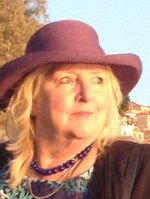
When we seek immortality or spiritual “rebirth,” are we not saying that there is something wrong with the “birth” that was given to us through the body of our mothers? In She Who Changes and in “Reading Plato’s Allegory of the Cave as Matricide and Theacide,” I asserted that our culture is “matricidal” because it is based on the assumption that life in the body in this world “just isn’t good enough.”
What is so wrong with the life that our mothers gave us that we must reject it in the name of a “higher” spiritual life? The answer of course death.
In a previous post on FAR I explored Greek Easter customs which interweave Christian and pre-Christian beliefs. Today I would like to take a closer look at one of these customs, the women’s ritual dance known as Tráta, ceremonially performed on ‘Bright Tuesday,’ the Tuesday after Easter. Versions of Tráta survive in the towns of Mégara and Elefsina just west of Athens, on the island of Salamína directly across from them, and in the surrounding area as far as Thebes.
Elefsina, of course, is Eleusis, where for over 2,000 years the Eleusinian Mysteries enacted the story of Demeter and her daughter Persephone’s descent to the Underworld. Choral dance was a central part of the ceremonies at Eleusis – as at other sacred sites including Delphi, Knossos, Athens, and Vravrona – and the ‘Well of the Beautiful Dances’ can still be seen at the archaeological site. It is a a visible reminder of the circle dancing which was a part of the initiatory experience, bringing cosmic order – symbolised by the circle – into the human world. This is still one of the functions of the Tráta as performed today.
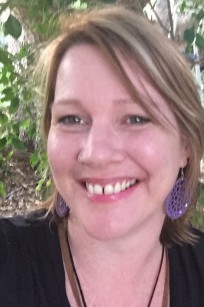
Mother’s Day is coming up on the 8th of May here in Australia and while I don’t agree with the commercialization of it all, I do believe that motherhood, maternal bonds, and the influence of mothers in society should be recognized and celebrated. The essence of this day is so much more than just giving a gift or saying Happy Mother’s Day, it is about truly letting our mums, whether they be maternal or just a mother figure in our life, know how much they are appreciated.
While celebrations commemorating and honouring motherhood date back to ancient times, it was not until the early 1900’s, through the efforts of Anna Jarvis that it became an official day of honour. Anna herself however also became resentful of the commercialization of the day after Hallmark started selling Mother’s Day cards in the 1920’s. She stood by her belief that it was a day to express gratitude, not one for profitable exploits and went as far as publicly protesting and boycotting Mother’s day to show her disgust at the companies who were taking advantage. Anna believed that we should be hand writing letters and cards and displaying our gratitude through actions, not by purchasing pre-made sentiments. I agree, mind you I have to say I don’t object to receiving wine and chocolates. Continue reading “Dear Mum by Jassy Watson”
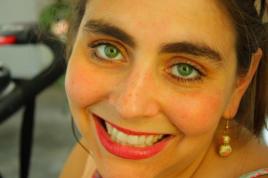
I used to paint and draw all the time as a child. I thought about majoring in art as a college student, but I went to an institution that did not have any applied arts courses in the curriculum. I had gone to college on a scholarship that I could not duplicate elsewhere, so I settled for a number of art history classes and gave up any formal pursuit of art. However, when I had my children, I rediscovered art. More accurately, I did not rediscover it so much as I fell in love anew. For, I found in working with my children a tremendous liberation. It did not matter if it was “good” or not, had the “right” form or not, used the medium “correctly” or not, or said something “properly.” I learned all over again that people could have hearts for heads; skies could rain jellybeans; and skin could be blue just because you like it that way.
Doing art with my children opened up my courage to recognize creative expression as a sacramental act. Both when it is done for overtly sacred purposes as well as when it is done for more secular ones, art of all media can be an outpouring of the spirit into the material world that allows one to say to another: here I am, this is what I have felt, did you see this, I’ve been there too. Once freed from norms about how something ought to be used or made or discussed or interpreted, art has the potential to become revelatory, both of the human and also of the divine (or, perhaps better, of the human as divine). Continue reading “I Used to Paint All the Time by Natalie Weaver”
“We” can give many answers for how to colonize someone; but for many of us, it often takes special training, years of education, reconstructive projects, task forces, books upon book of reading, listening through the loud and ever present static of dominant culture, constant vigilance, one’s own liberation, the liberation of others, etc. to learn how to think otherwise.
In her Presidential Address at the national meeting of the American Academy of Religion in 2011, Dr. Kwok Pui-lan outlined a history of Religious Studies and its relationship to colonial projects, challenging the membership to apply post-colonial theory and analysis to our scholarship and teaching, think with and relate to our global colleagues, and start asking questions about what studying religion does for us, “rethink[ing], reimagin[ing] and recreat[ing] our discipline.”[1] Responding to this call, I have been slowly working to include postcolonial discourse in each of my classes, lower division, upper division, graduate and undergraduate.
This continues the story I began last week. Catherina is my 2x great-grandmother; Agnes is my 2x great-aunt; Johanetta is my first cousin, 3x removed, and my step-2x great-grandmother; Henry is my 2x great-grandfather. It is true that Henry had eighteen children with two wives. It is also true that Henry and Johanetta married and had a child soon after Catherina’s death. Some of the other details came in waking trance as I allowed the ancestors to tell their stories through me.
Agnes Lattauer Sweitzer: I thought the day Catherina left for America would be the worst day of my life. I did not know I would see Catherina again. I did not know I would outlive my two little sisters and both of my brothers. I did not know what my daughter would do. I read Catherina’s letters from America through my tears. How I wanted to be with her on her wedding day. How I wished she had been with us when we buried our sister Johanetta. My heart nearly burst when Catherina wrote that she longed to take my hand when she gave birth to her first child. My mind contorted itself trying to envision her living in a big city, in a big building, climbing up and down stairs, her feet never touching the earth, her hands never working the soil. What kind of life was that?
Catherina Lattauer Iloff
Catherina Lattauer Iloff: I left home a girl. Because I was not yet engaged, Mother and Agnes never told me about married life. What to expect. What to do. I loved Heinrich, or Henry, as he wanted to be called after he became a citizen of the United States. I was not prepared. Henry was so insistent. I was soon pregnant. First Henry, named for Henry’s father Heinrich, then Elisabeth, named for Mother. I had to care for them on my own. Henry was busy with his work during the days. In the evenings he went to the German beer garden to meet his friends. Growing up with my mother and sisters, I had never been alone. There were other women around, but they were busy with their own lives. Some of them were kind, some of them were not, but nobody cared about me the way Mother and Agnes did. One night Henry came home and told me he had been talking with his friends. There was land available in a place called Cherry Ridge, Pennsylvania, a day’s journey from New York City. He said it was his dream come true. We would build our own house. There was plenty of land to farm—not like back home where there were never enough fields to go around. I held my tongue. I did not tell him that I suspected I was pregnant again.
The Iloff farm house
Agnes Lattauer Sweitzer: Catherina and Henry have been to Cherry Ridge. Catherina says there is land for us there too. I don’t know what my Heinrich will say. Life is difficult for us here, but we have two young daughters, Elisabeth and Johanetta, and the baby, Peter. There is Mother to consider. Well, you could have blown me over with a feather. Heinrich said we should grab the opportunity before it is too late. Mother said she would come with us, because she wants to see Catherina and Rudolph again before she dies. She is an old lady. I wonder how she will manage the journey. But I couldn’t say no. The two of us cannot contain our joy. We will see our beloved Catherina again.
Catherina Lattauer Iloff: My life is complete. Mother and Agnes and the dear little children arrived. Mother immediately took Henry and Elisabeth in her arms. Agnes comforted me about the loss of Baby John. I could finally allow myself to cry, knowing that Mother and Agnes would be there to wipe away my tears.
Agnes Lattauer Sweitzer: Our first years in Cherry Ridge were difficult. There were houses to be built, fields to be plowed, cows to be bought and milked. I had two more children, Henry, who died as a boy, and John. My little sister outdid me. She had nine children in all: Henry, Elisabeth, John who died, John who lived, George, Catherine, Mary, Frank, and Barbara. Giving birth to so many children took its toll on her. After the last one, she was never well. I think she may have been pregnant again several times, but she never spoke about it, not even to me. Finally, she took to her bed.
Catherina Lattauer Iloff: I had nine children. I never told anyone about the babies I lost before I began to show. Mother and Agnes worried that I was having too many children. But what could I do? I loved Henry, and I loved every one of my children. Mother died a few years after she came to Cherry Ridge. She always said she was so happy she had undertaken such a great adventure. She was pleased to know that Agnes and I were settled and happy. I miss her every day. Agnes is always by my side. I was forty-two when Barbara, my last baby was born. I bled a lot. After that, I never carried another child to term. I was never myself again. Agnes is my rock. Johanetta helps with the little ones. Henry is still strong as an ox, busy in the fields or with the cattle. I see that Johanetta hangs on his every word. I dismiss such thoughts from my mind. I do not know how much longer I have.
Agnes Lattauer Sweitzer: Catherina died yesterday. She was only forty-six (I am now fifty-six), and she had not been well for several years. I told her to stay away from Henry, but she was powerless to do so. Sometimes I blame him for her death. I worry about Johanetta now. Wild horses will not keep her away from Henry. I see the way she looks at him, and I see the old goat looking right back at her. She is twenty-six, a full grown woman.
Johanetta displaying her engagement ring
Johanetta Sweitzer: I can’t believe it! Henry asked me to marry him. Mother is furious. Father says he should have whipped me a long time ago. But they can’t say no. I told them I am pregnant with Henry’s child. The older children are shocked that their cousin is marrying their father. The younger ones are thrilled. They have always viewed me as a second mother as well as an aunt. I have been looking after all of them these last years what with Aunt Catherina being so ill. I love those children.
Agnes Lattauer Sweitzer: I had to forgive Johanetta, but I will never forgive Henry. I smile when I see him to keep the peace, but my heart is cold. Peter was her first-born. After that she had Agnes and Emma, who died of some of those diseases children get. I could not help wondering if that was God’s punishment.
Johanetta Sweitzer Iloff: Henry and I were married for twenty years. Except for losing Agnes and Emma, those were the happiest years of my life. In all, we had nine children: first Peter, Agnes, and Emma, and then, Anna, Lawrence, Charles, Robert, Otto, and Phillip. Henry was a good man. He worked hard all of his life to support his family. We lost the second John a few years ago, but there were fourteen living children to mourn Henry’s death. The little ones are still with me, some of the others are scattered to the winds, and quite a few are settled around here, raising families of their own. While he was still strong and able, Henry was elected Commissioner of Wayne County. He served his fellow countrymen proudly for years. I wish Mother had been alive to see that. Maybe then she would have understood what a wonderful man he was.
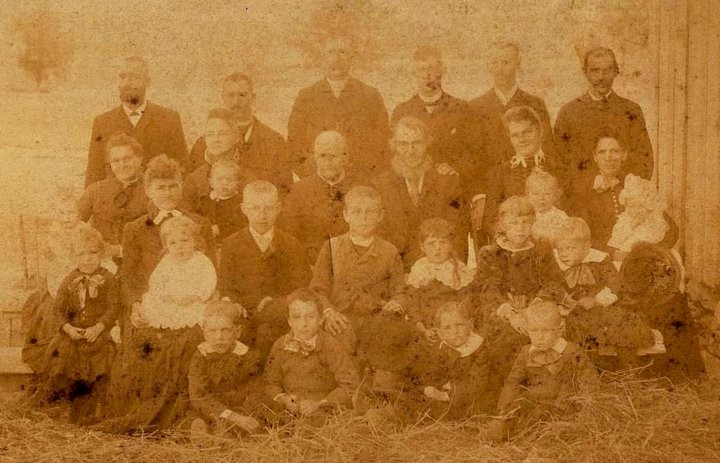
Henry and Johanetta, second row, center right with some of Henry’s children and grandchildren
(With apologies to Jean de La Fontaine for significant changes to his fable)
“Curses on that grasshopper!” exclaimed the ever-busy Madame Fourmi. “All he ever does is play. He’ll be sorry when winter comes.”
And so it went. Every day, Mme. Fourmi spent the morning scrubbing her front steps. And Monsieur Cigale?
“Partaaaaayyyyy!” Every day, he sped by on his skateboard. “Hey, Auntie Ant, stop cleaning the concrete and come and play with us. We’re gonna start a band!”
“Not on your life,” muttered this grandmother, most of whose conversations with her many daughters and granddaughters consisted of instructions on how to properly clean their homes and hills and how to prepare and store food for the winter. “Life is serious business, it is, it is. We need to plan ahead.”
Sirin’s efforts to raise his and his family’s social status ensured his spiritually and intellectually precocious children had the best opportunities for success. By his efforts, Hafsa, her two sisters Umm Sulaym and Karima, and her brothers Muhammad and Yahya–not to mention her half-siblings, some of whom are also reported to have transmitted hadith–would have grown up in the deeply intertwined social, scholarly, and devotional circles of the Companions and Followers in Medina and Basra.
Because her family had some access to these elite social circles, Hafsa had the opportunity to memorize the Qur’an by the age of twelve under the tutelage of the well-known Qur’an reciter Abu al-ʿAliya. As we saw, she also had the opportunity to learn from the companion of the prophet, Umm ʿAtiyya, from whom she transmits hadith. It is no small matter that she was a guest of the Governor of Basra and took part in an elite legal debate while there. Continue reading “Reconstructions of the Past 7: Hafsa bint Sirin (My Story of Her Life 2) by Laury Silvers”
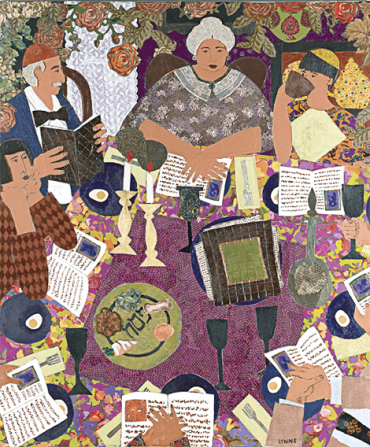
As the Jewish High Holiday of Passover draws to a close, I have been reflecting on this seasonal ritual so central to collective Jewish identity and so significant to me personally.
The Haggadah, the script for the Seder gathering, enjoins all Jews to experience the Exodus—the liberation of the ancient Hebrews from slavery in Egypt —as if it were happening to each of us in our own time. Because I was born in Cairo to an Arab Jewish family that left Egypt when I was two, I always felt Passover to be mine. No need for “as if”: our Exodus was all too real. Yet, from my parents’ accounts, life in Egypt had been delightful. I could not reconcile the Haggadah’s dreadful representation of ancient Egypt with my family’s treasured memories of contemporary Cairo: I could not understand why we celebrated deliverance from an Egypt we loved.
Love does not create powerful empires or concentrations of wealth or military might. Love is not what fuels the tanks of commerce or political clout or financial success. Many would say that love slows things down, mires us in complication. Love is not the way the successful and the effective move–it’s not fast enough, it’s not ruthless enough, it’s not excellent enough.
It’s no coincidence that women have often been seen as the carriers of love–the mothers of how we are loved and how we wish to be loved. The domain of women has been traditionally seen as “behind the scenes.” Women are the nurturers, the familiar narrative goes. Women are the ones who provide a soft landing after a hard day, an understanding ear for all the stresses of the world “out there.”
The extended narrative is that women will have to become masculinized to “play the game” of public life. Women will have to learn to be “like men” in order to compete, in order to win, in order to make an impact. Underneath these narratives of nurture and impact are the contours of power in patriarchy. Imprinting women with the responsibility to love in a context where love is secondary or even tertiary to things like aggression and competition, means women will often relegate themselves to the margins of public power. Not because we think we should be powerless, but because that’s where we often feel the most at home. And sometimes ceding public power can feel like the price women pay to truly love–to love ourselves, to love who we love, and to love the world around us. The contours of power in patriarchy can distort not just women’s lives, but everyone’s lives in ways that carry the weight of this distortion of love.
These gendered expectations of how and where love gets to live and move and breathe in this world distorts the power that love brings with it. After almost ten years of life working from the margins of institutions (church and academy) as an independent scholar and “freelance theologian” I have felt the push back about love as a respectable methodology and mode of operation enough to recognize it quickly.
Institutions often answer my invitation to a loving attentiveness to bodies, particularly to traumatized bodies, with legalities and anxieties: the language of “boundaries,” “reporting laws,” and “misconduct” can shut down work or conversation. The patriarchal hyper-sexualizing of love makes it a no-no or at least something to be feared as a slippery slope in institutional life. In ecclesial settings, where love is supposed to define our mode of operation, these conversations rapidly find their way to sin and human failure. Love is “in spite of” who people are, not because of who they are. Love is impossible without lots of grace and patience and overlooking the problematic things that people do. Love is, if we’re honest with ourselves in these contexts, a real chore in this iteration of its nature. And people default into feeling like a burden, not wanting to bother anyone with their problems, and feeling ashamed of who they really are.
Love is about trust: trusting a moment, trusting a space, trusting each other. And love struggles in contexts where spaces, moments, and people are not trustworthy. So many with whom I work in consulting, retreats, spiritual direction, and teaching struggle to trust and to love. They struggle to trust and love anything because they have encountered so many untrustworthy spaces along the way. The competitive intensity of doing good work can translate into a diminishing and demeaning cycle of “never enough” and the need to protect and defend.
It is amazing to witness what happens to people when they realize they can trust a space–even if it is just a temporary space, a pop-up beloved community where you can really be yourself and won’t be judged or scrutinized. The conventional standards of excellence might suggest such settings work from the lowest common denominator and the generated “product” will suffer from a lack of competition or lack of scrutiny. On the contrary, I see over and over again the beautiful things people can be and do and say and feel when they are loved and accepted. Art, poetry, unique insights, oratorical wisdom, powerful music, deep healing, a sense of freedom, clarity, creativity, peace, support, friendship, and good work all emerge in startling and potent ways when people encounter trustworthy love.
The academy and the church define themselves as places where people can learn and grow and find community. These institutions were formed by patriarchy, but are they doomed to reiterate the diminishing returns of patriarchy forever? Their aspiration is to help people find their way in the world in the most constructive ways they can. And in the world today, people need trustworthy love to truly find the music of their soul. The power of love can transform the spaces of enlightenment and ecclesia into truly collaborative, supportive, loving places of work. Far from screeching to a halt, these spaces might finally hit their stride.


 When we seek immortality or spiritual “rebirth,” are we not saying that there is something wrong with the “birth” that was given to us through the body of our mothers? In She Who Changes and in “Reading Plato’s Allegory of the Cave as Matricide and Theacide,” I asserted that our culture is “matricidal” because it is based on the assumption that life in the body in this world “just isn’t good enough.”
 In a
In a 

 Mother’s Day is coming up on the 8th of May here in Australia and while I don’t agree with the commercialization of it all, I do believe that motherhood, maternal bonds, and the influence of mothers in society should be recognized and celebrated. The essence of this day is so much more than just giving a gift or saying Happy Mother’s Day, it is about truly letting our mums, whether they be maternal or just a mother figure in our life, know how much they are appreciated.
 I used to paint and draw all the time as a child. I thought about majoring in art as a college student, but I went to an institution that did not have any applied arts courses in the curriculum. I had gone to college on a scholarship that I could not duplicate elsewhere, so I settled for a number of art history classes and gave up any formal pursuit of art. However, when I had my children, I rediscovered art. More accurately, I did not rediscover it so much as I fell in love anew. For, I found in working with my children a tremendous liberation. It did not matter if it was “good” or not, had the “right” form or not, used the medium “correctly” or not, or said something “properly.” I learned all over again that people could have hearts for heads; skies could rain jellybeans; and skin could be blue just because you like it that way.
 In
In 

 Carol P. Christ is author or editor of
  A Serpentine Path: Mysteries of the Goddess
 (With apologies to Jean de La Fontaine for significant changes to his fable)
 “Not on your life,” muttered this grandmother, most of whose conversations with her many daughters and granddaughters consisted of instructions on how to properly clean their homes and hills and how to prepare and store food for the winter. “Life is serious business, it is, it is. We need to plan ahead.”

 from Cascade Books in October 2015, is
